

Sciatica Exercises: Safe Techniques That Actually Help
- 8 min read
- Published November 27, 2026
Key Takeaways
- Sciatica exercises should be gentle, symptom-guided, and matched to the person’s level of irritation.
- Short, regular movement is often more helpful than long periods of rest.
- Some stretches can ease symptoms, but certain movements may aggravate nerve pain if done too aggressively.
- Core stability, walking, and targeted mobility work are commonly used in recovery plans.
- Pain that worsens, spreads, or comes with weakness or bladder or bowel changes needs prompt medical assessment.
Sciatica exercises can help reduce pain, improve mobility, and support recovery when they are chosen carefully and done consistently. The best approach depends on the cause of the nerve irritation, so gentle movement, posture awareness, and medical guidance matter more than forcing a routine.
Overview
Sciatica exercises are often part of a practical plan to calm irritation around the sciatic nerve and help the body move more comfortably again. For many people, the goal is not to “stretch the pain away,” but to choose movements that keep the back, hips, and legs mobile without provoking a flare.
Sciatica is a symptom, not a diagnosis on its own. It usually refers to pain that travels along the sciatic nerve pathway, often starting in the lower back or buttock and moving down the leg. Because the underlying cause may differ — such as a disc problem, spinal narrowing, muscle-related compression, or inflammation — the best exercises are usually selected after a careful assessment rather than copied from a generic list.
In everyday life, this means a person may need a different exercise plan depending on whether sitting worsens the pain, whether the leg feels tight or weak, and how far the symptoms travel. For international patients, that personalized approach can be especially useful when they are trying to recover while managing travel, work, and follow-up care in another country.
Symptoms

Sciatica is commonly felt as a sharp, burning, electric, or radiating pain that starts in the lower back, buttock, or hip and travels down the thigh, sometimes all the way to the calf or foot. Some people notice numbness, tingling, or a “pins and needles” sensation more than pain.
Movement often changes the symptoms. Sitting for long periods, bending forward, coughing, or twisting may make the pain more noticeable in some people, while others feel worse when standing or walking for too long. That is one reason why exercise advice for sciatica needs to be individualized.
It is also common for symptoms to fluctuate. A good day does not necessarily mean the problem is gone, and a flare does not always mean damage is increasing. Watching how the body responds before, during, and after exercise gives a better picture than focusing on one moment alone.
Causes & Risk Factors
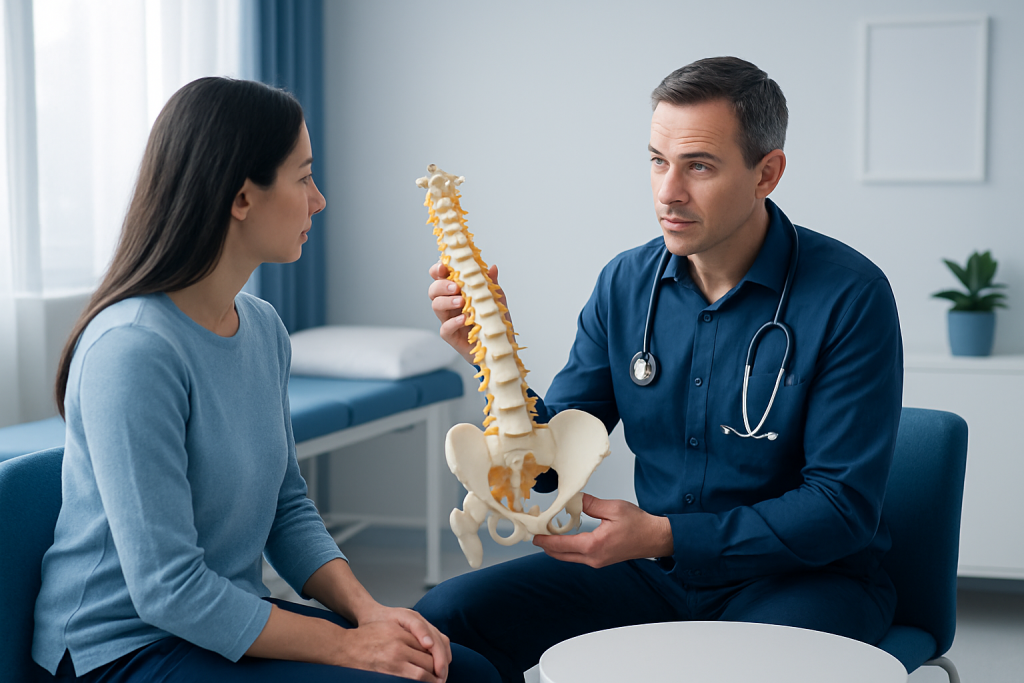
Sciatic nerve pain often happens when a spinal nerve root is irritated or compressed in the lower back. A herniated disc is a well-known cause, but it is not the only one. Spinal stenosis, degenerative changes, spondylolisthesis, and muscle or soft-tissue irritation can all contribute.
Certain factors can make sciatica more likely or more persistent. These include prolonged sitting, repetitive lifting with poor mechanics, limited trunk and hip strength, some sports or work activities, excess body weight, and age-related wear in the spine. Smoking may also affect disc health and healing.
Because the same symptom can come from different structures, it is important not to assume every case of sciatica should be treated the same way. A person who improves with walking may need a different routine from someone whose pain eases with rest and gentle extension-based movements. This is where a clinician’s exam helps shape a safer exercise plan.
Diagnosis
Before starting a structured exercise program, a doctor or physical therapist usually reviews the pain pattern, medical history, and any triggers that make symptoms better or worse. A physical examination may include checking posture, hip motion, reflexes, strength, sensation, and straight-leg raise testing.
Imaging is not always needed at the beginning. Many cases improve with conservative care, and a scan may not change the early treatment plan. However, imaging such as MRI or X-ray may be considered if symptoms are severe, persistent, unusual, or associated with nerve weakness, or if another spinal condition is suspected.
The most useful diagnosis is often functional: identifying which positions and movements calm the nerve and which ones irritate it. That information helps guide exercise selection, especially when pain affects travel, work, driving, or daily routines.
Treatment Options
Exercise is usually one part of a broader treatment plan for sciatica. Depending on the cause and severity, this may also include activity modification, short-term pain relief strategies recommended by a clinician, physical therapy, and in some cases injections or surgery.
Among the most commonly helpful sciatica exercises are gentle walking, pelvic tilts, nerve glides, supported bridging, and carefully selected stretches for the hips and lower back. The aim is to restore comfortable movement, reduce guarding, and improve support around the spine.
Examples of commonly used approaches include:
- Walking: short, frequent walks can maintain mobility without overloading the back.
- Pelvic tilts: slow movements that encourage awareness and gentle spinal motion.
- Bird-dog or modified core work: helps build trunk stability when tolerated.
- Hamstring or piriformis stretches: may help some people, but only if they do not increase nerve pain.
- Nerve glides: gentle, controlled movements that are different from forceful stretching.
Technique matters more than intensity. Exercises should feel manageable, with no sharp increase in leg pain, numbness, or weakness. A mild stretch or temporary muscle effort may be acceptable, but nerve symptoms that worsen during or after the session usually mean the movement needs to be modified.
For patients traveling for care, treatment plans are often organized in stages: initial pain calming, supervised rehabilitation, and a home program that can be continued safely after returning home. That kind of continuity is especially valuable when follow-up will happen across borders and time zones.
Prevention & Self-care
Prevention for sciatica is often about reducing repeated strain and keeping the spine and hips adaptable. Regular movement, attention to lifting technique, and avoiding very long periods of sitting can make a meaningful difference, especially for people who have had symptoms before.
Simple self-care habits may help support recovery:
- Take brief standing or walking breaks during long sitting periods.
- Use chairs and car seats that support the lower back.
- Lift objects by bending at the hips and knees rather than rounding the back.
- Build gradual core, glute, and hip strength under guidance.
- Stop any exercise that causes a strong increase in leg pain or numbness.
Heat, ice, sleep position adjustments, and stress management can also be useful for some people, although responses vary. The most reliable guide is the body’s own pattern: if a movement repeatedly leaves symptoms calmer and more centralized, it may belong in the routine; if it repeatedly spreads or intensifies pain, it should be reconsidered.
When recovery is being managed from another country, it helps to keep a simple symptom log. Note which activities helped, which ones aggravated pain, and how long flare-ups lasted. That record can make remote or in-person follow-up more precise and less guesswork-based.
When to See a Doctor
Medical evaluation is important if sciatica pain is severe, lasts more than a few weeks, or keeps returning despite sensible self-care. A doctor should also be seen sooner if the pain is accompanied by leg weakness, worsening numbness, trouble walking, or pain that is steadily spreading.
Some symptoms need prompt attention. These include new bladder or bowel control problems, numbness in the saddle area, fever with back pain, or sciatica after a major injury. These signs do not mean the worst outcome has happened, but they do warrant urgent assessment.
Exercise is usually helpful only when it is part of the right plan. If a person is unsure whether a stretch is appropriate, if symptoms are changing in a concerning way, or if recovery is not moving forward, a neurologist, orthopedist, or rehabilitation specialist can help refine the diagnosis and guide the next step. At Acibadem Health Point, multidisciplinary specialists and JCI-accredited hospitals diagnose and treat sciatica for international patients with coordinated care and follow-up support.
Frequently asked questions
01What are the safest sciatica exercises to start with?
Gentle walking, pelvic tilts, and lightly guided mobility work are often well tolerated at the start. The best choice depends on the person’s symptoms and what makes the pain better or worse. A clinician or physical therapist can help tailor the routine.
02Should sciatica be stretched or rested?
Neither extreme is usually ideal. Too much rest can stiffen the back and hips, while aggressive stretching can irritate the nerve further. Short, regular movement with symptom-guided exercise is often the most balanced approach.
03Can exercise make sciatica worse?
Yes, if the wrong movement is chosen or if exercises are done too forcefully. A sharp increase in leg pain, numbness, or weakness is a sign to stop and reassess. Mild effort or a gentle stretch is usually more acceptable than strong pain.
04How long does it take for sciatica exercises to help?
Some people feel improvement within days or weeks, while others need a longer rehabilitation period. The timeline depends on the cause of the sciatica, symptom severity, and how consistently the exercises are done. Progress is often gradual rather than immediate.
05Are nerve glides the same as stretching?
No. Nerve glides are controlled movements designed to let the nerve move more freely without being pulled hard. They should be gentle and are best introduced with professional guidance, especially if symptoms are active.
06When is sciatica a medical emergency?
Emergency evaluation is needed if sciatica comes with new bladder or bowel problems, numbness in the groin or inner thighs, major leg weakness, or severe pain after trauma. These symptoms require prompt medical assessment.
This article is for general information only and is not a substitute for professional medical advice. Please consult a qualified doctor about your individual situation.
Joint and spine care in Turkey — expert assessment & treatment
JCI-accredited · board-certified surgeons · reply within 24h
Add us as a Preferred Source to see more of our trusted health content across Google Search, AI Overviews and Discover.



How can we help you today?
Meet an Acibadem specialist by secure video, before you travel.
Book a video visit