Sciatica Causes: Nerve Pressure and Spine Changes
Sciatica is not a diagnosis by itself but a pattern of pain caused by irritation or compression of nerve roots that form the sciatic nerve. A herniated disc is a common cause, while spinal narrowing, arthritis-related changes, injury, and less commonly other conditions may also contribute.
Overview: what causes sciatica?
Sciatica causes are conditions that irritate, inflame, or compress one or more nerve roots in the lower back that contribute to the sciatic nerve. The most common cause is a herniated disc, in which disc material presses on a nearby nerve root; spinal narrowing and age-related joint changes can also be responsible.
The sciatic nerve is the body’s largest nerve. It is formed by several nerve roots in the lower spine and travels through the buttock and down each leg. When one of these roots is affected, pain may travel from the lower back or buttock into the thigh, calf, or foot. Symptoms can occur on one side and may include tingling, numbness, or weakness.
Sciatica is a symptom pattern rather than a single disease. Identifying the underlying cause matters because it helps a clinician recommend the most appropriate care and recognize uncommon situations that need prompt treatment. For an overview of diagnosis and management, see sciatica treatment.
How nerve irritation produces sciatic pain
The lower spine contains vertebrae, discs, ligaments, muscles, and small joints. Nerve roots leave the spinal canal through openings between the vertebrae. A disc, enlarged joint, bone spur, inflammation, or another structure can reduce the space around a nerve root and trigger symptoms.
Pressure is not the only mechanism. Chemicals released during disc injury can inflame a nerve root, making it more sensitive even when compression is limited. This helps explain why pain intensity does not always match the appearance of a scan, and why symptoms can change with posture, activity, and time.
People often describe sharp, burning, electric, or shooting pain. Coughing, sneezing, bending forward, or sitting for long periods may worsen symptoms in some cases. Others notice discomfort primarily when walking or standing, which can suggest a different pattern of spinal narrowing.
- Radicular pain: pain following the pathway of an irritated spinal nerve root.
- Neurological symptoms: tingling, altered sensation, or reduced strength in part of the leg or foot.
- Referred pain: pain felt away from its source, which may resemble but is not always true sciatica.
Common causes of sciatica
Herniated or bulging lumbar disc is one of the leading causes of sciatica. Discs cushion the vertebrae, and their softer inner material may push through or beyond the outer layer. If this affects a nearby nerve root, leg pain may develop suddenly or gradually. Disc-related symptoms are common in adulthood and may follow lifting, twisting, or no obvious event.
Lumbar spinal stenosis means narrowing of the spinal canal or the openings where nerves leave the spine. It often results from age-related changes such as thicker ligaments, enlarged facet joints, and disc degeneration. It can cause leg pain, heaviness, numbness, or weakness during walking or standing that improves when sitting or leaning forward.
Degenerative spondylolisthesis occurs when one vertebra slips forward relative to the vertebra below, sometimes narrowing the space around nerves. Osteoarthritis of the spine, bone spurs, and degenerative disc changes may similarly affect nerve roots. These changes become more common with age but do not always cause symptoms.
Less frequent causes include spinal injury, a cyst near a spinal joint, infection, inflammatory disease, or a tumor. Piriformis syndrome is sometimes discussed as a cause of buttock and leg pain due to irritation around the nerve outside the spine, but it is less common and should be diagnosed carefully after other causes are considered.
Risk factors that can increase the chance of sciatica
Having a risk factor does not mean a person will develop sciatica. Many people have disc or joint changes on imaging without pain. However, certain factors can increase the likelihood of lower-back conditions that may irritate nerve roots.
Age is an important factor because discs gradually lose water content and flexibility, while spinal joints and ligaments may change over time. Occupations or activities involving frequent lifting, twisting, vibration exposure, or prolonged sitting can place repeated stress on the lower back. Poor lifting technique can increase strain, particularly when combined with an unexpected load.
Excess body weight may add mechanical load to the spine, and low levels of physical activity can reduce muscle endurance and movement confidence. Smoking is associated with poorer disc health and may impair tissue healing. Diabetes and other conditions that affect nerves can also complicate the assessment of leg symptoms.
- Previous episodes of lower-back pain or disc problems
- Regular heavy manual work or repetitive bending and twisting
- Long periods of driving or sitting without movement breaks
- Reduced core and hip muscle conditioning
- Smoking and limited general physical activity
- Increasing age, particularly for spinal stenosis and degenerative changes
How sciatica is diagnosed
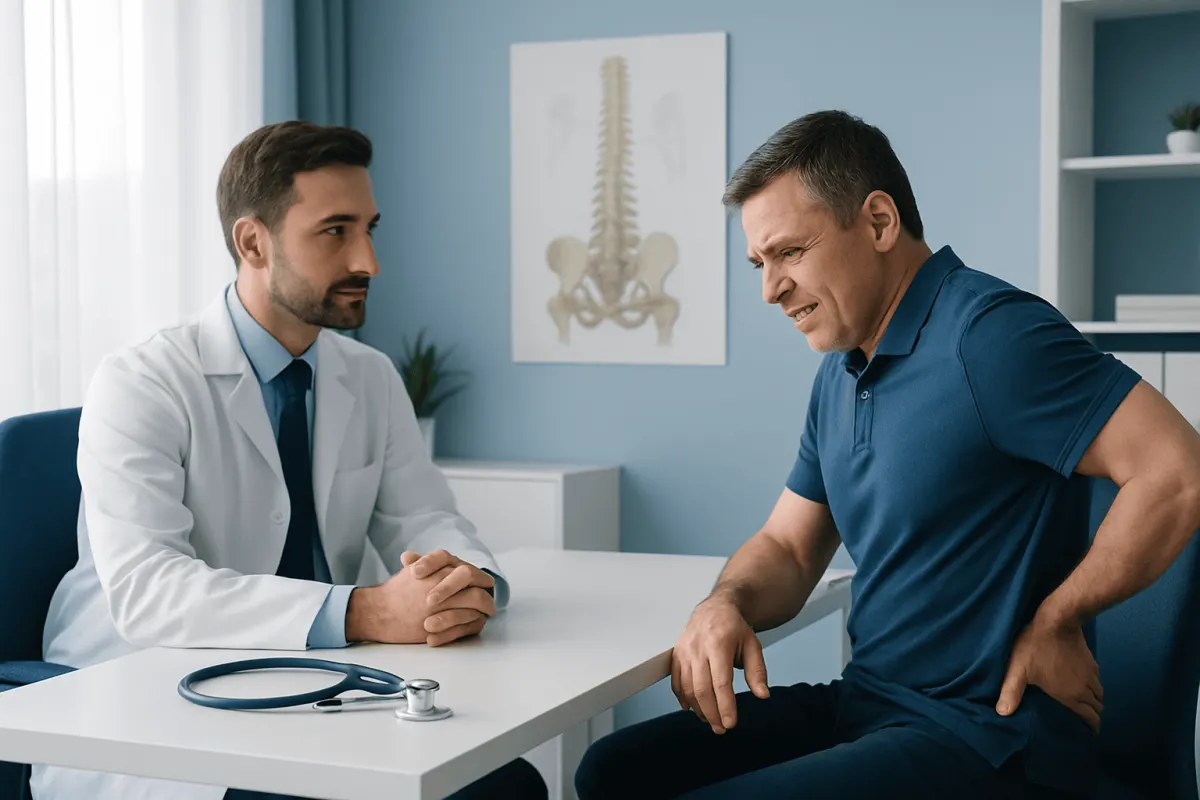
Diagnosis begins with a clinical history and physical examination. A clinician will ask where the pain travels, what triggers or relieves it, whether numbness or weakness is present, and how symptoms affect walking, sleep, and daily tasks. They may check posture, range of motion, reflexes, muscle strength, sensation, and leg-raising responses.
Imaging is not routinely necessary at the beginning of an uncomplicated episode. Many cases improve over time, and early scans may show common age-related changes that are not the actual source of pain. Imaging may be considered when symptoms are severe, persistent, worsening, associated with significant weakness, or when a serious underlying condition is suspected.
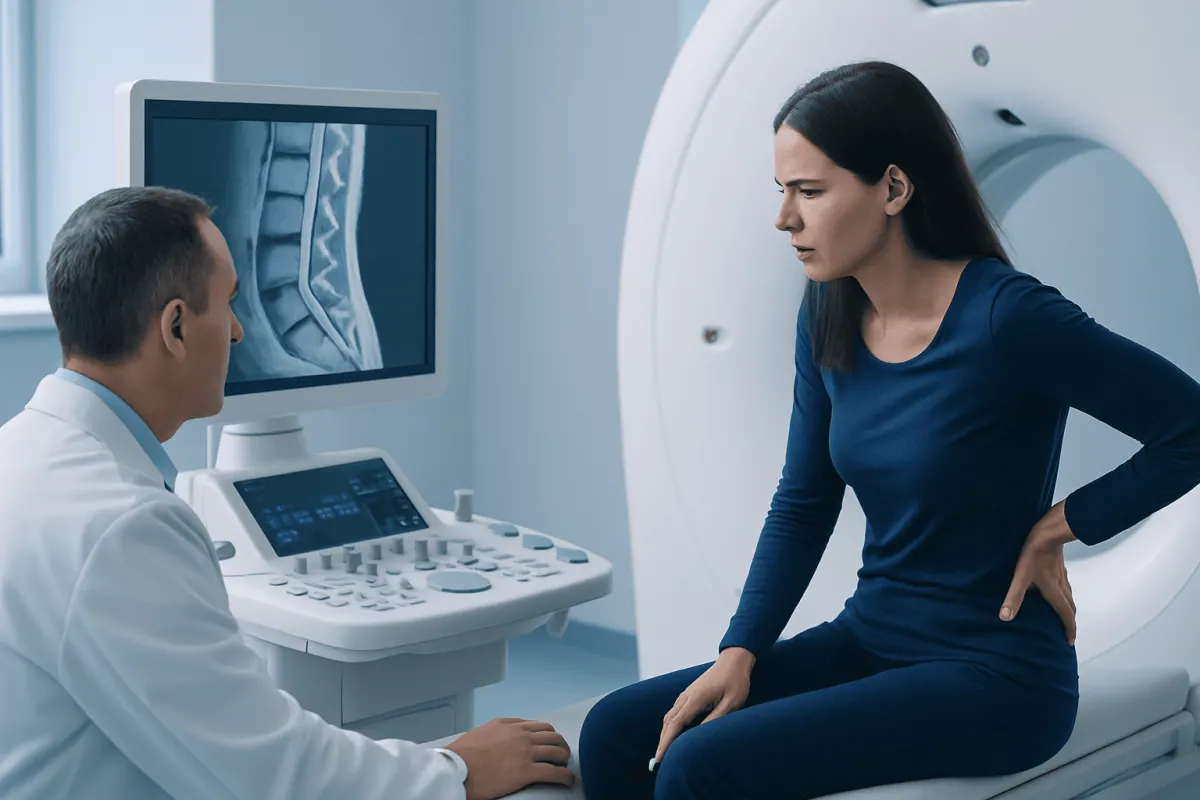
MRI is often the preferred test for assessing discs, nerve roots, and soft tissues when detailed imaging is needed. X-rays can show alignment, fractures, and some degenerative changes, but they do not directly show nerves or disc herniation. In selected cases, nerve conduction studies or electromyography may help distinguish nerve-root irritation from peripheral nerve conditions.
A diagnosis should connect examination findings, symptoms, and imaging results rather than relying on any single test. This approach helps avoid treating scan findings that may not be causing the person’s pain.
Treatment options and when procedures may help
Most people with sciatica improve with conservative care. A clinician may recommend staying gently active, avoiding extended bed rest, modifying aggravating movements temporarily, and taking part in a tailored exercise or physiotherapy program. Pain-relief medicines may be considered based on the person’s health history and under professional guidance.
If symptoms do not settle, a specialist may discuss options such as targeted injections for selected patients. These procedures aim to reduce inflammation around a nerve root and may provide short-term symptom relief that supports rehabilitation. They do not correct every structural cause, and their suitability depends on the diagnosis and overall health.
Surgery is generally considered when there is persistent disabling leg pain despite appropriate non-surgical treatment, progressive neurological weakness, or an urgent nerve-compression problem. For a disc herniation, a decompression procedure may remove the portion of disc pressing on the nerve. For stenosis, surgery may create more space for affected nerves; some people may also need stabilization if spinal instability is present.
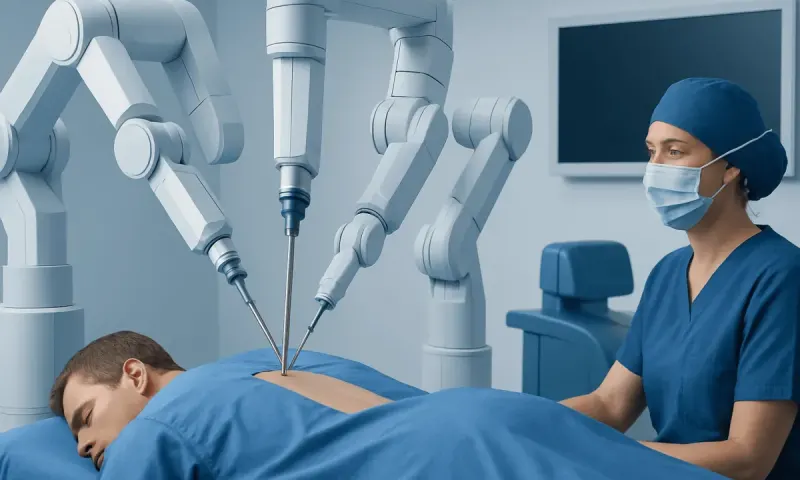
In broad terms, the procedure involves anesthesia, an incision in the back, careful access to the affected level, and removal or adjustment of tissue causing nerve compression. Candidacy depends on symptoms, examination findings, imaging, response to non-surgical care, and personal health factors. Benefits can include relief of leg pain and improved function, while risks include infection, bleeding, blood clots, dural tear, recurrent disc herniation, persistent symptoms, or the need for further treatment. Recovery timelines vary: walking is often encouraged early, daily activities increase gradually over weeks, and rehabilitation may continue for several months.
Prevention and self-care for lower-back health
Not all sciatica can be prevented, especially when it relates to age-associated changes or an unexpected injury. However, regular movement and sensible spine care may lower the risk of recurrent episodes and support recovery. The goal is usually gradual, sustainable activity rather than avoiding all movement.
Walking, swimming, cycling, and clinician-guided strengthening can improve general fitness and the endurance of muscles that support the trunk and hips. A physiotherapist can adapt exercises to the person’s symptoms, mobility, work demands, and any other medical conditions. Increasing activity gradually is usually safer than starting an intensive program abruptly.
When lifting, it may help to keep objects close to the body, bend through the knees and hips, avoid twisting while carrying, and ask for help with heavy or awkward loads. During desk work or driving, changing position and taking regular movement breaks can reduce prolonged strain. Stopping smoking and addressing weight concerns with healthcare support may also benefit overall spinal health.
Heat or cold may offer temporary comfort for some people, but neither replaces assessment when symptoms are severe or worsening. A qualified clinician can advise on safe self-care choices, particularly for people with other health conditions or those taking regular medication.
When to seek medical care
Medical assessment is appropriate for new leg pain that travels below the knee, persistent numbness or tingling, pain that limits normal activities, or symptoms that do not improve with sensible self-care. A clinician can confirm whether symptoms are likely to be sciatica and check for other causes of leg pain, including hip, vascular, or peripheral nerve conditions.
Urgent medical care is needed for new or worsening weakness in the leg or foot, numbness around the genitals or buttocks, inability to control urine or stool, or difficulty passing urine. These symptoms can indicate severe nerve compression and should not be managed at home. Urgent assessment is also important after significant trauma or when back pain occurs with fever, unexplained weight loss, or a history of cancer.
People with persistent or complex symptoms may benefit from coordinated assessment by spine, neurology, pain management, rehabilitation, and surgical specialists. Acıbadem Health Point’s multidisciplinary specialists and JCI-accredited hospitals diagnose and treat spinal conditions for international patients.
Seeking help early does not mean surgery will be needed. It allows the care team to identify warning signs, explain options clearly, and develop an individualized plan focused on pain relief, movement, function, and safe recovery.
Frequently asked questions
01What is the most common cause of sciatica?
A herniated disc in the lower back is a common cause of sciatica. Disc material can irritate or compress a nearby nerve root, causing pain that travels into the buttock and leg. Spinal stenosis and age-related degenerative changes are also common causes, particularly in <a href="https://www.acibademhealthpoint.com/blog/confusion-in-older-adults-delirium-dementia-or-another-neurological-problem/" title="Confusion in Older Adults: Delirium, Dementia, or Another Neurological Problem?" class="ahp-ilk">older adults.
02Can sciatica occur without back pain?
Yes. Some people mainly feel pain, tingling, numbness, or weakness in the buttock, leg, calf, or foot, with little or no lower-back pain. The symptoms still may arise from irritation of a nerve root in the lower spine.
03Does sitting cause sciatica?
Sitting does not usually create sciatica by itself, but prolonged sitting can aggravate symptoms in some people, especially when a disc is involved. Regular position changes, movement breaks, and attention to comfortable working posture may help. Persistent symptoms should be assessed by a clinician.
04Is sciatica always caused by a herniated disc?
No. Sciatica can also result from spinal stenosis, joint-related changes, spondylolisthesis, injury, or less commonly infections, tumors, or other conditions. A medical history and examination help identify the likely cause.
05When is sciatica an emergency?
Emergency assessment is needed for new bladder or bowel control problems, trouble urinating, numbness around the groin or buttocks, or rapidly worsening leg weakness. These can be signs of severe nerve compression. Immediate medical attention is also important after significant trauma or with symptoms such as fever and unexplained weight loss.
06Will sciatica go away without surgery?
Many cases improve with time, appropriate activity, physiotherapy, and other non-surgical measures. Surgery may be considered when disabling symptoms persist, weakness progresses, or there is serious nerve compression. The decision depends on the underlying cause, symptom severity, examination findings, and imaging when needed.
This article is for general information only and is not a substitute for professional medical advice. Please consult a qualified doctor about your individual situation.
Joint and spine care in Turkey — expert assessment & treatment
JCI-accredited · board-certified surgeons · reply within 24h
Add us as a Preferred Source to see more of our trusted health content across Google Search, AI Overviews and Discover.