Scar Revision Options for Appearance, Comfort, and Function
Scar revision is a group of medical and surgical treatments designed to make a scar less noticeable, less uncomfortable, or less restrictive. It cannot completely erase a scar, but an individualized approach can often improve its color, texture, position, symptoms, or effect on movement.
Scar Revision: What It Means and What It Can Achieve
Scar revision is the medical term for treatment intended to improve a scar’s appearance, symptoms, or impact on function. It may involve non-surgical care, minimally invasive procedures, surgery, or a combination of methods. The aim is not to make the skin look exactly as it did before an injury or operation; rather, it is to help the scar become flatter, softer, less visible, less painful, or less restrictive.
A scar forms as part of normal wound healing. The body replaces damaged skin with collagen-rich tissue, and this repair tissue may differ from surrounding skin in color, thickness, texture, and flexibility. Some scars settle gradually with time, while others remain raised, wide, indented, tight, itchy, painful, or noticeable because of their location.
Scar revision is considered when a scar causes physical discomfort, limits movement, affects an eyelid, lip, or other body structure, or causes significant cosmetic concern. A dermatologist, plastic surgeon, or another qualified clinician can assess whether treatment is likely to help and explain realistic goals. Improvement often occurs gradually and may require more than one treatment session.
Why Scars Look and Feel Different
Scars vary because wounds heal differently depending on their depth, cause, location, and the tension placed on the skin during healing. A small cut may leave a fine line, while burns, traumatic injuries, acne, infections, and larger surgical wounds can lead to more complex scarring. Areas that move frequently, such as the shoulders, chest, joints, and mouth, may be more prone to widened or raised scars.
Common scar patterns include flat scars, widened scars, depressed or pitted scars, and contractures. A contracture is a tight scar that pulls nearby skin and may restrict movement, particularly after a burn or deep injury. Atrophic scars are indented scars, often associated with acne or chickenpox. Some scars also have changes in pigmentation, appearing darker, lighter, or redder than surrounding skin.
Hypertrophic scars are raised scars that remain within the borders of the original wound. Keloids are raised scars that extend beyond the original wound edges and may continue to grow. Both may itch, hurt, or feel tender. People with a personal or family tendency toward keloids, as well as those with darker skin tones, may have a higher likelihood of developing these scars, although anyone can be affected.
- Scar maturity: New scars are often red, firm, or itchy before gradually softening and fading.
- Skin tension: Pull on a healing wound can contribute to widening or thickening.
- Healing complications: Infection, delayed healing, or wound separation can alter scar formation.
- Individual biology: Genetics, age, skin type, and medical conditions can influence healing.
When Is the Right Time for Scar Revision?

Timing is an important part of scar revision planning. In many cases, clinicians prefer to wait until a scar has matured, which commonly takes around 12 to 18 months. During this period, redness often fades and the scar may naturally become flatter and more flexible. Treating too early with surgery can sometimes lead to another unfavorable scar if the healing process is still active.
However, waiting is not always necessary or advisable. Early treatment may be recommended for scars that limit movement, distort an eyelid or lip, cause significant pain or itching, create problems around a joint, or are becoming markedly raised. Early interventions can also be useful for some red or thick scars, particularly when they are paired with careful monitoring.
Scar revision should be planned only after the underlying wound has healed and any active infection or inflammatory skin condition has been addressed. For scars following skin cancer removal, trauma, or an operation, the treating team may also need to consider medical history, current medicines, smoking status, and conditions such as diabetes that can affect wound healing.
Evidence-Based Scar Revision Options
The most appropriate scar revision treatment depends on the scar’s features and the person’s goals. A clinician may recommend starting with the least invasive option and reassessing over time. Combining treatments is common because a single approach may improve one aspect of a scar, such as thickness, while another addresses color or uneven texture.
Silicone gel or silicone sheets are commonly used for raised or recently healed scars. They may help hydrate the scar and reduce thickness, redness, and symptoms when used consistently as advised. Pressure therapy may also be considered in selected situations, particularly after burns. Sun protection is important because ultraviolet exposure can make scars darker or more noticeable for a prolonged period.
For raised hypertrophic scars or keloids, injections of corticosteroid medicine may help reduce inflammation, itching, and thickness. Depending on the scar, clinicians may combine injections with other medicines, freezing treatment, laser treatment, or surgery. Keloids can recur after removal, so a carefully planned combination strategy and follow-up are especially important.
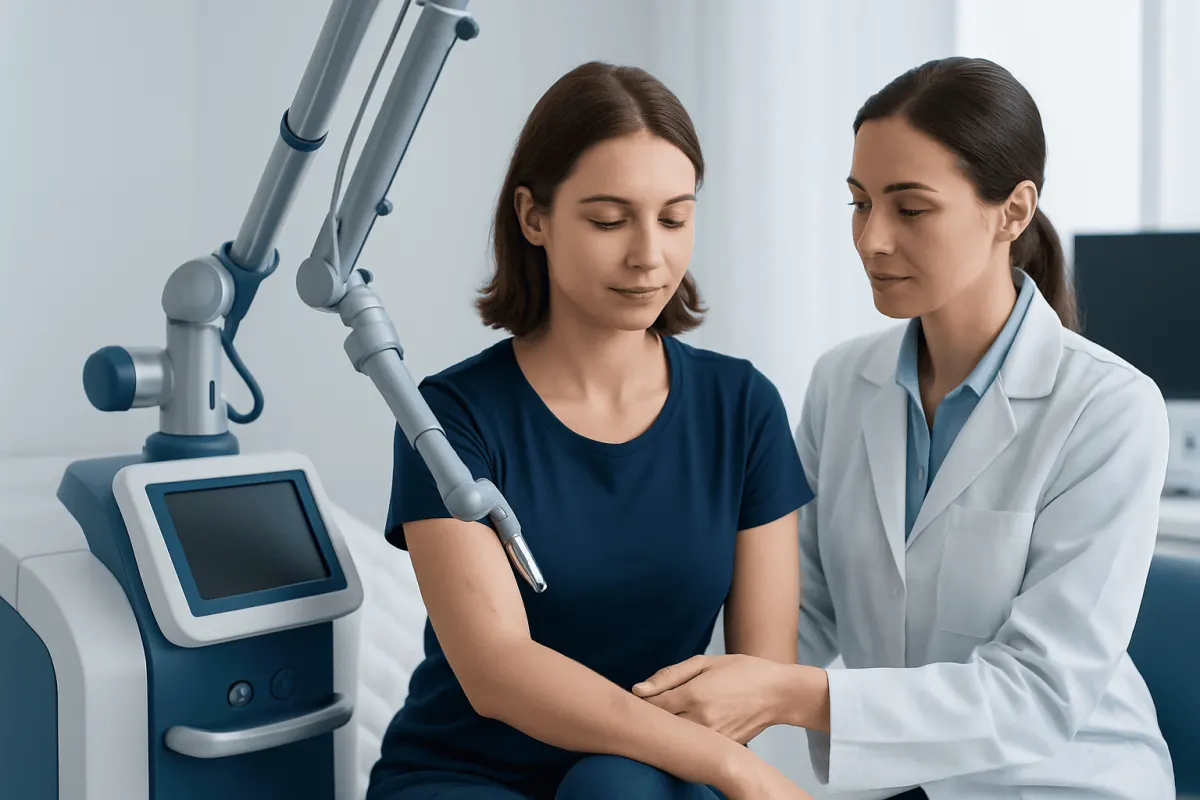
Laser and light-based procedures may improve scar redness, pigment changes, thickness, or texture. Fractional laser treatments can stimulate collagen remodeling in certain raised, indented, surgical, or acne scars. Results vary, and several sessions may be needed. Lasers are not suitable for every scar type or skin tone, so treatment should be selected by an experienced clinician who can discuss benefits and risks, including temporary color changes.
Surgical scar revision may be useful when a scar is wide, poorly positioned, tethered, or causing functional problems. A surgeon may remove the old scar and carefully close the wound, reposition the scar along natural skin lines, release tight tissue, or use techniques such as Z-plasty to redirect tension. Surgery creates a new wound and therefore a new scar, but meticulous planning can provide a better result than the original scar.
What to Expect Before and After Treatment
Before scar revision, the clinician will ask about how the scar developed, previous treatments, allergies, medications, smoking, medical conditions, and any history of abnormal scarring. They will examine the scar’s size, depth, flexibility, color, location, and relationship to nearby structures. Photographs may be taken to support treatment planning and to monitor progress.
The discussion should include what improvement is realistically possible, whether more than one treatment is likely, and the potential risks. Depending on the procedure, these may include bruising, swelling, temporary discomfort, infection, pigment changes, delayed healing, wound separation, or recurrence of a raised scar. These risks are usually considered in relation to the likely functional or cosmetic benefit.
After a procedure, the care plan may include gentle wound cleansing, dressings, limiting tension on the area, scar massage when advised, silicone therapy, and sun protection. It is important not to pick scabs or use unapproved topical products on a healing wound. The clinician may recommend avoiding smoking and nicotine products because they can reduce blood flow and impair healing.
Scar improvement takes time. Surgical scars can initially look redder or firmer before they begin to settle, and laser or injection treatments may require a series of appointments. Keeping follow-up visits allows the clinical team to identify early thickening, pigment changes, or other concerns and adjust treatment if needed.
Scar Care at Home and Common Myths
Once a wound is fully closed and a clinician has confirmed that it is safe, simple scar care may support healing. This can include regular use of broad-spectrum sunscreen on exposed scars, as well as silicone gel or sheets when recommended. Moisturizing and gentle massage may be advised for some scars, but massage should not begin until the wound is healed and a healthcare professional has provided guidance.
A common myth is that a cream, oil, or home remedy can fully remove a scar. No topical product can erase a mature scar. Some products may moisturize the skin, but evidence for many over-the-counter ingredients is limited compared with silicone-based products for selected scars. Strong exfoliants, unregulated bleaching products, or irritating substances can worsen discoloration or inflammation.
Another myth is that all scars need immediate treatment. Many uncomplicated scars improve naturally over months. Conversely, it is also incorrect to assume that nothing can be done for a troublesome scar. Persistent itch, pain, tightness, or emotional distress are valid reasons to seek professional advice.
Healthy general habits support wound healing and skin health. A balanced diet with adequate protein, managing long-term conditions, following prescribed aftercare, and avoiding smoking can all be helpful. These measures do not guarantee a particular scar outcome, but they can reduce avoidable barriers to healing.
When to Seek Medical Care
Medical assessment is recommended if a scar is painful, increasingly itchy, rapidly thickening, spreading beyond the original wound, or limiting movement. Care should also be sought if a scar affects vision, breathing, eating, speaking, or the ability to close the eye or mouth normally. A clinician can determine whether symptoms are due to scar tissue or another condition that needs treatment.
Prompt medical care is important if a healing wound becomes increasingly red, warm, swollen, or tender, or if it produces pus, opens, or is accompanied by fever. These signs may suggest infection or wound-healing problems rather than normal scar maturation. Early assessment can help protect both health and the eventual scar outcome.
People who have a history of keloids, poor wound healing, diabetes, immune suppression, or previous radiation treatment should discuss elective scar revision with a specialist. Acıbadem Health Point’s multidisciplinary specialists and JCI-accredited hospitals can assess and treat scars for international patients, with care tailored to the scar type and the person’s overall health.
Frequently asked questions
01Can scar revision remove a scar completely?
No treatment can completely remove a scar or restore the skin exactly to its pre-injury appearance. Scar revision can often make a scar flatter, softer, less noticeable, less symptomatic, or less restrictive. The degree of improvement depends on the scar type and the treatment used.
02How long should someone wait before scar revision?
Many scars are allowed to mature for about 12 to 18 months before surgical revision is considered. This gives time for natural fading and softening. Earlier treatment may be appropriate when a scar is tight, painful, growing, or interfering with normal function.
03Is scar revision painful?
Comfort depends on the treatment. Topical numbing medicine, local anesthetic, or other anesthesia may be used for procedures such as injections, laser treatment, or surgery. Temporary tenderness, swelling, or sensitivity can occur afterward, and the clinical team can explain expected recovery.
04Can keloids come back after treatment?
Yes. Keloids have a tendency to recur, particularly after surgery alone. Clinicians often use a combination of approaches, such as injections, silicone treatment, pressure therapy, or selected procedures, to lower the likelihood of recurrence.
05Do silicone sheets really help scars?
Silicone sheets and gels have evidence supporting their use for some raised scars, especially when used consistently after the skin has fully healed. They may reduce scar thickness, redness, and symptoms such as itching. They are not a complete solution for every scar, so professional guidance is helpful.
06Is laser treatment suitable for every scar?
Laser treatment can help selected scars, including some red, thick, textured, or indented scars. Its suitability depends on the scar characteristics, skin tone, medical history, and treatment goals. A clinician experienced in laser scar management can recommend the safest option.
This article is for general information only and is not a substitute for professional medical advice. Please consult a qualified doctor about your individual situation.
Joint and spine care in Turkey — expert assessment & treatment
JCI-accredited · board-certified surgeons · reply within 24h
Add us as a Preferred Source to see more of our trusted health content across Google Search, AI Overviews and Discover.