Scabbing in the Nose: What You Need to Know

Key Takeaways
- Scabbing in the nose often happens when the nasal lining becomes dry, irritated, or injured.
- Common triggers include dry air, frequent nose blowing, nose picking, allergies, infections, and some medications.
- Most mild cases improve with gentle care, hydration, humidified air, and avoiding further irritation.
- Persistent scabs, repeated nosebleeds, swelling, or one-sided symptoms deserve medical evaluation.
- An ENT doctor may look for infection, inflammation, structural problems, or skin conditions affecting the nose.
Scabbing in the nose is usually a sign that the lining of the nasal passages has become dry, irritated, or inflamed. It often improves with simple care, but recurring scabs, pain, bleeding, or blockage should be checked by an ENT specialist.
Overview
Scabbing in the nose usually means the delicate lining inside the nostrils has been disturbed enough to form a crust while it heals. In many people, the cause is simple dryness or minor irritation, and the problem settles once the nose is protected from further injury.
It is helpful to think of the nose as a moist, sensitive passage rather than a dry skin surface. When that lining becomes cracked, inflamed, or lightly scratched, small scabs can form, sometimes with tenderness, a blocked feeling, or brief bleeding. For most people, scabbing in the nose is manageable, but repeated or one-sided scabs deserve attention because they can sometimes point to an infection, a chronic inflammatory condition, or an underlying structural issue.
For international patients deciding whether to seek care at home or while traveling, the key question is not only whether the scabs are present, but how long they have lasted, whether they keep returning, and whether other symptoms are appearing alongside them. Those details help an ENT specialist decide whether simple self-care is enough or whether a closer examination is needed.
Symptoms
Scabs inside the nose may be noticed as rough patches, crusts, or dry flakes near the front of the nostrils. Some people feel a stinging sensation when breathing in cold air, while others notice crusting when they wipe or blow the nose. A small amount of blood on tissues is also common when the lining has been irritated.
Symptoms can vary depending on the cause. Dryness often causes both nostrils to feel uncomfortable, while a small sore, infection, or localized irritation may affect only one side. In some cases, the nose feels blocked even though there is little mucus, because swelling and crusting narrow the nasal passage.
Signs that the problem may be more than simple dryness include repeated nosebleeds, increasing pain, swelling, bad-smelling discharge, fever, visible ulcers, or scabs that do not heal. A change in the appearance of the nose, such as a sore that seems to widen or a blockage that stays on one side, should not be ignored.
Causes & Risk Factors

Most cases of scabbing in the nose begin with irritation. Dry indoor air, air travel, heating systems, and low humidity can pull moisture from the nasal lining. Frequent nose blowing during colds or allergies may also break the surface of the tissue and create a cycle of crusting and healing.
Other common triggers include nose picking, hard wiping, exposure to smoke or chemical irritants, and overuse of decongestant sprays. Some medications, especially those that dry the body or nasal passages, can make crusting more likely. Allergic rhinitis, sinus inflammation, and viral infections may add swelling and mucus changes that make the lining more fragile.
Less common causes include bacterial infection, recurrent staph colonization, skin conditions such as eczema, autoimmune inflammation, and structural problems like a deviated septum that changes airflow and dries one side more than the other. Risk is also higher in people who live in dry climates, breathe mainly through the mouth, or have a history of frequent nosebleeds or nasal trauma.
Diagnosis
Diagnosis usually starts with a careful history and a look inside the nose. An ENT doctor may ask how long the scabbing has been present, whether it occurs on one side or both, whether there is bleeding, and whether the person has used sprays, had recent infections, or traveled to a dry environment.
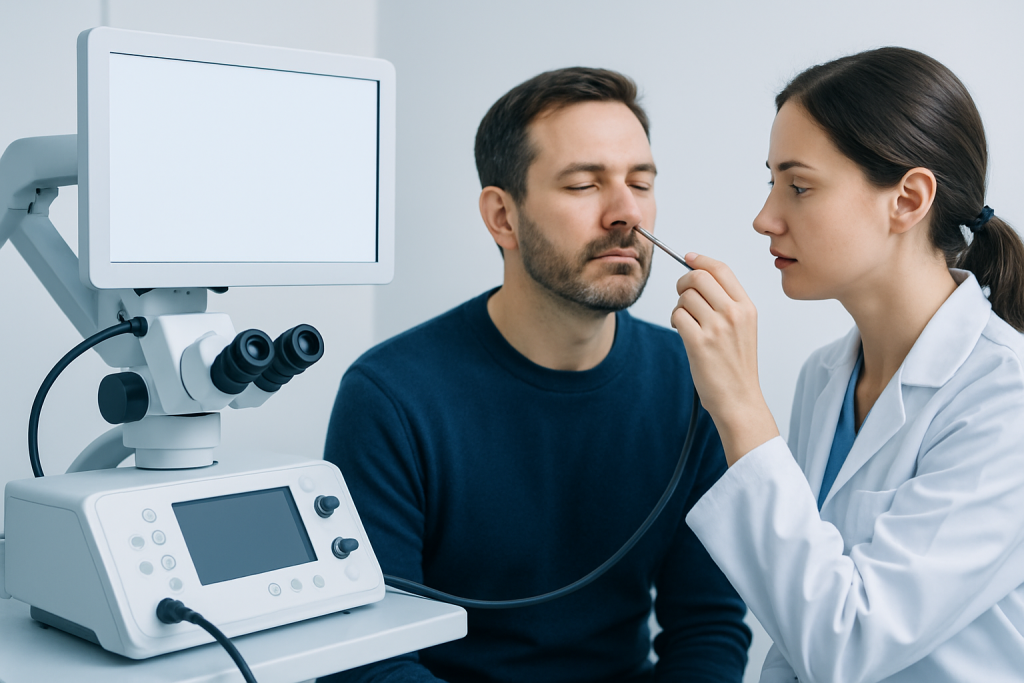
A simple nasal examination is often enough to identify dryness, crusting, a small sore, inflammation, or a visible source of bleeding. If symptoms are repeated, severe, or unusual, the doctor may consider a nasal endoscopy to get a better view deeper in the nasal passages. This can help identify polyps, infection, a foreign body, a septal issue, or less common causes of chronic crusting.
Additional tests are not needed for every patient, but they may be appropriate if the doctor suspects infection, an inflammatory disorder, or another systemic cause. The goal is to understand why the lining is not healing properly and to match treatment to the underlying issue rather than only removing the scab itself.
Treatment Options
Treatment depends on the cause, but the first step is usually to reduce irritation and help the nasal lining recover. Many mild cases improve with saline sprays or rinses, a humidifier, and gentle cleansing of the nostrils. Softening the area with a doctor-recommended nasal moisturizing product may also reduce cracking and crust formation.
If an infection is suspected, a clinician may recommend targeted treatment after examining the nose. For allergic or inflammatory causes, managing the underlying condition often helps the scabbing settle over time. When a structural issue or chronic localized injury is contributing, treatment may need to address airflow, repeated trauma, or another mechanical problem.
It is best to avoid picking or forcefully removing scabs, because that can reopen the surface and prolong healing. Over-the-counter products should be used carefully, especially inside the nose, and any persistent or worsening symptoms should be reviewed by a qualified doctor. The most effective plan is often a simple one, but it should be chosen after the cause is understood.
Prevention & Self-care
Keeping the nasal lining moist is one of the most practical ways to prevent recurring scabbing in the nose. Drinking enough fluids, using a humidifier in dry rooms, and limiting exposure to smoke and dust can all help. During flights or winter months, extra moisture may be especially useful because the air is often drier than usual.
Gentle habits matter as well. Blowing the nose softly, avoiding picking, and using tissues without vigorous rubbing can protect fragile skin inside the nostrils. If allergies are a frequent trigger, controlling them with a clinician’s guidance may reduce repeated inflammation and crusting.
People recovering from a nosebleed, a cold, or a minor nasal injury may need a short period of extra care while the lining heals. If they are traveling for treatment or following up from another country, it helps to keep a simple record of symptoms, medications, and any changes in bleeding or blockage so the ENT team can review the pattern clearly.
When to See a Doctor
Medical evaluation is advisable if scabbing in the nose keeps coming back, lasts more than a short period despite home care, or is accompanied by frequent bleeding. A doctor should also assess symptoms that are mostly on one side, because localized problems can point to a specific sore, infection, growth, or structural issue.
More urgent review is appropriate if there is severe pain, facial swelling, fever, pus-like or foul-smelling discharge, trouble breathing through the nose, or a visible sore that is enlarging. People who are immunocompromised, use blood-thinning medication, or have a history of significant nasal surgery or trauma should be especially attentive to changes.
An ENT consultation is also a sensible next step when the symptoms interfere with sleep, everyday breathing, or travel. Acibadem Health Point’s multidisciplinary specialists and JCI-accredited hospitals can diagnose and treat nasal and sinus conditions for international patients, with care plans that fit both the medical needs and the practical realities of being away from home.
Frequently asked questions
01Why do I keep getting scabs in my nose?
Repeated scabbing often happens when the nasal lining keeps drying out or being irritated. Common reasons include dry air, frequent nose blowing, allergies, nose picking, and certain sprays or medications. If it keeps returning, an ENT doctor can look for a more specific cause.
02Are nasal scabs a sign of infection?
Sometimes they can be, especially if there is pain, swelling, worsening redness, bad-smelling discharge, or fever. But many nasal scabs are caused by dryness or minor injury rather than infection. A medical exam helps tell the difference.
03Should I pick or remove the scab inside my nose?
It is better not to pick at it. Removing the scab can reopen the skin, trigger bleeding, and slow healing. Gentle saline care and moisture are usually safer approaches.
04Can allergies cause scabbing in the nose?
Yes. Allergies can inflame the lining of the nose, increase wiping and blowing, and make the tissue more fragile. Treating the allergy often helps reduce crusting and discomfort.
05How long should a nose scab take to heal?
A minor scab often improves within days to a couple of weeks if the area is protected from further irritation. If it keeps coming back, stays painful, or does not heal, it should be checked by a doctor.
06When is a nose scab more concerning?
It is more concerning if it is only on one side, keeps bleeding, causes significant pain, or is linked with swelling, discharge, or blockage. Those features may need a closer ENT evaluation.
This article is for general information only and is not a substitute for professional medical advice. Please consult a qualified doctor about your individual situation.
Persistent digestive symptoms? Get evaluated in Turkey
JCI-accredited · board-certified surgeons · reply within 24h
Add us as a Preferred Source to see more of our trusted health content across Google Search, AI Overviews and Discover.