Root Canal Retreatment: When Endodontic Treatment Needs a Second Chance

Root canal retreatment is a second procedure done when a previously treated tooth does not heal as expected or develops new problems later. In many cases, retreatment can relieve symptoms, remove lingering infection, and help preserve the natural tooth.
Overview
Root canal retreatment is a dental procedure used to treat a tooth that has already had root canal therapy but has not healed properly or has developed a new problem. The aim is to remove the previous root filling materials, clean the inside of the tooth again, disinfect the root canal system, and reseal it. This gives the tooth another opportunity to heal and remain functional.
A root canal is usually performed to remove infected or inflamed pulp from inside a tooth. Most treated teeth heal well and remain healthy for many years. However, some teeth can continue to cause discomfort, develop persistent infection, or become reinfected months or even years later. When this happens, retreatment may be considered before moving on to tooth removal.
For many people, saving the natural tooth is the preferred option because it helps maintain normal biting, chewing, and alignment. A natural tooth also supports the surrounding jawbone and neighboring teeth. If a tooth cannot be saved, replacement options such as dental implants or a dental bridge may be discussed, but retreatment is often explored first when the tooth structure is still restorable.
Symptoms That May Suggest Retreatment Is Needed

Not every previously treated tooth that feels different needs retreatment, but certain symptoms deserve evaluation. Some people notice ongoing pain after biting or chewing, while others develop sensitivity, swelling, or a pimple-like bump on the gum near the tooth. In some cases, there may be no symptoms at all, and the issue is found on a routine dental X-ray.
Signs that may suggest a previously treated tooth should be checked include:
- Persistent or returning tooth pain
- Tenderness when chewing or touching the tooth
- Swelling of the gum or face
- A recurring gum boil or drainage near the tooth
- Darkening of the tooth in some situations
- Discomfort months or years after the original treatment
It is important to remember that mild soreness can occur for a short time after dental work and does not always mean failure. However, symptoms that do not improve, return after a symptom-free period, or are accompanied by swelling should be assessed promptly by a dentist or endodontist.
Sometimes the problem is not inside the root canals themselves. A damaged filling, leaking dental crown, or new decay can let bacteria enter the treated tooth again. This is one reason why regular dental follow-up is important even after a root canal has been completed.
Why Root Canal Treatment May Need a Second Chance
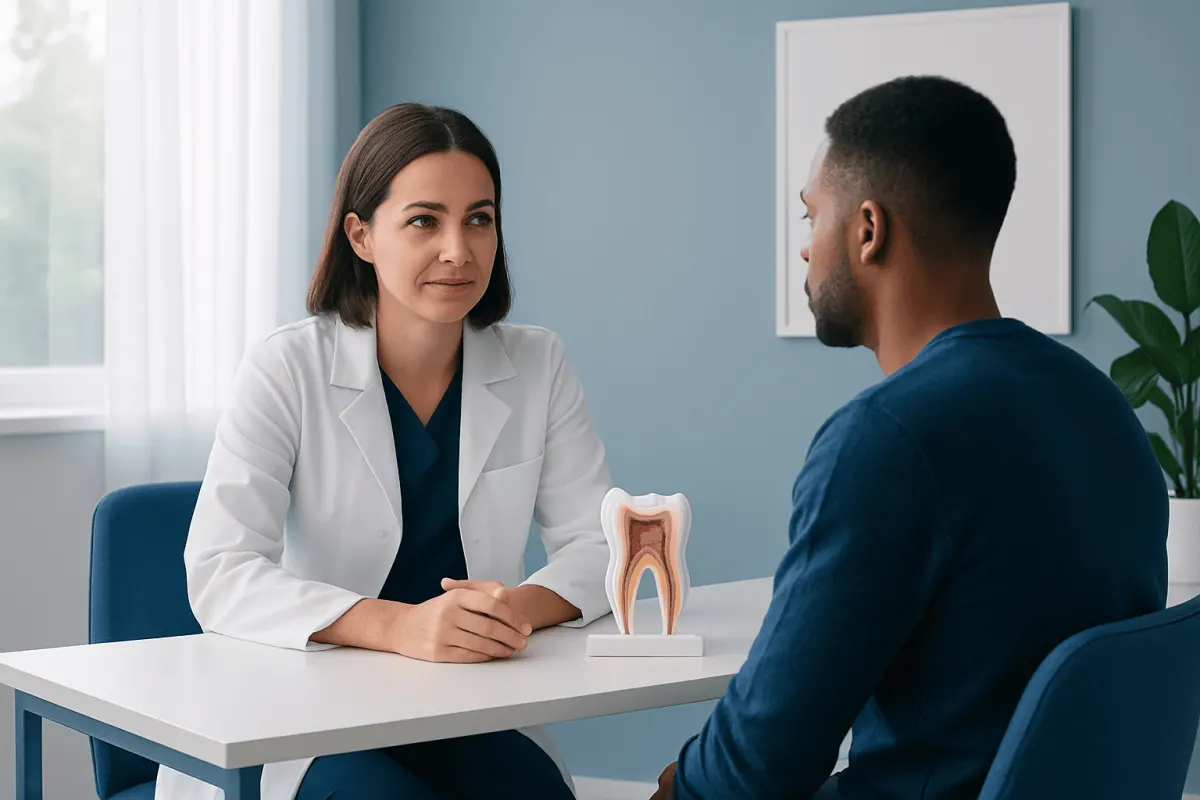
There are several reasons a tooth may need root canal retreatment. Teeth can have very complex internal anatomy, including narrow, curved, or extra canals that are difficult to detect and clean completely during the first procedure. If bacteria remain in part of the canal system, infection can persist or return later.
Another common reason is reinfection after the original treatment. This may happen if the tooth was not restored in a timely way, if a filling or crown becomes loose or cracked, or if new tooth decay develops. These pathways can allow saliva and bacteria to enter the root canal space again.
Structural problems can also contribute. A tooth may develop a crack, suffer trauma, or experience excessive biting pressure from habits such as bruxism. In some cases, instruments or filling materials used during the first treatment may make retreatment more technically challenging, but modern endodontic techniques often allow the dentist to manage these situations carefully.
Less commonly, symptoms near a treated tooth may come from a different source, such as gum disease, sinus-related discomfort in upper back teeth, or pain from a nearby tooth. Because of this, proper diagnosis is essential before deciding that retreatment is the right step.
How Dentists Diagnose a Failed or Reinfected Root Canal
Diagnosis begins with a detailed history of the symptoms and the tooth’s prior treatment. The dentist or endodontist will ask when the pain started, whether it occurs with chewing, hot or cold foods, or pressure, and whether there has been swelling or drainage. A full mouth and gum examination may also be done to rule out other causes.
Dental X-rays are commonly used to look for changes around the root tip, the quality of the previous root filling, hidden decay, or problems with the crown or filling. In some cases, 3D imaging such as cone beam CT may be helpful. This type of imaging can show canals, fractures, or areas of bone loss that may not be visible on standard X-rays.
The dentist may also check the tooth’s bite, look for cracks, and assess whether enough healthy tooth structure remains to restore the tooth after retreatment. Sometimes the final decision depends not only on infection control but also on whether the tooth can be predictably rebuilt and protected long term.
If the tooth has advanced structural damage or severe periodontal problems, extraction may be the more realistic option. If it appears savable, retreatment can often be planned in a way that addresses both the infection and the final restoration, together with good dental hygiene support afterward.
What Happens During Root Canal Retreatment
Root canal retreatment usually starts with reopening the tooth to gain access to the canal system. The dentist removes the existing crown or filling if needed, then carefully takes out the old root canal filling material. This allows the canals to be inspected, cleaned, and shaped again. Special instruments, magnification, and modern imaging can help locate missed canals or hidden anatomy.
Once the canals are accessible, the dentist disinfects them thoroughly to reduce bacteria and remove infected tissue or debris. If there is significant inflammation or drainage, medication may be placed inside the tooth between visits. In many cases, the canals are then sealed with a new root filling material to help prevent reinfection.
After the endodontic portion is complete, the tooth often needs a durable final restoration. This may include a filling or crown depending on how much tooth structure remains. A properly sealed restoration is a key part of success because it helps keep bacteria out of the treated tooth.
Some teeth are not suitable for standard retreatment because of complex anatomy, blocked canals, or other factors. In selected cases, a minor surgical endodontic procedure around the root tip may be considered instead. The most appropriate approach depends on the tooth, the cause of failure, and the person’s overall oral health.
Treatment Outcomes, Recovery, and Alternatives
Many teeth do well after retreatment, especially when the source of the problem can be identified and corrected. Healing may take time, and the bone around the root tip can take months to show improvement on X-rays. Follow-up visits are important so the dentist can monitor symptoms and confirm that healing is progressing.
After the procedure, mild soreness or tenderness for a few days is common. Patients are usually advised to avoid chewing hard foods on the tooth until the dentist confirms it is fully restored. Good home care and keeping any temporary restoration intact are also important during recovery.
Sometimes retreatment is not the best option. If the tooth is split, has too little remaining structure, or cannot be restored securely, extraction may be recommended. When a tooth is removed, replacement may help preserve chewing function and alignment. Depending on the situation, options can include implant-based replacement or a fixed bridge.
Near the end of the care journey, some people benefit from multidisciplinary planning, especially if the tooth is part of a larger restorative problem. Acıbadem Health Point’s multidisciplinary dental specialists in JCI-accredited hospitals evaluate and treat complex dental conditions for international patients, including teeth that may need retreatment and restoration.
Prevention and Self-care After a Root Canal
Not all retreatment can be prevented, but several steps may reduce the risk of future problems. One of the most important is completing the final restoration promptly after the original root canal. A well-fitted filling or crown helps protect the tooth from fracture and prevents bacteria from re-entering.
Daily oral care remains essential even for a treated tooth. Brushing twice a day with fluoride toothpaste, cleaning between the teeth, and attending regular dental checkups can help detect early decay or restoration problems. Routine care also supports the surrounding gums and bone, which are important for long-term tooth stability.
People who clench or grind their teeth may benefit from evaluation and protective measures, especially if repeated pressure is damaging restorations. Avoiding very hard foods and using the treated tooth carefully until final restoration is completed may also lower the risk of cracks.
Any previously treated tooth that starts to feel different should not be ignored. Early assessment often makes management simpler. Small issues such as a leaking filling or minor decay can sometimes be addressed before they lead to deeper reinfection.
When to See a Dentist
A dentist should be consulted if a previously treated tooth becomes painful, tender to bite on, swollen, or develops drainage from the gum. Even if discomfort is mild, symptoms that last more than a few days or return after a quiet period deserve attention. Delaying assessment may allow infection or structural damage to worsen.
Urgent dental evaluation is especially important if facial swelling, fever, trouble swallowing, or spreading pain occurs. These symptoms do not always mean a serious emergency, but they do need prompt professional assessment to protect oral and general health.
Regular follow-up appointments are also worthwhile after a root canal, even when there are no symptoms. Dentists can monitor healing on X-rays, check the integrity of the crown or filling, and ensure the tooth is functioning properly in the bite.
Anyone unsure whether a treated tooth is healing normally should seek advice rather than waiting. A qualified dentist or endodontist can explain the cause of symptoms, discuss whether retreatment is appropriate, and outline alternatives in a clear and reassuring way.
Frequently asked questions
01What is root canal retreatment?
Root canal retreatment is a second endodontic procedure done on a tooth that has already had a root canal. It is used when the tooth does not heal properly, symptoms return, or a new infection develops. The tooth is reopened, cleaned again, and resealed.
02How do people know if a root canal has failed?
Possible signs include pain when chewing, swelling, gum drainage, or recurring discomfort in a tooth that was previously treated. Sometimes there are no symptoms, and the problem is found on an X-ray during a routine dental visit. A dentist or endodontist is needed to confirm the cause.
03Is root canal retreatment painful?
The procedure is usually performed with local anesthesia, so patients should not feel significant pain during treatment. Some soreness or tenderness afterward is common, much like with many dental procedures. The dental team can explain how to manage normal short-term discomfort.
04Can a retreated tooth last a long time?
Yes, many retreated teeth can function well for years when the infection is removed and the tooth is restored properly. Long-term success depends on factors such as the tooth's structure, the presence of cracks, oral hygiene, and regular dental follow-up. No treatment can guarantee the same outcome for every case.
05What happens if retreatment is not possible?
If the tooth cannot be saved because of severe cracking, major structural loss, or other problems, extraction may be recommended. The dentist can then discuss replacement options such as an implant or bridge if appropriate. The best choice depends on oral health, bone support, and the person's goals.
06How long does recovery take after root canal retreatment?
Most people can return to normal daily activities quickly, although the tooth may feel tender for a few days. Complete healing of the tissues around the root may take several months and is usually checked with follow-up X-rays. The final crown or filling also plays an important role in recovery.
This article is for general information only and is not a substitute for professional medical advice. Please consult a qualified doctor about your individual situation.
Explore treatments in Turkey — costs, top hospitals & a free quote
JCI-accredited · board-certified surgeons · reply within 24h
Add us as a Preferred Source to see more of our trusted health content across Google Search, AI Overviews and Discover.