Red Circle on Skin No Itch: What You Need to Know

Key Takeaways
- A red circle on skin with no itch can come from fungal, inflammatory, allergic, or infectious causes.
- The shape, size, border, and whether the spot expands over time help guide diagnosis.
- Not every non-itchy red ring is dangerous, but persistent, spreading, or recurring lesions should be checked by a clinician.
- Diagnosis may require a skin exam and sometimes a swab, scraping, blood test, or biopsy.
- Treatment depends entirely on the cause, so self-treating with the wrong cream can delay proper care.
A red circle on skin with no itch is a common description for several different skin findings, and the cause is not always obvious from appearance alone. Some cases are harmless and temporary, while others need medical evaluation to rule out infection, inflammation, or a tick-related illness.
Overview
A red circle on skin no itch can look simple at first glance, but its meaning depends on details such as where it appears, whether it stays the same size, and whether the center is lighter than the edge. Some people notice one patch after sun exposure, a minor injury, or a new product; others find that the circle slowly enlarges over days or weeks.
The key point is that the absence of itching does not rule out an important skin condition. Ring-shaped redness may be caused by a fungal infection, a reaction to an insect bite, a dry-skin condition, an inflammatory rash, or, less commonly, an infection that deserves prompt attention. A careful look by a clinician is often the fastest way to sort out what the skin is trying to signal.
For international patients deciding whether to seek care abroad, this is the kind of concern that can often be assessed with a focused dermatology visit, especially if travel plans are already in place for another reason. A clear description of when the spot started, whether it has changed, and what treatments have already been tried helps the medical team narrow the possibilities quickly.
Symptoms
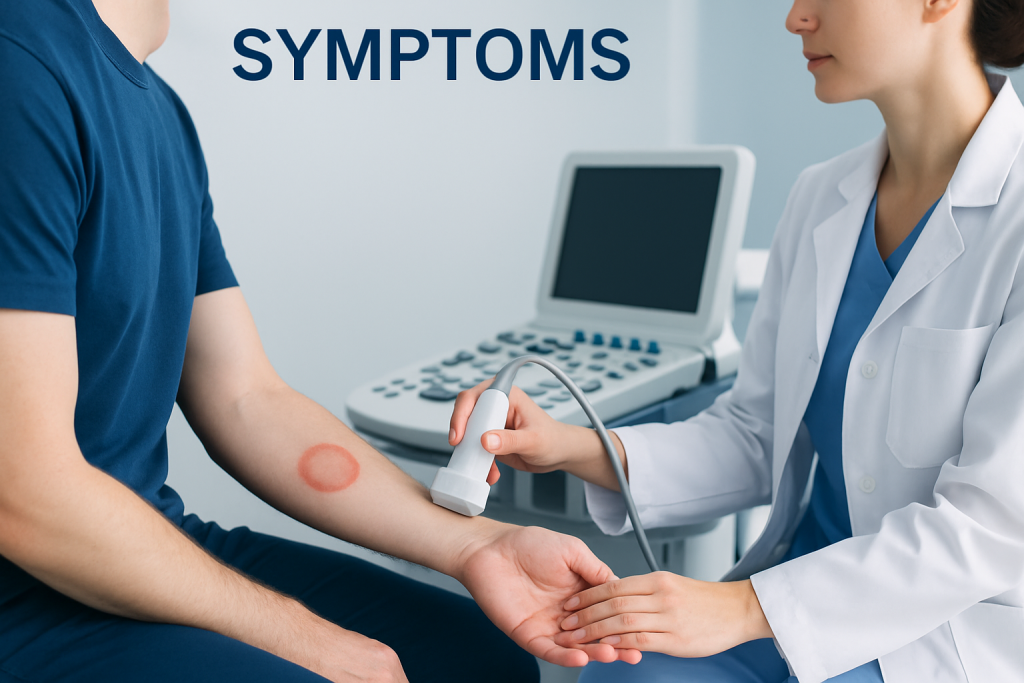
The appearance of a red circle can vary widely. Some lesions are flat and sharply outlined, while others are faint, raised, scaly, or made up of several concentric rings. The center may look normal, paler, darker, or slightly bruised, and the border may be smooth or flaky.
Common features that help distinguish one cause from another include:
- Whether the spot expands outward over time
- Whether there is scale, crusting, or central clearing
- Whether more than one circle is present
- Whether the skin is tender, warm, or swollen
- Whether there are other symptoms such as fever, fatigue, joint aches, or recent illness
Some people have no symptoms at all beyond the visible ring. Others notice mild burning, sensitivity, or discomfort when the area is touched. In contrast, certain causes can remain almost symptom-free until the rash becomes more noticeable, which is why the visible pattern matters so much in evaluation.
Causes & Risk Factors

Several conditions can produce a red circle on skin without itch, and the treatment approach differs for each one. A very common possibility is tinea corporis, a fungal infection often called ringworm, which can create a round patch with a more active border and lighter center. Despite the name, it is not caused by a worm.
Other possible causes include nummular eczema, pityriasis rosea, granuloma annulare, contact irritation, and reactions to insect bites. Some medication-related eruptions and autoimmune skin conditions can also present with ring-shaped redness. In certain cases, a tick bite followed by a slowly enlarging red ring can signal erythema migrans, the early skin sign of Lyme disease.
Risk factors depend on the cause. Fungal rashes are more likely with shared towels, sweaty or damp clothing, contact sports, or exposure to infected people or pets. Tick exposure, outdoor activity, travel to wooded areas, and delayed recognition of a bite may increase the chance of a tick-related rash. A recent change in skincare products, new medications, or a history of eczema can also be helpful clues.
Diagnosis
Diagnosis usually begins with a skin examination and a conversation about timing, exposures, and any changes in the lesion. A clinician may ask when the ring appeared, whether it has grown, whether anyone else at home has similar spots, and whether there has been travel, pet contact, or outdoor exposure.
If the appearance suggests a fungal infection, the doctor may gently scrape the surface skin and examine it under a microscope or send it for laboratory testing. When the diagnosis is less clear, blood tests, a swab, or a small skin biopsy may be considered. These tests are not always needed, but they can be useful when the rash is persistent, unusual, or not responding as expected.
For patients traveling from another country, it can help to bring photographs showing how the circle has changed over time, along with a list of any creams or oral medicines already used. That information can make a single consultation far more efficient, especially when follow-up time is limited.
Treatment Options
Treatment should match the cause rather than the shape alone. If a fungal infection is confirmed or strongly suspected, an antifungal cream or another prescribed antifungal treatment may be used. Steroid creams, while helpful for some inflammatory rashes, can worsen certain fungal infections if used on the wrong condition, so it is best not to guess.
If the lesion is related to eczema, irritation, or another inflammatory process, the plan may include emollients, gentle skin care, and a targeted anti-inflammatory treatment. For tick-related rashes or bacterial infections, the doctor may prescribe antibiotics or another appropriate therapy. When an autoimmune or less common disorder is suspected, a dermatologist may coordinate care with other specialists.
In international care settings, treatment planning should also include practicality: whether the medication can be continued after travel, how soon follow-up is needed, and what warning signs should prompt reassessment at home. A good plan is one the patient can realistically carry out after returning abroad.
Prevention & Self-care
Simple skin habits can lower the chance of some causes and reduce irritation while the rash is being evaluated. Keeping the area clean and dry, avoiding shared towels or clothing, and changing out of sweaty garments promptly can be useful if a fungal cause is possible. If there is a pet with a similar skin problem, veterinary assessment may be relevant because some fungal infections can spread between animals and people.
It is also wise to avoid picking, scrubbing, or repeatedly applying multiple over-the-counter creams to the same spot. Those steps can obscure the appearance and make diagnosis harder. If the lesion is in a sun-exposed area, gentle sun protection may help reduce additional redness or color change.
For people who spend time outdoors, tick prevention matters: use protective clothing, check skin after hikes or gardening, and remove ticks promptly if found. If a new ring-shaped rash appears after a possible bite, it should be reviewed by a clinician rather than watched indefinitely.
When to See a Doctor
A medical visit is advisable if the red circle is enlarging, lasting more than a short period, appearing in multiple places, or not improving with basic skin care. It is also important to seek care if the area becomes painful, warm, swollen, crusted, or develops drainage. Even without itching, a persistent ring deserves attention when the cause is uncertain.
Prompt evaluation is especially important if the person has fever, joint pain, fatigue, recent tick exposure, a weakened immune system, or a rash on the face or near the eyes. New spots in a child, widespread lesions, or a rash after starting a medication should also be discussed with a clinician.
If specialized assessment is needed, Acibadem Health Point’s multidisciplinary specialists and JCI-accredited hospitals diagnose and treat skin conditions for international patients with coordinated care and follow-up planning.
Frequently asked questions
01What does a red circle on skin with no itch usually mean?
It can mean several different things, including a fungal infection, eczema-like inflammation, a reaction to irritation, or a tick-related rash. The shape alone is not enough to identify the cause, so changes over time and other symptoms are important.
02Can ringworm be present without itching?
Yes. Although many fungal rashes itch, some people mainly notice a round or ring-shaped red patch without much discomfort. A clinician can confirm whether the pattern fits a fungal infection and advise the right treatment.
03Should I use steroid cream on a non-itchy red circle?
It is better not to start a steroid cream unless a doctor has said the rash is inflammatory or eczema-related. Steroids can make some fungal infections harder to recognize and may delay proper treatment.
04How long should I wait before getting checked?
If the spot is growing, changing, or not improving, it is reasonable to seek medical advice rather than waiting. A persistent or unexplained ring-shaped rash is easier to assess when it is still active and visible.
05Could a red circle on skin with no itch be Lyme disease?
It can be, especially if the circle is expanding and there has been possible tick exposure. Not every ring-shaped rash is Lyme disease, but a clinician should evaluate a new enlarging lesion after a bite or outdoor exposure.
06What information should I bring to the appointment?
Photos taken over several days are very helpful, especially if the rash changes size or color. It also helps to bring a list of products or medicines tried, recent travel history, and any possible insect or tick exposure.
This article is for general information only and is not a substitute for professional medical advice. Please consult a qualified doctor about your individual situation.
Joint and spine care in Turkey — expert assessment & treatment
JCI-accredited · board-certified surgeons · reply within 24h
Add us as a Preferred Source to see more of our trusted health content across Google Search, AI Overviews and Discover.