Products for Dark Lines Under the Lips: Treatment Options

The best product for dark lines under lips is not a single universal cream: daily broad-spectrum sunscreen and a gentle, evidence-based pigment-fading ingredient are often most helpful when darkening is due to irritation or sun exposure. Because discoloration around the mouth has several possible causes, persistent or changing marks should be assessed by a dermatologist before stronger treatments are used.
What is the best product for dark lines under lips?
For most people, the best product for dark lines under lips is a broad-spectrum sunscreen, ideally SPF 30 or higher, used every day on the skin around the mouth, together with a gentle pigment-targeting product selected for the likely cause. A tinted mineral sunscreen containing iron oxides may be especially useful for people whose pigmentation is worsened by visible light, although any well-tolerated broad-spectrum sunscreen is valuable.
For mild, even discoloration, ingredients such as niacinamide, azelaic acid, or vitamin C can be reasonable over-the-counter options. A dermatologist may recommend a retinoid, hydroquinone for a limited period, tranexamic acid, or another treatment when pigmentation is more persistent. The safest choice depends on whether the line is caused by post-inflammatory hyperpigmentation, friction, a contact reaction, a hormonal condition, medication, or another skin concern.
It is important to avoid treating every dark mark as cosmetic pigmentation. A single new or changing spot, a crusted lesion, or discoloration accompanied by pain, itching, scaling, or bleeding should be examined rather than self-treated with lightening products.
Why dark lines can appear around the lower lip
Dark lines under the lips commonly reflect increased melanin, the natural pigment that gives skin its color. The area may darken after inflammation or irritation, a process called post-inflammatory hyperpigmentation. This can follow acne, eczema, shaving irritation, repeated rubbing, lip licking, waxing, or use of irritating cosmetics and oral-care products.
Sun exposure is another frequent contributor. The lower face receives daily ultraviolet exposure, and visible light may also aggravate pigmentation in some skin tones. Without reliable sun protection, even an effective fading product may provide limited results because ongoing light exposure continues to stimulate pigment production.
Other possibilities include contact dermatitis from lip products, toothpaste flavorings, fragrances, cosmetics, or dental materials; dry or inflamed skin; and pigmentation associated with melasma. Less commonly, medicines, endocrine conditions, nutritional issues, or a distinct skin lesion may be involved. A clinician can help distinguish these causes during a skin examination.
Natural variation in lip and facial color is also common, particularly in people with more melanin-rich skin. Treatment is not always necessary unless the appearance is new, bothersome, or accompanied by other symptoms.
How to choose a product safely
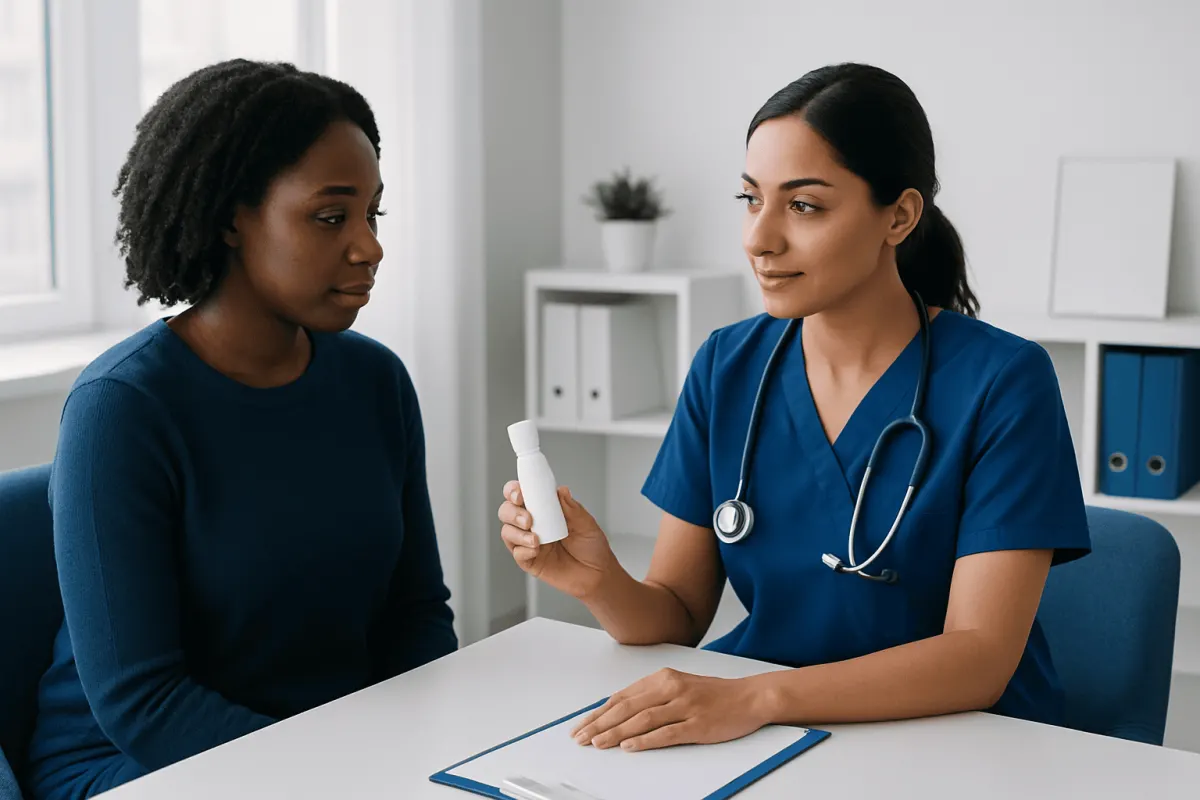
A simple routine is usually better than layering many active products. The first step is to use a mild, fragrance-free cleanser and a bland moisturizer that does not sting. Then apply a broad-spectrum sunscreen to the surrounding skin every morning, including the area below the lower lip. Reapplication is useful during prolonged time outdoors, sweating, or after wiping the area.
For a nonprescription pigment product, consider starting with one ingredient at a time. Niacinamide can support the skin barrier and may help uneven tone. Azelaic acid can be useful for discoloration associated with acne or inflammation and is generally well tolerated, though it can initially cause mild stinging. Vitamin C may help some people, but acidic formulations can irritate sensitive skin around the mouth.
Retinoids increase skin-cell turnover and can be helpful for some forms of hyperpigmentation, but dryness and irritation can worsen discoloration if introduced too quickly. Prescription retinoids should be discussed with a clinician, and retinoids are generally avoided during pregnancy unless a treating clinician advises otherwise. A dermatologist may also consider short, closely supervised courses of hydroquinone; it should not be used indefinitely or purchased from unregulated sources.
- Choose fragrance-free, non-scrubbing products whenever possible.
- Patch-test a new product on a small area before regular use.
- Introduce one active ingredient at a time and use it only as tolerated.
- Stop a product that causes burning, swelling, persistent redness, rash, or worsening darkening.
A practical routine for discoloration under the lips
In the morning, a gentle cleanse or rinse can be followed by moisturizer if needed, then sunscreen. Mineral sunscreens containing zinc oxide or titanium dioxide can be a good option for sensitive skin. Tinted formulations may offer added protection against visible light, but the most effective sunscreen is the one that is applied adequately and used consistently.
At night, cleanse gently and apply a moisturizer. A selected pigment-active product can be used on dry, intact skin around—not directly on—the lip unless its instructions specifically allow lip use. People with very sensitive skin may start only a few nights per week and increase gradually if no irritation occurs.
Reducing triggers is just as important as adding treatment. Avoid rubbing or scratching the area, aggressive exfoliating acids, physical scrubs, and home remedies such as lemon juice or baking soda. These may damage the skin barrier and leave darker marks. If lip licking is frequent because of dryness, a plain, fragrance-free lip balm can help interrupt the cycle.
Results take time because pigment fades gradually as skin renews. It is reasonable to reassess after several weeks of consistent, gentle care. If discoloration remains unchanged, spreads, or becomes more noticeable, a dermatologist can identify the cause and discuss options such as topical prescription treatment, chemical peels, or carefully selected light- and laser-based procedures. Procedures should be planned cautiously in skin prone to hyperpigmentation.
Products and practices to avoid
Not all “brightening” products are safe or appropriate for facial use. Products advertised as rapid bleaching agents may contain undeclared corticosteroids, mercury, or excessive hydroquinone, particularly if they are purchased from unregulated sellers. These substances can cause skin thinning, acne-like eruptions, persistent discoloration, and other health concerns.
Strong exfoliants, frequent chemical peels at home, abrasive brushes, and repeated waxing can also inflame the skin near the mouth. Inflammation can lead to more pigmentation, especially in people who develop dark marks after minor irritation. More treatment is not always better when pigment is the concern.
Fragranced lip balms, plumping products, essential oils, cinnamon- or mint-flavored products, and some toothpastes can trigger irritation or allergy in susceptible individuals. If the skin is itchy, scaly, cracked, or red before becoming dark, simplifying the routine and seeking medical advice is preferable to adding multiple fading products.
When to seek medical care
Medical assessment is recommended if a dark line or spot is new, changing in size or color, asymmetric, raised, painful, ulcerated, crusted, or bleeding. Evaluation is also appropriate when darkening develops suddenly, involves the inside of the mouth, appears with other unexplained symptoms, or does not improve after avoiding irritants and using gentle sun protection.
A dermatologist can examine the skin, review medications and product exposures, and determine whether the condition is simple hyperpigmentation, dermatitis, melasma, acne-related pigmentation, or a different diagnosis. In some cases, examination with a dermatoscope, patch testing for allergy, or a small biopsy may be needed to clarify the cause.
People with acne, recurrent rashes around the mouth, or eczema may benefit from treating the underlying inflammation first. When a procedure is being considered, specialist guidance helps reduce the risk of irritation and rebound pigmentation. Acıbadem Health Point’s multidisciplinary specialists and JCI-accredited hospitals can assess skin concerns and discuss appropriate treatment options for international patients.
Prevention and realistic expectations
Prevention focuses on limiting repeated irritation and protecting the skin from light exposure. Consistent sunscreen use, gentle cleansing, moisturizing, and avoiding known triggers can reduce the chance that dark marks will deepen or recur. Protective habits are especially important after acne, irritation, or cosmetic procedures.
Even with appropriate treatment, fading may be gradual and uneven at first. The goal is usually a more even skin tone and healthier skin barrier rather than immediate or complete color change. Taking periodic photographs in similar lighting can be more reliable than checking the area closely every day.
If a person is uncertain which product to try, a dermatologist or qualified health professional can recommend a routine matched to skin type, current products, and medical history. This personalized approach is particularly important for people with sensitive skin, darker skin tones, pregnancy, chronic skin conditions, or a history of pigment changes after irritation.
Frequently asked questions
01What ingredient works best for dark lines under the lips?
There is no single best ingredient for everyone because the cause of discoloration matters. Daily broad-spectrum sunscreen is essential, while niacinamide, azelaic acid, vitamin C, or clinician-prescribed treatments may help selected cases. Using a gentle routine and avoiding irritation are equally important.
02Can sunscreen really help darkening around the mouth?
Yes. Sunlight can stimulate melanin production and make existing discoloration more noticeable. Using broad-spectrum sunscreen daily helps prevent worsening and supports the effect of pigment-fading treatments.
03How long does it take for dark lines under lips to fade?
Pigmentation generally fades slowly, often over weeks to months rather than days. Progress depends on the cause, skin tone, ongoing sun exposure, irritation, and consistency of treatment. If there is no improvement or the area changes, medical assessment is appropriate.
04Can lip licking cause dark skin under the lip?
Repeated lip licking can irritate the skin around the mouth and damage its protective barrier. In some people, the inflammation is followed by darker pigmentation. Reducing licking and using a bland, fragrance-free balm may help while the skin heals.
05Is it safe to use hydroquinone for dark lines under lips?
Hydroquinone can be effective for some types of hyperpigmentation, but it should be selected and monitored by a qualified clinician. It is not suitable for every person or every cause of discoloration, and prolonged or unsupervised use can cause problems. Products from unregulated sources should be avoided.
06When is a dark spot near the lip more concerning?
A spot should be checked promptly if it is new and changing, irregular, raised, painful, bleeding, crusted, or ulcerated. A persistent patch with itching, scale, or repeated cracking also deserves assessment. Most discoloration has a benign explanation, but examination is the safest way to identify the cause.
This article is for general information only and is not a substitute for professional medical advice. Please consult a qualified doctor about your individual situation.
Explore treatments in Turkey — costs, top hospitals & a free quote
JCI-accredited · board-certified surgeons · reply within 24h
Add us as a Preferred Source to see more of our trusted health content across Google Search, AI Overviews and Discover.