Private Knee Replacement: Procedure, Benefits, Risks and Recovery

Key Takeaways
- Private knee replacement is usually considered when knee arthritis or joint damage limits daily life and non-surgical treatment is no longer enough.
- The operation replaces damaged knee surfaces with an artificial joint to improve movement and reduce pain.
- Benefits may include better mobility and quality of life, but all surgery carries risks such as infection, blood clots, stiffness, and ongoing pain.
- Recovery is gradual and depends on physiotherapy, safe movement, wound care, and patience with healing.
- A surgeon will assess medical history, imaging results, and overall fitness before recommending surgery.
- People travelling for treatment should plan for support, mobility aids, and follow-up after returning home.
Private knee replacement is a planned joint replacement procedure performed in a private hospital setting for people whose knee pain and stiffness no longer respond to simpler treatments. It can reduce pain, improve walking, and support daily activities, but it also requires careful preparation, rehabilitation, and follow-up.
Overview
Private knee replacement is a surgical treatment for a knee that has become painful, stiff, and difficult to use because of arthritis, injury, or long-term joint wear. In a private hospital setting, the journey often feels more structured and coordinated, with consultation, imaging, surgery, rehabilitation, and follow-up arranged around the person’s needs.
For many people, the decision is not simply about replacing a joint. It is about getting back to ordinary tasks such as standing comfortably, walking without constant pain, climbing stairs, or sleeping without the knee waking them at night. A surgeon usually considers private knee replacement when symptoms remain troublesome despite medicines, injections, physiotherapy, weight management, or activity changes.
The operation most often involves replacing the worn knee surfaces with metal and plastic components that work together like a new joint surface. It is a major procedure, but also one of the most established operations in orthopedics, with well-defined steps before and after surgery. The best outcomes usually come from careful patient selection, realistic expectations, and committed rehabilitation.
Symptoms and signs that surgery may be considered
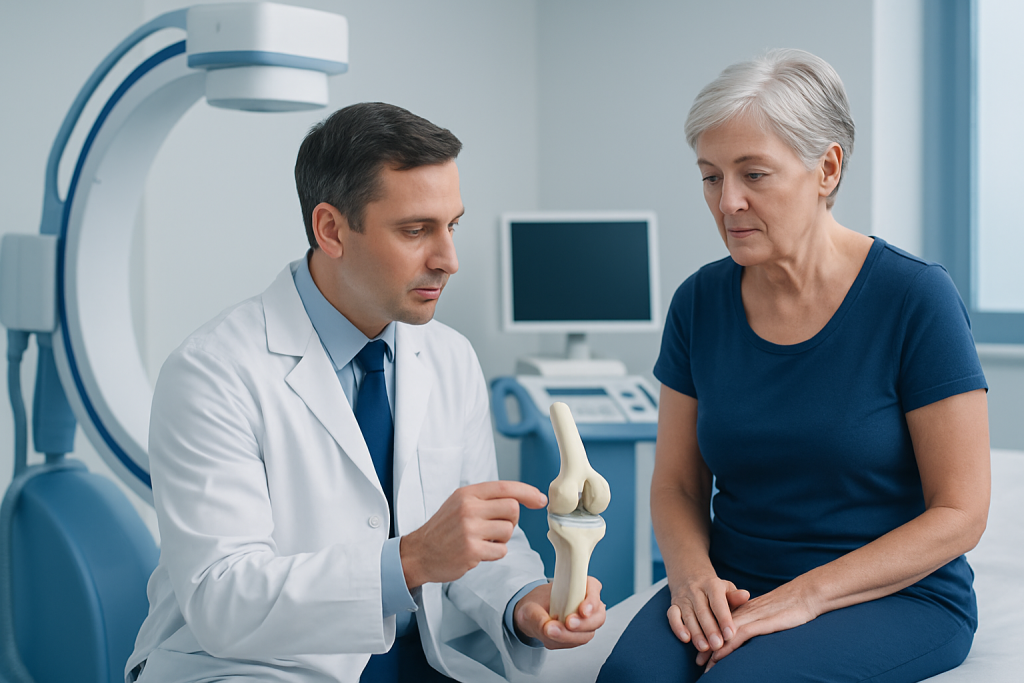
People who later undergo knee replacement often describe a pattern rather than one single symptom. Pain may start during activity and gradually begin to appear at rest. The knee may feel stiff in the morning, swollen after use, or unstable when turning, rising from a chair, or walking longer distances.
Common signs that the joint has become significantly affected include:
- Persistent pain that limits walking, sleeping, or working
- Reduced range of motion, especially bending or straightening the knee
- Swelling or recurrent inflammation
- Difficulty with stairs, sitting down, or standing up
- Visible deformity or the feeling that the knee is “wearing out”
These symptoms do not automatically mean surgery is needed. They do, however, suggest that the knee deserves a thorough orthopedic assessment. The impact on day-to-day life is often more important than the appearance of an X-ray alone.
Causes and risk factors
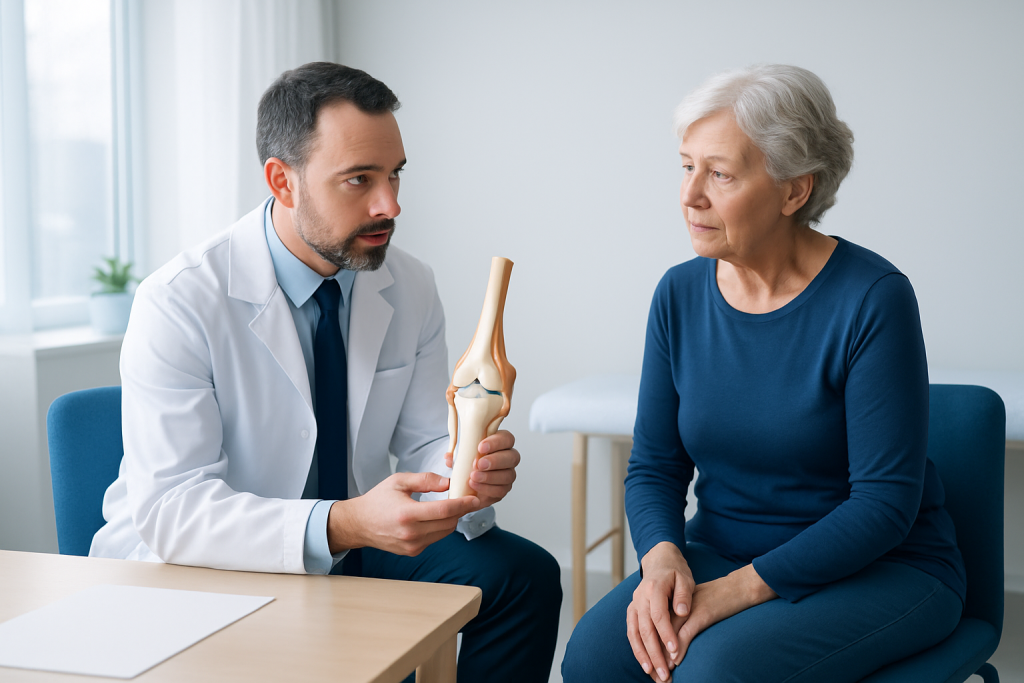
The most common reason for knee replacement is osteoarthritis, a condition in which the cartilage cushioning the joint gradually breaks down. Without that smooth surface, bone may rub on bone, leading to pain, stiffness, and inflammation. Some people develop knee damage after a previous injury, fracture, ligament problem, or longstanding abnormal joint alignment.
Several factors can increase the chance of serious knee wear over time. These include older age, excess body weight, previous knee surgery, repetitive heavy physical activity, and certain inflammatory joint diseases such as rheumatoid arthritis. Genetics can also influence who develops arthritis earlier or more severely.
Risk factors do not mean a person will need surgery. They simply help doctors understand why the joint has deteriorated and whether other treatments may still help. A private knee replacement consultation usually looks at the whole picture: symptoms, imaging, general health, and how much the knee is restricting life.
How the diagnosis and pre-surgery evaluation are done
Before private knee replacement is recommended, the orthopedic team usually confirms that the pain truly comes from the knee joint and that non-surgical measures have been tried appropriately. The consultation often starts with a discussion of symptoms, previous treatment, daily limitations, and what the person hopes surgery will change.
Examination may include checking walking pattern, range of motion, swelling, stability, and limb alignment. X-rays are commonly used to assess joint space narrowing, bone changes, and deformity. In some situations, further tests such as MRI, blood work, or additional imaging may be requested to clarify the diagnosis or plan the operation safely.
Pre-surgical assessment also focuses on general fitness for anesthesia and recovery. The medical team may review heart and lung health, diabetes, medications, smoking status, and any history of blood clots or infection. For international patients, this stage is especially important because it helps the team coordinate appointments, surgery dates, and post-op support around travel plans.
Treatment options and the procedure itself
Private knee replacement is not one single operation for every person. The surgeon may suggest a total knee replacement, where the whole joint surface is replaced, or a partial replacement if only one compartment of the knee is badly damaged. The choice depends on how much of the joint is affected and whether the surrounding structures are still functioning well.
On the day of surgery, anesthesia is used so the person does not feel pain during the procedure. The surgeon makes an incision over the knee, removes the damaged joint surfaces, and positions prosthetic components to recreate a smoother, more stable joint. The exact technique can vary, but the aim is the same: to reduce pain and restore useful movement.
Some hospitals also use enhanced recovery pathways that combine careful pain control, early mobilization, and physiotherapy. These approaches can make recovery more predictable, but they still require active participation from the patient. Surgery is only one part of treatment; rehabilitation is what helps the new joint become functional in everyday life.
Benefits, risks, and realistic expectations
The main benefit of knee replacement is relief from the pain and stiffness caused by a damaged joint. Many people notice that they can walk farther, move more confidently, and perform daily activities with less effort. Better sleep, easier travel, and greater independence are also common goals.
That said, knee replacement is still major surgery, and it is important to understand the possible risks. These can include infection, bleeding, blood clots, nerve or blood vessel injury, stiffness, ongoing pain, implant wear, or the need for further surgery in the future. The overall risk profile depends on age, general health, the condition of the knee, and how well postoperative instructions are followed.
Results are usually improved when expectations are realistic. A replacement knee is designed to function well, but it may not feel exactly like a natural joint. Kneeling, high-impact sports, or long periods of heavy activity may remain uncomfortable. The best result is often a stable, pain-reduced knee that supports ordinary life more comfortably than before.
Recovery, rehabilitation, and returning home
Recovery begins soon after surgery, often with movement on the same day or the next day if the medical team advises it. Early walking, leg exercises, and physiotherapy are important because they help reduce stiffness and support circulation. Pain control is also part of recovery, allowing the person to take part in rehabilitation safely.
During the first weeks, swelling, bruising, and fatigue are common and usually improve gradually. The patient may use a walker, crutches, or a cane for a period of time. Wound care, gentle exercise, and adherence to the rehabilitation plan all matter more than trying to do too much too soon.
For someone travelling internationally for private knee replacement, planning matters. They should understand how long they are expected to stay before flying, what follow-up visits are needed, and how physiotherapy will continue once they return home. It is wise to arrange a companion, mobility support, and a clear written plan for medicines, warning signs, and local medical follow-up.
Prevention, self-care, and when to see a doctor
Not every painful knee leads to surgery, and many people can protect the joint for as long as possible with thoughtful self-care. Staying at a healthy weight, keeping the thigh and hip muscles strong, using suitable low-impact exercise, and avoiding repetitive strain can all reduce stress on the knee. Supportive footwear and pacing activities may also help.
After treatment, self-care is just as important. Following physiotherapy instructions, taking medicines as prescribed, keeping the incision clean, and reporting unusual symptoms early are simple but meaningful steps. A person should not push through severe pain or ignore a sudden change in swelling, redness, or leg pain.
Medical review is needed if knee pain is steadily worsening, function is declining, or the knee is limiting sleep and ordinary activity despite treatment. Urgent attention is important for fever, wound drainage, sudden calf swelling, chest pain, shortness of breath, or marked redness around the surgical site. People seeking surgery abroad may prefer centers with coordinated orthopedic, anesthesia, rehabilitation, and nursing care; Acibadem Health Point’s multidisciplinary specialists and JCI-accredited hospitals diagnose and treat this condition for international patients.
Frequently asked questions
01Who is a candidate for private knee replacement?
It is usually considered for people with severe knee pain, stiffness, and loss of function that have not improved enough with non-surgical treatment. The orthopedic surgeon will look at symptoms, imaging, and overall health before making a recommendation. The decision is based on how much the knee affects daily life, not only on age or scan results.
02How long does recovery from knee replacement take?
Recovery is gradual and varies from person to person. Many people begin walking with support very early, but strength, balance, and confidence can take weeks to months to rebuild. Physiotherapy and regular follow-up are key parts of the process.
03Is private knee replacement better than public treatment?
Private and public care can both provide excellent treatment when delivered by experienced teams. Private care may offer more flexible scheduling, more individualized planning, and a different hospital experience, but the operation and recovery principles are similar. The most important factor is choosing a qualified orthopedic team and a setting that feels appropriate for the patient’s needs.
04What are the main risks of knee replacement surgery?
The main risks include infection, blood clots, bleeding, stiffness, ongoing pain, and complications related to anesthesia. Serious complications are uncommon, but they are possible and should be discussed before surgery. A good preoperative assessment helps lower risk and prepare for recovery.
05Will the new knee feel completely normal?
Many people gain major pain relief and improved mobility, but the joint may not feel exactly like a natural knee. Some activities can remain uncomfortable, especially during the early months of recovery. The aim is usually a reliable, stable knee that supports everyday life much better than before.
06Can a person travel soon after private knee replacement?
Travel should be planned carefully because long journeys soon after surgery can increase discomfort and may require special precautions. The surgeon will advise when it is safe to fly or travel and what measures are needed, such as movement breaks or blood clot prevention strategies. For international patients, arranging follow-up before leaving is especially important.
This article is for general information only and is not a substitute for professional medical advice. Please consult a qualified doctor about your individual situation.
Joint and spine care in Turkey — expert assessment & treatment
JCI-accredited · board-certified surgeons · reply within 24h
Add us as a Preferred Source to see more of our trusted health content across Google Search, AI Overviews and Discover.