Praecordial Catch Syndrome: Causes, Symptoms, Diagnosis and Treatment

Key Takeaways
- Praecordial catch syndrome usually causes a sudden, sharp, localized chest pain that lasts seconds to minutes.
- It is more common in children, teenagers, and young adults and is generally not dangerous.
- The pain often becomes noticeable at rest or with posture changes and may worsen with a deep breath.
- Diagnosis is usually based on the symptom pattern and a medical history, not on extensive testing.
- Simple reassurance, posture awareness, and calm breathing can help during an episode.
- A doctor should assess chest pain that is prolonged, recurrent with concerning symptoms, or linked to fainting, fever, or exertion.
Praecordial catch syndrome is a common, harmless cause of sudden sharp chest pain, usually felt in children, teenagers, and young adults. The pain is brief, often worse with a deep breath, and typically goes away on its own without treatment.
Overview
Praecordial catch syndrome is a common explanation for a very sudden, very sharp chest pain that appears without warning and then fades just as quickly. It is usually felt on the left side of the chest, can seem alarming in the moment, and is often noticed in children, teenagers, and young adults who are otherwise healthy.
The condition is also called precordial catch syndrome. Despite the intense sensation, it is not the same as a heart attack and is not generally linked to heart disease. In many people, the episode lasts only a few seconds, though the discomfort may linger a little longer if the person is anxious or keeps taking shallow breaths afterward.
For international patients trying to decide whether chest pain needs urgent evaluation, the pattern matters as much as the pain itself. A clinician usually looks at how long it lasts, where it is felt, whether breathing changes it, and whether there are other symptoms such as fever, fainting, or shortness of breath. Those details often point toward a benign cause like praecordial catch syndrome.
Symptoms
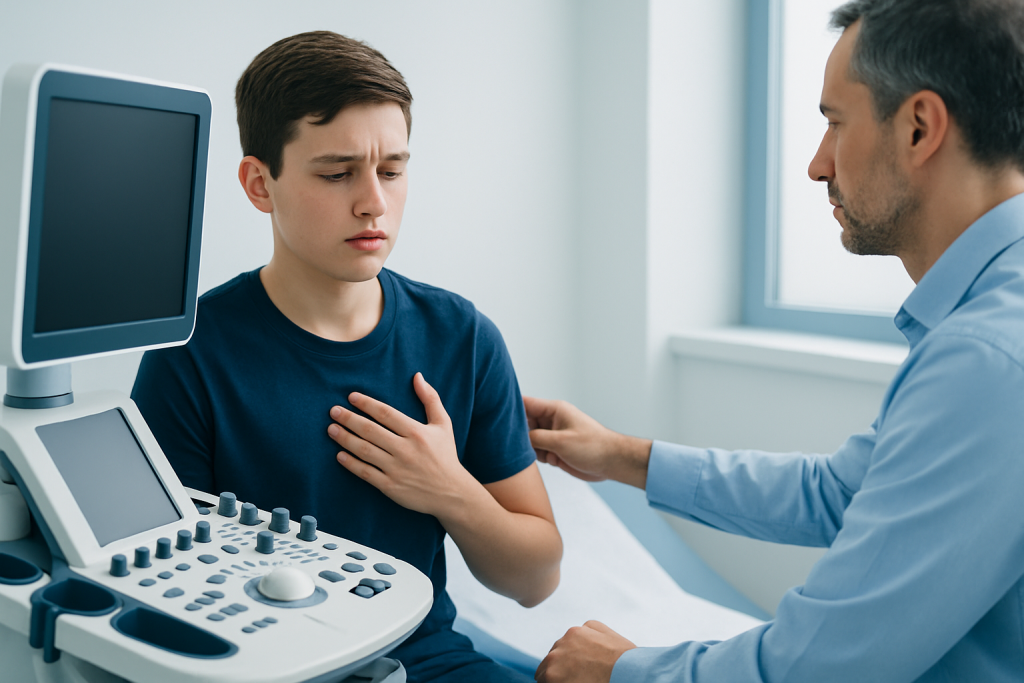
The hallmark of praecordial catch syndrome is a sudden, stabbing pain in one small spot of the chest. Many people can point to the exact place with a fingertip. The pain is often described as a “catch,” a jab, or a needle-like pinch that is hard to ignore because it comes on so abruptly.
Episodes often happen while a person is resting, sitting, or changing posture. The discomfort may become more noticeable when taking a deep breath, which can lead to shallow breathing for a short time. Some people feel the urge to sit very still until the pain passes.
Common features include:
- Sharp, localized chest pain
- Pain that worsens with a deep inhale
- Brief duration, often seconds to a few minutes
- No fever, cough, or illness symptoms in many cases
- Pain that resolves on its own
It is not unusual for someone to remember these episodes for years because the sensation is so distinct, even though the condition itself is usually harmless. Repeated episodes can happen, but they do not usually progress into a more serious problem.
Causes & Risk Factors

The exact cause of praecordial catch syndrome is not fully understood. One widely accepted explanation is irritation of the chest wall or nerves near the lining of the chest, producing a brief pain signal that becomes more noticeable during inhalation. This would help explain why the pain feels sharp and why deep breathing can intensify it.
It is seen more often in younger people, especially during growth years. Some episodes seem to happen when the body is slouched, twisted, or still for a while, which may place temporary strain on the chest wall or surrounding tissues. However, many episodes appear without a clear trigger.
Risk factors are not the same as those for heart disease. Praecordial catch syndrome is commonly reported in otherwise healthy children and adolescents, and it may be more likely when a person is inactive, stressed about the pain, or paying close attention to body sensations. Even so, it can occur in people with no obvious risk factors at all.
Because chest pain has many possible causes, doctors consider the broader context. Pain that occurs with exercise, dizziness, trauma, breathing trouble, or a recent infection deserves a different level of attention and should not be assumed to be praecordial catch syndrome without assessment.
Diagnosis
Diagnosis usually starts with the story of the pain. A clinician will ask exactly where the pain is felt, how long it lasts, what it feels like, and whether it changes with breathing or movement. The classic pattern is sudden, pinpoint, sharp pain that appears at rest and disappears within a short time.
In many cases, no complex testing is needed once the history fits praecordial catch syndrome and the physical examination is reassuring. A doctor may listen to the heart and lungs, check vital signs, and look for signs that the pain might come from another source. If the symptoms are typical and there are no warning signs, that may be enough.
Testing may be considered when the story is not clear or when other conditions need to be ruled out. Depending on the situation, a clinician might order an electrocardiogram, imaging, or other studies. This is especially important if the pain is prolonged, occurs with exertion, or comes with shortness of breath, fever, fainting, or a family history that raises concern.
For families traveling from another country, having a written timeline of episodes can be useful. Notes about where the pain occurs, how long it lasts, what the person was doing, and whether breathing changes it can make the consultation more efficient and help avoid unnecessary testing.
Treatment Options
Praecordial catch syndrome usually does not require medication or procedures. The pain typically resolves spontaneously, so treatment is mainly about comfort, reassurance, and recognizing the pattern. Understanding that the episode is brief and not dangerous can make it feel much less distressing when it happens again.
During an episode, many people find relief by standing or sitting upright, taking slow gentle breaths, and trying to relax the chest and shoulder muscles. Some clinicians suggest a posture change or a careful stretch, though any movement should be comfortable and not forceful. The goal is to ease the body out of the moment rather than to “push through” severe pain.
If a doctor confirms the diagnosis, families are often advised to avoid repeated emergency testing unless the pattern changes. That said, new symptoms should always be taken seriously. Treatment in this condition is less about suppressing pain and more about knowing when reassurance is appropriate and when reevaluation is needed.
When the diagnosis is uncertain, care may focus first on ruling out more serious causes. In that setting, treatment depends entirely on the underlying problem rather than on praecordial catch syndrome itself.
Prevention & Self-care
There is no guaranteed way to prevent praecordial catch syndrome, and many people notice episodes without any clear trigger. Still, a few practical habits may make it less bothersome or help a person cope better when it happens.
Good posture may reduce how often the chest wall feels strained, especially during long periods of sitting or studying. Some people notice symptoms more often when they are hunched over, so changing position regularly can be helpful. Gentle stretching and relaxed breathing may also make the episode feel shorter.
Helpful self-care steps include:
- Stay calm and pause activity if the pain starts
- Sit upright and breathe slowly
- Avoid forcing deep breaths if they intensify the pain
- Keep track of episode patterns and triggers
- Seek medical advice if the pattern changes
For families managing care across borders, self-care also includes keeping symptom notes that can be shared at follow-up visits. A clear record helps another clinician understand whether the chest pain fits a benign pattern or deserves further assessment after travel.
When to See a Doctor
Even though praecordial catch syndrome is usually harmless, chest pain should never be dismissed automatically. A doctor should evaluate pain that lasts longer than expected, happens during exercise, or is accompanied by fainting, palpitations, fever, cough, shortness of breath, or a recent injury.
Medical review is also important if chest pain becomes more frequent, changes in character, or starts spreading beyond a small, well-defined area. New symptoms in someone who has previously had typical episodes deserve attention, because a familiar pattern can occasionally shift and point to another cause.
Seek urgent care if chest pain is severe and persistent, or if it is associated with blue lips, trouble breathing, collapse, or a feeling of being very unwell. Those symptoms require prompt evaluation regardless of age or past history.
For patients who need a second opinion or coordinated workup after travel, multidisciplinary teams can help sort out chest pain efficiently. Acibadem Health Point’s specialists and JCI-accredited hospitals diagnose and treat chest pain conditions for international patients with a careful, stepwise approach.
Frequently asked questions
01Is praecordial catch syndrome serious?
It is usually not serious and is considered a benign cause of chest pain. The pain can feel dramatic, but it typically passes quickly and does not damage the heart.
02How long does praecordial catch syndrome last?
Most episodes last only a few seconds to a few minutes. Some people may feel sore or cautious afterward, but the sharp pain itself usually ends on its own.
03Can adults have praecordial catch syndrome?
Yes, although it is more common in children, teenagers, and young adults. Adults can still experience it, especially if the symptom pattern has been present since earlier life.
04Does praecordial catch syndrome need medicine?
Usually, no medicine is needed. Reassurance, gentle breathing, and posture changes are often enough because the episode tends to resolve naturally.
05How can a doctor tell it is not heart pain?
Doctors look at the full pattern, including how the pain feels, how long it lasts, whether it changes with breathing, and whether other symptoms are present. If anything is unclear, tests may be used to rule out other causes.
06When should chest pain never be assumed to be praecordial catch syndrome?
Chest pain should be evaluated carefully if it happens with exercise, lasts longer than usual, or comes with fainting, fever, breathing trouble, or palpitations. Those features suggest that another cause may need to be considered.
This article is for general information only and is not a substitute for professional medical advice. Please consult a qualified doctor about your individual situation.
Joint and spine care in Turkey — expert assessment & treatment
JCI-accredited · board-certified surgeons · reply within 24h
Add us as a Preferred Source to see more of our trusted health content across Google Search, AI Overviews and Discover.