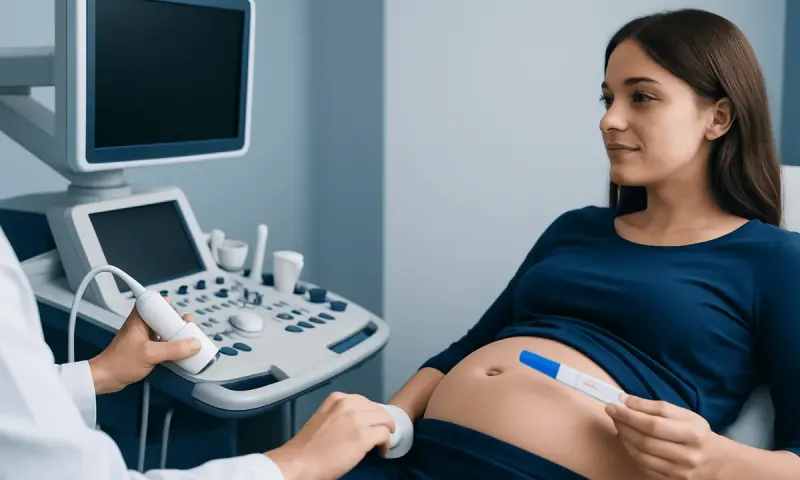
Positive Pregnancy Test at 5 Weeks: What It Means

A 5 weeks positive pregnancy test usually means that pregnancy hormone levels are high enough to be detected after implantation. The next step is to arrange prenatal care, review medicines and health history with a clinician, and know which symptoms need prompt assessment.
5 Weeks Positive Pregnancy Test: What It Usually Means
A 5 weeks positive pregnancy test usually means that the body is producing enough human chorionic gonadotropin (hCG), the pregnancy hormone, for the test to detect it. Most home urine tests are accurate when they are used after a missed period and according to the manufacturer’s instructions. A clinician can confirm the pregnancy and help plan appropriate care.
Pregnancy dating can be confusing at first. Healthcare professionals usually calculate gestational age from the first day of the last menstrual period, not from conception. Therefore, at five weeks pregnant, fertilization often happened around three weeks earlier, although this varies with cycle length and ovulation timing.
At this stage, a positive result does not provide complete information about the location, viability, or exact dating of a pregnancy. These questions are assessed through symptoms, medical history, repeat hCG testing when indicated, and an ultrasound at the clinically appropriate time.
Is it normal to get a positive pregnancy test at 5 weeks?
Yes. It is normal to get a positive pregnancy test at five weeks. By this point, many people have missed a period, and hCG levels are often sufficient to show a clear positive result on a home test. Results may appear earlier or later depending on when ovulation and implantation occurred, the sensitivity of the test, and how diluted the urine is.
A positive line or digital result should be treated as positive, even if the line is faint, provided it appeared within the test’s stated reading time. Testing with first-morning urine may be helpful if there is uncertainty. Repeating a home test after 48 hours can sometimes provide reassurance, but it cannot determine whether a pregnancy is developing normally.
False-positive results are uncommon but may occur in certain circumstances, including recent pregnancy loss, recent use of fertility medicines containing hCG, or rarely some medical conditions. A healthcare professional can clarify an uncertain result with a urine or blood test.
Is the baby still implanting at 5 weeks?

In most pregnancies, implantation is already complete by five weeks of gestational age. Implantation generally occurs about 6 to 12 days after fertilization, which is often during the fourth week of pregnancy when dates are counted from the last menstrual period. The embryo is then embedded in the lining of the uterus, where early placental tissues support development.
At five weeks, the early embryo is very small and is undergoing rapid foundational development. The gestational sac may sometimes be seen on a transvaginal ultrasound, although findings vary depending on the exact dating of the pregnancy. It may be too early to see all expected structures or cardiac activity, especially when ovulation occurred later than assumed.
Light spotting can happen in early pregnancy, but bleeding should not automatically be assumed to be implantation bleeding. Any bleeding during pregnancy deserves discussion with a clinician, particularly if it is increasing, persistent, or associated with pain.
What should my next steps be after a positive pregnancy test?
After a positive test, the individual should contact an obstetrician, family doctor, midwife, or prenatal clinic to arrange an initial appointment. The timing differs between healthcare systems and individual circumstances. Earlier review may be recommended for people with pain or bleeding, a history of ectopic pregnancy or miscarriage, fertility treatment, chronic health conditions, or regular prescription medicines.
Starting a prenatal vitamin containing folic acid is an important early step. Folic acid supports normal early neural tube development, often before a person realizes they are pregnant. A clinician or pharmacist can advise on a suitable product, especially for those who have medical conditions or may need a different supplement plan.
It is also important to review all prescription medicines, over-the-counter products, herbal preparations, vitamins, and supplements with a qualified professional. A person should not stop an essential prescribed medicine suddenly without medical advice, as untreated conditions can also pose risks during pregnancy.
- Avoid alcohol, smoking, vaping, and recreational drugs.
- Limit caffeine in line with local prenatal guidance.
- Choose well-cooked foods and follow food-safety advice to reduce infection risks.
- Maintain regular meals, fluids, sleep, and gentle activity if comfortable.
- Write down the first day of the last menstrual period and any symptoms to discuss at the appointment.
Early prenatal assessment may include medical history, blood pressure checks, blood and urine tests, and discussion of screening options. An early ultrasound is not always needed immediately, but may be used to date the pregnancy, confirm that it is in the uterus, or assess concerning symptoms. This is part of routine pregnancy follow-up when clinically appropriate.
What are some signs that my pregnancy is going well at 5 weeks?
At five weeks, there is no single symptom that can confirm a pregnancy is progressing normally. Many people notice fatigue, breast tenderness, nausea, heightened sensitivity to smells, frequent urination, mild pelvic pulling sensations, or emotional changes. Others have few or no symptoms and can still have a healthy pregnancy.
Symptoms can vary considerably between individuals and from day to day. Nausea may begin later, become more noticeable over the following weeks, or not occur at all. Likewise, temporary changes in breast soreness or tiredness are common and do not reliably indicate whether the pregnancy is healthy.
The most reliable assessment comes from appropriate clinical follow-up. Depending on dates and symptoms, a clinician may recommend serial hCG blood tests or an ultrasound. If early imaging is inconclusive because the pregnancy is too early to visualize fully, repeating the scan after an appropriate interval is often more informative than drawing conclusions from one early examination.
Early Pregnancy Symptoms and Self-Care
Common early pregnancy symptoms can be uncomfortable but are usually manageable. Small, frequent meals may help with nausea, and drinking fluids regularly can reduce the risk of dehydration. Rest, light movement, and simple foods may be useful when energy is low. A clinician can recommend safe options if nausea, constipation, heartburn, or another symptom is interfering with daily life.
Mild cramps can occur as the uterus and surrounding tissues begin to change. However, pain that is severe, worsening, localized to one side, or combined with dizziness or bleeding should be assessed promptly. Early pregnancy symptoms overlap with other conditions, so personal symptoms should be considered in context rather than self-diagnosed.
Emotional responses after a positive test can include happiness, uncertainty, worry, or mixed feelings. Sharing concerns with a trusted person or healthcare professional can be helpful. Mental health is an important part of prenatal care, and support is available for anxiety, depression, past pregnancy loss, or difficult circumstances.
When to seek medical care
Routine prenatal contact should be arranged after a positive pregnancy test. However, some symptoms need more urgent assessment because they may indicate a complication, including a possible ectopic pregnancy. An ectopic pregnancy occurs when a fertilized egg implants outside the uterus and requires prompt medical care.
The individual should seek urgent medical advice for vaginal bleeding that is heavy, bright red, or accompanied by clots; severe, persistent, or one-sided lower abdominal pain; shoulder-tip pain; marked dizziness; fainting; or feeling very unwell. Emergency care is particularly important if these symptoms occur together.
Contact a clinician promptly for ongoing vomiting with inability to keep fluids down, fever, painful urination, or concerns about medicines or exposure to infections. People with a previous ectopic pregnancy, tubal surgery, an intrauterine device in place at conception, or fertility treatment may be advised to have earlier confirmation of pregnancy location. Acıbadem Health Point’s multidisciplinary specialists and JCI-accredited hospitals provide assessment and care for Myomectomy Recovery for International Patients: The Usual Travel Timeline" class="ahp-ilk">international patients with early pregnancy concerns.
Frequently asked questions
01How accurate is a positive home pregnancy test at 5 weeks?
A positive home pregnancy test at five weeks is usually very accurate when the test is used correctly and read within the stated time window. Home tests detect hCG in urine, but they do not confirm the exact age, location, or health of the pregnancy. A clinician can provide confirmation and arrange follow-up if needed.
02Should a pregnancy test line be darker at 5 weeks?
Some tests show a darker line as hCG rises, but line darkness is not a reliable way to monitor pregnancy development. Different test brands, urine concentration, and testing times can change how a line looks. Clinical assessment, blood testing when indicated, and ultrasound provide more useful information.
03When should an ultrasound be done after a positive pregnancy test?
The right timing depends on symptoms, medical history, and how certain the pregnancy dates are. An ultrasound performed very early may not yet show all expected structures, which can create uncertainty. A clinician may recommend earlier imaging for pain, bleeding, previous ectopic pregnancy, fertility treatment, or other specific concerns.
04Can I have no symptoms at 5 weeks pregnant and still be okay?
Yes. Some people have noticeable fatigue, nausea, or breast changes at five weeks, while others have no obvious symptoms. The presence, absence, or day-to-day fluctuation of symptoms does not by itself determine whether a pregnancy is progressing normally. Prenatal follow-up is the best way to assess individual circumstances.
05What should I avoid after a positive pregnancy test?
Avoid alcohol, smoking, vaping, recreational drugs, and medicines or supplements that have not been reviewed for pregnancy safety. Do not stop an essential prescribed medicine without talking to the prescribing clinician. Food hygiene, regular hydration, and a prenatal vitamin with folic acid are also important early measures.
06Does mild cramping at 5 weeks mean something is wrong?
Mild, brief cramping can be common in early pregnancy and may occur as the uterus begins to change. It should be discussed with a clinician if it persists or causes concern. Severe pain, one-sided pain, heavy bleeding, dizziness, fainting, or shoulder-tip pain needs urgent assessment.
This article is for general information only and is not a substitute for professional medical advice. Please consult a qualified doctor about your individual situation.
IVF & fertility treatment in Turkey — success rates and costs
JCI-accredited · board-certified surgeons · reply within 24h
Add us as a Preferred Source to see more of our trusted health content across Google Search, AI Overviews and Discover.