Polycystic Ovary Syndrome Hair Loss Treatment: Options, Effectiveness and Recovery

Key Takeaways
- PCOS-related hair loss is usually linked to hormone imbalance, especially excess androgen activity.
- Treatment often works best when it addresses both hair shedding and the underlying PCOS.
- Results are gradual; it may take several months before reduced shedding or new growth becomes noticeable.
- A clinician may check for other causes of hair loss, such as thyroid problems, iron deficiency, or stress-related shedding.
- Lifestyle measures, gentle hair care, and follow-up support can help protect hair while treatment is underway.
Polycystic ovary syndrome can trigger hormone-related hair thinning that often improves when the underlying condition is addressed. Effective care usually combines medical treatment, scalp-friendly habits, and time, since hair growth changes slowly.
Overview
Polycystic ovary syndrome hair loss treatment usually starts with one important idea: the hair problem is often a sign of the hormone imbalance behind PCOS, not a separate scalp disease. In many women, the hair looks thinner along the part line, at the crown, or across the top of the scalp, while the front hairline stays relatively intact. The most useful treatment plan is the one that addresses the hormonal driver and also supports the hair shaft and scalp during recovery.
PCOS can influence hair in two different ways. Some women notice increased facial or body hair, while others experience scalp hair thinning that resembles female pattern hair loss. Both changes can be distressing, especially when they happen gradually and become obvious in photos or daily grooming. A careful medical evaluation helps confirm whether PCOS is the main cause or whether another condition is contributing too.
For patients considering care from another country, it helps to know that treatment is usually not a single procedure or quick fix. It is a step-by-step plan: confirm the diagnosis, select the right medication or hormonal approach, support the scalp, and monitor response over time. Because hair growth cycles slowly, the goal is steady improvement rather than immediate transformation.
Symptoms
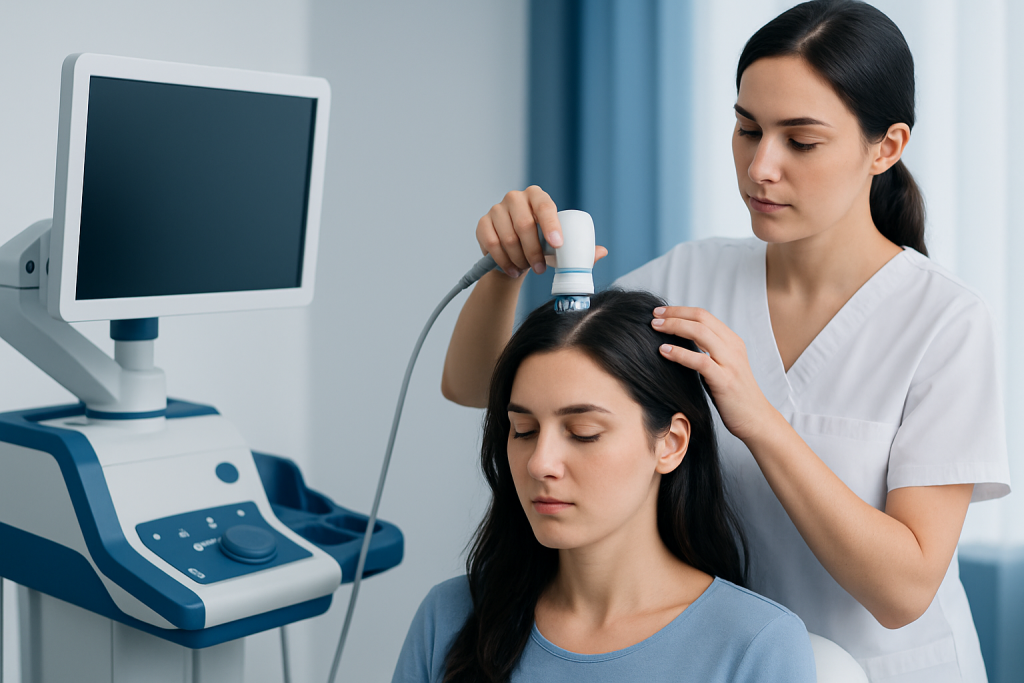
Hair loss linked to PCOS often appears as diffuse thinning rather than complete bald patches. Many women first notice that their ponytail feels smaller, the scalp shows more clearly in bright light, or the part line widens. Some also find more hair on the pillow, in the shower drain, or on a brush than usual.
Other signs may point toward PCOS as the underlying cause. These can include irregular periods, acne, weight changes, oily skin, or increased hair growth on the face, chest, or abdomen. Not every woman has all of these features, and hair thinning can sometimes be the first clue that hormones need attention.
It is also important to remember that not every case of hair loss in someone with PCOS is caused only by PCOS. Stress, iron deficiency, thyroid disorders, recent illness, or crash dieting can add to shedding. That is why a clinician will usually look at the full picture rather than assuming one explanation fits all.
Causes & Risk Factors

The most common mechanism behind PCOS-related scalp hair loss is sensitivity to androgens, a group of hormones that includes testosterone. In PCOS, these hormones may be elevated or the hair follicles may be more sensitive to them. Over time, this can shorten the growth phase of hair and cause strands to become finer and shorter.
Insulin resistance may also play a role. When the body has difficulty responding to insulin, hormone balance can shift in ways that affect both ovulation and hair growth. Genetics can influence how strongly a person’s hair follicles react, which helps explain why some women with PCOS experience major thinning while others do not.
Several factors can make hair loss more noticeable or more difficult to manage:
- Family history of female pattern hair loss
- Long periods of irregular ovulation or untreated PCOS
- Significant weight changes
- Iron deficiency or low vitamin stores
- Thyroid disease or other endocrine disorders
- High stress, illness, or restrictive dieting
Diagnosis
Diagnosis begins with a conversation about when the hair loss started, how it is progressing, and whether there are PCOS symptoms such as irregular cycles or excess facial hair. A scalp examination helps distinguish diffuse thinning from patchy hair loss or scalp inflammation. In many cases, the clinician will also ask about hair practices, recent pregnancies, new medications, and major life stressors.
Blood tests are often used to rule out other common contributors. Depending on the situation, a doctor may check thyroid function, iron levels, blood counts, and hormone markers related to PCOS. Sometimes a pelvic ultrasound is part of the broader PCOS evaluation, although the diagnosis does not rely on ultrasound alone.
When the pattern is unclear, a dermatologist or endocrinologist may recommend additional assessment. This can include a close look at hair density or, less commonly, a scalp biopsy. The aim is not to overwhelm the patient with testing, but to make sure treatment is aimed at the right cause.
Treatment Options
Polycystic ovary syndrome hair loss treatment is usually most effective when it is individualized. The best-known approaches target hormone balance, reduce androgen effects on the follicles, or stimulate hair growth directly. A doctor may recommend one treatment or a combination, depending on the person’s age, symptom pattern, fertility goals, and medical history.
Hormonal treatment is often considered when PCOS symptoms suggest androgen excess. Combined oral contraceptives may help regulate cycles and reduce hormone-related hair changes in some patients. Anti-androgen medicines are sometimes used under specialist supervision, especially when hair thinning is part of a broader PCOS picture. Because these medicines are not suitable for everyone, careful medical guidance is essential.
Topical treatments can also support regrowth. Minoxidil is commonly discussed for female pattern hair thinning and may help maintain or improve density over time. It does not correct the hormone imbalance itself, but it can support follicles while the underlying PCOS is being managed. Patients should use any scalp treatment only as directed by a clinician, especially if they are pregnant, trying to conceive, or breastfeeding.
When insulin resistance is a major part of the PCOS pattern, treatment may include lifestyle changes and, in some cases, medication chosen by an endocrinology specialist. For certain patients, improving insulin sensitivity is helpful not only for cycle regulation and metabolic health but also for the hormonal environment that affects hair.
Other supportive measures may be recommended when needed:
- Correcting iron deficiency or low vitamin levels if present
- Treating dandruff, seborrheic dermatitis, or scalp irritation
- Reviewing medications that may contribute to hair shedding
- Considering cosmetic options such as volumizing cuts, fibers, or scalp-friendly styling while treatment is underway
Hair restoration procedures are not the first step for most patients with PCOS-related thinning, but they may be discussed in selected cases after the hormonal situation is stable and the pattern of loss has been assessed carefully. The order of treatment matters: controlling the active cause usually comes before considering more advanced cosmetic solutions.
Prevention & Self-care
Not every case of PCOS-related hair thinning can be prevented, but good daily habits can reduce avoidable shedding and help protect fragile strands. Gentle handling matters: avoid tight hairstyles, frequent high-heat styling, aggressive brushing, and repeated chemical processing if the hair is already delicate. A calm, consistent routine is often kinder to the scalp than multiple products and treatments used at once.
Nutrition also deserves attention. Eating regular meals with enough protein, iron, and other essential nutrients supports overall hair health. Very restrictive diets can worsen shedding, particularly when the body is already under hormonal stress. If weight management is part of the PCOS plan, it is usually safer to aim for steady, medically guided changes rather than abrupt dieting.
Stress management is another practical part of self-care. Hair concerns can become emotionally draining, and stress may intensify shedding in some people. Sleep, physical activity, and realistic expectations about treatment timing can make the process feel more manageable. For patients traveling internationally for care, it is helpful to plan follow-up appointments before returning home and to keep a record of medications, test results, and treatment instructions.
When to See a Doctor
Medical evaluation is worthwhile when hair thinning is persistent, getting worse, or accompanied by other signs of hormone imbalance. A doctor should also be consulted if periods are irregular, acne is worsening, or there is new facial or body hair growth. Early assessment can help distinguish PCOS-related thinning from other causes that may need different treatment.
Prompt review is especially important if hair loss is sudden, patchy, painful, or associated with scalp redness or scaling. Those features are less typical of PCOS alone and may point to another condition. Likewise, if fatigue, cold intolerance, heavy bleeding, or major weight change is present, thyroid or iron-related issues may need to be checked.
For women who are planning pregnancy, are pregnant, or could become pregnant, treatment choices need extra caution. Some therapies used for hair loss or hormone control may not be appropriate in those situations. A qualified clinician can help choose an option that fits both hair goals and reproductive plans.
Acibadem Health Point can be a useful option for international patients seeking multidisciplinary evaluation, where dermatology, endocrinology, and women’s health specialists work together in JCI-accredited hospitals to diagnose and treat this condition. That kind of coordinated approach can make it easier to align hair care with the wider PCOS treatment plan.
Frequently asked questions
01Can hair loss from PCOS grow back?
In many cases, yes, at least partially. Improvement depends on how early treatment starts, how severe the thinning is, and how well the underlying hormone imbalance is controlled. Because hair grows slowly, visible change usually takes months rather than weeks.
02What is the most effective treatment for PCOS hair loss?
There is no single best treatment for everyone. The most effective plan often combines management of PCOS itself with a hair-focused treatment such as topical minoxidil or hormone-directed therapy when appropriate.
03How long does it take to see results?
Hair response is gradual. Some people notice less shedding first, followed by finer new growth later. It is common for treatment evaluation to require several months before the result can be judged fairly.
04Can diet and exercise help with PCOS-related hair thinning?
They can help support overall hormone and metabolic health, which may indirectly benefit hair. They do not replace medical treatment when the follicles are being affected by androgen-related changes, but they are often a useful part of the broader plan.
05Should a woman with PCOS and hair loss see a dermatologist or endocrinologist?
Either specialist may help, and many patients benefit from both. A dermatologist focuses on the scalp and hair pattern, while an endocrinologist can address the hormonal drivers of PCOS.
06Is it safe to use over-the-counter hair products for PCOS hair loss?
Some cosmetic products may help hair look fuller, but they do not treat the underlying cause. It is wise to check with a clinician before starting active treatments, especially if pregnancy is possible or other medical conditions are present.
This article is for general information only and is not a substitute for professional medical advice. Please consult a qualified doctor about your individual situation.
Hair transplant in Turkey — costs, graft counts & a free assessment
JCI-accredited · board-certified surgeons · reply within 24h
Add us as a Preferred Source to see more of our trusted health content across Google Search, AI Overviews and Discover.