Pilates vs Yoga: Key Differences and How Doctors Tell Them Apart
You are standing in front of a class schedule, and half the classes say Pilates and half say yoga. They look almost the same from the doorway — mats, calm music, people stretching. So which one do you book?
They are not the same thing. Put simply, Pilates is usually more focused on core strength, alignment, and controlled movement, while yoga combines physical postures with breathing, flexibility, and often a meditative element.
At a Glance: Pilates vs Yoga
When people compare pilates vs yoga, the main difference is the purpose of the movement. Pilates is a structured exercise method designed to improve core strength, stability, posture, and efficient body mechanics. Yoga is a broader mind-body practice that uses postures, breathing techniques, and relaxation to support flexibility, balance, stress management, and overall wellbeing.
The two do overlap. Both may improve body awareness, coordination, mobility, and muscle endurance. Both can be adapted for beginners, older adults, and people recovering from illness or injury when supervised appropriately. But a clinician tends to see them as two different tools, each with strengths that may fit certain symptoms or health goals better than the other.
If you are trying to decide, it helps to see them side by side:
- Main focus: Pilates emphasizes core control and precise strengthening; yoga emphasizes poses, breathing, flexibility, and mind-body regulation.
- Typical pace: Pilates often follows repeated, technique-based sequences; yoga may be slow and restorative or more dynamic depending on the style.
- Breathing: Both use breath, but yoga often gives it a more central role.
- Equipment: Yoga usually needs a mat and optional props; Pilates may be mat-based or use specialized equipment.
- Best known for: Pilates is often chosen for posture and trunk stability; yoga is often chosen for flexibility, stress reduction, and balance.
- Clinical use: Pilates may be recommended in some rehabilitation plans; yoga may be suggested for gentle movement, relaxation, and mobility support.
What Pilates Involves
Pilates is a low-impact exercise method built around controlled movement, neutral alignment, and activation of the deep stabilizing muscles of the abdomen, pelvis, hips, and back. Rather than moving quickly or using heavy resistance, Pilates usually asks the person to move with precision. The goal is not only to strengthen muscles, but also to improve how the body organizes movement during daily life.
Mat Pilates uses body weight and small props such as rings, bands, or balls. Equipment-based Pilates may use machines such as the reformer or cadillac, which provide resistance and support. In medical or rehabilitation settings, modified Pilates-style exercises are often used to retrain posture, improve trunk control, and reduce strain on the spine and joints.
Doctors may be more likely to suggest Pilates-inspired exercise for people who need guided strengthening, especially when poor posture, weak core muscles, or movement control problems are contributing to symptoms. This can be relevant in some cases of back pain or after evaluation by a spine or rehabilitation specialist. If symptoms are linked to structural problems, a doctor may also discuss options such as physical therapy and rehabilitation as part of a broader care plan.
What Yoga Involves
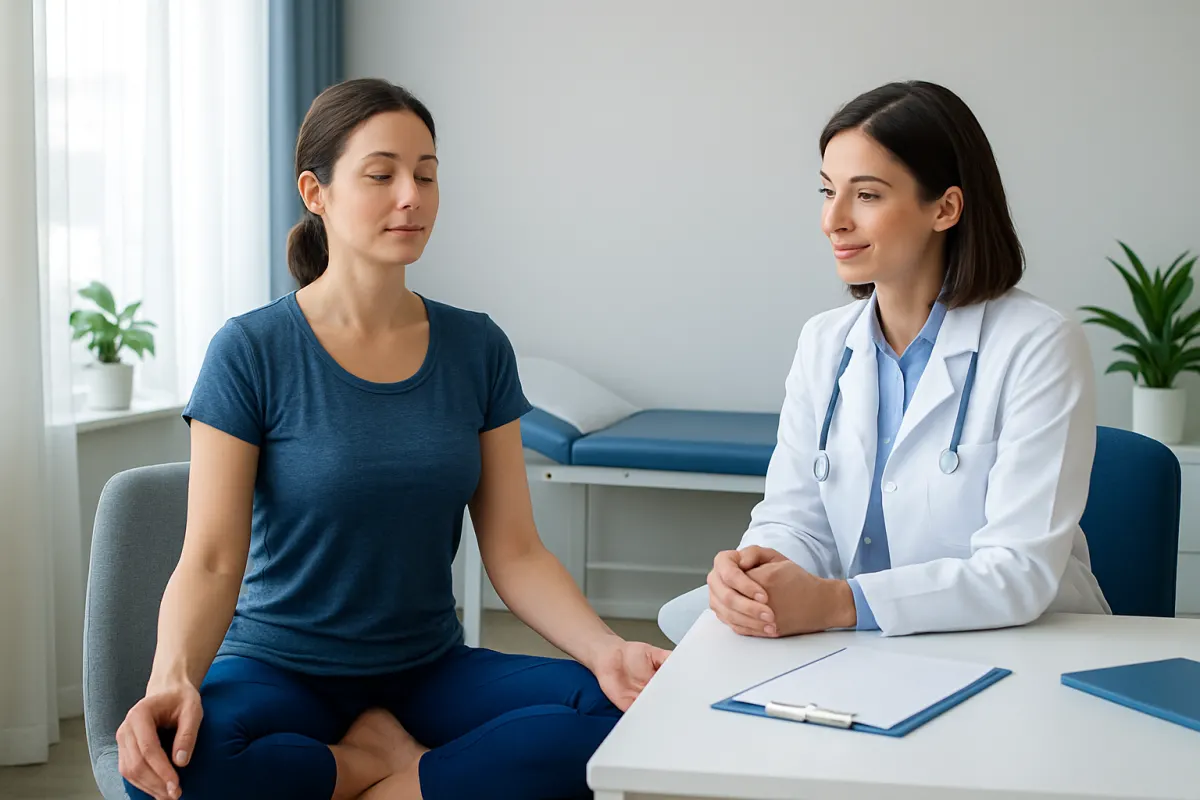
Yoga is a broad practice with many styles. Most modern forms combine physical postures, controlled breathing, and focused attention. Depending on the style, yoga may be gentle and restorative, slow and alignment-based, or more physically demanding. That range is one reason yoga and Pilates get mixed up so often.
From a clinical perspective, yoga often stands out for its effect on flexibility, balance, body awareness, and stress regulation. The breathing and relaxation components may be especially helpful for people whose symptoms are worsened by tension, poor sleep, or anxiety. This does not mean yoga is only for relaxation; many forms also build strength and endurance.
Doctors may recommend carefully chosen yoga for people who want to improve mobility, reduce stiffness, and support mental wellbeing, provided movements are matched to their condition. People with osteoporosis, glaucoma, uncontrolled high blood pressure, recent surgery, or severe joint disease may need to avoid certain poses or inversions. In those cases, a clinician may recommend modifications rather than unsupervised practice.
How Clinicians Tell Them Apart
Doctors do not judge these two by how they look on social media or in a studio. We look at what the movements actually demand of the body, and what they are meant to achieve. Pilates typically uses repetitive, controlled exercises aimed at improving trunk stability, joint alignment, and neuromuscular control. Yoga is more likely to include sustained poses, transitions, breath-focused practice, and a stronger relaxation component.
Another difference is how symptoms behave during and after activity. Someone who benefits from targeted core activation and postural retraining may feel better with Pilates-based work. Someone whose symptoms are linked to stiffness, stress, poor balance, or reduced mobility may tolerate a gentle yoga approach well. Still, this is not a strict rule, and individual response matters more than labels.
Clinicians also consider medical history. For a person with recurring neck or low back strain, Pilates may be used to train safe mechanics and muscle support. For a person with stress-related muscle tension, mild chronic pain, or limited flexibility, yoga may be considered if poses can be modified. When pain is persistent or linked to nerve symptoms, specialists may investigate problems such as a herniated disc before recommending exercise.
In rehabilitation medicine, the question is often not “Which is better?” but “Which is safer and more appropriate right now?” The answer depends on age, balance, bone health, pregnancy, prior injuries, heart and lung status, and the person’s goals. A trained clinician or physiotherapist can often identify which method, intensity, and style are more suitable.
What Doctors Consider for Back Pain, Stress, Flexibility, and Recovery
For back pain, doctors often look first at the cause rather than the exercise trend. If pain is related to deconditioning, posture, or reduced trunk support, Pilates-based exercises may help build stability and movement control. If pain is associated with stiffness, fear of movement, or stress-related muscle tension, gentle yoga may also be useful. What matters most is proper technique and a program that avoids painful positions.
For stress, poor sleep, or tension headaches, yoga may have an advantage because of its stronger emphasis on breathing and relaxation. Slow, mindful movement can help calm the nervous system and may reduce the physical effects of stress. Pilates can also improve concentration and body awareness, but it is not usually used primarily as a relaxation practice.
For flexibility and balance, yoga is often the first choice, especially in slower styles that allow time in supported poses. Pilates can improve mobility too, but it is generally known more for controlled strength and alignment. For rehabilitation after injury or surgery, clinicians may favor individualized exercise under professional guidance, sometimes incorporating Pilates principles within orthopedic rehabilitation or supervised recovery programs.
If symptoms involve the spine, joints, or recurring muscular strain, some people may benefit from assessment by orthopedics and traumatology or rehabilitation specialists before starting a new routine. This is especially important when pain radiates, causes weakness, or limits daily activities.
How to Choose the Right Option for Each Case
Choosing between Pilates and yoga starts with a simple question: what is the main goal? A person who wants stronger core support, improved posture, and more controlled movement may prefer Pilates. A person who wants to increase flexibility, work on balance, and include breath-based relaxation may prefer yoga. Some people benefit from both, used on different days or at different stages of recovery.
Beginners often do best in entry-level classes or one-to-one instruction. Instructors should be told about medical conditions, recent surgeries, pregnancy, bone density problems, chronic pain, or dizziness. This allows safer modifications, such as avoiding deep twists, loaded spinal flexion, prolonged kneeling, or positions that stress vulnerable joints.
Clinicians usually advise a gradual approach. It is often better to start with shorter, lower-intensity sessions and monitor how the body responds over the next day. Mild muscle soreness can be normal, but increasing pain, numbness, joint swelling, breathlessness, or loss of function suggests that the program needs adjustment.
When symptoms are complex or simply will not settle, some patients want everything looked at in one place. Acıbadem Health Point’s multidisciplinary specialists and JCI-accredited hospitals assess musculoskeletal and rehabilitation needs for international patients, and can guide suitable exercise choices alongside medical treatment when needed.
Safety Tips and When to Seek Medical Care
Both Pilates and yoga are generally safe when taught well and matched to the person doing them. Still, some warning signs mean you should stop and talk to a healthcare professional — especially if what you feel is new, severe, or far out of proportion to the exercise you just did.
Medical advice is important before starting either practice if a person has uncontrolled heart disease, severe osteoporosis, a recent fracture, recent surgery, major balance problems, advanced arthritis, pregnancy-related complications, or a neurological condition affecting strength or coordination. Children, older adults, and people with chronic illness may also need tailored guidance.
- Seek medical care promptly for chest pain, fainting, severe shortness of breath, or sudden weakness.
- Arrange an evaluation for pain that travels down an arm or leg, numbness, tingling, or bladder or bowel changes.
- Ask a clinician about persistent joint swelling, repeated falls, or pain that lasts despite rest and modified exercise.
- Consult a doctor if symptoms interfere with sleep, work, daily function, or exercise tolerance.
If there is doubt about whether Pilates or yoga is appropriate, a doctor, sports medicine specialist, or physiotherapist can help choose the safer option and suggest modifications.
Frequently asked questions
01Is Pilates better than yoga?
Neither is universally better. Pilates may suit people who want targeted core strengthening and posture work, while yoga may suit those who want more flexibility, balance, and breath-focused relaxation. The better choice depends on a person’s health needs, symptoms, and preferences.
02Which is better for back pain, Pilates or yoga?
It depends on the cause of the back pain. Pilates may be helpful when poor core support and movement control are contributing factors, while gentle yoga may help when stiffness and stress are prominent. Persistent, severe, or radiating pain should be medically assessed before starting either one.
03Can beginners do both Pilates and yoga?
Yes, both can be beginner-friendly when taught at an appropriate level. Starting with introductory classes and telling the instructor about any medical issues can make practice safer. A gradual pace is usually best.
04Do doctors ever recommend Pilates or yoga as part of treatment?
Yes, clinicians may suggest either as part of a broader plan for mobility, strength, stress management, or rehabilitation. However, they are usually recommendations within an individualized care plan, not a substitute for diagnosis when symptoms are concerning. The exact approach depends on the person’s condition and functional goals.
05Is yoga safer than Pilates?
Not necessarily. Safety depends more on the style, intensity, technique, and the person’s medical history than on the name of the activity. Either one can be safe with proper modifications, or problematic if done incorrectly.
06Who should talk to a doctor before starting Pilates or yoga?
People with recent injuries, surgery, severe pain, osteoporosis, balance problems, heart disease, uncontrolled blood pressure, or neurological symptoms should seek guidance first. Pregnant individuals and older adults with frailty may also need modifications. A clinician can help identify safer movements and limits.
This article is for general information only and is not a substitute for professional medical advice. Please consult a qualified doctor about your individual situation.
Joint and spine care in Turkey — expert assessment & treatment
JCI-accredited · board-certified surgeons · reply within 24h
Add us as a Preferred Source to see more of our trusted health content across Google Search, AI Overviews and Discover.