

Pain in the Ear When I Swallow: Causes, Relief and When to Worry
- 8 min read
- Published November 26, 2026
Key Takeaways
- Ear pain triggered by swallowing is often linked to the throat, Eustachian tube, tonsils, or jaw rather than the ear canal.
- Common causes include colds, sore throat, tonsillitis, Eustachian tube dysfunction, acid reflux, and temporomandibular joint (TMJ) problems.
- Self-care may help when symptoms are mild, but worsening pain, fever, hearing changes, or trouble swallowing should prompt evaluation.
- A clinician can check whether the pain is coming from the ear, throat, teeth, or jaw and recommend the right treatment.
- Seek urgent help for severe swelling, breathing trouble, high fever, ear drainage, facial weakness, or sudden hearing loss.
Pain in the ear when someone swallows is often referred pain, meaning the source may be in the throat, tonsils, jaw joint, or middle ear rather than the ear itself. Most causes are treatable, but persistent, severe, or one-sided symptoms deserve medical assessment.
Overview
When a person says, “I feel pain in the ear when I swallow,” the ear is not always the true source of the problem. The throat, tonsils, Eustachian tube, jaw joint, teeth, and nearby nerves all share pathways that can make pain seem to radiate into the ear during swallowing.
That is why this symptom can appear during a common sore throat, after a cold, with jaw tension, or alongside an ear infection. In many cases the cause is temporary and manageable, but the pattern of the pain offers important clues that help a clinician decide where to look first.
For international patients who are arranging care from another country, this symptom is usually straightforward to evaluate with an ear, nose, and throat examination, and sometimes dental or jaw assessment if the ear itself appears normal. A careful history often points toward the right diagnosis before any advanced testing is needed.
Symptoms
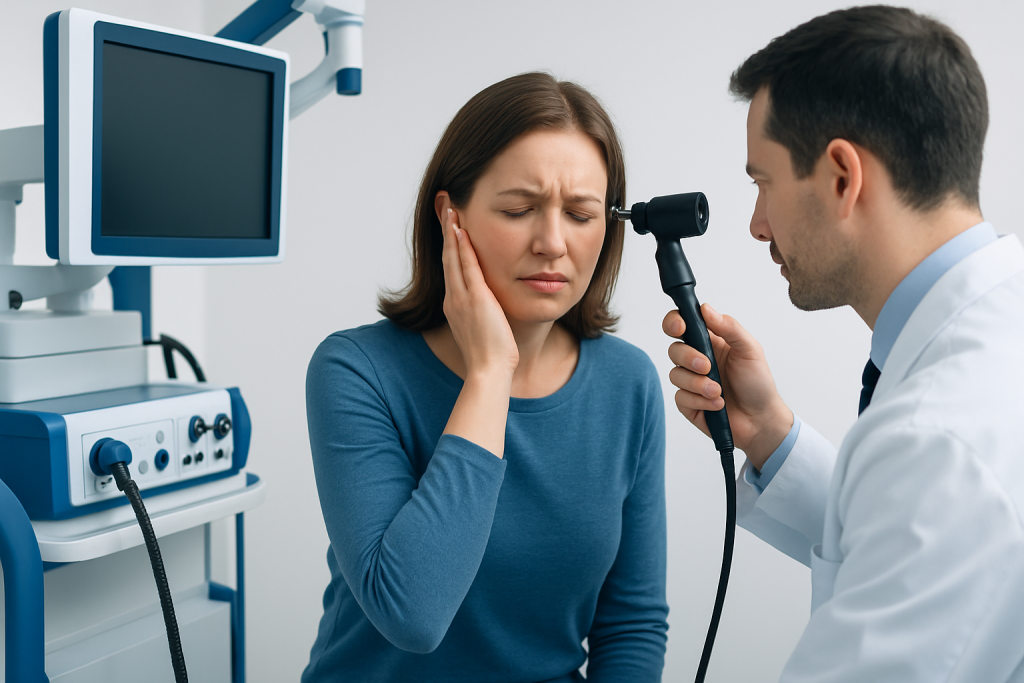
The discomfort may feel sharp, dull, burning, or pressure-like. Some people notice it only while swallowing saliva, food, or liquids, while others feel it every time they yawn, talk, or chew. The pain may stay on one side or appear on both sides, depending on the cause.
Ear pain related to swallowing is often accompanied by other clues. A sore throat, hoarse voice, blocked nose, ear fullness, clicking in the jaw, tooth pain, or fever can narrow the possibilities. Some patients also report reduced hearing, popping in the ear, or pain that spreads to the temple or neck.
- Pain only when swallowing
- Throat soreness or tonsil swelling
- Ear fullness, popping, or muffled hearing
- Jaw tenderness or clicking
- Fever, fatigue, or swollen neck glands
The pattern matters as much as the intensity. A brief ache during a cold may settle on its own, while ongoing one-sided pain, especially with difficulty swallowing or neck swelling, deserves medical attention.
Causes & Risk Factors

One of the most common explanations is a throat or tonsil infection. Because the throat and ear share nerve connections, inflammation in the tonsils, pharynx, or surrounding tissue can be felt as ear pain when swallowing. Viral infections, strep throat, and tonsillitis are typical examples.
Eustachian tube dysfunction is another frequent cause. This small passage helps equalize pressure between the middle ear and the back of the nose. When it becomes blocked by a cold, allergies, sinus congestion, or changes in altitude, swallowing can trigger pressure, popping, or pain in the ear.
Other possible causes include:
- Temporomandibular joint (TMJ) irritation or teeth grinding
- Dental infection or impacted teeth
- Acid reflux or throat irritation from stomach acid
- Middle ear infection or fluid behind the eardrum
- Swollen lymph nodes or inflammation near the neck
- Less commonly, nerve-related pain or a growth in the throat or ear region
Risk can be higher during upper respiratory infections, in people with seasonal allergies, in those who clench their jaw or grind their teeth, and in travelers who have recently flown or climbed to higher altitude. Smoking and chronic reflux may also irritate the throat and increase symptoms.
Diagnosis
Diagnosis begins with a detailed conversation about when the pain started, what makes it worse, and whether there are other symptoms such as fever, hearing change, sore throat, or jaw pain. This history is especially useful because ear pain with swallowing often reflects a nearby problem rather than a primary ear disorder.
A clinician usually examines the ear canal and eardrum, throat, tonsils, jaw, teeth, and neck. If the ear exam looks normal, the focus often shifts toward the throat, Eustachian tube, or jaw joint. In some cases, a nasal or throat endoscopy may be recommended to look more closely at the back of the nose and upper throat.
Depending on the findings, additional tests may include a throat swab for infection, hearing assessment, dental evaluation, imaging, or blood tests. The goal is not to test everything at once, but to match the workup to the pattern of symptoms and the physical examination.
Treatment Options
Treatment depends on the cause. A simple viral cold or temporary Eustachian tube dysfunction may improve with rest, fluids, and symptom relief, while bacterial infections may need clinician-prescribed medicine. TMJ-related pain often improves when jaw strain is reduced, and reflux-related irritation may respond to dietary and lifestyle changes guided by a doctor.
Common approaches include pain relief recommended by a clinician, warm compresses for jaw discomfort, saline nasal measures for congestion, and treatment of the underlying infection or inflammation when present. If fluid is trapped behind the eardrum or the Eustachian tube remains blocked, a specialist may suggest additional ENT-directed therapy.
When the cause is dental or jaw-related, the best treatment may involve a dentist or oral specialist rather than the ear itself. That is why a focused diagnosis matters: ear pain during swallowing can improve quickly once the true source is treated.
In more complex cases, such as persistent throat asymmetry, recurrent infections, or unexplained one-sided pain, a specialist may recommend closer follow-up to rule out less common problems and to ensure symptoms are not being missed.
Prevention & Self-care
Not every episode can be prevented, but some practical steps may reduce irritation and support recovery. Staying well hydrated, treating nasal congestion early, and avoiding throat irritants can help when a cold or allergy flare is driving the pain.
For people who clench or grind their teeth, reducing jaw strain can make a meaningful difference. Soft foods, limiting gum chewing, and paying attention to daytime jaw tension may ease pain that travels to the ear. If reflux seems likely, avoiding late meals and trigger foods may help the throat recover.
- Use gentle hydration and rest during upper respiratory illness
- Manage allergies and nasal congestion with clinician guidance
- Avoid smoking and secondhand smoke
- Choose softer foods if chewing worsens symptoms
- Protect the jaw by reducing clenching and grinding triggers
Travelers should also be aware that flying, rapid altitude changes, and dehydration can worsen ear pressure. Swallowing, yawning, and staying hydrated may help equalize pressure, but persistent pain after travel still deserves assessment.
When to See a Doctor
A medical evaluation is wise when ear pain with swallowing lasts more than a few days, keeps returning, or is strong enough to interfere with eating, sleeping, or speaking. It is especially important if the pain is mainly on one side, because persistent unilateral symptoms sometimes require closer inspection.
Seek prompt medical care if there is fever, ear drainage, hearing loss, swelling around the neck or jaw, severe sore throat, difficulty opening the mouth, or trouble swallowing fluids. Sudden facial weakness, breathing difficulty, or rapidly worsening swelling should be treated urgently.
People who are traveling for treatment or waiting to see a specialist from abroad should arrange an ENT assessment if symptoms are not settling or if they are unsure whether the cause is the ear, throat, or jaw. Acibadem Health Point’s multidisciplinary specialists and JCI-accredited hospitals can diagnose and treat these ENT concerns for international patients in a coordinated way.
Even when the problem turns out to be minor, getting the right diagnosis can prevent repeated discomfort and reduce the chance of missing a condition that needs targeted care.
Frequently asked questions
01Why does my ear hurt when I swallow?
This often happens because the pain is referred from the throat, tonsils, Eustachian tube, jaw joint, or nearby teeth. The ear and throat share nerve pathways, so inflammation in one area can be felt in another. A clinician can help identify the real source by examining both the ear and surrounding structures.
02Can a sore throat cause ear pain when swallowing?
Yes. Throat infections, tonsillitis, and irritation in the back of the throat commonly cause pain that radiates to the ear during swallowing. This is one of the most frequent reasons for the symptom.
03Is ear pain when swallowing always an ear infection?
No. An ear infection is only one possible cause, and many people with this symptom have a normal ear exam. Throat infection, Eustachian tube dysfunction, TMJ issues, dental problems, and reflux can all be responsible.
04What can help relieve the pain at home?
Rest, hydration, and avoiding irritants may help if the cause is mild and temporary. Warm compresses can ease jaw-related discomfort, and treating congestion may help pressure-related ear symptoms. If the pain is strong or persistent, medical advice is the safer next step.
05When should someone worry about ear pain when swallowing?
Concern increases when the pain is one-sided, severe, or lasts more than a few days, especially if there is fever, hearing change, swelling, or trouble swallowing. Sudden facial weakness, breathing trouble, or ear drainage also need prompt evaluation. These symptoms do not always signal something serious, but they do deserve a clinician’s assessment.
06Can reflux cause pain in the ear when I swallow?
Yes, acid reflux can irritate the throat and create discomfort that feels like it is coming from the ear. Some people notice a sore throat, hoarseness, or a lump-in-the-throat feeling along with the ear pain. A doctor can help decide whether reflux is contributing and what changes may help.
This article is for general information only and is not a substitute for professional medical advice. Please consult a qualified doctor about your individual situation.
Joint and spine care in Turkey — expert assessment & treatment
JCI-accredited · board-certified surgeons · reply within 24h
Add us as a Preferred Source to see more of our trusted health content across Google Search, AI Overviews and Discover.


How can we help you today?
Meet an Acibadem specialist by secure video, before you travel.
Book a video visit