Pain in Eye When I Blink: Causes, Relief and When to Worry

Key Takeaways
- Pain when blinking is often linked to the eye’s surface, such as dryness, a scratch, or a foreign body.
- Redness, discharge, light sensitivity, or blurred vision can help distinguish a minor irritation from a condition that needs examination.
- Simple measures like resting the eyes, avoiding rubbing, and using lubricating drops may ease mild discomfort.
- Contact lens wearers, people with recent eye injury, and those with vision changes should seek medical advice sooner.
- An eye doctor can check for infection, corneal injury, inflammation, or pressure-related problems and recommend targeted treatment.
Pain in the eye when blinking is often caused by dryness, irritation, or a minor surface problem, but it can sometimes point to an eye infection or a more serious condition. Understanding the pattern of pain and any associated symptoms helps guide the right next step, from simple self-care to prompt medical review.
Overview
When a person says they have pain in eye when i blink, the discomfort is usually coming from the surface of the eye or the eyelid rather than from the eye “inside” itself. Blinking moves the eyelid across a very sensitive surface, so even a small issue such as dryness, a trapped eyelash, or a tiny scratch can feel surprisingly painful.
Most causes are not dangerous, but the pattern matters. Pain that is mild and short-lived often improves with rest and lubrication, while pain that comes with redness, discharge, swelling, light sensitivity, or blurred vision deserves a professional eye examination. For someone deciding whether to manage symptoms at home or arrange care while traveling, the key question is not only “Does it hurt?” but also “What other changes are happening with it?”
This article explains the most common causes, what relief may be reasonable at home, and when the symptom should be checked by a doctor. It is written for readers who want practical guidance without unnecessary alarm.
Symptoms That Help Narrow the Cause
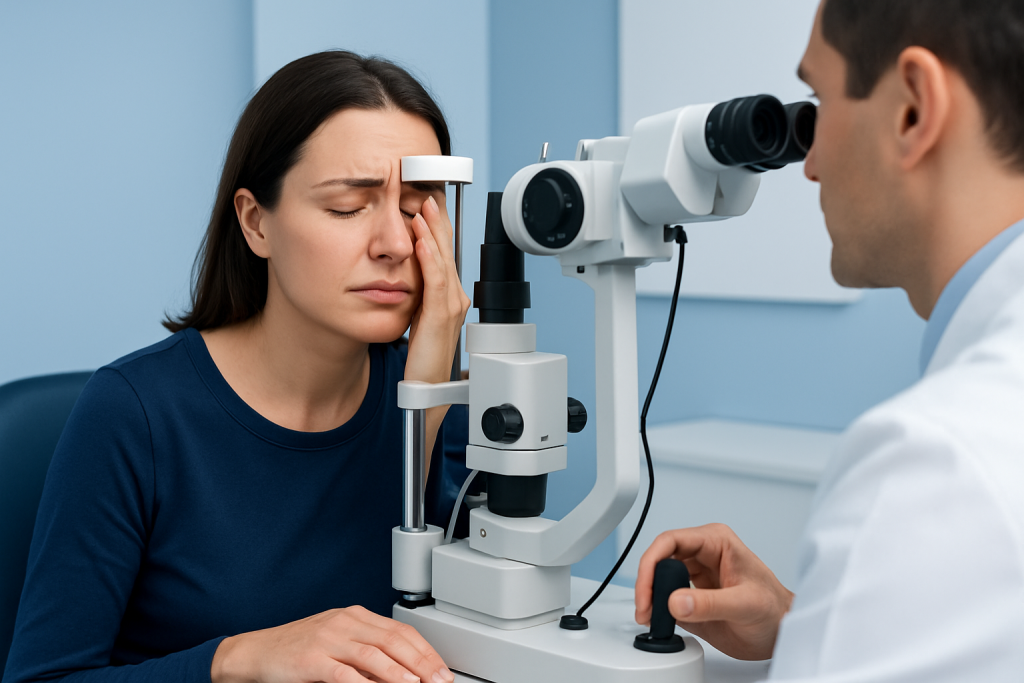
Eye pain with blinking rarely appears in isolation. The surrounding symptoms often provide the most useful clues. Dryness tends to feel gritty, burning, or as if sand is in the eye. A scratch on the cornea may cause sharp pain, tearing, and discomfort that is worse with blinking or light.
Inflammation or infection often changes the look of the eye as well as the sensation. Redness, swelling, discharge, crusting on the lashes, or a feeling that the eye is stuck shut can suggest conjunctivitis or a stye. If the eyelid itself is tender or swollen, the discomfort may come from the lid margin rather than the eyeball.
More concerning symptoms include vision changes, severe light sensitivity, significant swelling, headache with nausea, or pain after an injury. These do not always mean a serious condition, but they do mean the eye should be assessed promptly.
- Gritty or burning feeling: often dryness or irritation
- Sharp pain with blinking: possible scratch or foreign body
- Redness and discharge: possible infection or inflammation
- Light sensitivity or blurred vision: needs medical review
Common Causes and Risk Factors

Dry eye is one of the most frequent reasons blinking hurts. When tears do not coat the surface well enough, blinking creates friction. Screen use, air conditioning, smoke, dehydration, contact lens wear, and some medicines can all contribute to dryness.
Foreign bodies and minor injuries are another common explanation. A lash, dust particle, or tiny scratch can make every blink feel irritating. People who work in dusty environments, use tools, or rub their eyes are more likely to notice this problem.
Eye infections and eyelid conditions can also cause blinking pain. Conjunctivitis may produce redness and discharge, while a stye or blepharitis can make the eyelid margin sore. Less commonly, conditions such as corneal inflammation, uveitis, or changes in eye pressure may be responsible and require professional treatment.
Risk is higher in people who wear contact lenses, have allergies, spend long hours on digital devices, recently had eye surgery, or experienced direct eye trauma. A history of autoimmune disease or chronic eyelid inflammation can also make eye discomfort more persistent.
How Doctors Diagnose the Problem
An eye specialist usually starts with questions about when the pain began, whether it affects one or both eyes, and what makes it better or worse. The pattern of symptoms, along with recent contact lens use, injury, travel, or exposure to dust and chemicals, helps narrow the likely cause.
The examination may include checking vision, looking at the eyelids and eye surface with a light, and using dye to highlight scratches or areas of dryness. If needed, the doctor may remove a foreign body, examine the cornea in more detail, or measure eye pressure. These steps are usually quick and are designed to identify the source of discomfort safely.
For international patients, diagnosis may be especially useful when symptoms begin during travel or after a flight, long screen use, or a change in environment. Clear documentation of symptoms and any previous treatment helps the clinician decide whether the issue is simple irritation, an infection, or something that needs closer follow-up.
Treatment Options
Treatment depends on the cause. For dry eye or mild irritation, doctors often recommend lubricating eye drops, brief breaks from screens, and avoiding rubbing the eyes. If the problem is related to allergies, treatment may focus on reducing exposure to the trigger and easing inflammation.
When there is a scratch, foreign body, or infection, the eye may need targeted care. A doctor may remove the irritant, prescribe medication if an infection is present, or advise temporary contact lens avoidance while the surface heals. Pain that stems from the eyelid, such as a stye, is sometimes managed with warm compresses and careful lid hygiene.
It is important not to self-treat with leftover medicines, especially steroid eye drops, unless a clinician has prescribed them for that exact problem. The wrong drop can delay healing or worsen certain infections. Prompt evaluation is particularly important for contact lens wearers, because corneal infections can progress more quickly in that group.
In some cases, treatment is not about one symptom but about the larger picture. If blinking pain is part of a broader condition such as blepharitis, uveitis, or eye pressure changes, follow-up care may include repeated examinations and longer-term management.
Relief and Self-care at Home
For mild discomfort without red-flag symptoms, a few careful measures may help while the eye settles. Resting the eyes, reducing screen time, and blinking consciously can lessen strain from dryness. Preservative-free lubricating drops can be helpful for many people, especially in dry environments or after long periods of reading or screen use.
A person should avoid rubbing the eye, since rubbing can worsen irritation or push a foreign body deeper. If there is a clear particle on the eyelid or lashes, gentle rinsing with clean water or sterile saline may help, but anything embedded in the eye should be handled by a clinician. Contact lenses should be removed until the eye is comfortable and a doctor says it is safe to resume them.
Simple comfort measures can also help the eyelids. A warm compress may soothe lid-margin irritation, while good hand hygiene lowers the risk of spreading infection. If symptoms began after exposure to smoke, dust, or chlorine, leaving the environment and rinsing the eye may reduce ongoing irritation.
- Use lubricating drops if dryness is suspected
- Take regular screen breaks and blink fully
- Avoid eye rubbing and makeup until symptoms improve
- Pause contact lens use during irritation
- Seek advice before using any medicated eye drops
When to See a Doctor
Medical review is recommended if eye pain with blinking lasts more than a day or two, keeps returning, or is not improving with basic self-care. It should also be assessed sooner if there is redness that is spreading, thick discharge, swelling around the eye, or discomfort after a scratch, chemical exposure, or impact.
Urgent evaluation is especially important when pain is accompanied by blurred vision, marked light sensitivity, severe headache, nausea, fever, or trouble opening the eye. These symptoms can point to a condition that needs prompt treatment to protect vision and comfort.
Contact lens wearers should be more cautious than usual. If pain develops while lenses are in use, the lenses should be removed and the eye checked if symptoms do not quickly improve. When in doubt, it is safer to have the eye examined than to assume the cause is minor.
For patients arranging care from another country, a clinician can help determine whether treatment can wait until after travel or should be addressed immediately. Acibadem Health Point’s multidisciplinary specialists and JCI-accredited hospitals diagnose and treat eye conditions for international patients, with follow-up planning designed to fit a cross-border care journey.
Prevention Tips and Practical Eye Care
Many episodes of blinking pain can be reduced by protecting the eye surface. Good eyelid hygiene, regular breaks from digital devices, and avoiding dry or smoky environments can make a meaningful difference. People who already struggle with dry eye may benefit from making lubrication and blink breaks part of their routine rather than waiting for symptoms to become severe.
Work and lifestyle habits matter too. Safety glasses are worth considering during activities that create dust or flying debris, and contact lenses should be used exactly as directed by an eye-care professional. Makeup should be removed gently, and expired products should be discarded to reduce irritation and infection risk.
It also helps to notice patterns. If pain tends to happen after long flights, late-night screen use, allergy season, or contact lens overuse, those triggers can often be modified. Preventive care is less about avoiding every symptom and more about reducing the conditions that make the eye surface vulnerable.
Frequently asked questions
01What is the most common cause of pain in eye when I blink?
Dry eye and surface irritation are among the most common causes. A tiny scratch, an eyelash, or a foreign body can also make blinking hurt. The exact cause is often suggested by other symptoms such as redness, tearing, or discharge.
02Can eye pain when blinking go away on its own?
Mild irritation sometimes improves with rest, lubrication, and avoiding eye rubbing. If the pain persists, keeps coming back, or is linked to vision changes or redness, it should be checked by a doctor.
03Is blinking pain a sign of an eye infection?
It can be, especially if the eye is red, crusty, watery, or has discharge. However, infections are only one possibility, and dryness or a scratch can feel similar. An examination is the safest way to tell the difference.
04Should contact lens wearers worry more?
Yes, because contact lenses can increase the risk of corneal irritation and infection. If discomfort starts while wearing lenses, they should be removed and the eye monitored closely. If the pain does not settle quickly, medical assessment is advisable.
05Can I use over-the-counter eye drops for this?
Lubricating drops may help if the issue is mild dryness or irritation. It is best to avoid using medicated drops without professional advice, especially steroid drops or any product marketed for “red eye” relief if the cause is unclear.
06When is blinking pain an emergency?
Seek urgent care if the pain is severe, follows an injury or chemical exposure, or comes with blurred vision, strong light sensitivity, marked swelling, or nausea. These symptoms can signal a condition that needs prompt treatment.
This article is for general information only and is not a substitute for professional medical advice. Please consult a qualified doctor about your individual situation.
Persistent digestive symptoms? Get evaluated in Turkey
JCI-accredited · board-certified surgeons · reply within 24h
Add us as a Preferred Source to see more of our trusted health content across Google Search, AI Overviews and Discover.