Pacemaker Risks: Possible Complications After Implantation
Pacemaker risks are generally low, and most people recover well after implantation, but the procedure can cause short-term discomfort and uncommon complications such as bleeding, infection, a collapsed lung or movement of a pacing lead. Understanding how a pacemaker works, who may benefit and which symptoms need prompt review can help patients make informed decisions with their cardiology team.
Pacemaker risks: the answer first
Pacemaker implantation is a well-established procedure used to support an excessively slow or unreliable heartbeat. Most people have only temporary soreness, bruising or fatigue after the procedure. More serious pacemaker risks are uncommon, but may include bleeding, infection, a collapsed lung, a blood clot, movement of a lead or a problem with the device or its electrical connections.
Risk varies with a person’s age, general health, heart and lung conditions, medicines and the type of pacemaker needed. The cardiology team weighs these risks against the potential benefit of preventing symptoms caused by slow heart rhythms, such as dizziness, fainting, fatigue or breathlessness.
A pacemaker does not usually change the underlying cause of a rhythm condition, but it can provide reliable support when the heart rate becomes too slow. For a broader explanation of the device and treatment pathway, see pacemaker treatment.
How a pacemaker works and who may need one
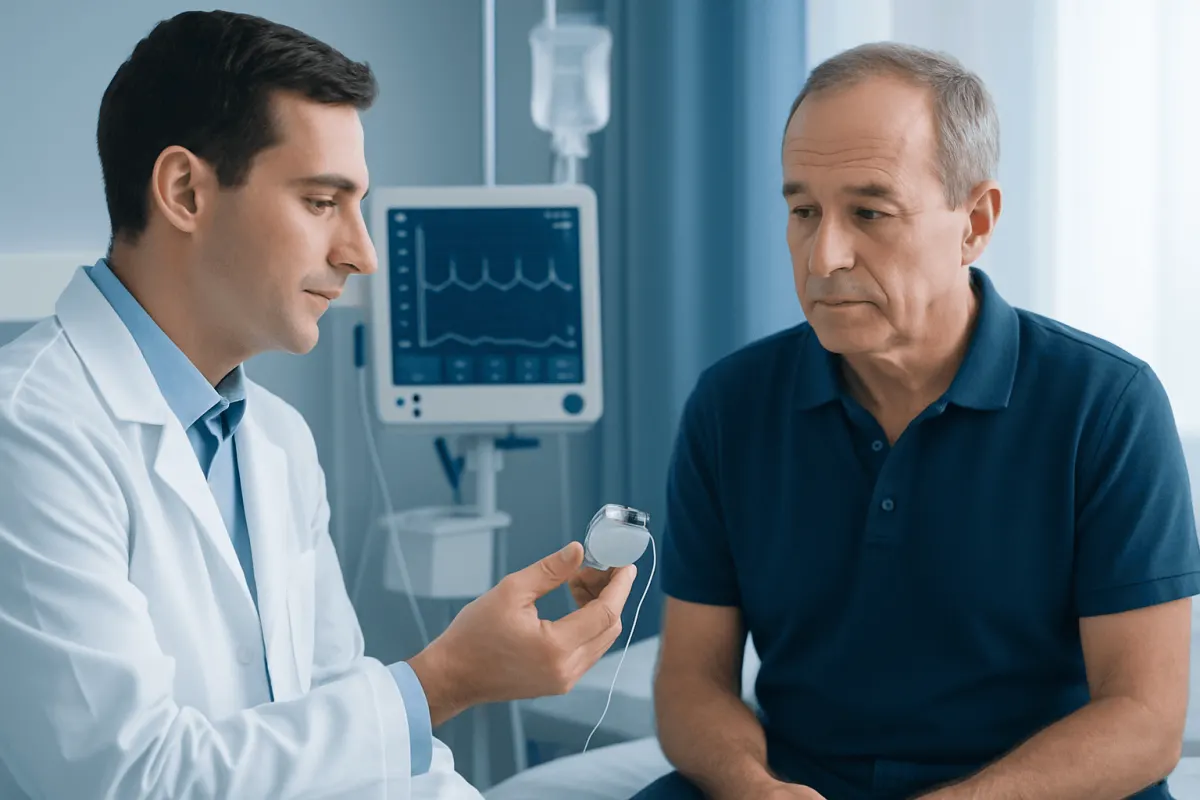
A pacemaker is a small electronic device placed under the skin, most often below the collarbone. It monitors the heart’s rhythm and, when necessary, sends tiny electrical signals to help the heart beat at an appropriate rate. A traditional system includes a pulse generator, which contains the battery and computer, and one or more thin insulated wires called leads that connect to the heart.
Some people may be suitable for a leadless pacemaker, a smaller device implanted directly inside the heart through a catheter. The most appropriate option depends on the rhythm problem, heart anatomy, previous procedures and individual health needs. Not every pacemaker continuously stimulates the heart; many work only when the natural rhythm is too slow.
Pacemakers are most commonly considered for bradycardia, meaning a slow heart rate, or for interruptions in electrical signals traveling through the heart. Examples include sinus node dysfunction and certain forms of heart block. They may also be recommended after selected heart procedures or in particular cases of heart failure when specialized pacing is needed.
- Symptoms that may lead to assessment include fainting, near-fainting, unexplained fatigue, dizziness, reduced exercise tolerance or palpitations.
- Some slow rhythms cause no symptoms and may only require monitoring rather than a pacemaker.
- A cardiologist considers symptoms, ECG findings, monitoring results and possible reversible causes before recommending implantation.
Assessment and the pacemaker implantation procedure

Before implantation, clinicians review symptoms, medical history, current medicines and test results. An electrocardiogram, ambulatory rhythm monitor, echocardiogram and blood tests may be used where appropriate. The team also checks for factors that can affect planning, such as infection, bleeding risk, kidney disease, allergies or use of blood-thinning medicines.
Most conventional pacemakers are inserted in a cardiac catheterization or operating room using local anesthetic and sedation. After the skin is cleaned and numbed, the clinician makes a small incision below the collarbone. Leads are guided through a vein into the heart using X-ray imaging, then tested to confirm secure positioning and appropriate electrical function.
The generator is placed in a small pocket beneath the skin and connected to the leads. The incision is closed and covered with a dressing. A chest X-ray and device check may be performed afterward, particularly with transvenous systems, to confirm lead position and look for early complications. Procedures differ for leadless and other specialized pacemakers.
Patients should ask their care team how to prepare, including whether any medicines need adjustment. They should not stop prescribed anticoagulants, antiplatelet medicines or other treatments without medical advice.
Possible pacemaker side effects and complications
It is normal to have tenderness, bruising, mild swelling or a pulling sensation near the incision during the first days after implantation. Some people feel tired after sedation or after a hospital stay. These effects generally improve as the wound heals, although the timeline differs from person to person.
Bleeding or a collection of blood under the skin, called a hematoma, can occur around the generator pocket. This is more likely in people taking medicines that affect clotting. Infection is another important concern and can involve the incision, generator pocket, leads or, rarely, the bloodstream. Careful sterile technique and wound care help reduce this risk.
During placement of a lead through a chest vein, there is a small risk of puncturing the lung and causing a pneumothorax, or collapsed lung. Less commonly, a lead may irritate or perforate the heart muscle, or shift out of its intended position. These issues can cause chest discomfort, breathlessness, abnormal pacing or a need for further testing or a repeat procedure.
Over time, leads can fracture, wear or develop insulation problems, and the battery will eventually run down. Regular device checks identify most technical issues before they cause symptoms. Modern pacemakers are designed with safety features, but no implanted device is entirely free of complications.
- Early risks: pain, bruising, bleeding, infection, pneumothorax, blood vessel injury and reaction to sedation.
- Device-related risks: lead displacement, inappropriate pacing, sensing problems, pocket discomfort and later battery depletion.
- Rare risks: serious infection, heart perforation, blood clots and complications requiring lead revision or removal.
Benefits and recovery timeline
For people whose symptoms are caused by a slow rhythm, a pacemaker can reduce fainting or near-fainting, improve energy and support safer daily activity. The expected benefit depends on the rhythm diagnosis and on whether other heart, lung or medical conditions are contributing to symptoms. A pacemaker is programmed for the individual and may be adjusted over time.
Many patients go home the same day or after an overnight stay, depending on the procedure, monitoring needs and general health. In the first week, the incision should be kept clean and dry according to the discharge instructions. Mild soreness often settles within days, while bruising and tenderness may take longer to resolve.
For several weeks, patients are commonly advised to avoid heavy lifting, vigorous upper-body exercise and repeated overhead movement on the implant side. These restrictions help the incision heal and reduce the chance of lead movement. The exact duration and activity plan should come from the implanting team, particularly for athletes and people with physically demanding jobs.
Follow-up typically includes a wound review and device interrogation, either in clinic or through remote monitoring when available. The team checks the battery, lead measurements, heart rhythm information and device settings. Patients should carry their pacemaker identification card and tell healthcare professionals about the device before procedures or scans.
Living safely with a pacemaker
Most everyday household appliances and electronics can be used safely when they are in good working order. Mobile phones should generally be kept away from the pacemaker site rather than stored in a chest pocket over the device. Patients can ask their cardiology team for device-specific advice about work equipment, travel, exercise, magnetic fields and medical imaging.
Security systems and anti-theft gates rarely cause lasting interference, but it is sensible to pass through normally and avoid lingering beside them. Some industrial machinery, strong magnets and certain medical procedures may require precautions. MRI may be possible with many modern MRI-conditional pacemakers, but it must be planned and supervised by an experienced clinical team.
Wound care is an important part of prevention. Patients should follow instructions about bathing, dressing changes and when to resume activity. Avoiding tobacco, managing blood pressure and diabetes, taking medicines as prescribed and attending follow-up appointments can support overall cardiovascular health and reduce avoidable complications.
A pacemaker does not automatically prevent all rhythm symptoms. New palpitations, fatigue or dizziness should be discussed with a clinician because device settings, medications or another health condition may need review.
When to seek medical care
Patients should contact their cardiology team promptly if the incision becomes increasingly red, warm, swollen or painful, if it opens or drains fluid, or if they develop a fever or chills. These may be signs of infection and are best assessed early. Increasing swelling or a rapidly expanding bruise around the device should also be reported.
Urgent medical assessment is needed for chest pain, sudden shortness of breath, coughing blood, fainting, persistent dizziness, a fast or very slow heartbeat, or severe weakness. These symptoms do not always mean a pacemaker complication, but they should not be ignored, especially in the days or weeks after implantation.
Anyone who receives an alert through remote monitoring, hears an unexpected device-related alert, or is told that their pacemaker needs evaluation should follow the instructions provided by the device clinic. Routine concerns, including discomfort that does not improve or questions about activity, can be discussed at a scheduled review.
Acıbadem Health Point’s multidisciplinary cardiology specialists and JCI-accredited hospitals assess and treat rhythm disorders for international patients, including pacemaker evaluation and follow-up planning.
Frequently asked questions
01How risky is pacemaker surgery?
Pacemaker implantation is commonly performed and is generally considered a low-risk procedure when recommended by an experienced cardiac team. However, risks such as bleeding, infection, lung injury, lead movement and reaction to sedation can occur. Individual risk depends on health conditions, medications and the type of device used.
02What are normal side effects after a pacemaker is fitted?
Mild pain, bruising, swelling and tenderness near the incision are common in the early recovery period. Some people also feel tired for a short time after sedation or hospitalization. Symptoms should gradually improve; worsening pain, redness, drainage or fever should be reported.
03Can a pacemaker cause shortness of breath?
Shortness of breath is not expected to be ignored after pacemaker implantation. It can have many causes, including a lung complication, fluid buildup, an underlying heart condition or an issue requiring device assessment. New, severe or sudden breathlessness needs urgent medical evaluation.
04How long does recovery after pacemaker implantation take?
Many people return home within one day, but healing continues over several weeks. The incision often becomes more comfortable within days, while activity restrictions for the implant-side arm may apply for a few weeks. The implanting team provides individualized guidance based on the procedure and recovery progress.
05Will a pacemaker battery need to be replaced?
Yes. Pacemaker batteries gradually deplete over years, and regular checks estimate how much battery life remains. When replacement is needed, the generator is usually changed through a procedure, while functioning leads may often remain in place.
06What should a person avoid with a pacemaker?
Immediately after implantation, heavy lifting and repeated overhead arm movements on the implant side are usually limited temporarily. Long term, most normal activities are possible, but strong magnetic fields, certain industrial equipment and some medical procedures may need special precautions. The device clinic can provide advice tailored to the specific pacemaker.
This article is for general information only and is not a substitute for professional medical advice. Please consult a qualified doctor about your individual situation.
Heart care in Turkey — expert evaluation and treatment
JCI-accredited · board-certified surgeons · reply within 24h
Add us as a Preferred Source to see more of our trusted health content across Google Search, AI Overviews and Discover.