Oxygen Chamber Therapy: Uses, Limits and Safety
An oxygen chamber is used to deliver hyperbaric oxygen therapy, a medical treatment in which a person breathes nearly pure oxygen at increased pressure. It can be beneficial for specific, evidence-based conditions, but it is not a general cure for fatigue, aging, cancer, or most chronic health concerns.
What Is an Oxygen Chamber?
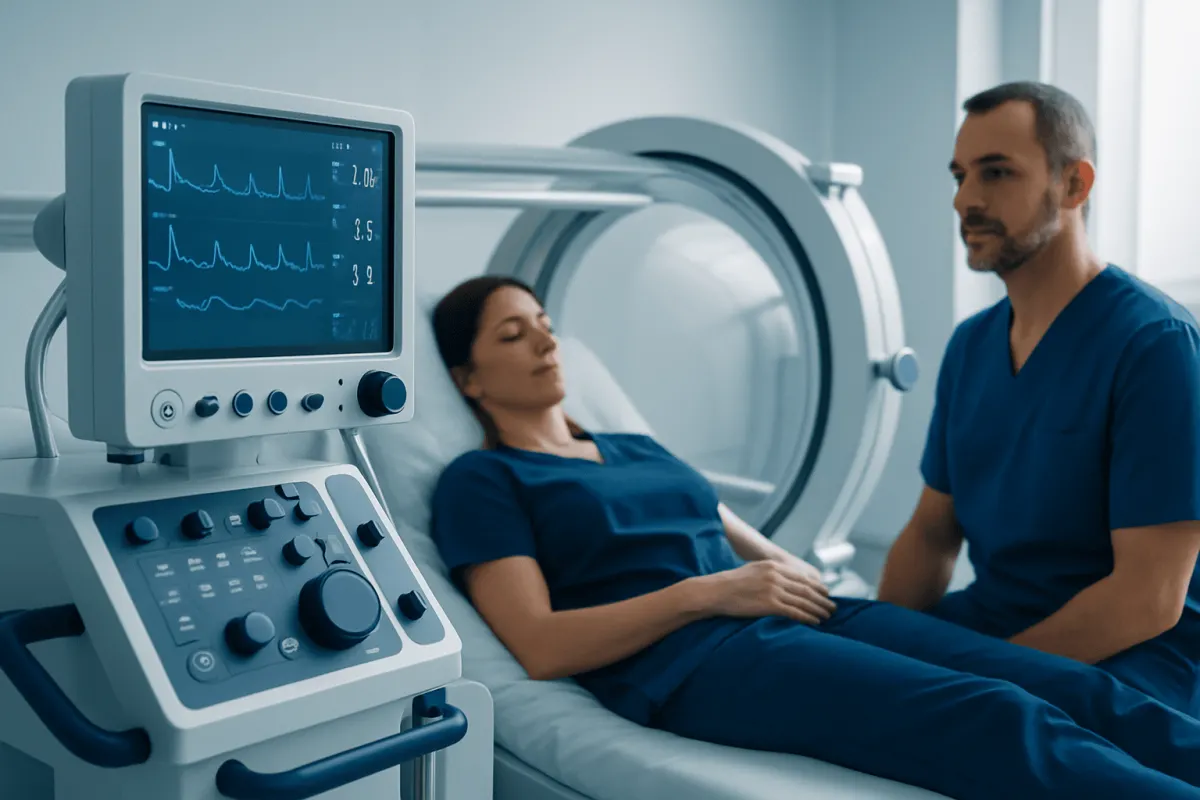
An oxygen chamber, also called a hyperbaric chamber, is a sealed medical device in which air pressure is raised above normal atmospheric pressure. During treatment, the person usually breathes 100% oxygen. This is known as hyperbaric oxygen therapy (HBOT). The higher pressure allows substantially more oxygen to dissolve into the bloodstream and reach body tissues than breathing oxygen at normal pressure.
Medical HBOT is delivered in either a monoplace chamber, designed for one person, or a multiplace chamber, which can accommodate several people and clinical staff. Treatment plans vary according to the condition being treated, the person’s health, and the response to care. Sessions are prescribed and supervised by trained clinicians rather than selected as a general wellness service.
The term “oxygen chamber” is also sometimes used for lower-pressure chambers offered by wellness businesses. These are not equivalent to hospital-based hyperbaric medicine. Their pressure and oxygen delivery may differ considerably, and claims about energy, detoxification, athletic performance, aging, or broad disease prevention often go beyond the available medical evidence.
How Hyperbaric Oxygen Therapy Works
Under increased pressure, oxygen enters not only red blood cells but also the liquid portion of blood, called plasma. This can improve oxygen delivery to tissues when blood flow is impaired or when the body needs help overcoming a severe oxygen-related injury. The treatment may also reduce swelling in some situations, support the activity of infection-fighting cells, and help the body form new small blood vessels during wound healing.
These biological effects do not mean that HBOT benefits every illness. Whether more oxygen is helpful depends on the underlying problem. For example, a wound caused by poor circulation, tissue damage after radiation, or a serious infection may be treated differently from tiredness, chronic pain, or an uncomplicated injury. HBOT is generally used alongside standard medical and surgical care, not as a replacement for it.
During a session, a person may lie down or sit inside the chamber while pressure increases gradually. The ears may feel full, similar to the sensation during airplane descent. Patients are taught to swallow, yawn, or gently equalize ear pressure. Staff monitor the person throughout treatment and can communicate with them during the session.
When Is an Oxygen Chamber Supported by Medical Evidence?

Hyperbaric oxygen therapy has well-established uses for a limited group of conditions. These include decompression sickness, often associated with diving; air or gas embolism; severe carbon monoxide poisoning; and certain traumatic injuries where blood supply to tissue is suddenly compromised. In these settings, HBOT may be urgent and is coordinated with emergency care.
It may also be considered for selected chronic or complex problems, such as some diabetic foot ulcers that have not improved with appropriate wound care, certain radiation-related tissue injuries, chronic bone infection that has not responded to other treatment, and specific severe soft-tissue infections. Decisions are individualized. The team considers wound depth, circulation, infection control, diabetes management, surgery needs, and other treatments already tried.
Accepted indications can differ somewhat between countries, professional organizations, and health systems. A recommendation should be based on a clear diagnosis and current clinical guidance. A person considering an oxygen chamber should ask what condition is being treated, what the expected goal is, what standard treatments remain necessary, and how benefit will be assessed.
- Emergency indications require prompt assessment in an emergency department or specialized service.
- For wounds, HBOT is usually one component of a broader plan that may include cleaning the wound, pressure relief, infection treatment, blood sugar control, and vascular assessment.
- Evidence-based care should have a defined medical purpose rather than promise a universal health benefit.
Common Claims That Need Careful Interpretation
Oxygen is essential to life, but more oxygen is not automatically better for every person or symptom. There is insufficient high-quality evidence to support medical hyperbaric therapy as a routine treatment for healthy aging, “detoxification,” general immunity boosting, uncomplicated sports recovery, or everyday stress and fatigue. Personal stories can feel persuasive, but they cannot show whether improvement came from the chamber, natural recovery, other treatment, or expectation effects.
HBOT is also not a standalone cure for cancer, dementia, autism, Lyme disease, or most long-term pain conditions. Research may continue in some areas, but experimental, early, or mixed findings are different from proven clinical benefit. People should be especially cautious of claims that suggest they can avoid established care, stop prescribed medicines, or use an oxygen chamber instead of evaluation by a doctor.
A reliable provider explains uncertainties as well as potential benefits. They should review medical records, screen for risks, use appropriate safety procedures, and communicate with the person’s treating clinicians. Marketing that guarantees results, presents one treatment as suitable for everyone, or discourages conventional care should be viewed carefully.
Safety, Side Effects, and Who May Not Be Suitable
When delivered in an accredited medical setting by trained professionals, HBOT is generally well tolerated. The most common issue is pressure-related discomfort in the ears or sinuses. Some people experience temporary changes in eyesight, fatigue, or lightheadedness. People with diabetes may need blood glucose monitoring because levels can fall during or after treatment.
Less common but important complications include middle-ear or sinus injury, lung pressure injury, and oxygen toxicity that can rarely trigger seizures. Hyperbaric facilities use protocols to reduce these risks. Fire safety is also essential because oxygen supports combustion; patients must follow strict rules about clothing, personal care products, electronics, and prohibited items.
An untreated collapsed lung, known as pneumothorax, is generally an absolute reason not to receive HBOT until it has been evaluated and managed. Certain lung diseases, ear or sinus problems, fever, seizure disorders, pregnancy, and some medicines may require extra caution or may make treatment unsuitable. Recent surgery, implanted devices, and a history of pressure-related ear difficulties should also be discussed before treatment. A clinician can determine whether testing, medication adjustments, or specialist review is needed.
What to Expect Before, During, and After Treatment
Before treatment, the clinical team reviews the diagnosis, medical history, medications, allergies, and any symptoms that could affect pressure equalization. They may examine the ears, lungs, and wound area where relevant. Patients should tell the team about diabetes, respiratory conditions, past chest surgery, ear surgery, cold symptoms, pregnancy, and any concern about claustrophobia.
During compression and decompression, the person is asked to equalize ear pressure. If ear pain occurs, they should alert staff immediately rather than trying to tolerate it. A session length and number of sessions are determined by the medical indication; there is no single schedule that is appropriate for all conditions. Some people need a course of treatments, while urgent conditions may follow a different protocol.
Afterward, most people can return to normal activities unless their clinical team advises otherwise. It is useful to report persistent ear pain, hearing changes, sinus pain, vision symptoms, unusual shortness of breath, chest pain, or neurologic symptoms. For wound-related care, progress is assessed through regular examinations and by addressing the factors that caused delayed healing in the first place.
When to Seek Medical Care
Emergency medical attention is needed after a diving incident with confusion, weakness, severe joint pain, breathing difficulty, loss of consciousness, or other concerning symptoms. Immediate assessment is also important after suspected carbon monoxide exposure, particularly if there is headache, dizziness, nausea, chest discomfort, confusion, fainting, or symptoms in more than one person in the same setting. Do not delay emergency care to search for a chamber independently.
People with a wound that is becoming more painful, red, swollen, warm, foul-smelling, or associated with fever should contact a clinician promptly. A foot ulcer in a person with diabetes deserves early professional assessment, especially if there is drainage, discoloration, numbness, or reduced circulation. HBOT, if appropriate, is considered after the underlying condition has been properly evaluated.
For people exploring planned hyperbaric treatment, a doctor or hyperbaric medicine specialist can explain whether there is an evidence-based reason to use it and whether safer or more effective options should come first. Acıbadem Health Point’s multidisciplinary specialists and JCI-accredited hospitals can assess and treat eligible international patients as part of coordinated medical care.
Frequently asked questions
01Is an oxygen chamber the same as hyperbaric oxygen therapy?
A medical oxygen chamber is the device used to provide hyperbaric oxygen therapy. In medical HBOT, pressure is increased and the person breathes high-concentration oxygen under professional supervision. Lower-pressure wellness chambers may not provide the same treatment conditions or evidence-based benefits.
02What conditions can hyperbaric oxygen therapy treat?
HBOT is used for selected conditions such as decompression sickness, severe carbon monoxide poisoning, certain serious infections, radiation tissue injury, and some difficult-to-heal wounds. The exact indications depend on clinical guidance and individual circumstances. A specialist should confirm whether the therapy is appropriate.
03Does an oxygen chamber help with fatigue or anti-aging?
There is not strong clinical evidence that hyperbaric oxygen therapy should be used routinely for general fatigue, anti-aging, detoxification, or wellness in otherwise healthy people. Persistent fatigue has many possible causes and should be assessed by a qualified healthcare professional. Treating the underlying cause is usually more useful than pursuing unproven therapies.
04Is hyperbaric oxygen therapy painful?
The treatment itself is usually not painful, although many people feel ear pressure while the chamber is being pressurized or depressurized. Staff teach techniques to relieve this sensation, and the pressure can be adjusted if needed. Persistent or severe ear pain should be reported immediately.
05Who should not use an oxygen chamber?
People with an untreated pneumothorax should not receive HBOT until they have been medically evaluated and treated. Other conditions, including some lung, ear, sinus, and seizure disorders, may require special precautions. A thorough medical assessment is necessary before treatment.
06Can hyperbaric oxygen therapy replace wound care or antibiotics?
No. For eligible wounds or infections, HBOT is an additional treatment rather than a replacement for standard care. Wound cleaning, pressure relief, circulation assessment, diabetes management, surgery when needed, and antibiotics for bacterial infection remain important parts of treatment.
This article is for general information only and is not a substitute for professional medical advice. Please consult a qualified doctor about your individual situation.
Oncology care in Turkey — second opinion and treatment plan
JCI-accredited · board-certified surgeons · reply within 24h
Add us as a Preferred Source to see more of our trusted health content across Google Search, AI Overviews and Discover.