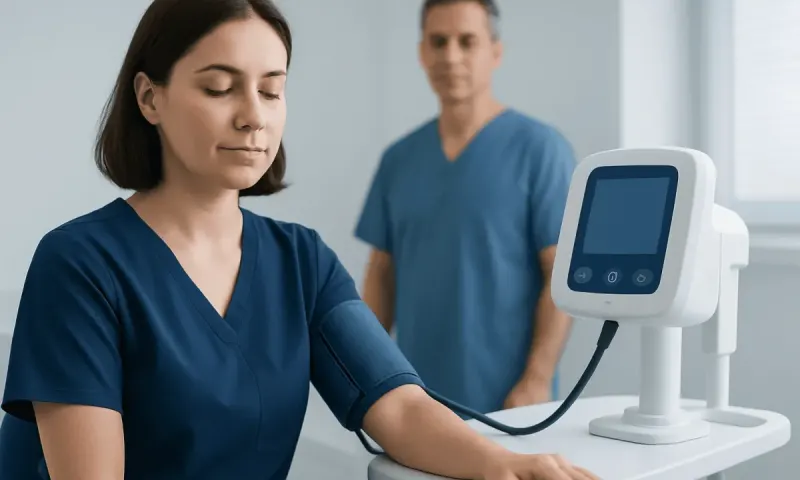
Nuclear Stress Test: Checking Blood Flow to the Heart
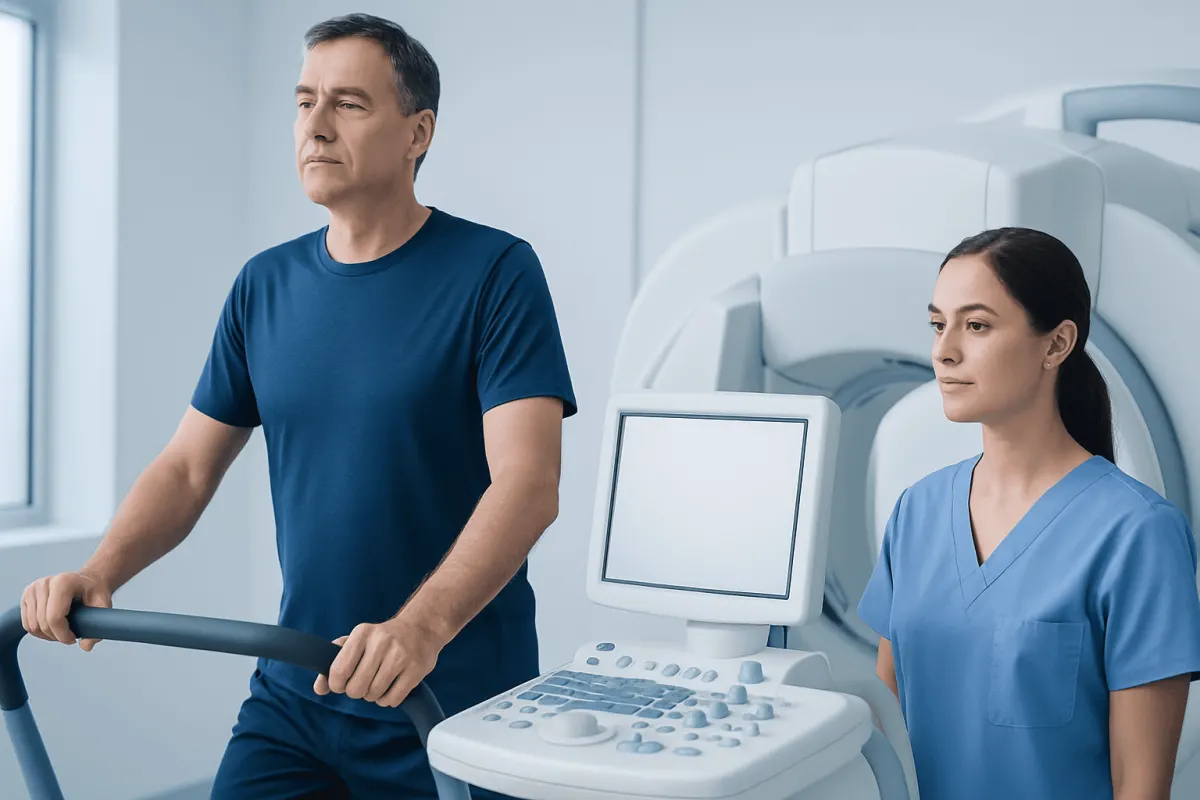
A nuclear stress test is an imaging test that compares blood flow to the heart muscle at rest and during exercise or medication-induced stress. It can help a cardiology team investigate symptoms, assess coronary artery disease, and guide whether further testing or treatment may be needed.
Nuclear Stress Test Overview
A nuclear stress test, also called myocardial perfusion imaging, is a heart imaging examination that evaluates blood flow to the heart muscle. Images are taken after a small amount of a radioactive tracer is injected into a vein. The test compares how the heart receives blood while at rest and when it is working harder.
For the stress portion, a person may walk on a treadmill or receive a medicine that safely increases the heart’s workload or widens heart blood vessels. A special camera then detects the tracer and creates images of the heart. Areas receiving less blood during stress than at rest may suggest reduced blood flow through one or more coronary arteries.
Clinicians may request this test for chest discomfort, unexplained shortness of breath, reduced exercise tolerance, or an abnormal initial heart test. It may also help assess known coronary artery disease or evaluate heart health before selected procedures. It is not usually an emergency test for sudden, severe symptoms.
How the Procedure Is Performed
Preparation instructions vary by facility and medication list. People are commonly asked to avoid caffeine for a period before the test, because caffeine can affect some stress medicines. They may also need to avoid food for several hours, wear comfortable clothing and walking shoes, and bring a complete list of medicines and supplements.
During the appointment, a healthcare professional places an intravenous line and attaches electrocardiogram leads to monitor the heart rhythm. The tracer is injected, followed by a waiting period before imaging. The scan itself involves lying still on an imaging table while a camera moves around the chest; it does not usually involve entering a narrow tunnel.
If exercise is appropriate, the treadmill speed and incline gradually increase while symptoms, blood pressure, and heart rhythm are monitored. If a person cannot exercise adequately, a medication may be used instead. Some people notice temporary flushing, headache, breathlessness, chest pressure, nausea, or a rapid heartbeat with stress medication; staff monitor closely and can treat concerning symptoms.
The total visit often takes several hours because it includes preparation, stress monitoring, tracer circulation time, and both rest and stress images. The active exercise or medication-stress portion is much shorter. A cardiologist or appropriately trained clinician reviews the images together with the monitoring data.
Results, Accuracy and the Meaning of a Good Score
How accurate is a nuclear stress test for heart disease? A nuclear stress test is a well-established, useful test for detecting blood-flow problems that may be caused by significant coronary artery narrowing. Its accuracy is not perfect: image quality, body shape, breast or diaphragm tissue, certain heart rhythm problems, medications, and the ability to reach an adequate stress level can influence results. It may produce false-positive or false-negative findings, so it is interpreted with the person’s symptoms, risk factors, examination, ECG, and other tests.
What is a good score on a nuclear stress test? There is no single score that is “good” for every person or every imaging laboratory. A reassuring report commonly describes normal or uniform perfusion at rest and stress, with no reversible defect, and normal or preserved left ventricular pumping function. The ejection fraction, a measurement of how much blood the main pumping chamber ejects with each beat, may also be reported, but it should be interpreted in context rather than viewed alone.
A reversible perfusion defect means an area appears to receive less blood during stress but improves at rest. This can be consistent with inducible ischemia. A fixed defect appears at both rest and stress and may reflect previous heart muscle injury, although technical image artifacts can sometimes resemble abnormalities. Further evaluation may include medical management, a coronary CT scan, echocardiography, or coronary angiography when clinically appropriate.
The reporting clinician may also comment on exercise capacity, ECG changes, symptoms during the test, heart rhythm, blood pressure response, and the amount of heart muscle involved. These details help a cardiology team estimate risk and decide on the most appropriate next step.
Recovery and Everyday Activities
How long does it take to feel normal after a nuclear stress test? Most people feel back to normal within a few hours and can resume routine activities later the same day. Tiredness after treadmill exercise is common, while brief effects from stress medication, such as flushing, headache, mild nausea, or a fast heartbeat, generally settle soon after the medication has worn off.
Drinking water after the test, unless a clinician has advised fluid restriction, can help the body clear the tracer through urine. The radioactive amount used for imaging is small and leaves the body naturally over time. The imaging team will provide any specific instructions, including whether temporary precautions are needed around infants or pregnant people; these are not necessary for everyone and depend on the tracer used.
What should you not do after a nuclear stress test? People should not ignore new or worsening chest pain, severe shortness of breath, fainting, or persistent palpitations. They should also avoid caffeine until the testing team confirms that it is acceptable, particularly if medications were used during testing or if an additional scan is planned. Heavy exertion may be postponed for the rest of the day if a person feels fatigued or has been advised to do so.
Regular prescribed medicines should only be restarted or adjusted according to the testing team’s instructions. This is particularly important for medicines used for diabetes, heart rhythm conditions, blood pressure, or chest pain. If a sedative was given, the person should not drive, drink alcohol, or make important decisions until its effects have fully passed.
Risks, Safety and Special Considerations
Nuclear stress testing is generally considered safe when performed in an appropriately equipped setting with trained professionals. The radiation exposure is carefully planned and kept as low as reasonably achievable while obtaining useful images. The test is ordered when its expected clinical value outweighs the small risks associated with radiation and stress testing.
Exercise or stress medicines can occasionally trigger an abnormal rhythm, chest pain, low blood pressure, or, rarely, a serious cardiac event. Continuous monitoring and emergency equipment are available during testing. A person should tell the healthcare team immediately about chest discomfort, dizziness, severe breathlessness, wheezing, or any other concerning symptom during the procedure.
Pregnancy, possible pregnancy, breastfeeding, asthma or chronic lung disease, kidney problems, previous reactions to imaging agents, and certain heart conditions should be discussed before scheduling. The test may be delayed, modified, or replaced with another test depending on individual circumstances. It is also important to share all medications, inhalers, and supplements because some can affect stress testing.
When to Seek Medical Care
After leaving the test center, urgent medical care is appropriate for chest pain that is severe, new, persistent, or accompanied by sweating, nausea, fainting, or breathlessness. Emergency assessment is also important for severe allergic-type symptoms such as swelling of the face or throat, widespread hives, or difficulty breathing, although these reactions are uncommon.
A person should contact the testing center or their clinician promptly if they have ongoing dizziness, troublesome palpitations, persistent vomiting, or symptoms that do not improve as expected. For non-urgent questions about recovery, test preparation, medications, or results, the ordering clinician is the best source of individualized advice.
Results are often discussed at a follow-up visit rather than immediately after imaging, as image processing and specialist interpretation take time. Acıbadem Health Point’s multidisciplinary specialists and JCI-accredited hospitals can assess cardiac symptoms and coordinate diagnostic testing and treatment planning for international patients.
Understanding the Next Steps After Results
A normal study can be reassuring, but it does not rule out every cause of chest symptoms or every form of heart disease. For example, symptoms can arise from heart rhythm conditions, valve disease, small-vessel disease, lung conditions, digestive causes, or musculoskeletal pain. Continuing or changing symptoms should be reviewed even when imaging is normal.
If results suggest reduced blood flow, treatment may focus on managing risk factors and symptoms. This can include stopping smoking, regular physical activity when medically appropriate, heart-healthy eating, treatment of high blood pressure, cholesterol management, diabetes care, and prescribed medicines. Some individuals may need further anatomical testing or procedures to restore blood flow.
Follow-up should be personalized. The clinician will consider the degree of abnormality, symptom pattern, heart function, personal and family history, and risk factors such as diabetes, smoking, high cholesterol, and high blood pressure. Bringing questions to the follow-up appointment can help a person understand what the findings mean for their own health.
Frequently asked questions
01Is a nuclear stress test painful?
The imaging portion is usually painless, apart from the brief needle insertion for the intravenous line. Exercise can cause expected exertion such as sweating and breathlessness. Stress medication may cause temporary sensations including flushing, headache, chest pressure, or a faster heartbeat, and staff monitor these closely.
02Can someone eat or drink before a nuclear stress test?
Instructions differ by test center, but people are often asked not to eat for several hours beforehand and to avoid caffeine for a specified period. Certain medicines may also need to be held or timed differently. The ordering team should provide individualized instructions, and prescribed medicines should not be stopped without their advice.
03Why are rest and stress images both needed?
Rest and stress images allow the clinician to compare blood flow under different conditions. Reduced flow that appears only with stress can suggest a problem when the heart needs more oxygen. An abnormality seen in both sets of images may have a different meaning, such as prior injury or an imaging artifact.
04Does an abnormal nuclear stress test always mean blocked arteries?
No. An abnormal result can be influenced by technical factors, body tissue attenuation, medications, heart rhythm issues, or other cardiac conditions. The clinician combines the scan findings with symptoms and other information before determining whether more testing is necessary.
05Can a nuclear stress test show a previous heart attack?
It can sometimes show a fixed area of reduced tracer uptake that may be consistent with scar from a previous heart attack. However, a scan finding alone does not always confirm this, since artifacts and other factors can affect images. Additional clinical information and tests may be needed for interpretation.
06When will nuclear stress test results be available?
Timing varies by facility because images must be processed and reviewed by a qualified clinician. Some people receive preliminary information on the day, while others discuss the finalized report at a follow-up appointment. The ordering clinician can explain when and how results will be communicated.
This article is for general information only and is not a substitute for professional medical advice. Please consult a qualified doctor about your individual situation.
Heart care in Turkey — expert evaluation and treatment
JCI-accredited · board-certified surgeons · reply within 24h
Add us as a Preferred Source to see more of our trusted health content across Google Search, AI Overviews and Discover.