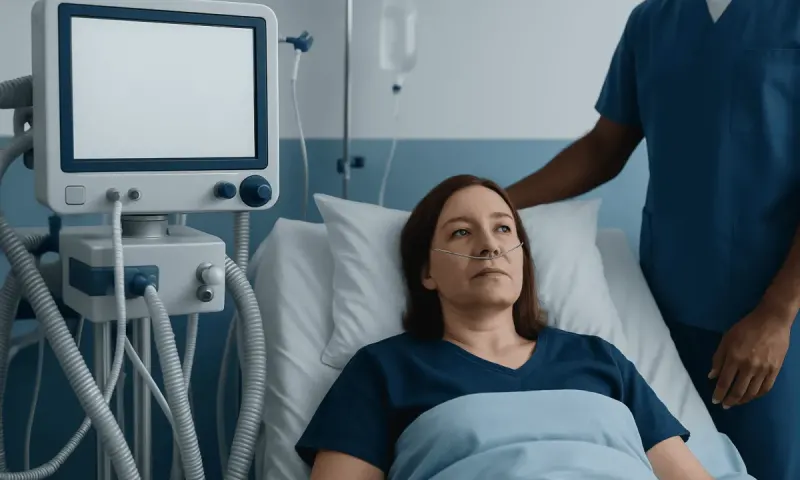
Normal Blood oxygen (SpO2) by Age: Charts, Ranges, and What Your Numbers Mean

You clip the pulse oximeter on your finger, watch the number bounce around, then settle — and you wonder whether that’s a good number for someone your age. Here’s the reassuring part: normal blood oxygen (SpO2) looks pretty much the same whether you’re 5 or 85. For most healthy children, adults, and many older adults, readings sit around 95% to 100% at sea level.
But one number never tells the whole story. Symptoms, altitude, chronic lung or heart disease, sleep, even the way you hold your hand during the reading can all shift the result. Context matters every time.
Normal blood oxygen (SpO2) by age: quick reference chart
For healthy people measured by pulse oximeter at sea level, normal blood oxygen is usually 95% to 100% — and that broad range holds true for infants, children, adults, and many older adults. So don’t read the number by age alone. Look at symptoms, medical history, and whether the value is stable or slipping.
The table below is a practical reference for home readings. It is not a diagnosis by itself, and acceptable targets may differ for people with chronic lung or heart conditions. A clinician may set a different personal goal for someone living with illnesses such as chronic obstructive pulmonary disease or other respiratory disorders.
- Infants: often about 95% to 100% when well and measured correctly
- Children: usually 95% to 100%
- Adults: usually 95% to 100%
- Adults 65+: often still 95% to 100%, though underlying conditions may affect readings
- Borderline or lower readings: should be interpreted with symptoms, altitude, and health history in mind
Numbers wobble. One slightly low reading — especially if you feel fine — may just mean cold fingers, movement, or awkward device technique, not a real oxygen problem. Warm your hand, rest a few minutes, and test again; you’ll usually get a more reliable result.
What SpO2 means and how pulse oximeters work
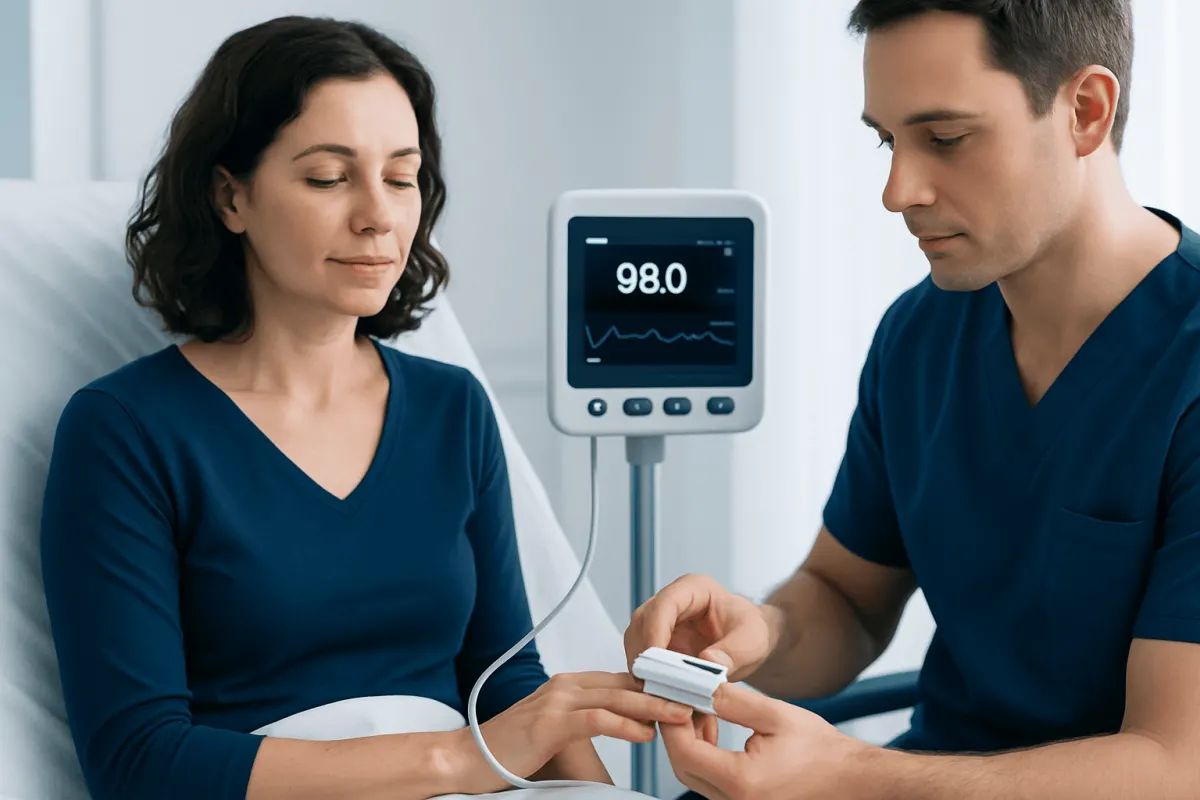
SpO2 is short for peripheral oxygen saturation — an estimate of how much oxygen your red blood cells are carrying compared with their full capacity. The small clip you put on your finger, toe, or sometimes your earlobe shines light through the skin and works out the saturation from how that light is absorbed.
It’s quick, painless, and widely available — which is why it’s so useful. It can help monitor respiratory symptoms at home or in hospital, especially during infections, asthma flare-ups, sleep-related breathing concerns, or recovery from surgery. It is still only an estimate, not a direct blood test.
Always read the number alongside how the person actually looks and feels. Someone breathing comfortably, speaking normally, with a stable reading needs a different response than someone with the same number who also has severe shortness of breath, drowsiness, or chest pain. When in doubt, trust clinical evaluation over the device.
How to interpret SpO2 by age bracket

Infants and young children: Healthy infants and children usually have oxygen saturation in the same general range as adults. However, babies can become unwell more quickly when breathing is affected, so feeding difficulty, fast breathing, chest retractions, unusual sleepiness, or bluish lips deserve attention even if a home reading seems acceptable. Technique matters because movement can make pediatric readings less reliable.
Adults: In healthy adults at sea level, 95% to 100% is commonly considered normal. A reading should be viewed as one part of the picture. A person with fever, cough, wheezing, or known lung disease may still need assessment even if the number is not dramatically low, especially if the reading is falling over time.
Adults over 65: Getting older doesn’t automatically mean lower oxygen. Many older adults still read in the normal range. What changes more often is the presence of conditions such as heart failure, chronic lung disease, sleep apnea, pneumonia, or reduced mobility, which can influence oxygen levels and symptoms.
People with chronic disease: Some individuals have a usual baseline lower than the general range. This can happen in certain long-term respiratory or heart conditions, and their doctor may give a personal target. Home monitoring may be part of care for some patients, sometimes alongside further assessment such as pulmonary function testing when breathing symptoms need evaluation.
Why the number may change: common factors that affect SpO2
Several everyday and medical factors can shift an SpO2 reading. Altitude is one of the most important. At higher elevations, the air contains less available oxygen, so readings may be somewhat lower than at sea level even in healthy people. The normal range should therefore be interpreted with location in mind.
Health conditions also matter. Asthma, pneumonia, viral respiratory infections, sleep apnea, interstitial lung disease, pulmonary embolism, anemia, and heart conditions can all affect oxygen delivery or oxygen exchange. In some cases, shortness of breath may be related to a specific disease process that needs formal medical evaluation, such as pneumonia or other lung illnesses.
Measurement conditions can create misleading values. Cold hands, shaky movement, poor circulation, dark or chipped nail polish, artificial nails, bright ambient light, and low-quality devices may interfere with accuracy. Pulse oximeters may also be less accurate in some situations involving darker skin pigmentation, especially when oxygen levels are low, so symptoms should never be ignored because of one apparently reassuring number.
Temporary body states can contribute too. Sleep, strenuous exercise, acute pain, anxiety with rapid breathing, and recent smoking may influence readings or how symptoms are perceived. A one-time value is usually less informative than a consistent trend measured under similar conditions.
How to check blood oxygen correctly at home
For the most reliable home reading, sit quietly for a few minutes first. Keep your hand warm and relaxed, and take off nail polish or artificial nails if you can. Make sure the device fits properly, then hold still until the number settles.
Rather than reacting to one brief fluctuation, take two or three readings a minute apart and note the most consistent result. Recording the value with the date, time, symptoms, and whether the reading was taken at rest or after activity can make the result more useful for a doctor.
Think of a home pulse oximeter as a screening tool, not a diagnostic device. If your readings are unexpectedly low, all over the place, or simply don’t match how you feel, your doctor may want a more formal assessment. Depending on your symptoms, that could mean blood tests, a chest X-ray, CT scan imaging, or specialist breathing assessment.
For people who snore heavily, wake unrefreshed, or have overnight breathing concerns, daytime finger readings may miss the problem. In such cases, a doctor may suggest sleep-focused evaluation, because oxygen levels can drop mainly during sleep rather than during the day.
When lower SpO2 may suggest a health problem
A lower-than-expected reading isn’t always an emergency — but it deserves a closer look. If the number sits repeatedly below your usual range, or keeps drifting down alongside breathlessness, cough, fever, wheezing, chest tightness, or fatigue, see a doctor. The question to answer: is it the device, a temporary trigger, or an underlying condition?
Doctors may look for respiratory causes, heart-related causes, circulation problems, or sleep-related breathing disorders. Some people may need evaluation for asthma, chronic bronchitis, emphysema, pneumonia, fluid in the lungs, or blood clots. Others may need cardiac testing if symptoms suggest that the heart is not pumping effectively enough to support normal oxygen delivery.
Every assessment is tailored to the person. Expect questions about altitude exposure, smoking, recent infections, lung history, medicines, sleep symptoms, and how much activity you can manage before you’re short of breath. In some cases, further tests such as echocardiography can help assess possible heart-related contributors to low oxygen levels.
When to seek medical care
See a doctor if your SpO2 readings are repeatedly low, clearly different from your usual pattern, or come with worrying symptoms. Prompt assessment is especially important when there is shortness of breath at rest, bluish lips or face, chest pain, new confusion, fainting, severe wheezing, or a sudden decline in energy or alertness.
Parents should seek care for infants or children who have difficult breathing, poor feeding, unusual sleepiness, grunting, chest retractions, or persistent fever, regardless of a single home reading. Older adults and people with chronic lung, heart, or neurological disease may also need earlier medical review because complications can develop more subtly.
Severe breathing distress or rapidly worsening symptoms? Get urgent evaluation — it’s the safest choice. For non-emergency concerns, a doctor can help interpret the result and decide whether monitoring, treatment, or further testing is needed. Acıbadem Health Point’s multidisciplinary specialists in JCI-accredited hospitals evaluate oxygen-related symptoms for international patients and can coordinate respiratory, cardiac, and imaging assessments when appropriate.
Frequently asked questions
01Is normal blood oxygen different for older adults?
In many cases, no. Many healthy older adults still have SpO2 readings around 95% to 100% at sea level. What changes more often with age is the chance of having lung, heart, or sleep-related conditions that can affect the reading.
02What is a normal SpO2 for a child or infant?
Healthy infants and children often have oxygen saturation in the same general range as adults, commonly about 95% to 100% when measured correctly at sea level. If a child has labored breathing, poor feeding, bluish lips, or unusual sleepiness, symptoms should be taken seriously even if the number seems near normal.
03Can a pulse oximeter be wrong?
Yes. Readings can be affected by motion, cold fingers, poor circulation, nail polish, artificial nails, bright light, and device quality. Pulse oximeters can also be less accurate in some situations at lower oxygen levels, so they should be used together with symptoms and medical advice.
04Does high altitude change normal blood oxygen levels?
Yes. At higher elevations, oxygen saturation may be lower than at sea level because there is less oxygen available in the air. A reading should always be interpreted with altitude in mind, especially when comparing values from different locations.
05Should someone worry about one low reading?
Not always. A single low value may happen because of poor technique or temporary factors such as cold hands or movement. It is usually better to rest, repeat the test carefully, and consider whether symptoms are present or the reading is consistently lower than usual.
06What symptoms matter more than the number itself?
Breathlessness, bluish lips, chest pain, confusion, severe wheezing, fainting, and difficulty speaking or feeding are especially important. These symptoms can signal a problem even if the pulse oximeter does not appear dramatically abnormal, and they should prompt medical advice or urgent care depending on severity.
This article is for general information only and is not a substitute for professional medical advice. Please consult a qualified doctor about your individual situation.
Heart care in Turkey — expert evaluation and treatment
JCI-accredited · board-certified surgeons · reply within 24h
Add us as a Preferred Source to see more of our trusted health content across Google Search, AI Overviews and Discover.