

No Shave FUE Hair Transplant: Procedure, Benefits, Risks and Recovery

Key Takeaways
- No shave FUE keeps the donor area unshaven or only minimally trimmed, making the procedure less noticeable.
- It may suit patients who need to return to work or social life quickly, but it is not ideal for everyone.
- The same core surgical principles as standard FUE apply: careful donor harvesting, graft handling, and planned placement.
- Recovery is usually manageable, but healing instructions matter for graft protection and scalp comfort.
- A consultation is essential to confirm candidacy, estimate graft needs, and discuss realistic results.
A no shave FUE hair transplant is a follicular unit extraction procedure in which donor hair is harvested without fully shaving the scalp, allowing a more discreet treatment journey. It can be a practical option for selected patients who want hair restoration while keeping their appearance closer to normal during recovery.
Overview
A no shave FUE hair transplant is a variation of follicular unit extraction in which the surgeon removes hair follicles from the donor area without fully shaving the scalp. For many people, that means the treatment can be carried out with a lower visual profile, which is especially appealing when work, travel, or social commitments make a traditional shaved procedure difficult.
The core goal is the same as any hair transplant: relocating healthy follicles from a denser area to regions affected by thinning or baldness. What changes is the preparation. Instead of shaving a wide donor zone, the surgical team works around existing hair, which can make the process more technically demanding and sometimes longer than standard FUE.
This approach is not simply about appearance. It is about fitting treatment into a real-life schedule, including patients who may be arranging care from another country and want a discreet option before returning home. A good candidate should understand that the method may offer privacy and convenience, but it still requires the same careful planning, aftercare, and follow-up as other hair restoration procedures.
Symptoms and When Hair Transplant Consideration Arises
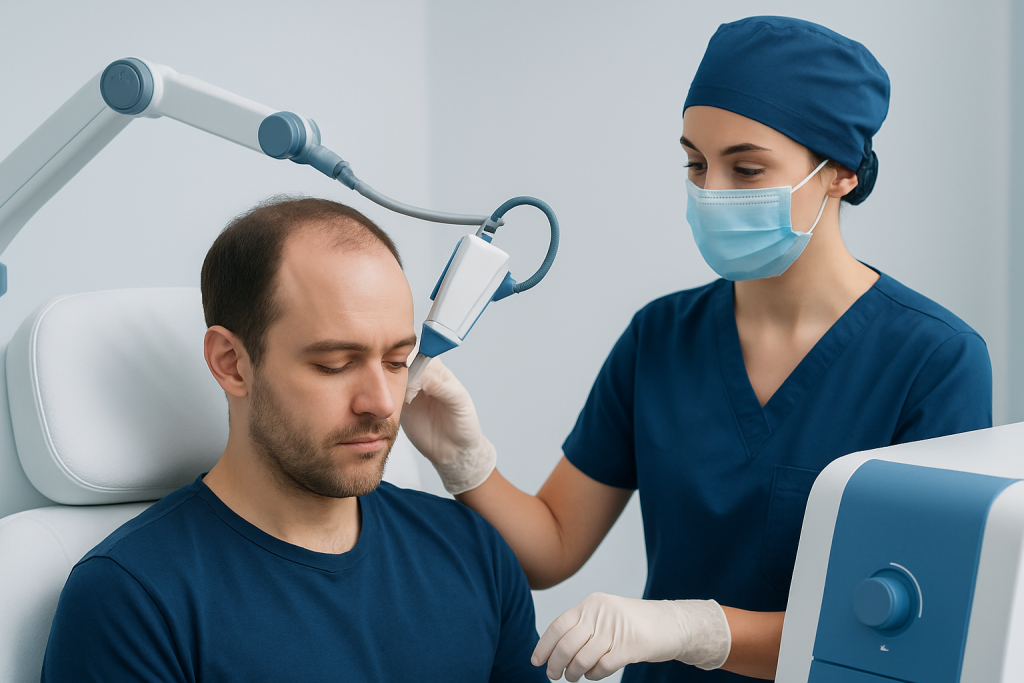
People usually begin considering a hair transplant when hair loss becomes visible enough to affect styling, confidence, or daily grooming. The pattern may involve a receding hairline, thinning at the crown, a widening part, or patchy loss after injury or previous surgery. In some cases, patients seek treatment to rebuild eyebrows, beard areas, or other hair-bearing sites, though the technique and planning can differ.
A no shave FUE hair transplant is not chosen because of a symptom in the medical sense, but because of the practical impact of hair loss. Patients often want a treatment that preserves their current appearance while they heal. This can be important for people in public-facing jobs, for those traveling internationally for care, or for anyone who prefers to keep the procedure private.
- Hairline recession that becomes difficult to conceal
- Noticeable thinning at the crown or mid-scalp
- Uneven loss after trauma or prior surgery
- Desire to avoid a fully shaved donor area
- Need for a discreet return to routine activities
Causes and Risk Factors
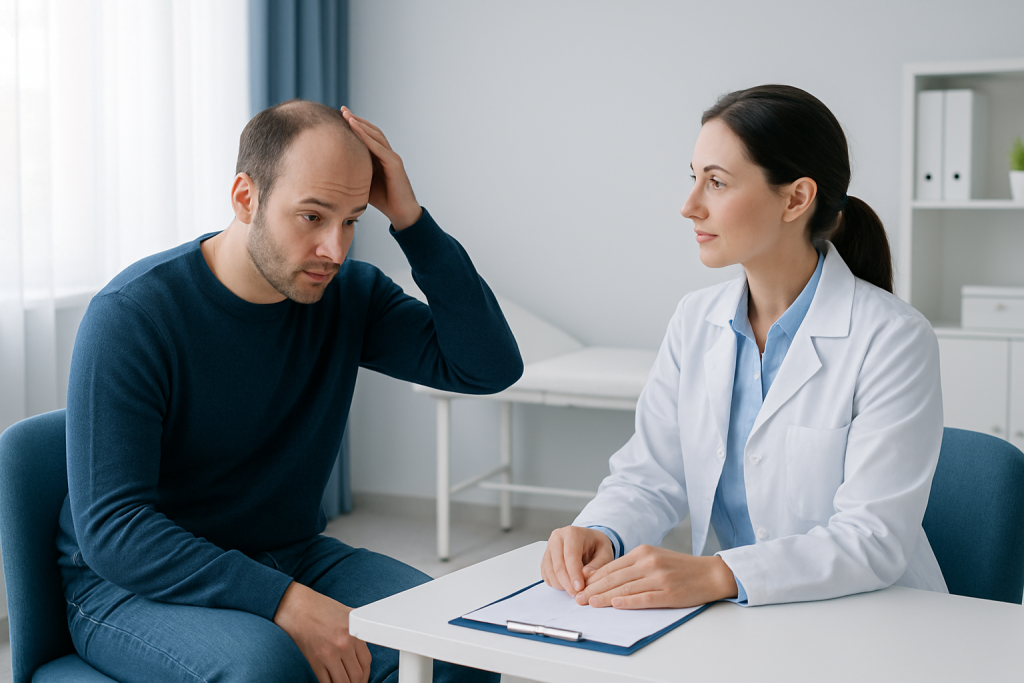
The most common reason for hair transplantation is androgenetic alopecia, also called pattern hair loss. This condition gradually miniaturizes hair follicles in genetically susceptible people, leading to thinning over time. Other causes can include scarring from burns or injury, traction-related hair loss, some inflammatory scalp conditions, and hair loss that remains stable enough for surgical restoration to be considered.
Not every person with hair loss is a good surgical candidate. The quality and density of the donor area matter greatly because transplanted hair must come from follicles that are more resistant to permanent loss. Surgeons also consider age, pattern stability, scalp laxity, hair texture, and whether a patient has realistic expectations about thickness and coverage.
A no shave FUE hair transplant may be particularly appealing to patients who value discretion, but it can be less suitable when a large number of grafts are needed. The surrounding hair must be worked around carefully, so the surgeon may recommend another method if the required coverage is extensive or if donor harvesting would be too time-consuming in an unshaven field.
Diagnosis and Preoperative Assessment
Hair transplant planning begins with a detailed consultation rather than a single test. The medical team reviews the pattern of hair loss, examines the scalp, assesses donor density, and asks about previous treatments, medications, family history, and any scalp conditions. In many cases, photographs are taken for comparison and surgical mapping.
For a no shave procedure, the evaluation is especially important because the surgeon must estimate how to harvest grafts without making the donor region visually obvious. The team may discuss whether a partial trim is needed, how many grafts are feasible, and which areas can be treated in one session. If the pattern of loss is still changing, the clinician may recommend waiting or combining surgery with medical hair-loss management.
Patients traveling from abroad should also plan for practical details such as the length of stay, dressing changes, and how soon a follow-up can occur after returning home. The consultation is the best time to clarify these steps, because a smooth journey depends as much on logistics as on the operation itself.
Treatment Options: How No Shave FUE Is Performed
In no shave FUE, the surgeon extracts individual follicular units from the donor area, usually at the back or sides of the scalp, while leaving the surrounding hair largely intact. The harvested grafts are then prepared and implanted into the thinning area according to the planned hairline design and density distribution. Local anesthesia is commonly used, and patients are typically awake but comfortable during the procedure.
The technique requires precision because the longer surrounding hair can limit visibility. Teams with experience in unshaven or minimally shaven harvesting use careful parting, lighting, and placement methods to reduce disruption to the donor area. Some patients may hear terms such as full no shave, partial shave, or long-hair FUE; these approaches differ in how much hair is trimmed and how much of the donor area remains concealed.
The main advantages are privacy and convenience. The main trade-offs are that the operation may take longer, may cost more in some settings, and may not be appropriate for very large graft counts. A surgeon will usually recommend the option that balances aesthetics, feasibility, and donor safety rather than choosing the most visually appealing method alone.
Benefits
The appeal of a no shave FUE hair transplant lies in how naturally it fits into daily life. Because the donor area is not fully shaved, many patients can move through the treatment period with less visible evidence of surgery. This may help reduce social discomfort, make a return to work easier, and support patients who are flying home soon after treatment.
Another practical benefit is psychological. Hair restoration can be emotional, and some patients feel more at ease when they do not have to adopt an obvious “post-surgery” appearance. For international patients, that discretion can matter during airport travel, hotel stays, and early follow-up visits.
- Less obvious appearance during recovery
- Potentially easier social and professional reintegration
- Useful for patients who prefer privacy
- Can be combined with individualized hairline design
Risks, Limitations, and Possible Side Effects
No hair transplant is risk-free, including no shave FUE. Temporary swelling, redness, tenderness, itching, and mild crusting are common early healing effects. The donor area may also feel sore or tight for a short period. These reactions usually settle as the scalp heals, but patients should follow postoperative instructions closely to protect the grafts.
Because the procedure is done around existing hair, there is a small risk of overharvesting if planning is not careful. There may also be a greater chance that the donor area looks uneven if the surrounding hair is very fine or sparse. As with standard FUE, graft survival depends on handling, timing, and the patient’s ability to avoid rubbing, scratching, smoking, or other behaviors that can compromise healing.
Other limitations include the possibility that the method is not suitable for people needing very large sessions, those with poor donor density, or those with scalp conditions that need medical treatment first. A responsible surgeon will discuss these limits openly so the patient can choose a technique that is both safe and realistic.
Recovery and Self-care
Recovery after a no shave FUE hair transplant is usually straightforward, but the first several days are important. Patients are typically advised to sleep with the head elevated, avoid direct pressure on the grafts, and keep the scalp clean according to the surgical team’s instructions. Gentle washing, when permitted, helps reduce crusting without disturbing the new follicles.
Activity restrictions are temporary but meaningful. Heavy exercise, swimming, saunas, and contact sports are often postponed for a period recommended by the surgeon. The donor and recipient areas may look different in the first weeks, and that is normal. Transplanted hairs often shed before new growth begins, which can be surprising if a patient is not prepared for it.
For people recovering after international travel, it is helpful to plan ahead: arrange a comfortable seat on the flight home, bring approved scalp-care items, and know how to contact the clinic if questions arise. A well-organized recovery plan makes the process feel far less disruptive.
- Follow washing instructions exactly
- Avoid touching, picking, or scratching the grafts
- Protect the scalp from sun and friction
- Keep all follow-up appointments, including remote reviews if offered
When to See a Doctor
A doctor should be consulted when hair loss is progressing, when there is scarring or patchy shedding, or when a person is considering surgery and wants to understand whether no shave FUE is the right method. Medical evaluation is also important if the scalp is itchy, inflamed, painful, or showing signs of an underlying skin condition, because those issues may need treatment before any transplant is planned.
After surgery, patients should contact the clinic if they develop increasing redness, worsening pain, fever, foul-smelling drainage, or any concern that grafts have been displaced. Most recovery experiences are uncomplicated, but prompt advice is always better than guessing from home, especially when the patient has returned to another country.
For international patients, a center with coordinated care can be especially helpful. At Acibadem Health Point, multidisciplinary specialists and JCI-accredited hospitals diagnose and treat hair restoration conditions for international patients, with attention to both medical safety and practical recovery planning.
Frequently asked questions
01What is a no shave FUE hair transplant?
It is a hair transplant in which follicular units are extracted from the donor area without fully shaving the scalp. The aim is to make the procedure less noticeable while using the same basic FUE principles.
02Who is a good candidate for no shave FUE?
It may suit patients who want a discreet procedure and have enough donor hair for the planned graft count. A surgeon also looks at scalp health, hair loss pattern, and whether the patient’s expectations are realistic.
03Is no shave FUE more painful than standard FUE?
Pain is usually managed with local anesthesia during the procedure and simple aftercare afterward. The technique itself is not necessarily more painful, although the scalp may feel tender for a short time during healing.
04How long does recovery take?
Early healing usually takes days to a couple of weeks, while the visual return to normal can take longer because transplanted hairs grow gradually. The exact timeline depends on the individual, the number of grafts, and how well aftercare instructions are followed.
05Can the transplanted hair fall out after surgery?
Yes, temporary shedding of transplanted hairs is expected in many cases and does not mean the transplant has failed. New growth typically begins later, following the natural hair cycle.
06Does no shave FUE work for large bald areas?
It can, but it may not be the best choice when a very large number of grafts is needed. In those cases, the surgeon may recommend a different approach for efficiency and donor-area safety.
This article is for general information only and is not a substitute for professional medical advice. Please consult a qualified doctor about your individual situation.
Hair transplant in Turkey — costs, graft counts & a free assessment
JCI-accredited · board-certified surgeons · reply within 24h
Add us as a Preferred Source to see more of our trusted health content across Google Search, AI Overviews and Discover.


