Natural Remedies for Spider Bites: What Works, What Does Not, and Safety Notes

Natural remedies for spider bites are most useful when they support simple first aid: gently clean the skin, apply a covered cold compress, and monitor symptoms. Many popular household remedies have little evidence and may irritate the skin, delay appropriate care, or increase infection risk.
Natural Remedies for Spider Bites: What Actually Helps
Natural remedies for spider bites should focus on safe, low-risk first aid rather than strong household substances or unverified products. For a mild suspected bite, washing the area with soap and clean running water, applying a cold pack wrapped in cloth, and resting the affected limb are the most sensible measures. These steps can reduce surface contamination, swelling, discomfort, and itching while the skin heals.
Most spiders are not dangerous to people, and many suspected bites are minor skin reactions. In fact, a sore, red, or pimple-like area is often not caused by a spider at all; insect bites, irritation, folliculitis, and bacterial skin infections can look similar. A person should avoid assuming that a lesion is a spider bite if they did not see a spider or develop symptoms soon after possible exposure.
Home care is appropriate only when symptoms are mild and stable. The area should be checked regularly for changes, particularly increasing redness, warmth, swelling, drainage, darkening skin, or escalating pain. A clinician can help identify whether a skin problem needs treatment and whether it may be related to another condition.
A Practical Evidence Check for Home Measures
The most evidence-aligned home measures are simple. Gently wash the skin, remove rings or tight jewelry if a hand, arm, foot, or leg is swelling, and use a cold compress for short periods with a cloth barrier to protect the skin. Raising the limb may also ease swelling. Keeping fingernails short and avoiding scratching can reduce skin damage and lower the chance of infection.
For itching, a pharmacist or clinician may suggest an appropriate nonprescription option, such as a topical anti-itch product or an oral antihistamine, depending on the person’s age, health conditions, pregnancy status, and other medicines. These are not “natural” treatments, but they have clearer safety information than many home mixtures. Pain relief options should similarly be discussed with a pharmacist or healthcare professional when there are medical conditions, medication interactions, or uncertainty.
Some people find a cool, clean wet cloth soothing. This is reasonable if it is used briefly and kept clean. Aloe vera gel may feel cooling for intact skin in some people, but evidence that it treats spider venom or speeds recovery is limited. It should not be used on an open wound, blistered area, or skin that is becoming infected, and it should be stopped if it causes stinging, rash, or increased redness.
- Supported for comfort: cleaning, covered cold compresses, elevation, rest, and protecting the area from scratching.
- Limited evidence: aloe vera for comfort on intact skin only; it does not neutralize venom.
- Not supported: products claimed to “draw out” venom or rapidly cure a bite.
Popular Remedies That Are Best Avoided
Several commonly shared remedies are anecdotal rather than evidence-based. Toothpaste, baking soda pastes, vinegar, alcohol, hydrogen peroxide, essential oils, tea tree oil, garlic, and plant extracts can irritate or burn damaged skin. They do not remove spider venom and may make it harder to assess whether the area is truly worsening.
Heat should not be applied to a suspected spider bite unless a healthcare professional specifically advises it. Heating pads, hot water, and heated objects can cause burns, especially when sensation is reduced by swelling or pain. Likewise, ice should never be placed directly on the skin, because direct contact can damage tissue. A cold pack should always be wrapped in a clean cloth.
Suction devices, cutting the skin, squeezing the area, and attempting to remove venom are not recommended. These actions can injure tissue and raise the risk of infection without providing proven benefit. A tourniquet should also not be used, as restricting circulation can be harmful.
If the skin becomes increasingly painful, red, warm, swollen, or produces pus, it may be an infection rather than a simple bite reaction. Prompt assessment is important because early treatment may prevent complications. General information about related skin problems is available in skin infections.
How to Care for a Suspected Spider Bite at Home
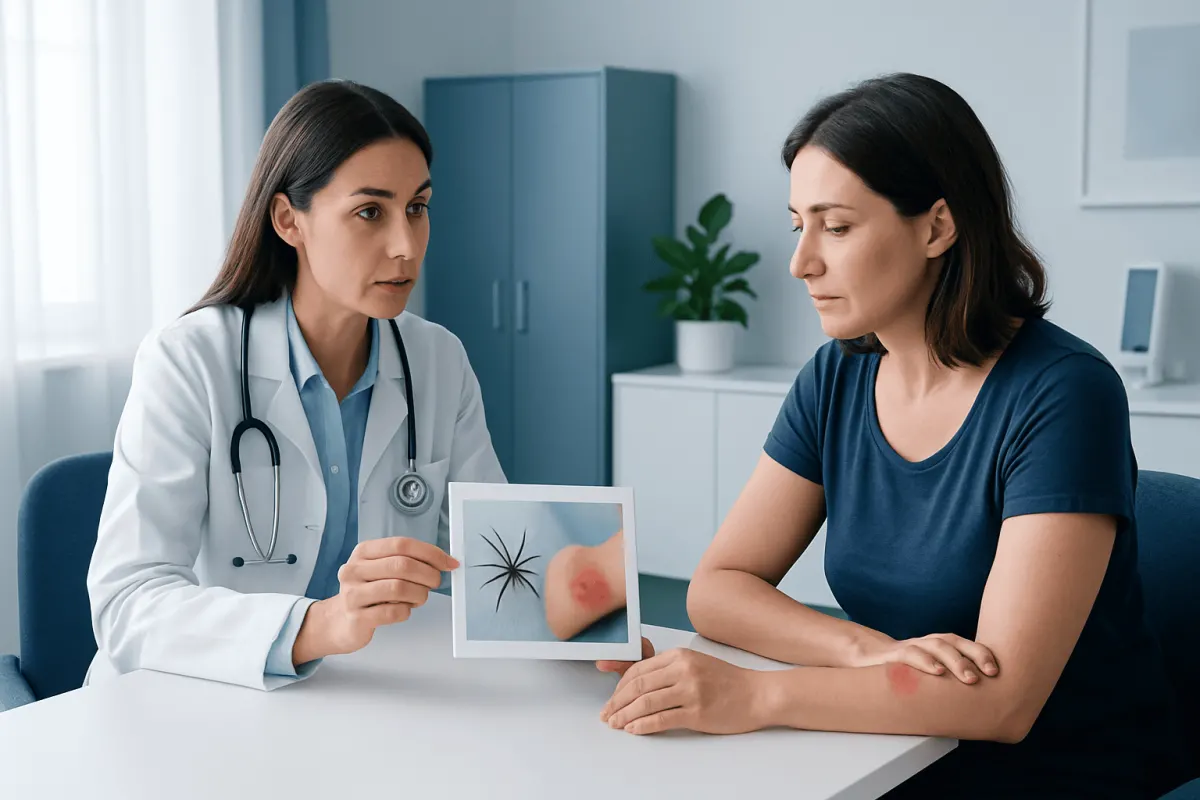
Start by moving away from the area where exposure may have occurred and washing the site with soap and water. If possible, note the time symptoms began. A photograph of the skin area can be useful for comparing changes over the next day or two, but a person should not try to capture or handle a spider for identification.
Apply a covered cold compress for brief intervals, then allow the skin to return to normal temperature between applications. Keep the bite clean and dry, and cover it loosely with a clean dressing if clothing rubs against it or if the skin has been broken. Change any dressing if it becomes wet or dirty.
It can help to mark the outer edge of redness lightly with a pen and note the time, especially if redness is noticeable. This is not a substitute for medical care, but it can make spreading redness easier to recognize. Children, older adults, and people with weakened immune systems or conditions that affect circulation should have a lower threshold for contacting a clinician.
Symptoms such as mild local redness, itching, and swelling may settle over several days. Symptoms should gradually improve, not intensify. If there is uncertainty about the cause of a skin lesion or concern about healing, a qualified healthcare professional should evaluate it.
Why Some “Spider Bites” Need a Different Diagnosis
True medically significant spider bites are uncommon in many regions, while other skin conditions are relatively common. Bacterial infections can begin as a tender red bump and may later form pus, crusting, or an abscess. Contact dermatitis, eczema, bed bug bites, flea bites, and ingrown hairs can also be mistaken for a spider bite.
A clinician will consider the appearance of the skin, the timing of symptoms, possible exposure, overall health, and signs of infection or allergy. If a person saw the spider, a photo taken from a safe distance may help, but identification is often not possible or necessary. Laboratory tests are not routinely needed for mild local reactions.
When an infection is suspected, treatment may include wound care, drainage of an abscess, or prescription medicine when appropriate. It is important not to use leftover antibiotics or someone else’s medication. Antibiotics do not treat spider venom and are not useful unless a clinician believes there is a bacterial infection.
For unusual, severe, or persistent skin symptoms, specialist input may be appropriate. Acıbadem Health Point’s multidisciplinary specialists and JCI-accredited hospitals diagnose and treat skin concerns for international patients when medically indicated.
When to Seek Medical Care
Seek emergency care immediately for trouble breathing, swelling of the lips, tongue, or throat, fainting, confusion, severe weakness, seizures, or a rapidly spreading hives-like rash. These can be signs of a severe allergic reaction or another urgent medical problem. Emergency assessment is also needed for severe whole-body symptoms after a suspected bite, such as intense Supplements for Muscle Cramps: When They May Help" class="ahp-ilk">muscle cramps, vomiting, heavy sweating, chest pain, or severe abdominal pain.
Contact a doctor promptly if pain is severe or increasing, redness expands, the skin becomes hot or markedly swollen, a blister or open sore develops, there is pus or red streaking, or fever and chills occur. Medical review is also important if the center of the lesion becomes purple, dark, or black, or if an area of damaged skin is enlarging.
Children, pregnant people, older adults, and people with immune suppression, diabetes, poor circulation, or chronic skin conditions may need earlier guidance. A clinician should also assess any suspected bite near the eye, on the face, or in the genital area. If tetanus vaccination is not up to date and the skin is broken, a healthcare professional can advise on whether a booster is needed.
For a mild lesion that does not begin improving within a few days, or one that persists beyond about one to two weeks, an appointment is sensible. Medical assessment can distinguish a bite reaction from an infection or another skin condition and guide safe treatment.
Preventing Spider Encounters and Skin Reactions
Prevention usually centers on reducing accidental contact. Gloves, long sleeves, and closed shoes can be useful when moving stored items, working in sheds or garages, gardening, handling firewood, or cleaning less-used areas. Shoes, gloves, bedding, and clothing that have been stored should be shaken out before use.
Keeping storage spaces tidy and sealing gaps around windows, doors, and utility openings may reduce spiders indoors. Regularly removing webs from sheltered outdoor areas and reducing clutter can also limit places where spiders hide. Insect control around the home may reduce spider food sources, although pest-management decisions should follow local safety advice.
When traveling or spending time outdoors, avoid placing bare hands into dark crevices, under rocks, or into woodpiles without looking first. If a spider is found indoors, it is generally safer to keep a distance and use local pest-control guidance when needed rather than trying to handle it.
Being prepared does not mean expecting a serious bite. Most encounters do not lead to significant injury, and calm first aid plus careful observation is enough for many minor skin reactions.
Frequently asked questions
01What is the best natural remedy for a spider bite?
The safest home approach is not a strong topical remedy but basic first aid: wash the area, use a cold compress wrapped in cloth, and elevate the limb if it is swollen. These measures can ease discomfort and help protect the skin. They do not neutralize venom, but most mild suspected bites improve with this type of care.
02Can baking soda or toothpaste help a spider bite?
There is no good clinical evidence that baking soda or toothpaste treats a spider bite or removes venom. Both can irritate skin, especially if the area is broken or inflamed. It is safer to clean the area gently and use a covered cold compress.
03Should a spider bite be kept warm or cold?
A covered cold compress is generally preferred for mild swelling, itch, and pain. Heat can burn the skin and may worsen inflammation, so it should not be used unless a healthcare professional gives specific advice. Never place ice directly on the skin.
04How can someone tell whether a lesion is really a spider bite?
It is often difficult to know unless a spider was seen biting the person. Many rashes, insect bites, ingrown hairs, and bacterial skin infections resemble spider bites. Worsening pain, pus, spreading redness, fever, or an enlarging sore should be evaluated by a clinician.
05When should a suspected spider bite be treated as an emergency?
Emergency care is needed for difficulty breathing, swelling of the face or throat, fainting, confusion, seizures, or severe body-wide symptoms such as intense cramps, vomiting, or heavy sweating. Rapidly worsening symptoms should not be managed with home remedies alone. Local emergency services should be contacted if these signs occur.
06Can a spider bite become infected?
Yes. Scratching, squeezing, cutting, or applying irritating substances can damage the skin and increase infection risk. Increasing warmth, tenderness, spreading redness, pus, red streaks, fever, or chills are reasons to seek medical advice promptly.
This article is for general information only and is not a substitute for professional medical advice. Please consult a qualified doctor about your individual situation.
Explore treatments in Turkey — costs, top hospitals & a free quote
JCI-accredited · board-certified surgeons · reply within 24h
Add us as a Preferred Source to see more of our trusted health content across Google Search, AI Overviews and Discover.