Nasal Fold Filler: Procedure, Benefits, Risks and Recovery

Key Takeaways
- Nasal fold filler is commonly used to reduce the appearance of nasolabial folds, also called smile lines.
- A careful facial assessment is important because some people benefit from treating surrounding areas rather than the fold alone.
- The procedure is usually quick, but swelling, bruising, and temporary tenderness can occur afterward.
- Serious complications are uncommon but possible, so treatment should be performed by a qualified medical professional.
- Results are temporary and maintenance sessions may be needed over time.
- People should seek urgent care if they develop severe pain, skin color changes, vision symptoms, or signs of infection after treatment.
Nasal fold filler is a non-surgical treatment used to soften the lines that run from the sides of the nose toward the mouth. It may create a fresher appearance, but the right candidate, technique, and aftercare matter for safe, natural-looking results.
Overview
Nasal fold filler is a non-surgical cosmetic treatment used to soften the lines that run from the sides of the nose toward the corners of the mouth. These lines are more accurately called nasolabial folds, and they often become more noticeable with age, weight changes, facial movement, or a natural loss of skin support.
The treatment works by placing a filler, most often based on hyaluronic acid, into selected areas to add volume and smooth the transition between the cheek and the mouth. For many people, the goal is not to erase the fold completely, but to create a softer, more rested appearance that still looks like their own face.
Because the face is a highly individual structure, there is no single approach that suits everyone. A thoughtful assessment of the cheeks, midface, lips, skin quality, and smile pattern helps determine whether filler in the fold itself is the best option or whether support in nearby areas will produce a more balanced result.
Symptoms and When People Consider Treatment
Nasolabial folds are not a medical problem in the usual sense, but they are a common aesthetic concern. Some people first notice them only in certain lighting or during facial expressions, while others see deeper lines even at rest. They may appear alongside general facial volume loss, making the lower face look heavier or more tired.
People commonly consider nasal fold filler when makeup settles into lines, when photographs show more shadowing around the mouth, or when the face appears less refreshed than it once did. In international patients, this is often discussed as part of a broader facial rejuvenation plan rather than as a single isolated feature.
It is worth remembering that folds can be completely normal and expressive. Treatment is usually a personal choice, based on how much the lines bother the individual and whether the expected result fits the overall face.
Causes and Risk Factors

Nasolabial folds deepen for several reasons. Natural aging reduces collagen, elastin, and facial fat support, which allows the skin to settle more easily. Repeated facial movement also contributes over time, especially in people with expressive smiles.
Sun exposure, smoking, rapid weight loss, genetics, and differences in facial anatomy can all make folds appear earlier or more prominent. Some people have naturally deeper creases from childhood, while others notice a gradual change later in adult life.
Risk factors for an unsatisfactory cosmetic result often relate less to the fold itself and more to treatment planning. Overfilling, placing filler too superficially, or ignoring the surrounding midface structure can lead to heaviness, unevenness, or an unnatural look.
Diagnosis and Pre-Treatment Assessment
Nasal fold filler does not require a medical diagnosis in the traditional sense, but it does require a careful consultation. A qualified clinician will examine facial proportions, skin quality, prior cosmetic treatments, medical history, and expectations before recommending any injection.
The assessment usually includes a discussion of allergies, bleeding tendencies, past reactions to fillers, autoimmune conditions, pregnancy or breastfeeding status, and any recent dental work or skin infections. It is also important to review medications and supplements that may increase bruising, although patients should never stop a prescribed medicine without speaking to their own doctor.
Good planning helps decide whether filler is suitable, whether another treatment may be preferable, and how much product would be needed for a subtle correction. For patients traveling from abroad, this visit is especially important because it sets realistic expectations and allows enough time for questions, consent, and follow-up planning.
Treatment Options and Procedure
The most common product used for nasal fold filler is hyaluronic acid, a substance that attracts water and can be adjusted more easily than some other filler types. In selected cases, a clinician may recommend another approach, such as treatment of the cheeks first, skin-quality treatments, or a combination plan tailored to the face.
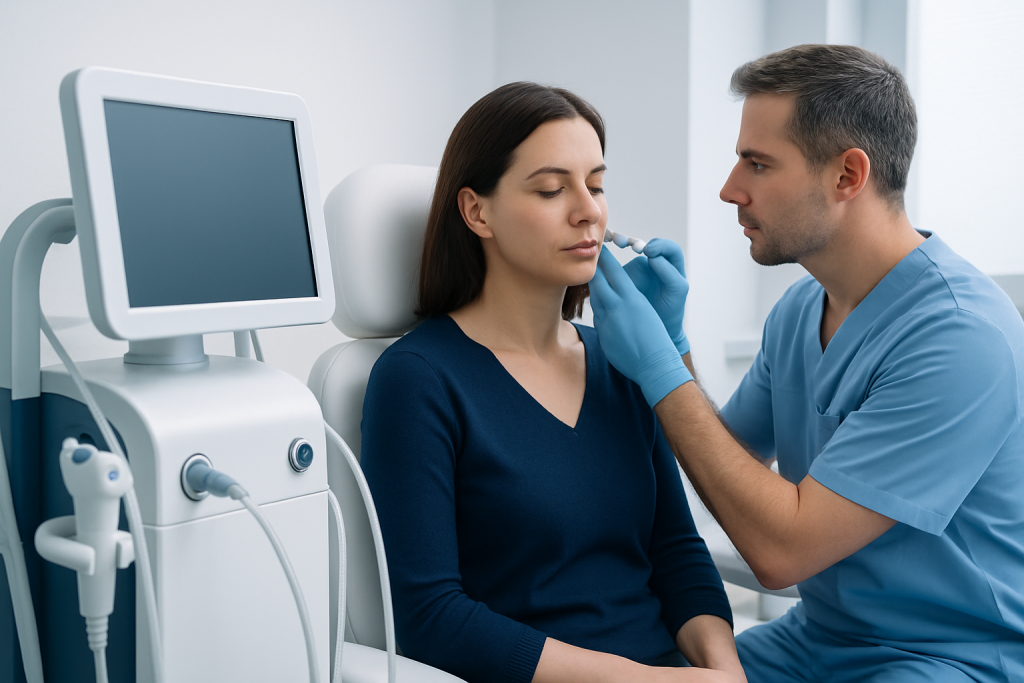
The procedure is usually performed in a clinic setting and often takes a short time. After cleansing the skin, the clinician may use a numbing cream, local anesthetic, or a filler that already contains anesthetic. The product is then placed with a needle or cannula, depending on the technique and the anatomy being treated.
During the session, the clinician may ask the patient to sit upright so facial symmetry can be checked from different angles. Gentle shaping is common, but a careful injector will avoid forcing too much volume into the fold, because the most natural result often comes from subtle support rather than strong correction.
- Hyaluronic acid fillers: commonly chosen because they are versatile and can be dissolved if needed.
- Midface support first: sometimes better for patients whose folds are caused mainly by cheek descent or volume loss.
- Combination care: may include skincare, other injectables, or non-invasive treatments when appropriate.
Benefits and Expected Results
When nasal fold filler is well planned and carefully placed, it can soften deep creases and reduce shadowing around the mouth. Many patients like that the change is visible without surgery, anesthesia, or a long recovery period.
Another practical benefit is flexibility. With hyaluronic acid filler, results can be adjusted over time, and the treatment can often be refined in later sessions rather than committing to a permanent change. This makes it appealing to people who prefer gradual improvement.
Patients also value the sense of balance it can bring to the lower face. In a well-designed treatment plan, the goal is not to make the face look “done,” but to restore harmony so expressions remain natural and familiar.
Risks, Side Effects, and Safety Considerations
Most side effects are mild and short-lived, such as swelling, bruising, redness, tenderness, or a feeling of firmness at the injection sites. These usually improve over several days, though some sensitivity can last longer depending on the product and the person’s skin response.
More significant problems are uncommon but can include lumps, asymmetry, prolonged swelling, infection, allergic reactions, or placement of too much filler. Rarely, filler can enter or compress a blood vessel, which is a medical emergency because it can threaten skin or vision. This is one reason injectable facial treatments should only be performed by trained professionals who know facial anatomy well.
Patients should contact a clinician promptly if they develop severe pain, skin that turns pale, grey, or mottled, sudden vision changes, or swelling that worsens instead of improving. Even when concerns turn out to be minor, early assessment is always safer than waiting.
Recovery, Prevention, and Self-care
Recovery is usually straightforward. Many people return to work or normal activities the same day, although they may prefer to avoid important social events until bruising or swelling settles. Following aftercare instructions helps protect the result and lowers the chance of irritation.
Typical advice may include avoiding rubbing the area, skipping intense exercise for a short period, and staying away from very hot environments immediately after treatment. If the clinician recommends ice or a specific cleansing routine, it should be followed gently and exactly as instructed.
Long-term self-care matters too. Sun protection, smoking cessation, healthy sleep, and skin care can support overall facial appearance, even though they do not replace filler. People who travel for treatment should also plan a follow-up window in case a review visit is needed before returning home.
- Keep the area clean and avoid unnecessary pressure.
- Do not massage the filler unless specifically advised.
- Postpone facial treatments or dental work if the clinician recommends waiting.
- Follow the clinic’s instructions on medications, makeup, and activity.
When to See a Doctor
A routine follow-up is useful if the patient wants an adjustment, has questions about symmetry, or feels the result is not matching expectations. Small refinements are often easier and safer than waiting until concern builds up.
Urgent medical attention is needed if severe pain, skin color change, increasing swelling, fever, pus, or vision symptoms appear after treatment. These signs are not typical recovery findings and should be assessed without delay.
People considering treatment should also speak with a doctor first if they are pregnant, have an active skin infection, have had repeated reactions to fillers, or have a medical condition that could affect healing. For international patients, Acibadem Health Point’s multidisciplinary specialists and JCI-accredited hospitals can diagnose and treat this condition for those seeking care abroad, with attention to consultation, procedure planning, and follow-up.
Frequently asked questions
01What is nasal fold filler used for?
Nasal fold filler is used to soften the lines that run from the nose to the mouth. It can help the lower face look smoother and less shadowed, while still keeping a natural expression.
02Is nasal fold filler the same as smile line filler?
Yes, these terms are often used for the same area. The medical term is the nasolabial fold, while smile line filler is a common everyday description.
03How long does the procedure take?
The appointment is often relatively short, though consultation and planning take time as well. The actual injections may only take a few minutes, depending on the treatment plan.
04How long do results last?
Results are temporary and vary by product, placement, and the person’s metabolism. Many patients need maintenance treatment over time to keep the same level of correction.
05Can filler make the folds look worse?
If too much filler is used or if the wrong area is treated, the face can look heavy or uneven. A careful assessment of the cheeks and lower face helps reduce this risk.
06Is there any downtime after treatment?
Downtime is usually limited, but swelling or bruising can happen. Most people can return to normal routines soon after treatment, provided they follow aftercare guidance.
07What should someone do if they are traveling from another country for treatment?
They should allow enough time for consultation, the procedure, and a possible follow-up visit. It is sensible to plan travel around recovery and to keep contact details for the clinic in case questions arise after returning home.
This article is for general information only and is not a substitute for professional medical advice. Please consult a qualified doctor about your individual situation.
Explore treatments in Turkey — costs, top hospitals & a free quote
JCI-accredited · board-certified surgeons · reply within 24h
Add us as a Preferred Source to see more of our trusted health content across Google Search, AI Overviews and Discover.