Narrow Angles Without Glaucoma: Causes, Symptoms, Diagnosis and Treatment

Key Takeaways
- Narrow angles without glaucoma are a risk state, not the same as glaucoma.
- Many people have no symptoms, so the finding is often discovered during an eye exam.
- A detailed eye examination, especially gonioscopy, is central to diagnosis.
- Treatment may range from observation to laser or other procedures, depending on the risk.
- Prompt assessment is important if eye pain, halos, redness, or sudden vision changes occur.
Narrow angles without glaucoma means the drainage angle in the eye is narrower than usual, but there is no evidence of optic nerve damage or glaucoma yet. It is important because some people with this eye shape have a higher future risk of angle closure and may need monitoring or preventive treatment.
Overview
Narrow angles without glaucoma describes an eye anatomy in which the space between the iris and the cornea is tighter than usual, making the fluid drainage pathway less open than expected. The person does not yet have the optic nerve damage or vision field loss that defines glaucoma, but the eye may be more vulnerable to a sudden or gradual rise in eye pressure in the future.
This is often found during a routine eye examination rather than because of symptoms. For many people, the main value of the diagnosis is not alarm, but awareness: once the eye specialist identifies a narrow angle, the next step is deciding whether simple monitoring is enough or whether preventive treatment makes sense.
In practical terms, narrow angles without glaucoma sit in a middle zone. The eye is not currently damaged by glaucoma, yet it is not fully low-risk either. That is why a careful eye exam matters, especially for people planning travel, living far from their specialist, or seeking a second opinion before deciding on preventive treatment.
Symptoms
Most people with narrow angles without glaucoma do not notice anything at all. Their vision may seem completely normal, and the finding can come as a surprise after a doctor looks at the front of the eye with special lenses or instruments. This lack of symptoms is one reason routine eye care is so important.
When symptoms do occur, they are usually related to intermittent or sudden angle narrowing, which can temporarily interfere with fluid drainage. People may report blurred vision, halos around lights, headache, eye discomfort, or a sense of pressure in the eye. These symptoms are not specific to narrow angles, so they need medical evaluation rather than self-diagnosis.
Warning signs of a more urgent problem can include a painful red eye, nausea, vomiting, sudden blurred vision, or seeing rainbow-colored halos. These can suggest acute angle closure, which is an eye emergency. Even if a person has previously been told they only have narrow angles without glaucoma, new sudden symptoms should be assessed promptly.
Causes & Risk Factors

Narrow angles are usually related to eye shape rather than a temporary illness. In many cases, the front part of the eye is naturally shorter or more crowded, so the iris sits closer to the drainage angle. As a result, the channel that lets fluid leave the eye can become partially blocked more easily, especially when the pupil changes size.
Several factors can make narrow angles more likely. These include older age, female sex, farsightedness, a family history of angle-closure disease, and certain ethnic backgrounds in which angle closure is more common. Cataract growth can also contribute in some people by crowding the front of the eye even more.
Some medicines may briefly worsen angle narrowing in susceptible eyes by enlarging the pupil or changing how the eye fluid behaves. That is why it is helpful for patients to tell every eye doctor and prescribing clinician about a known narrow-angle finding before starting new medications, especially if they are traveling and may see different providers in different countries.
Diagnosis
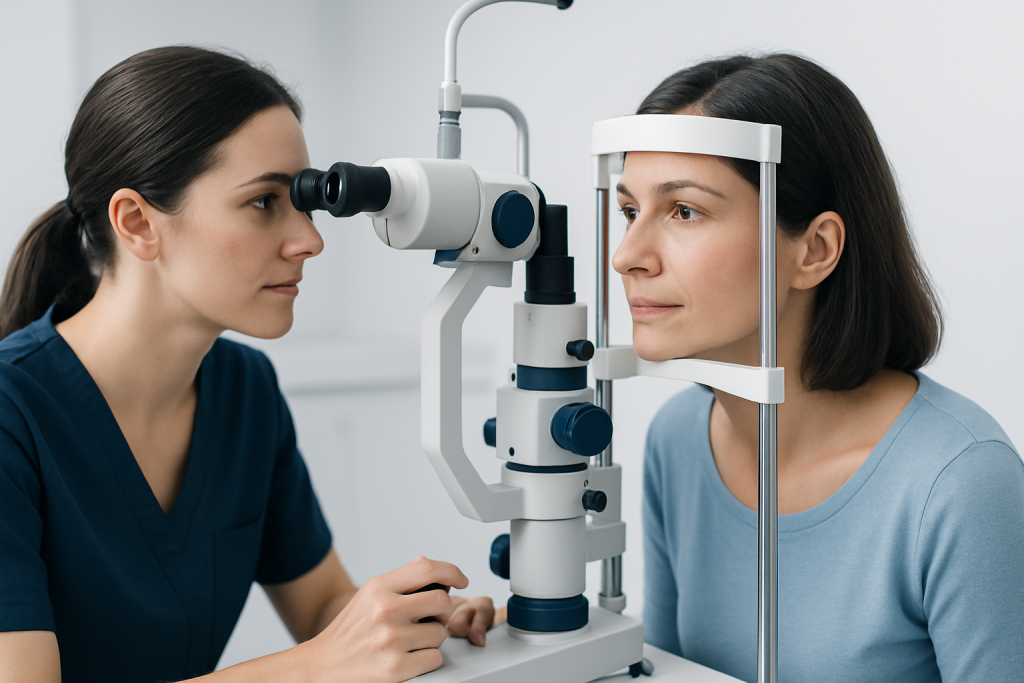
The key test for narrow angles is gonioscopy, a specialist examination that allows the doctor to directly view the drainage angle with a mirrored lens and slit lamp microscope. This test helps confirm whether the angle is narrow, whether it is closed in places, and whether there are signs of damage or other anatomical reasons for concern.
Other tests often support the diagnosis. These may include eye pressure measurement, optic nerve examination, visual field testing, and sometimes imaging such as optical coherence tomography or anterior segment imaging. Together, these tests help the doctor determine whether the person has narrow angles only, or whether glaucoma has already started.
Because the diagnosis can affect future treatment choices, patients should ask for clear explanation of the result: Is the angle merely narrow, or is it partially closed? Is the pressure normal? Is the optic nerve healthy? For international patients, it can be useful to request written test results and images for follow-up care at home.
Treatment Options
Treatment depends on how narrow the angle is, whether eye pressure is normal, and whether the optic nerve appears healthy. In lower-risk cases, doctors may recommend observation with periodic eye exams rather than immediate intervention. This approach can be appropriate when the angle is narrow but stable and there are no signs of pressure-related damage.
If the risk of angle closure is considered significant, laser peripheral iridotomy is a common preventive option. This procedure creates a tiny opening in the iris to help fluid move more freely and reduce the chance of sudden blockage in certain eye shapes. In selected patients, doctors may also consider lens-based approaches, especially if cataract or lens crowding is part of the problem.
Medication is sometimes used in special situations, but it is not the main long-term solution for many people with narrow angles. The choice between monitoring, laser, or surgery depends on anatomy, symptoms, pressure findings, and the doctor’s assessment of future risk. A careful discussion is especially important for patients who need to coordinate treatment around travel, work, or caregiving responsibilities.
- Observation: appropriate when risk is low and follow-up is reliable.
- Laser peripheral iridotomy: often used to reduce the risk of angle closure in suitable eyes.
- Lens surgery or cataract surgery: may help when lens crowding is a major contributor.
- Ongoing monitoring: important even after treatment, because eye risk does not disappear completely.
Prevention & Self-care
There is no guaranteed way to prevent narrow angles because eye anatomy plays the leading role. Still, people who know they have narrow angles can reduce the chance of problems by keeping regular follow-up appointments and telling eye specialists about the diagnosis before any new medication is started.
It also helps to learn the symptoms of acute angle closure and seek care quickly if they appear. Patients should avoid assuming that a mild headache or blurry vision is harmless if they already have a narrow-angle diagnosis. In eye care, a short delay can matter, so a cautious response is usually the safer one.
For those managing care across borders, practical self-care includes carrying copies of examination results, understanding what procedure was done if any treatment has been performed, and planning follow-up timing before leaving the treatment country. Patients recovering after a procedure should follow the surgeon’s instructions on activity, drops, and review visits, and should ask what symptoms would justify earlier contact.
When to See a Doctor
An eye specialist should evaluate anyone told they have narrow angles, even if they feel well, because the condition requires risk assessment rather than guesswork. If a person has been diagnosed elsewhere and is unsure whether they have glaucoma, a second opinion can help clarify the stage and the best next step.
Urgent care is needed for sudden eye pain, redness, blurred vision, halos around lights, nausea, vomiting, or a rapidly worsening headache with eye symptoms. These can signal an acute pressure rise that should not wait for a routine appointment. People with known narrow angles should treat these symptoms as time-sensitive.
For international patients, it is reasonable to seek care at a center that can provide complete diagnostic testing, explain options in plain language, and coordinate follow-up after return home. At Acibadem Health Point, multidisciplinary specialists and JCI-accredited hospitals diagnose and treat this condition for international patients, with attention to both medical safety and practical follow-up.
Frequently asked questions
01Does narrow angles without glaucoma mean I already have glaucoma?
No. It means the eye has an anatomical risk factor, but there is no documented optic nerve damage or glaucoma at the time of diagnosis. The finding matters because it can increase the chance of future angle closure or glaucoma, so monitoring is often recommended.
02Can narrow angles cause symptoms even if I do not have glaucoma?
Yes, but many people have no symptoms at all. Some may notice intermittent blur, halos, headache, or eye pressure if the angle narrows further or briefly blocks fluid drainage.
03What test confirms narrow angles?
Gonioscopy is the main confirmatory test because it lets the doctor examine the drainage angle directly. Eye pressure measurement, optic nerve evaluation, and visual field testing are often used alongside it.
04Will I always need laser treatment if I have narrow angles?
Not always. Some people can be safely observed if the risk is low and follow-up is dependable, while others are advised to have preventive laser treatment based on their anatomy and overall risk profile.
05Can cataracts make narrow angles worse?
Yes, in some people the lens becomes thicker and crowds the front of the eye, which can narrow the angle further. In selected cases, cataract or lens surgery may help improve the drainage space.
06What should I do if I suddenly get eye pain and blurred vision?
Seek urgent medical care right away, especially if the eye is red, the vision is blurred, or there are halos, nausea, or vomiting. These symptoms can indicate acute angle closure and should be assessed without delay.
This article is for general information only and is not a substitute for professional medical advice. Please consult a qualified doctor about your individual situation.
Persistent digestive symptoms? Get evaluated in Turkey
JCI-accredited · board-certified surgeons · reply within 24h
Add us as a Preferred Source to see more of our trusted health content across Google Search, AI Overviews and Discover.