Monolid Eyes: Causes and Characteristics

Key Takeaways
- A monolid is a natural eyelid variation, not a disease.
- It can occur in many people and may be influenced by genetics and ethnicity.
- Most monolids do not require treatment unless they cause functional or personal concerns.
- A careful eye and facial assessment helps determine whether any procedure is appropriate.
A monolid is an eyelid shape with little or no visible crease in the upper lid. It is a normal anatomical variation, but some people seek advice for vision-related concerns, makeup challenges, or cosmetic preferences.
Overview
A monolid is an upper eyelid shape in which the usual visible crease is absent or minimal. The eyelid appears smoother from the lash line to the brow, and this can be completely normal. In many people, it is simply one of several healthy eyelid patterns rather than a sign that anything is wrong.
Because eyelid shape is part of facial anatomy, people often notice a monolid for personal, cultural, or cosmetic reasons. Some adults have had the same eyelid shape since childhood, while others notice asymmetry, such as one eye having a crease and the other not. In international patients considering care abroad, it is often helpful to start with a consultation that focuses on both appearance and function, not just on the eyelid fold itself.
A monolid may also be discussed together with terms such as epicanthic fold or double eyelid. These features are related but not identical. An experienced clinician looks at the entire eye area, including the eyelid skin, eyebrow position, eyebrow-to-lash distance, and whether the eyelid opens normally.
Symptoms and Common Concerns
A monolid does not usually cause medical symptoms on its own. The main issue is often visual or practical: some people find it harder to apply makeup evenly, while others simply prefer a different eyelid contour for personal style. In many cases, the concern is about appearance rather than health.
There can also be functional questions. If the eyelid skin is heavy, if the eyebrow is low, or if the lid droops, a person may feel that the eye looks smaller or that the upper lid partly covers the lashes. This is not the monolid alone, but the combined effect of eyelid anatomy. A proper assessment helps distinguish a naturally crease-free lid from ptosis or other eyelid conditions.
- Little or no visible upper eyelid crease
- Possible asymmetry between the two eyes
- Makeup application may require different techniques
- In some cases, a heavy upper lid may affect the field of view
It is also common for preferences to change over time. Some people never want to alter their eyelid shape, while others begin considering treatment after learning more about options or after noticing that eyelid heaviness affects daily life.
Causes and Risk Factors

Most monolids are the result of normal anatomy and genetics. The placement of the orbital septum, the distribution of fat in the upper eyelid, and the way skin attaches to the eyelid tissues all influence whether a crease forms. Family traits and ethnic background can play a role, but there is wide natural variation within every population.
A monolid can be present from birth or become more noticeable with age. As the skin around the eyes loses elasticity over time, a previously visible crease may soften or disappear. Weight changes, swelling, and certain eyelid conditions can also alter the appearance of the upper lid.
Risk factors for seeking medical advice are usually not about the monolid itself, but about associated features. These may include eyelid drooping, irritation from extra skin, dry eye symptoms, or an eyebrow position that changes how the eyelid sits. A specialist evaluates whether the eyelid shape is simply a normal variant or part of a broader functional issue.
Diagnosis
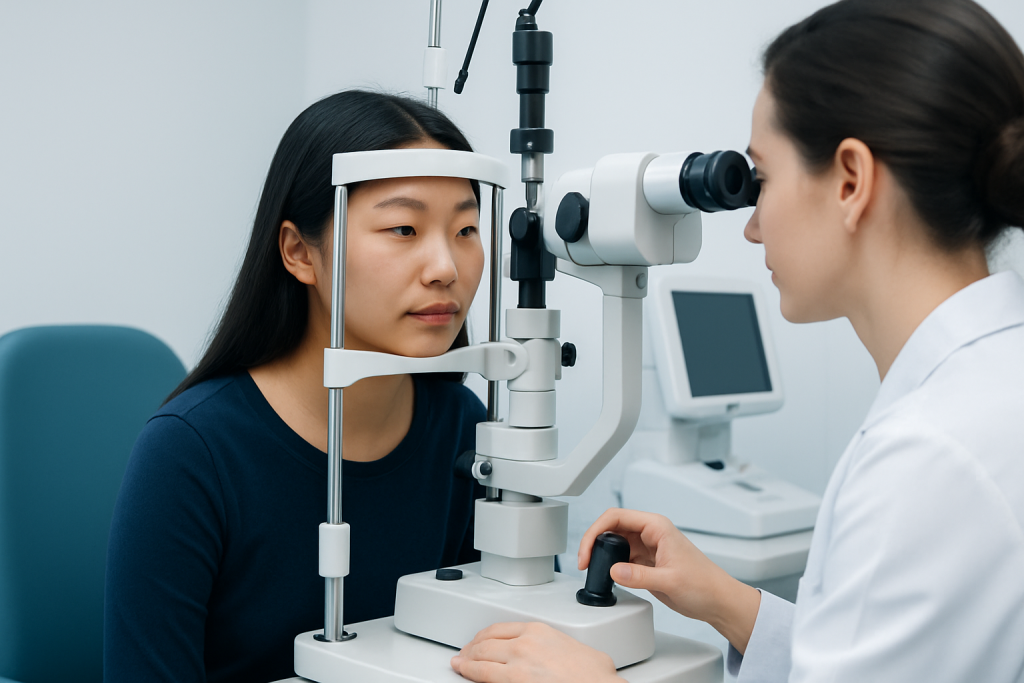
There is no special laboratory test for a monolid. Diagnosis is based on a clinical examination of the eyes, eyelids, and surrounding facial structures. A clinician will typically ask about the person’s concerns, medical history, any past eye surgery or trauma, and whether the eyelid shape affects vision or comfort.
The exam may include a look at how the eyelid opens and closes, where the crease sits if one is present, the amount of skin overhanging the lid, and the position of the eyebrow and eyelashes. If the concern is more functional than cosmetic, the clinician may check the visual field and rule out ptosis, dermatochalasis, or other causes of lid heaviness.
For international patients, good diagnosis often depends on clear communication. Photos, interpreter support when needed, and a detailed discussion of expectations can help the treating team understand what the patient hopes to change and what is medically appropriate. This is especially important because eyelid surgery is highly individualized.
Treatment Options
Most monolids do not need treatment. When someone wants a change, the right approach depends on whether the goal is cosmetic refinement, improved symmetry, or relief from heaviness. A specialist may first explain conservative options and then discuss procedures only when they match the anatomy and the person’s expectations.
Non-surgical approaches are limited but can be useful for temporary appearance changes. Makeup techniques, eyelid tape, and certain adhesive products may create the look of a crease for some people. These methods are reversible, but they can irritate sensitive skin if used too aggressively or too often.
Surgical options may be considered when the person wants a more permanent eyelid crease or when excess skin and eyelid structure contribute to functional concerns. Procedures are planned carefully to suit the eyelid thickness, the amount of skin present, and the desired crease height. Common surgical discussions include:
- Double eyelid surgery to create or define a crease
- Ptosis repair if the upper lid is drooping
- Upper blepharoplasty when excess skin contributes to heaviness
- Combination procedures tailored to facial balance
Recovery and results vary from one person to another. Swelling and temporary tightness are common after eyelid procedures, and the final appearance may take time to settle. For patients traveling from another country, follow-up planning matters as much as the operation itself, since early reviews and clear instructions help support a safe recovery.
Prevention and Self-care
A monolid itself cannot usually be prevented because it is part of natural anatomy. The more practical focus is on caring for the eyelids and protecting the skin around the eyes, especially if a person uses makeup, adhesives, or wears contact lenses. Gentle habits can help reduce irritation and keep the area comfortable.
Daily self-care should be mild and consistent. The skin around the eyes is delicate, so harsh rubbing or frequent pulling at the eyelids is best avoided. People who use eyelid tape or other cosmetic aids should follow product directions carefully and stop if redness, swelling, or discomfort develops.
- Remove eye makeup gently and completely
- Use products designed for sensitive skin around the eyes
- Avoid repeated tugging or stretching of the eyelids
- Protect the eyes from sun exposure with sunglasses
- Seek advice before trying any cosmetic procedure abroad
If someone is considering treatment in another country, preparation helps the experience go more smoothly. That includes bringing a medication list, sharing past eye records when available, and discussing how long they will remain locally for recovery and review. A thoughtful plan reduces avoidable stress and supports better follow-up.
When to See a Doctor
Medical advice is worthwhile when a monolid is associated with vision changes, lid drooping, recurrent irritation, or a feeling that one eye looks or functions differently from the other. A clinician can determine whether the issue is simply anatomical or whether another eyelid condition is present.
It is also reasonable to seek a consultation if a person is considering a cosmetic change and wants to understand the benefits, limits, and possible risks. A careful evaluation is especially important before any surgery, because eyelid procedures must be matched to facial structure and eye health rather than to a single look seen in photos.
Anyone with sudden eyelid swelling, pain, redness, discharge, double vision, or a rapidly changing eyelid position should seek prompt medical assessment. These symptoms are not typical features of a monolid and deserve attention. For international patients, a multidisciplinary team and JCI-accredited hospitals, such as those at Acibadem Health Point, can help diagnose and treat eyelid concerns with coordinated planning.
Frequently asked questions
01Is a monolid normal?
Yes. A monolid is a normal eyelid variation and, by itself, is not a medical problem. Many people have it from birth, and it is common across different families and populations.
02Can a monolid change with age?
Yes, the eyelid crease can become less visible over time as skin elasticity changes. Some people notice more eyelid heaviness or a softer crease with aging, weight changes, or swelling.
03Does having a monolid affect vision?
Usually, no. If the upper lid skin is very heavy or the eyelid droops, a person may notice a functional effect, and that should be assessed by a doctor.
04What is the difference between a monolid and ptosis?
A monolid is an eyelid shape with little or no crease, while ptosis is drooping of the upper eyelid. A person can have a monolid without ptosis, and the two should not be confused.
05Are there non-surgical ways to create a crease?
Some people use makeup, eyelid tape, or adhesive products for a temporary effect. These methods can work for some individuals, but they should be used gently to avoid skin irritation.
06How is surgery for a monolid planned?
Planning depends on eyelid thickness, skin amount, symmetry, and the person’s goals. A qualified surgeon considers both appearance and eyelid function before recommending any procedure.
This article is for general information only and is not a substitute for professional medical advice. Please consult a qualified doctor about your individual situation.
Explore treatments in Turkey — costs, top hospitals & a free quote
JCI-accredited · board-certified surgeons · reply within 24h
Add us as a Preferred Source to see more of our trusted health content across Google Search, AI Overviews and Discover.