Metal Partial Denture vs Acrylic: Which Feels Different?
In a metal partial denture vs acrylic comparison, metal-framework dentures are generally thinner, stronger, and more stable, while acrylic partial dentures can be useful as temporary, transitional, or selected long-term replacements. The best choice depends on the number and location of missing teeth, the health of remaining teeth and gums, bite forces, appearance goals, and the clinician’s assessment.
Metal Partial Denture vs Acrylic: Side-by-Side Comparison
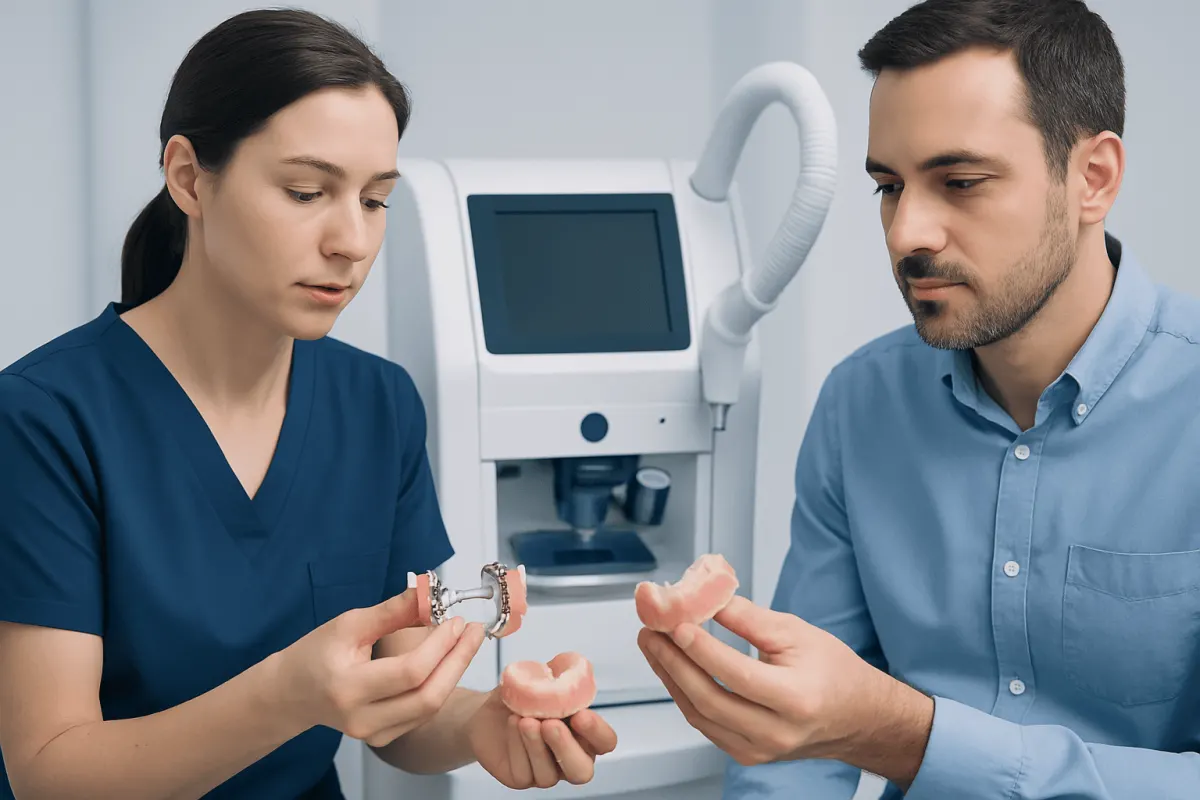
A removable partial denture replaces one or more missing teeth while fitting around the natural teeth that remain. In the metal partial denture vs acrylic decision, the main difference is the base structure: metal partial dentures have a cast metal framework, while acrylic partial dentures use a pink acrylic resin base, often with metal wire clasps.
Neither design is automatically right for every person. A dentist considers the condition of the gums and supporting bone, the strength and position of remaining teeth, how many teeth are missing, expected changes in the mouth, and the person’s ability to clean and manage the appliance.
- Framework: Metal partials have a rigid, thin metal framework; acrylic partials have a thicker resin base.
- Durability: Metal is generally more resistant to bending and fracture. Acrylic can crack or wear over time, particularly under heavier bite forces.
- Fit and stability: A well-designed metal framework often offers stable support through carefully planned rests and clasps. Acrylic appliances may move more, especially if the fit changes.
- Appearance: Both can include tooth-colored replacement teeth and gum-colored resin. Visible clasps may affect appearance, depending on their location.
- Adaptability: Acrylic partials can sometimes be easier to alter when teeth are expected to be added later, although this depends on the design and condition of the denture.
- Typical role: Metal partials are commonly considered for durable long-term use; acrylic partials may be used temporarily, during healing, or in carefully selected long-term situations.
How a Clinician Tells Metal and Acrylic Partials Apart
A clinician can identify a metal partial denture by its rigid metal framework, which may include slender connectors across the palate or behind the lower front teeth, small rests that sit on selected natural teeth, and clasps that help retain the denture. The framework is custom made from an impression or digital scan and is designed to distribute chewing forces in a controlled way.
An acrylic partial denture has a more substantial pink resin base that supports replacement teeth. It may have bent metal wire clasps, though some designs use other retention features. The thicker acrylic can cover more of the palate in the upper jaw or more of the gum-bearing tissues in the lower jaw.
The material alone does not determine quality. A well-fitting acrylic partial may be more comfortable than a poorly fitting metal one. During an examination, the dentist also evaluates tooth decay, gum inflammation, tooth mobility, bite alignment, dry mouth, jaw anatomy, and whether the appliance can be cleaned effectively.
Are Metal Partials Better Than Acrylic?

Metal partials are not universally better, but they are often preferred when a person needs a durable, slim, stable removable denture and has enough suitable remaining teeth to support the design. Their rigidity can improve stability and allow the denture base to be less bulky. This may make speech and adaptation easier for some people.
Acrylic partial dentures may be appropriate when tooth replacement is expected to change over time, such as after extractions and healing, or when a clinician expects to add replacement teeth later. They can also be a reasonable option when a metal framework is not suitable for a person’s oral situation.
Before selecting either type, active dental problems should be managed. Treating gum disease, decay, infection, or poorly fitting restorations helps create a healthier foundation for any removable appliance. For missing-tooth treatment planning, a dentist may also discuss dental implants or fixed bridge options where clinically appropriate.
Which Type of Partial Denture Is the Most Comfortable?
The most comfortable partial denture is usually the one that fits accurately, has a balanced bite, places minimal pressure on sensitive tissues, and is cleaned and reviewed regularly. Many people find a well-made metal partial comfortable because the framework can be thinner than acrylic and may cover less of the palate. However, the sensation of comfort is individual.
Acrylic partials may initially feel bulkier, particularly in the upper jaw. They can still be comfortable when properly designed and adjusted. New denture wearers commonly need a period of adaptation as the tongue, cheeks, and chewing muscles adjust to the appliance.
Soreness, rubbing, looseness, clicking, speech difficulty that persists, or pain when chewing should not simply be tolerated. The denture may need professional adjustment. People should avoid filing, bending, or repairing a denture themselves, as this can damage the appliance or create pressure points.
Are Metal Partial Dentures Noticeable?
Metal partial dentures can be noticeable if clasps are placed on front or highly visible teeth. Whether this occurs depends on which teeth are missing, where the supporting teeth are located, the design needed for stability, and the person’s smile line. The artificial teeth and visible gum-colored areas can often be matched to the natural mouth, but no removable appliance is completely invisible in every situation.
In many cases, the main metal framework is not readily seen during normal speech or smiling because it sits on the inside surfaces of teeth or the roof of the mouth. A dentist can explain where clasps and supporting parts may be visible before treatment begins and may discuss alternative designs if appearance is a central concern.
Implant-supported options can sometimes reduce the need for visible clasps, depending on the mouth and overall treatment plan. The most suitable approach should balance appearance with predictable function, oral hygiene, and protection of remaining teeth.
What Is the Disadvantage of Metal Dentures?
The main disadvantage of metal dentures is that they require careful planning around the remaining natural teeth. Clasps or rests may be visible in some smiles, and the framework may not be appropriate if supporting teeth are weak, severely decayed, or affected by advanced gum disease. Some people also dislike the feeling of metal in the mouth, although many adapt well.
Metal frameworks are less easily modified than acrylic bases if a tooth is lost later or the mouth changes substantially. They can also require more complex clinical and laboratory work. A metal partial must be kept clean around clasps, rests, and the natural teeth it contacts, because plaque retention can increase the risk of decay or gum problems if hygiene is inadequate.
Metal sensitivity is uncommon but should be discussed with the dentist, especially when there is a known allergy to metals. The dental team can review material options and medical history before the denture is made.
Care, Self-Care, and What to Do for Each Type
Both metal and acrylic partial dentures should be removed and cleaned daily using a soft denture brush and a cleaner recommended by a dental professional. Regular toothpaste may be too abrasive for some denture materials. Natural teeth, gums, and the tongue also need thorough daily cleaning, including cleaning around clasps and along the gumline.
Unless a dentist gives different instructions, many people are advised to remove removable dentures at night to allow the gums to rest and to clean the appliance. The denture should be stored safely in water or a denture-soaking solution as advised, rather than in hot water, which can distort acrylic components.
For a metal partial, follow-up visits help check the fit of the framework, the condition of supporting teeth, and areas beneath clasps. For an acrylic partial, reviews are important if it becomes loose, cracks, or no longer matches the gums after healing or tooth changes. Do not use household glue or attempt home repairs.
Acıbadem Health Point’s multidisciplinary dental specialists and JCI-accredited hospitals assess missing teeth and provide individualized treatment planning for international patients.
When to Seek Medical Care
A person should arrange a dental appointment if a partial denture causes persistent pain, ulcers that do not improve, bleeding gums, bad taste, swelling, looseness, difficulty chewing, or a change in how the teeth meet. These symptoms can result from an appliance that needs adjustment, but they may also indicate tooth decay, gum disease, infection, or another oral health concern.
Prompt dental care is especially important for a broken denture, a broken clasp, or a denture that suddenly no longer fits. Continuing to wear a damaged or unstable denture can irritate tissues and place unhelpful forces on the remaining teeth.
Urgent assessment is appropriate for facial swelling, fever, severe tooth or jaw pain, difficulty swallowing, or difficulty breathing. These symptoms may indicate an infection or other problem requiring timely professional care.
Frequently asked questions
01How long does it take to get used to a partial denture?
Adaptation varies from person to person. Mild awareness of the denture, increased saliva, and small changes in speech or chewing can occur initially, but these often improve with regular use and professional adjustments. Persistent pain or instability should be reviewed by a dentist.
02Can a metal partial denture damage natural teeth?
A properly designed and maintained metal partial should aim to protect and support the remaining teeth. However, plaque can collect around clasps and supporting surfaces if cleaning is inadequate, increasing the risk of decay and gum disease. Daily hygiene and regular dental checkups are important.
03Can acrylic partial dentures be used long term?
Yes, some acrylic partial dentures are used long term when they suit the person’s oral condition and treatment goals. They may need relining, repair, or replacement if the gums and bone change, the appliance wears, or it becomes less stable. A dentist can monitor whether it remains appropriate.
04Should a partial denture be worn while sleeping?
Many people are advised to remove a removable partial denture at night, unless their dentist recommends otherwise. This allows the oral tissues to rest and gives the denture time to be cleaned. Individual instructions may differ based on dental treatment and oral health needs.
05Can a partial denture be repaired if it breaks?
Some breaks can be repaired by a dental laboratory, but the appropriate solution depends on the material, location of the damage, and cause of the break. A dentist should examine the denture and the mouth before repair. Home adhesives and self-repairs should be avoided.
06Is a partial denture a substitute for dental implants?
A partial denture and dental implants are different ways to replace missing teeth. A partial denture is removable, while implants are placed in the jawbone and may support a crown, bridge, or removable denture. Suitability for implants depends on oral health, bone availability, medical history, and personal treatment goals.
This article is for general information only and is not a substitute for professional medical advice. Please consult a qualified doctor about your individual situation.
Joint and spine care in Turkey — expert assessment & treatment
JCI-accredited · board-certified surgeons · reply within 24h
Add us as a Preferred Source to see more of our trusted health content across Google Search, AI Overviews and Discover.