Male Reproductive System Labelled: A Complete Medical Overview

A male reproductive system labelled diagram identifies the organs that produce sperm and testosterone, transport semen, and support sexual function. This overview explains each structure in clear terms, including normal changes during puberty and when medical assessment may be helpful.
Male Reproductive System Labelled: Answer-First Overview
A male reproductive system labelled overview names the organs involved in producing hormones and sperm, moving sperm through the body, and delivering semen during ejaculation. The main structures are the penis, scrotum, testes, epididymis, vas deferens, ejaculatory ducts, seminal vesicles, prostate gland, bulbourethral glands and urethra.
Some organs are visible outside the body, while others lie in the pelvis. Although they work as one system, each has a distinct role in fertility, sexual development and urinary function. Anatomy differs naturally from one person to another, and variation in size, color and shape is usually normal.
This article is an educational guide rather than a tool for self-diagnosis. A doctor or urologist can answer personal questions about development, pain, sexual health, fertility or changes in the genital area.
Can You Provide an Overview of the Male Reproductive System?
The male reproductive system can be understood as a coordinated pathway. Sperm are made in the testes, mature in the epididymis and travel through the vas deferens. Fluids from several glands combine with sperm to form semen, which passes through the urethra and exits through the penis during ejaculation.
The testes also produce testosterone. This hormone supports the development of typically male physical characteristics during puberty, contributes to sex drive, helps maintain muscle and bone health, and is important for sperm production. The brain and pituitary gland regulate this process through chemical signals.
The system has a close relationship with the urinary system because the urethra runs through the penis and carries urine out of the body. However, during ejaculation, muscular valves help prevent urine from mixing with semen and help direct semen forward.
- External structures: penis, scrotum and testes.
- Sperm transport structures: epididymis, vas deferens, ejaculatory ducts and urethra.
- Fluid-producing glands: seminal vesicles, prostate gland and bulbourethral glands.
- Hormonal control: testes, hypothalamus and pituitary gland.
Can You Describe the Male Reproductive System With a Labeled Diagram?
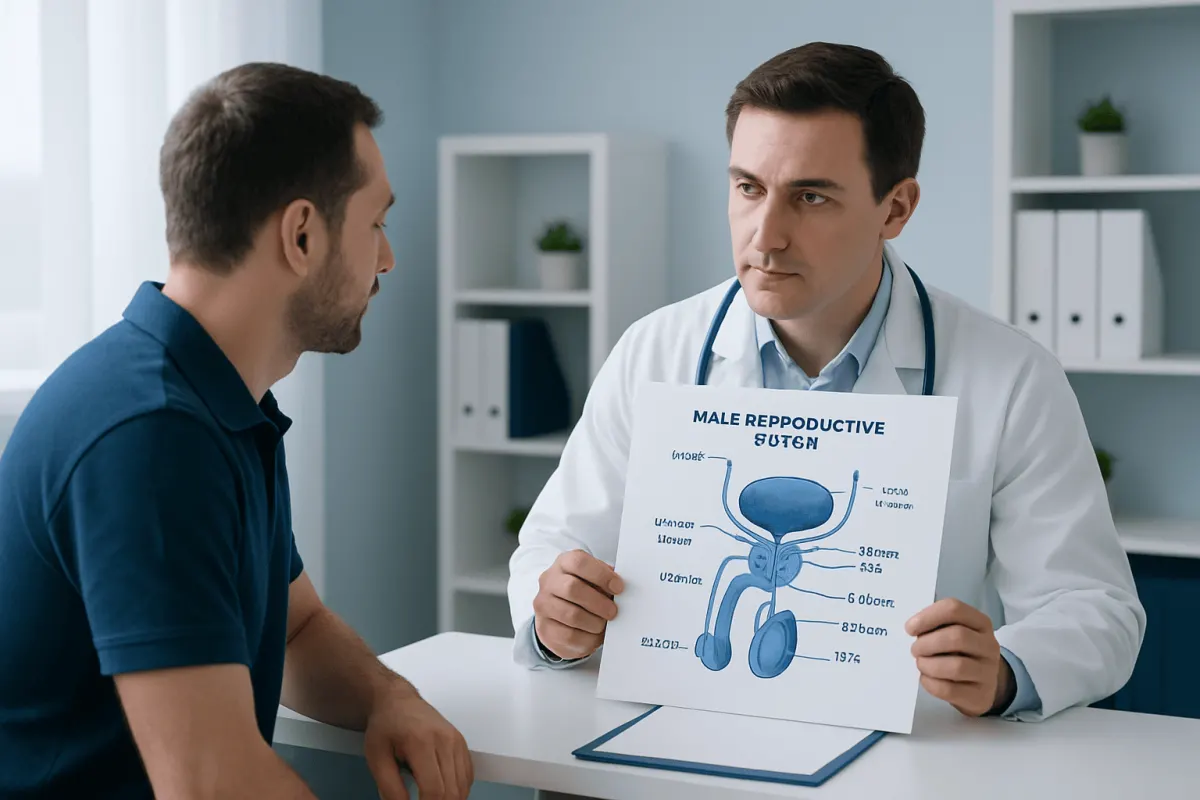
A medical diagram is usually drawn as a side view, or sagittal view, of the pelvis. Starting outside the body, the label penis refers to the external organ that contains erectile tissue and the urethra. The scrotum is the skin sac below the penis that holds the testes and helps keep them at a temperature suited to sperm production.
Inside each testis are tiny coiled tubes where sperm are produced. Along the back of each testis is the epididymis, a long, coiled tube where sperm mature and are stored. From there, sperm enter the vas deferens, a muscular tube that travels upward into the pelvis.
In a labelled diagram, the vas deferens passes behind the bladder and joins a duct from a seminal vesicle. Together they form the ejaculatory duct, which passes through the prostate gland. The prostate sits below the bladder and surrounds the first part of the urethra. The small bulbourethral glands sit below the prostate and release lubricating fluid into the urethra.
The urethra continues from the bladder, through the prostate and penis, to the opening at the tip of the penis. It carries urine or semen, but not normally at the same time. A clinician can use diagrams, examination and imaging when a more individual assessment is needed.
What Are the 7 Functions of the Male Reproductive System?
The male reproductive system performs several connected functions. These functions begin at puberty and continue throughout adulthood, although hormone levels, sperm production and sexual function may change with age, health and medication use.
- Produces sperm: the testes create sperm cells through a process called spermatogenesis.
- Produces testosterone: the testes release testosterone and other hormones important for reproductive development and general health.
- Matures and stores sperm: the epididymis supports sperm maturation and temporary storage.
- Transports sperm: the vas deferens and ejaculatory ducts move sperm toward the urethra.
- Produces seminal fluid: the seminal vesicles, prostate and bulbourethral glands add fluids that nourish, protect and help transport sperm.
- Enables erection and ejaculation: nerves, blood vessels, muscles and erectile tissue work together in sexual response and semen release.
- Delivers semen: the urethra and penis provide the route through which semen leaves the body during ejaculation.
These functions depend on physical health, blood flow, nerve signaling and balanced hormones. Difficulties in one area do not necessarily mean that every reproductive function is affected.
What Does a Boy's Private Look Like in Real Life?
In everyday language, a boy’s “private” or genital area usually refers to the penis, scrotum and testes. The penis has a shaft and a head, also called the glans. The opening at the tip is where urine leaves the body. In uncircumcised boys, the glans is partly or fully covered by a fold of skin called the foreskin; in circumcised boys, this skin has been surgically removed.
The scrotum hangs below the penis and contains two testes. It is common for one testis, often the left, to hang lower than the other. The scrotal skin may look wrinkled and can tighten or relax with temperature, activity or emotion. Skin tone, penis size and the amount of visible hair after puberty vary widely.
During puberty, the penis and testes usually grow, the scrotum becomes larger, and pubic hair develops. Erections, including erections that happen without sexual thoughts, can be normal. For younger children, foreskin development also varies; it should not be forcibly pulled back, as this can cause injury.
Parents and caregivers can use accurate, calm language when discussing anatomy and body changes. A healthcare professional should assess concerns such as a testicle that is not in the scrotum, marked swelling, a new lump, severe pain, injury, discharge or problems urinating.
Common Health Concerns Affecting Reproductive Anatomy
Many reproductive health concerns are treatable, and symptoms can have more than one cause. Infections, inflammation, injury, hormonal conditions, urinary problems, blood-flow changes and medication effects can all influence reproductive or sexual function. A clinical assessment helps identify the cause rather than relying on symptoms alone.
Examples include inflammation of the epididymis, sexually transmitted infections, enlarged veins around the testes, testicular torsion, erectile dysfunction, prostate conditions and fertility problems. A painless lump does not always indicate a serious condition, but any new testicular lump should be checked promptly. Sudden, severe testicular pain needs urgent assessment because it can be a sign of torsion.
Difficulty getting or keeping an erection can sometimes be linked with stress, relationship factors, smoking, alcohol, diabetes, heart and blood vessel disease, hormone changes or certain medicines. For information about assessment and care, see erectile dysfunction. Persistent fertility concerns may also benefit from fertility and IVF assessment when appropriate for the individual or couple.
Routine self-awareness is useful: a person should know what is usual for their own body and report noticeable changes. Regular medical care, sexual health testing when indicated, and open communication with a clinician can support reproductive health.
Supporting Reproductive Health and When to Seek Medical Care
Healthy habits support overall reproductive health. These include not smoking, limiting alcohol, staying physically active, maintaining a balanced diet, getting adequate sleep and managing long-term conditions such as diabetes or high Systolic Blood Pressure: What Patients Need to Know" class="ahp-ilk">blood pressure. Using condoms can reduce the risk of many sexually transmitted infections, although they do not prevent every infection in every circumstance.
People trying to conceive may be advised to avoid overheating the testes for prolonged periods, avoid anabolic steroids and discuss medicines or supplements with a clinician. No lifestyle step can guarantee fertility, but medical review can identify potentially treatable causes when pregnancy has not occurred as expected.
When to seek medical care: arrange an appointment for a new lump, persistent ache, swelling, changes in testicle size, blood in urine or semen, painful urination, discharge, persistent erectile difficulties, delayed puberty concerns or fertility questions. Seek urgent medical care for sudden severe testicular or scrotal pain, especially with nausea, vomiting or swelling.
Acıbadem Health Point’s multidisciplinary specialists and JCI-accredited hospitals can assess reproductive, urological and fertility concerns for international patients. Care is individualized, and the most suitable testing or treatment depends on symptoms, age, medical history and personal goals.
Frequently asked questions
01What are the main parts of the male reproductive system?
The main parts are the penis, scrotum, testes, epididymis, vas deferens, seminal vesicles, prostate gland, bulbourethral glands, ejaculatory ducts and urethra. The testes produce sperm and testosterone, while the ducts and glands help move sperm and create semen.
02Where are sperm made and stored?
Sperm are made in small tubes inside the testes. They then move to the epididymis, a coiled tube attached to the back of each testis, where they mature and can be stored before ejaculation.
03Is the urethra part of both the urinary and reproductive systems?
Yes. In males, the urethra carries urine from the bladder out through the penis and also carries semen during ejaculation. The body uses muscular control to keep urine and semen from normally passing through the urethra at the same time.
04Is it normal for one testicle to hang lower than the other?
Yes, this is very common. One testicle may hang lower or be slightly different in size or position, often without any health concern. A new change in size, a firm lump, swelling or pain should be assessed by a clinician.
05When does the male reproductive system develop?
The reproductive organs begin developing before birth, but many of their functions become active during puberty. At puberty, hormone changes lead to testicular and penile growth, sperm production, pubic hair growth and other physical changes.
06Can a person be fertile if they have erectile difficulties?
Possibly. Erectile function and fertility are related but are not the same; sperm production may be normal in someone with erectile difficulties. A healthcare professional can assess sexual function, hormones, semen quality and other factors when needed.
This article is for general information only and is not a substitute for professional medical advice. Please consult a qualified doctor about your individual situation.
IVF & fertility treatment in Turkey — success rates and costs
JCI-accredited · board-certified surgeons · reply within 24h
Add us as a Preferred Source to see more of our trusted health content across Google Search, AI Overviews and Discover.