Loose Fitting Hat for Hair Transplant: Procedure, Benefits, Risks and Recovery

Key Takeaways
- A loose fitting hat for hair transplant may be permitted, but timing matters more than the hat itself.
- The main concern is pressure, friction, and rubbing on newly placed grafts.
- Patients should follow their surgeon’s instructions on when to wear a cap, beanie, or sun-protective hat.
- Healing needs vary after FUE, FUT, and other transplant methods.
- Clean hands, careful placement, and avoiding tight bands support recovery.
- If there is bleeding, increasing pain, or graft movement, the treating team should be contacted promptly.
A loose fitting hat can sometimes be worn after a hair transplant, but only when the surgeon says it is safe and the grafts are secure. The right timing, the right type of hat, and gentle handling all help protect healing without disturbing the transplanted follicles.
Overview
A loose fitting hat for hair transplant is often one of the first practical questions patients ask after surgery. The short answer is that it may be safe in some situations, but only after the transplant team confirms that the grafts are stable enough and the hat does not press, rub, or catch on the healing scalp.
For many patients, the issue is not whether a hat exists in the wardrobe, but when it can be used and how it should sit on the head. A loosely placed cap may help with comfort, sun exposure, or privacy during travel, yet the scalp still needs an early healing period with as little disturbance as possible. That is why post-operative instructions matter more than fashion or habit.
People planning treatment from another city or another country often want clear guidance before leaving the clinic, especially if they will be walking outdoors, using public transport, or returning home soon after surgery. In that setting, the most useful advice is individualized: the surgeon considers the procedure type, the condition of the grafts, and the patient’s daily routine before giving a timeline for headwear.
What makes a hat safe or unsafe after a hair transplant
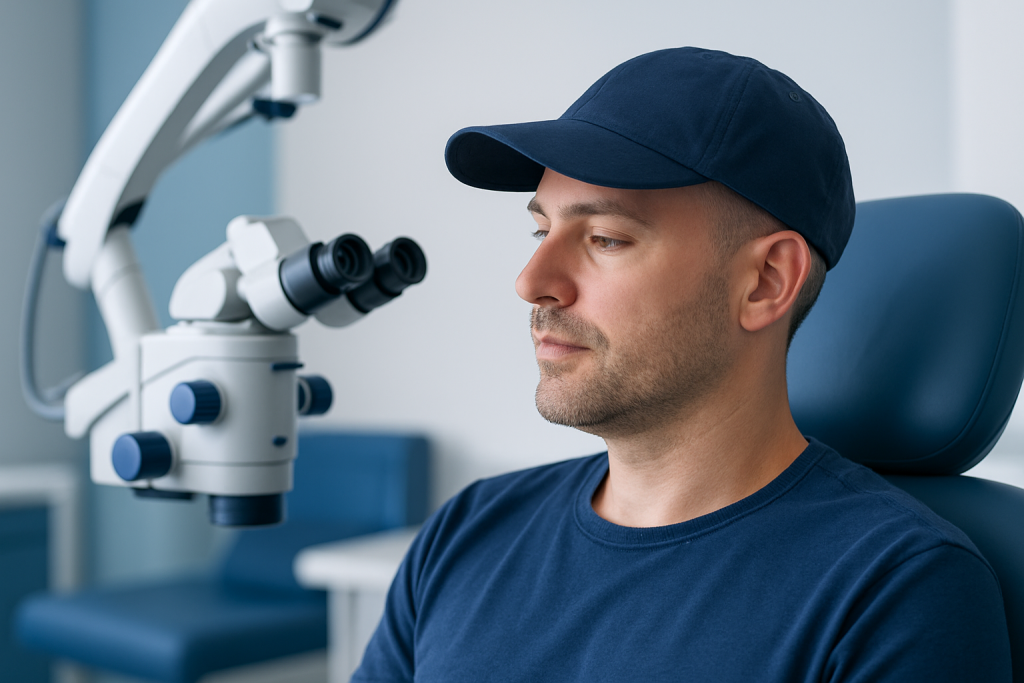
After a hair transplant, the grafts need time to settle into the recipient area. During the earliest phase, even mild friction can irritate the scalp or dislodge grafts, particularly if a hat is tight around the forehead, crown, or transplanted zone. The safest hat is usually one that touches the scalp as little as possible and can be removed without tugging.
Several features make headwear more likely to interfere with healing. Tight bands, rough fabric, seams that pass over grafts, heavy caps, and anything that needs force to pull on or off can all create unnecessary contact. A patient who must bend the head, press the fabric down, or adjust the cap repeatedly is usually adding avoidable risk.
By contrast, a truly loose fitting hat for hair transplant recovery should feel roomy, sit gently, and avoid direct pressure on the treated area. Even then, safety depends on the stage of healing. The first few days are often the most sensitive, while later the scalp generally becomes more resilient as scabs lift and redness fades.
- Choose soft, smooth fabric that will not snag crusts or grafts.
- Avoid tight elastic bands or stiff inner rims.
- Do not force the hat over the scalp if it catches on healing skin.
- Keep the hat clean to reduce irritation and debris.
When patients may wear a loose fitting hat

The timing depends on the procedure and the surgeon’s instructions. Some patients are told to avoid any hat for an early period after surgery, while others may be allowed to wear a very loose cap for short periods once the clinic confirms it will not disturb the grafts. There is no universal rule that fits every transplant.
Hair transplant methods can heal differently. After follicular unit extraction (FUE), the donor and recipient areas often need careful protection from rubbing and sweat. After follicular unit transplantation (FUT), the donor incision also requires attention, and the hat must not pull against stitches or the healing line. The size of the transplant, the location of grafts, and the patient’s scalp sensitivity all influence the advice given.
Patients traveling home after treatment should ask the clinic in advance whether a hat can be worn during the journey. If the answer is yes, it is usually better to place it on gently once and leave it alone, rather than taking it on and off many times. The goal is to reduce both pressure and handling.
Possible benefits of wearing the right hat
When permitted by the surgeon, a loose hat can offer practical support during recovery. It may reduce direct sun exposure, which is especially useful in warm climates or during airport transfers, taxi rides, and outdoor walks. It may also help patients feel more comfortable in social settings during the early days after surgery.
Some patients find that a hat gives them a greater sense of privacy while the scalp is red or while scabs are still visible. That can matter for international patients who are moving through busy environments soon after treatment. Comfort, however, should never come at the expense of graft protection.
In select situations, a hat can also help shield the scalp from dust or accidental contact. This is only helpful if the hat is clean and does not rub the transplant area. A protective accessory should always remain secondary to the healing process itself.
Risks and common mistakes
The most important risks come from pressure, friction, and heat. A tight hat can irritate the scalp, flatten swollen tissue, and in some cases disturb the grafts before they are fully secure. Warm, non-breathable headwear may also make the scalp sweaty, which can be uncomfortable and may complicate early healing.
Many problems happen not because a patient wears a hat, but because the hat is handled roughly. Pulling it on with both hands, dragging it across the grafts, or adjusting it repeatedly can catch on healing skin. Even a loose fitting hat for hair transplant recovery becomes less safe if it is used carelessly.
Another common mistake is choosing style over softness. Hats with structured fronts, hard inner seams, or close-fitting sports designs may seem harmless but can create pressure points. If the scalp feels hot, tender, or newly tender after wearing headwear, that is a sign to stop and ask the clinical team for guidance.
- Do not wear a tight cap to “hold” the scalp in place.
- Avoid hats that require stretching to fit over the head.
- Do not sleep in a hat unless the surgeon specifically recommends it.
- Do not use a dirty hat, even if it feels soft.
How to put on and remove a hat without disturbing grafts
When a clinician says hat use is acceptable, the technique matters. The safest approach is to wash hands first, hold the hat open without letting the inner surface brush the grafts, and lower it slowly into position. There should be no need to press firmly against the transplanted area.
Removal should be just as gentle. The hat should be lifted away rather than peeled off quickly. If it has snagged on scabs or feels stuck, it should not be forced. In that case, the patient should pause, loosen the hat carefully, and contact the clinic if the scalp appears irritated or bleeding starts.
Travelers may find it useful to pack a clean backup hat so that the same one is not worn constantly for long periods. Fresh, soft headwear can be more comfortable, but only if it meets the surgeon’s size and fabric recommendations. The main principle is simple: the scalp should stay protected, not compressed.
Prevention, self-care, and recovery tips
Recovery after a hair transplant is shaped by small, consistent habits. Patients are usually advised to protect the scalp from direct sunlight, follow the prescribed cleaning routine, and avoid scratching or picking at scabs. These steps matter whether a hat is worn or not.
Sleep position can also affect comfort early on. Many patients are told to keep the head elevated for a period after surgery and to avoid direct pressure on the grafted areas. Clothing with wide neck openings and easy closure may also help reduce accidental contact when dressing.
For international patients, planning is particularly helpful. It is sensible to bring comfortable, loose clothing, a clean hat only if the surgeon approves it, and any aftercare products recommended by the clinic. If follow-up care will happen from abroad, the patient should know how to send photos, ask questions, and report symptoms to the treating team. At Acibadem Health Point, multidisciplinary specialists and JCI-accredited hospitals diagnose and treat hair and scalp conditions for international patients with coordinated follow-up support.
- Use sunscreen or physical shade if the team allows and the scalp is exposed.
- Keep the scalp clean according to the clinic’s washing schedule.
- Never scratch crusts or rub away flakes.
- Attend planned follow-up visits or virtual reviews when available.
When to see a doctor
Most post-transplant discomfort is mild and expected, but some changes should be checked promptly. Patients should contact their surgeon if a hat seems to have shifted grafts, if there is persistent bleeding, or if pain becomes stronger instead of gradually improving. New swelling, marked redness, warmth, or foul-smelling discharge also deserves medical attention.
Medical advice is also needed if the patient is unsure whether the hat they own is truly loose enough. A cap that looks comfortable at home may behave differently once the scalp is tender, the patient is walking outside, or the weather is warm. When in doubt, the transplant team can usually advise on a safer option.
Hair transplant recovery is highly individual, and that includes the timing of headwear. The safest plan is the one tailored by the treating surgeon, especially for patients who are balancing healing with travel, work, or family obligations in another country.
Frequently asked questions
01Can a patient wear a loose fitting hat after a hair transplant?
Sometimes yes, but only if the surgeon says it is safe for that stage of healing. The hat should not press on the grafts, rub the scalp, or require force to remove.
02How soon after surgery can a hat be worn?
There is no single answer for every patient. Timing depends on the procedure, the size of the transplant, and how quickly the grafts and donor area are healing.
03What type of hat is usually safest?
A soft, clean, roomy hat with no tight band or rough seams is usually preferred when headwear is allowed. It should sit lightly rather than compressing the scalp.
04Can a hat damage the grafts?
Yes, if it is tight, dirty, or handled roughly. The main concerns are pressure and friction, especially during the early days after surgery.
05Is it better to avoid all hats during recovery?
Not always. Some patients can wear a very loose hat for comfort or sun protection, while others are asked to wait longer. The surgeon’s instructions should guide the decision.
06What should a patient do if a hat causes pain or bleeding?
The patient should remove it gently and contact the treating clinic for advice. New bleeding, increased pain, or visible graft disturbance should be reviewed promptly.
This article is for general information only and is not a substitute for professional medical advice. Please consult a qualified doctor about your individual situation.
Hair transplant in Turkey — costs, graft counts & a free assessment
JCI-accredited · board-certified surgeons · reply within 24h
Add us as a Preferred Source to see more of our trusted health content across Google Search, AI Overviews and Discover.