Liver Tumour Diagnosis, Outlook, and Treatment Options
A liver tumour is an abnormal growth in the liver that may be benign or cancerous. Accurate imaging, blood tests, and specialist assessment help determine whether treatment is needed and which approach is most appropriate.
Liver tumour overview
A liver tumour is a mass or abnormal growth within the liver. It may be benign, meaning non-cancerous, or malignant, meaning cancerous. A tumour can begin in liver cells, such as hepatocellular carcinoma, or it can represent cancer that has spread to the liver from another part of the body. The diagnosis and outlook depend greatly on which of these possibilities is present.
Not every liver lesion is a cancer. Common benign findings include hemangiomas, focal nodular hyperplasia, and some adenomas. These may require observation, repeat imaging, or treatment in selected circumstances. A specialist review is important because the appearance on a scan, a person’s medical history, and liver blood tests together help clarify what the finding means.
Primary liver cancer occurs more often in people with chronic liver disease, particularly cirrhosis related to viral hepatitis, alcohol-associated liver disease, metabolic dysfunction-associated steatotic liver disease, or certain inherited conditions. Early assessment offers the best opportunity to discuss all suitable treatment options.
Symptoms and signs of a liver tumour
Small liver tumours often cause no symptoms. They may be detected incidentally during an ultrasound, CT scan, or MRI performed for abdominal discomfort, abnormal liver blood tests, or another health concern. This is one reason follow-up of an unexpected liver finding should not be delayed.
When symptoms occur, they can be nonspecific and may include persistent discomfort or fullness in the upper right abdomen, reduced appetite, feeling full quickly, unexplained weight loss, tiredness, nausea, or a noticeable abdominal swelling. Symptoms can also arise from underlying liver disease rather than from the tumour itself.
Jaundice, which causes yellowing of the skin or eyes, dark urine, pale stools, increasing abdominal swelling, confusion, vomiting blood, or black stools require prompt medical attention. These symptoms do not always indicate cancer, but they can signal significant liver or bile duct problems that should be assessed urgently.
How a liver tumour is diagnosed
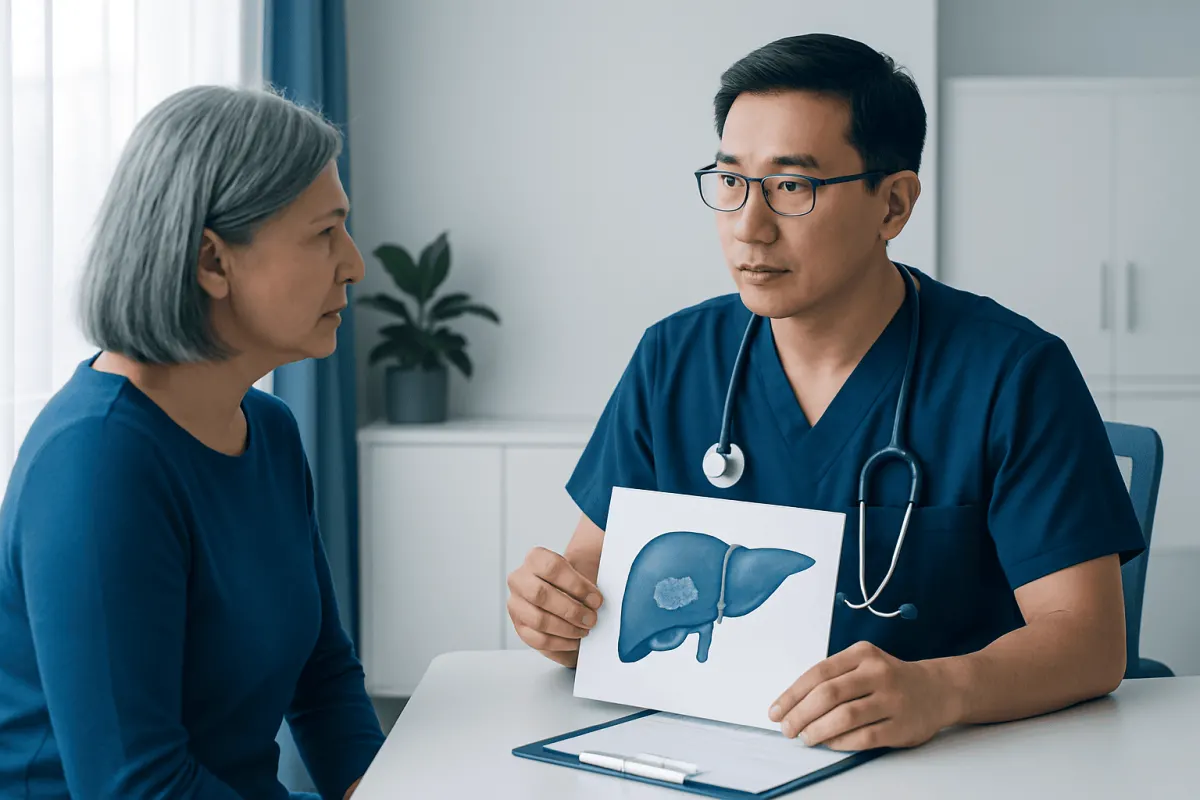
Assessment usually begins with a medical history, physical examination, and blood tests. Tests may evaluate liver function, hepatitis infection, blood clotting, and tumour markers such as alpha-fetoprotein. A normal tumour marker does not rule out liver cancer, and an elevated result does not confirm it on its own.
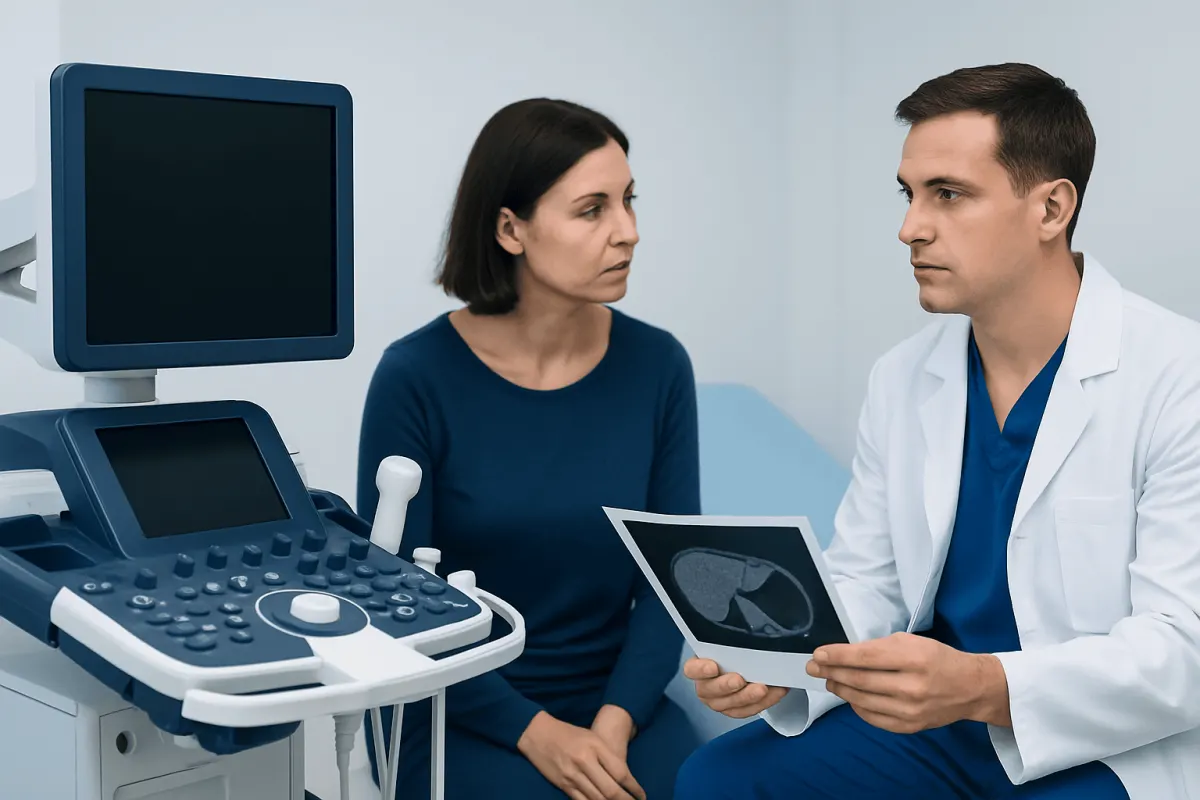
Multiphasic contrast-enhanced CT or MRI is central to diagnosis. These scans show how a lesion takes up and releases contrast at different times, which can sometimes identify hepatocellular carcinoma without a biopsy in a person with cirrhosis. Ultrasound may be used for initial assessment or surveillance, and contrast-enhanced ultrasound can be helpful in selected cases.
A biopsy may be recommended when imaging cannot confidently identify the tumour type, when the liver is not cirrhotic, or when a metastatic cancer or another diagnosis is suspected. If cancer is confirmed or strongly suspected, staging scans assess the number and size of tumours, blood vessel involvement, lymph nodes, spread outside the liver, and the condition of the remaining liver tissue.
- Imaging features and tumour location
- Whether the tumour began in the liver or spread from elsewhere
- Liver function and presence of cirrhosis
- Performance status and other medical conditions
- Whether the cancer can be removed or treated locally
What stage is a 10 cm liver tumor?
A 10 cm liver tumour cannot be assigned a stage based on size alone. Size is important, but staging also depends on whether there is one tumour or several, whether the tumour has entered major blood vessels, whether lymph nodes are involved, whether cancer has spread outside the liver, and how well the liver is functioning.
For hepatocellular carcinoma, clinicians may use systems such as the Barcelona Clinic Liver Cancer system alongside tumour-node-metastasis staging. These systems combine cancer extent with liver reserve and a person’s general health, helping the team select treatment. A single large tumour may still have different treatment possibilities from a smaller tumour that has vascular invasion or spread beyond the liver.
For a 10 cm mass, specialist imaging review is particularly important. Some large tumours can be considered for surgery, catheter-based treatment, radiation therapy, or systemic therapy, depending on the anatomy and liver function. The care team should explain which staging system is being used and what it means for the individual situation.
Modern treatment approaches for liver tumours
Treatment is individualized through a multidisciplinary discussion involving hepatology, liver surgery, medical oncology, radiology, interventional radiology, pathology, and radiation oncology. For benign tumours, careful monitoring is often appropriate. Treatment may be considered if a benign lesion is symptomatic, growing, at risk of bleeding, or difficult to distinguish from cancer.
For localized primary liver cancer, surgery to remove the tumour may offer a potentially curative option when there is enough healthy liver remaining. Liver transplantation can be considered for selected people with early-stage hepatocellular carcinoma and cirrhosis, because it treats both the cancer and the diseased liver. Liver transplantation requires detailed eligibility assessment and access to a suitable donor organ.
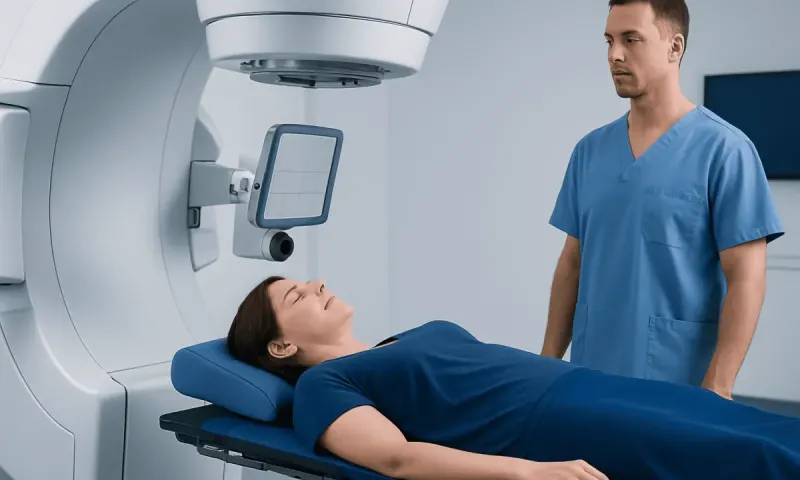
When surgery is not appropriate, local therapies may control or destroy tumours. Thermal ablation uses heat or cold through a needle to treat selected small lesions. Catheter-based procedures, including transarterial chemoembolization and radioembolization, deliver treatment through the liver’s blood supply. Radioembolization may be an option for certain tumours, including some that are not removable with surgery.
Systemic treatment is used when cancer is advanced, cannot be treated effectively with local methods, or has spread. Options may include immunotherapy-based combinations, targeted therapies, and other medicines selected according to liver function, prior treatment, and cancer characteristics. External-beam radiation therapy, including precisely planned techniques, may also have a role for selected patients.
What is the newest treatment for liver tumors?
There is no single newest treatment that is best for every liver tumour. In recent years, treatment for advanced hepatocellular carcinoma has increasingly used immunotherapy, often combined with medicines that target tumour blood vessel growth or other cancer pathways. These approaches may help some people live longer and may control disease when surgery or local therapy is not suitable.
Advances have also improved the precision of local treatment. Examples include image-guided ablation, selective radioembolization, stereotactic body radiation therapy, and better planning for surgery. Researchers continue to study new immunotherapy combinations, targeted medicines, and ways to combine systemic and local treatments.
The most appropriate modern option depends on the specific tumour and the person’s liver health. Newer treatment does not automatically mean better for every individual; the aim is to select a treatment with an appropriate balance of effectiveness, safety, and impact on liver function.
What is the most successful treatment for liver cancer?
For appropriately selected people with early liver cancer, treatments with curative intent are generally considered the most successful. These include surgical resection, liver transplantation, and local ablation for certain small tumours. The best choice differs from person to person because cirrhosis, tumour location, number of lesions, and available liver reserve strongly influence safety and likely benefit.
Liver transplantation may offer an especially valuable option for selected patients with early hepatocellular carcinoma and significant cirrhosis. Surgical resection may be preferred when the cancer is removable and the remaining liver is healthy enough. Ablation can be effective for carefully selected small cancers, particularly when surgery is not advisable.
For larger, multifocal, or advanced cancers, catheter-directed therapies, radiation, immunotherapy, and targeted medicines can provide meaningful disease control. The goal may be to shrink or stabilize the tumour, reduce symptoms, make another treatment possible, or prolong survival. Some patients benefit from more than one treatment over time.
What is the average lifespan after being diagnosed with liver cancer?
It is not possible to give one average lifespan that applies to everyone diagnosed with liver cancer. Prognosis varies widely according to the cancer stage, whether it can be treated with curative intent, liver function, the presence of cirrhosis, response to treatment, and general health. Some people with early disease treated successfully can live for many years, while advanced disease usually requires a different treatment strategy.
Population survival statistics can be useful for understanding broad trends, but they cannot predict an individual’s outcome. They often reflect people diagnosed over several years, including those treated before newer therapies became available. A treating specialist can provide more personalized information after reviewing imaging, pathology, liver tests, and treatment response.
It can be helpful to ask the care team about the treatment goal, the factors affecting outlook, and how often progress will be reassessed. Supportive care for symptoms, nutrition, emotional wellbeing, and complications of liver disease is important at every stage and can be provided alongside cancer treatment.
Reducing risk and when to seek medical care
Some liver cancers cannot be prevented, but risk may be reduced by treating chronic hepatitis, avoiding excessive alcohol, maintaining a weight that supports metabolic health, and avoiding exposure to known liver toxins. People with cirrhosis or certain chronic hepatitis infections may need regular surveillance, usually with ultrasound and sometimes blood tests, even if they feel well.
Medical care should be sought promptly for persistent upper abdominal pain or fullness, unexplained weight loss, jaundice, a newly swollen abdomen, or worsening fatigue in someone with known liver disease. Emergency care is needed for vomiting blood, black stools, severe confusion, fainting, or severe abdominal pain. These symptoms can have several causes and should be evaluated without assuming they are due to a tumour.
A multidisciplinary evaluation helps ensure that imaging, liver health, and treatment options are considered together. Acıbadem Health Point’s multidisciplinary specialists and JCI-accredited hospitals assess and treat liver tumours for international patients, with treatment planning based on individual clinical findings. People with a newly identified liver mass should discuss results and next steps with a qualified liver specialist or oncology team.
Frequently asked questions
01Can a liver tumour be benign?
Yes. Many liver tumours are benign, including hemangiomas and focal nodular hyperplasia. Even when a lesion is likely benign, a clinician may recommend follow-up imaging to confirm that its features remain stable and typical.
02Does a liver tumour always need a biopsy?
No. In some people with cirrhosis, characteristic findings on high-quality contrast MRI or CT can diagnose hepatocellular carcinoma without a biopsy. A biopsy may be needed when imaging is inconclusive, when another tumour type is possible, or when the liver is not cirrhotic.
03Can a liver tumour be removed surgically?
Some liver tumours can be removed with surgery, particularly when they are localized and enough healthy liver can remain afterward. Whether surgery is appropriate depends on tumour location, number and size of lesions, blood vessel involvement, liver function, and overall health.
04Is a 10 cm liver tumour always cancer?
No. A large liver lesion is not automatically cancerous, although it requires timely expert assessment. Imaging and, in some cases, biopsy are used to identify the type of tumour and determine whether treatment is necessary.
05Can liver cancer be cured?
Some early liver cancers can be treated with curative intent through surgery, transplantation, or ablation in appropriately selected patients. Cure is less likely when cancer has spread or liver function is severely impaired, but treatment may still control the disease and support quality of life.
06How often should people with cirrhosis be checked for liver cancer?
Many people with cirrhosis are advised to have liver cancer surveillance at regular intervals, often every six months. The exact plan depends on the cause and severity of liver disease and should be set by the treating liver specialist.
This article is for general information only and is not a substitute for professional medical advice. Please consult a qualified doctor about your individual situation.
Medical weight-loss options in Turkey — costs & eligibility
JCI-accredited · board-certified surgeons · reply within 24h
Add us as a Preferred Source to see more of our trusted health content across Google Search, AI Overviews and Discover.