Light Therapy for Eczema at Home: Is It Safe?

Light therapy for eczema at home can reduce inflammation, itching and visible eczema in some people when it is prescribed and monitored by a dermatologist. It is not a replacement for daily skin care or prescribed medicines, and home devices should not be used without an individualized treatment plan.
Overview: light therapy for eczema at home
Light therapy for eczema at home, also called home phototherapy, uses a prescribed medical device to expose affected skin to carefully measured ultraviolet (UV) light. For eczema, the most commonly used option is narrowband UVB (NB-UVB). This type of treatment can calm inflammation in the skin and may reduce itching, redness, thickening and the frequency of flares in some people with moderate or more widespread eczema.
Home treatment is not simply using any UV lamp. A dermatologist should first confirm the diagnosis, assess whether phototherapy is appropriate, select the device and provide a written exposure schedule. The goal is to deliver enough UVB to help the skin while avoiding sunburn and limiting unnecessary cumulative UV exposure. Eczema is often part of a long-term inflammatory skin condition, so treatment plans usually also include moisturisers, trigger reduction and, when needed, topical or systemic medicines.
Home phototherapy may be considered when clinic-based treatment is difficult to attend regularly, provided the person can follow instructions reliably and has appropriate follow-up. It may not be suitable for everyone, including people with certain photosensitivity disorders, a personal history of some skin cancers, or those taking medicines that increase sensitivity to light.
Who may benefit and how home phototherapy is arranged
Dermatologists may consider phototherapy for eczema that remains troublesome despite consistent skin care and appropriately used topical treatment, especially when it affects larger areas or frequently disrupts sleep and daily life. It can also be an option for people who need a treatment approach that may reduce reliance on topical anti-inflammatory medicines over time. The decision depends on eczema severity, skin type, medical history, medicines and practical ability to use a device safely.
Before prescribing treatment, the clinician usually reviews the pattern of eczema, checks for infections and asks about previous UV exposure, skin cancer history, eye conditions and medications. Some medicines, including certain antibiotics, diuretics and acne treatments, can make the skin more sensitive to light. A patient should provide a complete medication and supplement list and should report any new medicine during the treatment course.
Training is an important part of home use. The clinician or phototherapy service explains how to position the body, protect unaffected areas when advised, use protective eyewear and record each session. Follow-up appointments, photographs or symptom tracking help the care team adjust the plan. This structured approach differs from tanning beds, sun lamps and unregulated devices, which should not be used to treat eczema.
Procedure: what happens during light therapy at home
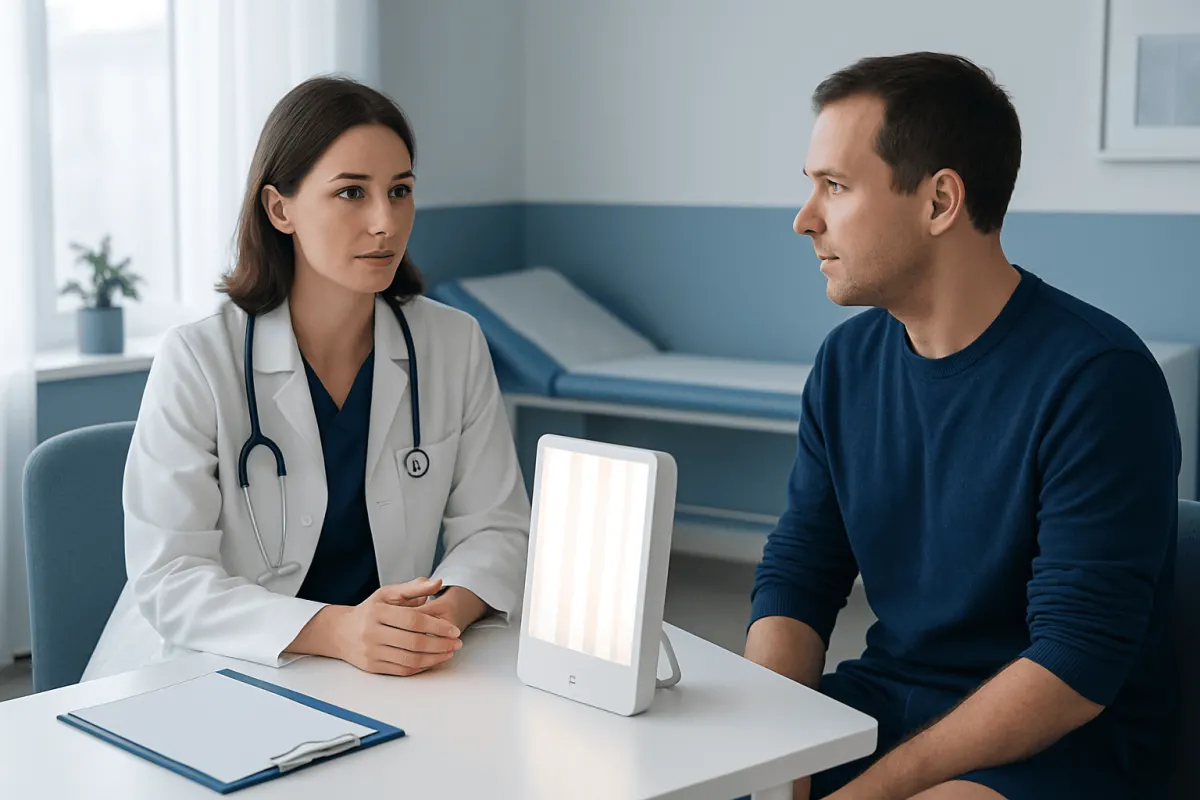
A prescribed home unit may be a full-body cabinet, a hand-held device or a panel for specific areas. The person follows the treatment schedule exactly, including which areas to expose and which to cover. Sessions are generally brief at first. Exposure length and frequency are adjusted gradually according to the skin’s response, rather than increased quickly in an effort to speed results.
Before a session, the skin should be clean and dry unless the dermatology team has given different instructions. Thick products, fragrances and products containing ingredients that may react with UV light should not be applied immediately beforehand unless specifically approved. Emollients may be part of eczema care, but the timing of application should be discussed because some products can alter how UV light reaches the skin.
Protective goggles should be worn if instructed, and sensitive areas such as the eyes, lips, genitals or unaffected skin may need covering. The person should stand or sit at the recommended distance from the device and avoid looking directly at the light source. A treatment log is useful for recording the date, duration, body areas treated, skin reaction and any missed sessions.
Phototherapy is usually one component of broader dermatology care. Depending on the type and severity of eczema, clinicians may also discuss atopic dermatitis treatment options such as tailored topical therapy, infection management, systemic medicines or biologic treatments.
How long does it take for light therapy to work on eczema?
Light therapy usually works gradually rather than after one or two sessions. Some people notice less itch or redness after several weeks, but a clearer change often requires a consistent course of treatment over weeks to a few months. The exact timeframe depends on eczema severity, the treated areas, the prescribed schedule, adherence, other treatments and individual skin response.
It is helpful to measure progress by more than appearance alone. A person may track itch intensity, sleep disruption, need for rescue topical treatment, new flare frequency and photographs taken in similar lighting. This gives the dermatologist a more complete picture of whether treatment is helping and whether the schedule needs adjustment.
Not everyone responds at the same pace, and some people do not improve enough for phototherapy to remain worthwhile. If there is no meaningful benefit after an adequate supervised trial, the dermatologist can reassess the diagnosis, check for contact allergy or infection, review adherence and discuss other options. Treatment should not be intensified independently at home.
How successful is light therapy for eczema?
Phototherapy can be successful for many appropriately selected people with eczema, particularly when disease is widespread or has not been adequately controlled with topical care alone. Studies and clinical experience support narrowband UVB as an established option for atopic dermatitis, but response varies. Some people achieve substantial improvement, while others have a partial response or no clear benefit.
Success is best understood as improved control rather than a permanent cure. Eczema may return after a course ends, and many people still need regular moisturising, trigger management and intermittent prescribed anti-inflammatory treatment. A dermatologist can help define realistic goals, such as less itch, fewer flares, improved sleep or reduced affected skin area.
Results may be influenced by consistent attendance or use, correct technique and management of contributing factors. Irritants, allergic contact reactions, skin infection, stress, weather changes and scratching can all affect eczema activity. A treatment plan should therefore address the skin barrier as well as inflammation.
What is the success rate of phototherapy?
There is no single success rate of phototherapy that applies to every person with eczema. Research uses different definitions of improvement, different treatment schedules and different patient groups, so one percentage can be misleading. In practice, dermatologists assess whether there is a clinically meaningful reduction in symptoms and eczema severity after a supervised treatment course.
Narrowband UVB has evidence of benefit for moderate-to-severe atopic dermatitis, but individual outcomes range from major improvement to limited response. The chance of benefit may be lower when treatment is inconsistent, when eczema is driven by an unrecognised trigger, or when a different skin condition is present. A clinician can provide a more personalized expectation after reviewing the person’s skin and medical history.
Even after a good response, maintenance care remains essential. Some people need periodic reassessment or another treatment approach if eczema becomes active again. The safest measure of success is improved disease control with acceptable side effects and a plan that can be maintained in daily life.
What not to do after phototherapy
After phototherapy, a person should not seek extra UV exposure from sunlight, tanning beds or sun lamps on the treated day unless their dermatologist has specifically advised otherwise. UV effects can add up, increasing the chance of redness or burning. If outdoor exposure is unavoidable, protecting the skin with clothing and following the clinician’s sun-protection advice is sensible.
Do not repeat a session early, extend the exposure time or make up for missed sessions without instructions from the phototherapy team. More UV is not necessarily more effective and can cause burns. The person should also avoid starting new creams, fragranced products, exfoliating treatments or medicines that may increase photosensitivity without checking with a clinician or pharmacist.
A gentle moisturiser can often be used after treatment if it is part of the skin-care plan. However, the person should follow individualized guidance about timing and products. If the skin becomes tender, very red, swollen, blistered or increasingly itchy, treatment should be paused and the prescribing team contacted for advice.
Safety, self-care and when to seek medical care
Common short-term effects of UVB phototherapy can include mild dryness, temporary redness or itch. More significant burning is not an expected result and needs assessment. Over the longer term, cumulative UV exposure may contribute to skin aging and can increase skin cancer risk, which is why treatment is prescribed in controlled courses and reviewed regularly.
Daily eczema care remains important during home phototherapy. This includes using an appropriate fragrance-free moisturiser, avoiding known irritants, keeping nails short to reduce skin damage from scratching and using prescribed medicines as directed. A dermatologist may also recommend treatment for secondary infection or investigate possible allergies if eczema is difficult to control.
Medical care should be sought promptly for widespread painful redness, blistering, eye pain or vision changes after exposure, fever, rapidly spreading rash, pus, yellow crusting, increasing warmth or pain in the skin. Urgent assessment is also appropriate if eczema is severely affecting sleep, mental wellbeing or everyday functioning. Acıbadem Health Point’s multidisciplinary specialists and JCI-accredited hospitals can assess eczema and discuss monitored treatment options for international patients.
Frequently asked questions
01Can a person use a light therapy lamp for eczema at home?
A person should use a home device for eczema only when it has been prescribed or approved by a dermatologist and comes with a personalized treatment schedule. General wellness lamps, tanning beds and unregulated UV devices are not substitutes for medical phototherapy because their wavelength and dose may not be appropriate or safe.
02How long does it take for light therapy to work on eczema?
Improvement often develops over several weeks of consistent treatment, with fuller results sometimes taking a few months. The pace varies by eczema severity, treatment schedule and individual response. A dermatologist should review progress rather than having the person increase exposure independently.
03What not to do after phototherapy?
Do not add extra UV exposure through sunlight, tanning beds or sun lamps without medical advice. Do not lengthen the next treatment or repeat a session early. New medicines or skin products should be checked first because some can increase light sensitivity.
04How successful is light therapy for eczema?
Light therapy can provide meaningful improvement for many people with appropriately selected moderate-to-severe eczema, but it does not work equally well for everyone. It is generally considered a method for improving control of symptoms and flares, not a permanent cure. Ongoing moisturising and other prescribed care may still be needed.
05What is the success rate of phototherapy?
There is no single reliable percentage because studies use different treatment plans and definitions of success. Dermatologists usually judge success by a meaningful decrease in itch, affected skin, flares and treatment needs. An individual estimate depends on the person's diagnosis, skin history and ability to follow the prescribed plan.
06Can phototherapy make eczema worse?
Phototherapy can temporarily cause dryness, itch or mild redness, especially early in treatment. Too much exposure can cause a burn and may worsen skin discomfort. Worsening rash, marked redness, blistering or signs of infection should be reported promptly to the treating clinician.
This article is for general information only and is not a substitute for professional medical advice. Please consult a qualified doctor about your individual situation.
Explore treatments in Turkey — costs, top hospitals & a free quote
JCI-accredited · board-certified surgeons · reply within 24h
Add us as a Preferred Source to see more of our trusted health content across Google Search, AI Overviews and Discover.