Lid Surgery Before and After: How Results Settle
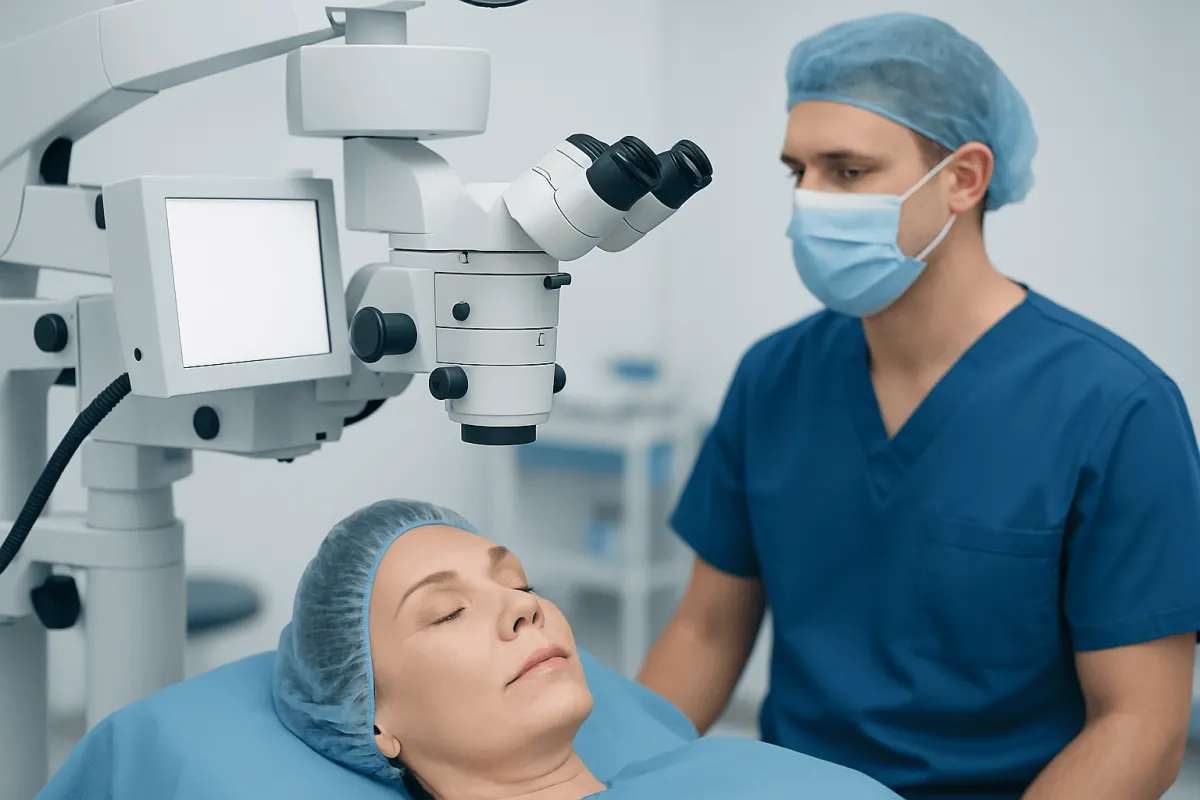
Lid surgery before and after changes are usually gradual rather than immediate. Bruising and swelling are expected early on, while a more settled, natural-looking result often becomes clearer over the following weeks and months.
Understanding Lid Surgery Before and After
Lid surgery, medically called blepharoplasty, reshapes the upper eyelids, lower eyelids, or both. It may remove excess skin, reduce or reposition prominent fat pads, and tighten selected tissues when appropriate. Before-and-after changes can include a less heavy upper lid, reduced lower-lid puffiness, and a more rested appearance; for some people, removing upper-lid skin may also improve a blocked upper visual field.
The early postoperative appearance is not the final result. Eyelids commonly look puffy, bruised, uneven, or tighter than expected during the first days after surgery. As healing progresses, swelling subsides and incision lines soften, revealing changes that are generally more subtle and individualized than immediate before-and-after photographs may suggest.
Blepharoplasty does not correct every concern around the eyes. Fine lines at the outer corners of the eyes, skin texture, a low brow, and true eyelid drooping caused by a weak lifting muscle may need different treatments. During assessment, the surgeon distinguishes excess skin from brow descent and ptosis so that the recommended procedure matches the cause of the concern.
How Blepharoplasty Works and Who May Be a Candidate
Upper eyelid blepharoplasty usually uses an incision placed in the natural upper-lid crease. Through this incision, the surgeon can remove a measured amount of loose skin and, when needed, adjust small amounts of fat or muscle. Lower eyelid surgery may use an incision just beneath the lashes or inside the lower lid, depending on whether the main concern is excess skin, under-eye bags, or both.
Suitable candidates are generally adults in stable health who have realistic expectations and concerns such as upper-lid skin redundancy, lower-lid bags, or eyelid heaviness. A consultation considers medical history, medication use, smoking, previous eye or facial surgery, allergies, and healing factors. People with dry eye symptoms, thyroid eye disease, glaucoma, eyelid laxity, or other eye conditions may need additional evaluation or treatment planning.
A thorough eye-area examination is important because the eyelids protect the surface of the eye. The clinician may assess vision, tear production, eyelid closure, brow position, lid symmetry, and the amount of skin that can be safely removed. If upper-lid skin appears to affect vision, formal visual-field testing may also be considered.
What Happens During the Procedure
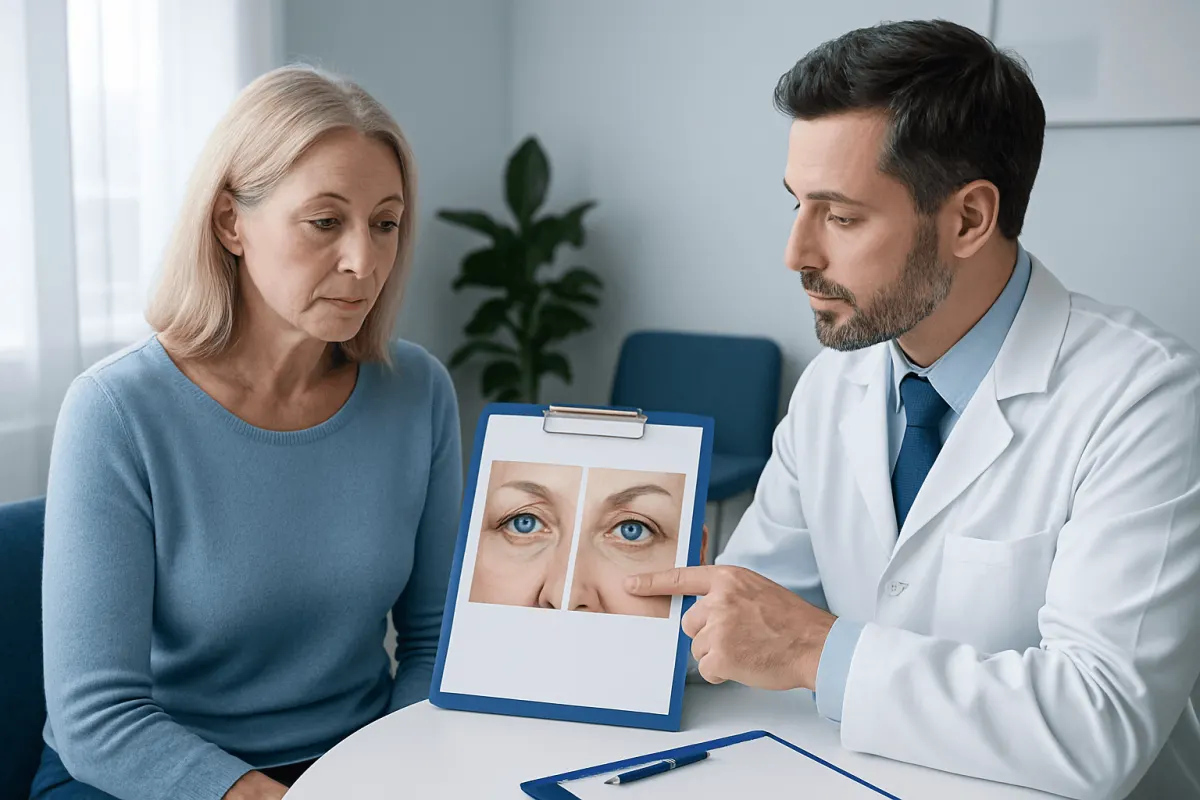
Blepharoplasty is commonly performed as an outpatient procedure. At the planning visit, the surgeon discusses the intended changes and marks the natural crease or other incision placement while the person is upright. Local anaesthesia with sedation or general anaesthesia may be used, depending on the planned surgery, health history, and clinical setting.
During upper-lid surgery, the incision is usually hidden in the crease. The surgeon removes or reshapes only the tissue needed to achieve the planned result, then closes the incision with fine sutures or another appropriate closure method. In lower-lid surgery, fat may be removed or repositioned to smooth the transition between the eyelid and cheek, while skin is treated conservatively to help preserve lower-lid support.
After the procedure, the eyes may be lubricated and cool compresses are often recommended. Most people return home the same day with a responsible adult if sedation or general anaesthesia was used. Written aftercare instructions typically cover eye drops or ointment, activity limits, wound care, follow-up appointments, and when it is safe to return to driving, work, contact lenses, makeup, and exercise.
Recovery Timeline and Visible Results
Recovery varies with the extent of surgery, whether one or both eyelids were treated, individual healing, and whether another facial procedure was performed at the same time. Swelling, bruising, mild tearing, dryness, numbness, and a feeling of tightness are common in the early period. Keeping the head elevated, using cool compresses as directed, and avoiding activities that increase facial pressure can support comfort during initial healing.
In the first few days, eyelids can look more swollen than expected. Bruising and obvious swelling often improve substantially over the first one to two weeks, while mild puffiness may remain longer, particularly in the morning. If non-dissolving sutures are used, they are commonly removed during an early follow-up visit. Incision redness and firmness usually continue to improve gradually over subsequent months.
How long does it take to look normal after upper eyelid surgery?
Many people feel comfortable being seen in public about 1–2 weeks after upper eyelid surgery, especially if bruising is mild and can be covered after the surgeon approves makeup. However, “normal” is personal: small amounts of swelling, incision pinkness, or asymmetry can remain for several weeks. A more refined result is often judged over a few months, once tissues have settled and scars have matured.
Will people notice I had blepharoplasty?
During the first days and weeks, close contacts may notice bruising, swelling, or visible healing. After recovery, a conservative, well-planned procedure often produces a rested rather than dramatically changed appearance. Whether others recognize surgery depends on the amount of correction, a person’s natural anatomy, skin quality, healing pattern, and whether other facial changes were made at the same time.
Benefits, Downsides, and Possible Risks
The potential benefits of eyelid surgery include less upper-lid heaviness, improved contour around the eyes, reduction of lower-lid bags, and improved peripheral vision when redundant upper-lid skin was obstructing it. The aim is not to create a standard eye shape, but to improve concerns while preserving eyelid function, natural expression, and appropriate protection of the eye.
What are the downsides of eyelid surgery?
Blepharoplasty involves recovery time and cannot stop the normal ageing process. Temporary bruising, swelling, dry or watery eyes, light sensitivity, numbness, and tightness are common downsides. Scars are permanent but are usually placed in natural creases or along the lash line and tend to fade with time; nonetheless, they may remain visible in some people. Results may also be limited if brow descent, skin quality, or muscle-related eyelid drooping is the main concern.
Potential complications include infection, bleeding, delayed healing, noticeable asymmetry, unsatisfactory scarring, persistent dryness, difficulty closing the eyes, and changes in eyelid position. Lower-lid surgery can rarely lead to outward turning or pulling down of the lower lid. Serious vision-related complications are uncommon, but any sudden change in vision, severe pain, or rapidly increasing swelling needs urgent assessment. A qualified surgeon explains individual risks and the possibility that further treatment or revision could be needed.
Comfort and Pain After Upper Eyelid Surgery
How painful is upper eyelid surgery?
Upper eyelid surgery is usually described as causing mild to moderate discomfort rather than severe pain. Local anaesthetic prevents pain during the operation, though a person may feel pressure or movement. Afterward, tenderness, tightness, itching, and a gritty sensation can occur as the tissues heal, and the surgeon may recommend suitable pain relief and eye lubrication.
Severe or worsening pain is not expected and should not be ignored, particularly if it occurs with reduced vision, marked swelling on one side, nausea, or bleeding. People should use only medications approved by their surgical team and should ask before restarting medicines or supplements that may affect bleeding. They should also avoid rubbing the eyes and follow the advised schedule for drops, ointment, and review visits.
When to Seek Medical Care
Contact the surgical team promptly for increasing redness, warmth, discharge, fever, persistent bleeding, worsening swelling, an incision that opens, or symptoms that do not improve as expected. Urgent medical assessment is needed for sudden loss or change of vision, severe eye pain, rapidly expanding swelling or bruising, pronounced inability to close the eye, or new double vision. These symptoms may have causes unrelated to surgery as well, but they should always be assessed without delay.
Routine follow-up is also important, even when healing appears straightforward. It allows the clinician to monitor incision healing, eyelid position, eye-surface comfort, and the developing result. At Acıbadem Health Point, multidisciplinary specialists and JCI-accredited hospitals can assess eyelid concerns and provide blepharoplasty care for international patients when clinically appropriate.
Frequently asked questions
01Are eyelid surgery results permanent?
The skin and fat removed or repositioned during blepharoplasty do not return in the same way. However, the face continues to age, and future skin laxity, brow descent, or changes in fat distribution can affect the eye area over time. Results therefore tend to be long-lasting, but not immune to natural ageing.
02Can blepharoplasty improve vision?
Upper eyelid surgery may improve the upper field of vision when excess eyelid skin physically hangs over the eye. It does not improve eyesight caused by refractive errors, cataracts, retinal conditions, or other eye diseases. An eye examination and, in some cases, visual-field testing help determine whether there is functional obstruction.
03Do blepharoplasty scars go away completely?
All surgery leaves a scar, but upper eyelid scars are generally hidden in the natural lid crease, while lower-lid scars are often placed near the lash line or inside the lid. Scars commonly become less red and less noticeable over several months. Individual scar healing varies according to skin type, surgical technique, sun exposure, and aftercare.
04Can people with dry eyes have eyelid surgery?
Dry eye does not automatically rule out eyelid surgery, but it requires careful assessment because surgery can temporarily worsen dryness or irritation. The surgeon may recommend treating dry-eye symptoms first or modifying the surgical plan to protect eyelid closure and the eye surface. People should report burning, grittiness, fluctuating vision, or frequent use of lubricating drops before surgery.
05When can makeup, contact lenses, and exercise be resumed?
The appropriate timing depends on healing, incision status, and the type of procedure performed. Makeup and contact lenses are usually avoided until the surgeon confirms that the incisions and eye surface have healed sufficiently, while strenuous activity is often restricted during early recovery. A person should follow their own postoperative instructions rather than relying on a general timetable.
06Can blepharoplasty be combined with ptosis repair or a brow lift?
It can be combined in selected cases when more than one issue contributes to a tired or obstructed eye area. Ptosis repair treats weakness of the eyelid-lifting muscle, while a brow lift addresses low brow position; neither is identical to removing excess eyelid skin. A detailed examination is needed to decide whether one procedure or a combined approach is appropriate.
This article is for general information only and is not a substitute for professional medical advice. Please consult a qualified doctor about your individual situation.
Explore treatments in Turkey — costs, top hospitals & a free quote
JCI-accredited · board-certified surgeons · reply within 24h
Add us as a Preferred Source to see more of our trusted health content across Google Search, AI Overviews and Discover.