Leukemia Bruises: Patterns, Causes and Warning Signs
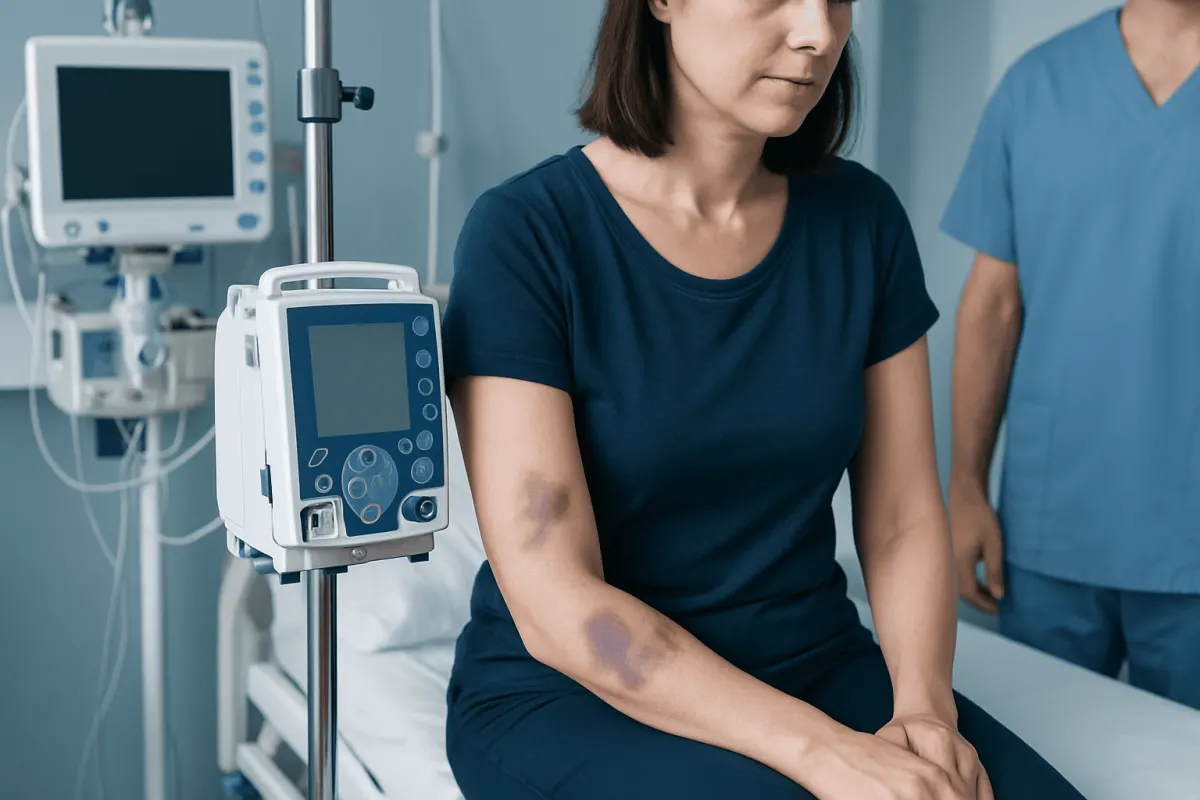
Lymphoma: Origins, Symptoms, and Diagnosis" class="ahp-ilk">Leukemia bruises can develop more easily than expected, become larger after minor bumps, or appear without a remembered injury when leukemia affects blood cell production. However, most bruises are not caused by leukemia, and persistent or unexplained bruising should be assessed in the context of other symptoms and a medical examination.
Why leukemia can cause bruising
Leukemia is a cancer of blood-forming cells, usually beginning in the bone marrow. As abnormal blood cells multiply, they can interfere with the marrow’s ability to make healthy blood cells. One important affected cell type is the platelet, which helps blood clot after a blood vessel is damaged.
When platelet counts are low, even a small bump may cause blood to leak beneath the skin and form a bruise. Low platelets can also cause tiny red, purple, or brown spots called petechiae, as well as bleeding from the nose or gums. These changes may occur in acute or chronic forms of leukemia, but their presence does not establish a diagnosis by itself.
Many people notice bruises after ordinary daily activities and may not remember the minor pressure or injury that caused them. Therefore, healthcare professionals consider the full pattern: how often bruises occur, their size and location, other bleeding symptoms, medicines, medical history, and blood test results.
What does bruising look like with leukemia?
Bruising with leukemia is not always visually distinct from an ordinary bruise. It may look blue, purple, dark red, or nearly black at first, then gradually change to green, yellow, or brown as the body clears the blood under the skin. A bruise may be tender, although painless bruising can also occur.
Features that may prompt medical assessment include bruises that are large, frequent, appear after little or no apparent injury, or develop in several areas of the body. People sometimes describe leukemia bruises all over the body, but widespread bruising can have several possible causes and needs medical evaluation rather than self-diagnosis.
Another relevant finding is petechiae: very small, flat red, purple, or brown dots that usually do not fade when pressed. They can appear in clusters, often on the lower legs, but may occur elsewhere. Petechiae are not the same as larger bruises and can also result from infections, medications, physical strain, or other platelet-related conditions.
- Typical bruises are often linked to a remembered bump or pressure.
- Concerning bruising may be new, recurrent, unusually extensive, or accompanied by other bleeding.
- Skin appearance alone cannot reliably distinguish leukemia from other causes.
Where do leukemia bruises first appear?

There is no single body location where leukemia bruises reliably begin. Bruises can occur anywhere, including the arms, legs, trunk, or areas exposed to routine bumps and pressure. For this reason, the location of a bruise alone is not a dependable way to identify leukemia.
Some people first notice bruising on the legs or arms because these areas are more likely to experience minor knocks. Petechiae may be noticeable on the lower legs, particularly around the ankles, but they can also occur on the arms, torso, inside the mouth, or other areas. A clinician will look for the overall distribution and whether there are signs of bleeding elsewhere.
Bruises in less injury-prone locations, such as the abdomen, back, chest, face, or inner upper arms, may deserve closer attention when they are unexplained or recurrent. Still, they are not specific to leukemia. Medication effects, bleeding disorders, liver disease, nutritional deficiencies, and accidental pressure or trauma are among the many alternatives a doctor may consider.
What is one of the first signs of leukemia?
One possible early sign of leukemia is persistent fatigue or reduced exercise tolerance, often related to anemia, which is a low level of red blood cells. Other possible early features include frequent infections, fever without a clear explanation, pale skin, unusual bruising or bleeding, night sweats, bone or joint discomfort, swollen lymph nodes, or unintentional weight loss.
These symptoms are common and usually have causes other than leukemia. They may develop gradually or, in some acute leukemias, become more noticeable over a shorter period. A symptom becomes more meaningful when it is persistent, worsening, unexplained, or occurs alongside abnormalities on a blood test.
Unexplained bruising may be an early feature when platelet production is affected, but it is not necessarily the first sign and should not be interpreted in isolation. A clinician can assess symptoms and arrange a complete blood count to check red cells, white cells, and platelets. If leukemia is suspected after initial testing, referral to a hematology or oncology team is appropriate.
Leukemia types of bruises to worry about
Bruising should be discussed with a healthcare professional when it is new and unexplained, repeatedly occurs without meaningful injury, or is noticeably different from a person’s usual pattern. Bruises that are unusually large, rapidly increasing in number, or accompanied by small pinpoint spots may indicate a problem with platelets or clotting.
Additional symptoms make timely assessment especially important. These include nosebleeds that are difficult to stop, bleeding gums, blood in urine or stool, unusually heavy menstrual bleeding, prolonged bleeding from small cuts, marked tiredness, recurrent fever, or frequent infections. These symptoms do not necessarily indicate leukemia, but they should not be ignored.
Medicines can be an important explanation. Blood thinners, antiplatelet medicines, aspirin-containing products, anti-inflammatory medicines, corticosteroids, and some supplements may increase the likelihood of bruising or bleeding. People should not stop prescribed medication without medical advice; instead, they should tell their clinician about all medicines, vitamins, and herbal products they use.
How long do leukemia bruises last?
Most ordinary bruises gradually heal over about one to several weeks, depending on their size, depth, location, age, skin characteristics, circulation, and whether another injury occurs. During healing, the color often changes from red or purple to green, yellow, and brown before fading.
Leukemia bruises can also fade, so a bruise that heals does not rule out a platelet problem. If platelet levels remain low, however, new bruises may develop easily while older ones are still resolving. This can create the impression that leukemia bruises come and go or that they never fully clear.
A bruise that does not improve over several weeks, grows, becomes very painful, forms a firm lump, or appears with ongoing bleeding should be reviewed by a clinician. Assessment is also advisable if a person is experiencing repeated unexplained bruises, even if each individual mark eventually heals.
How unexplained bruising is assessed
A healthcare professional will ask about the timing of bruises, injuries, family history of bleeding problems, infections, alcohol use, diet, and medications. They may examine the skin for bruises and petechiae and check for signs such as enlarged lymph nodes, liver or spleen enlargement, or pallor. These findings help guide testing but cannot confirm a diagnosis alone.
A complete blood count, often called a CBC, measures platelet levels and evaluates red and white blood cells. Depending on the results and the clinical situation, clinicians may request a blood smear, clotting tests, liver function tests, vitamin-related tests, or other investigations. If blood findings raise concern for a bone marrow disorder, a hematologist may recommend more specialized testing, including bone marrow examination.
Evaluation is designed to identify the cause rather than assume leukemia. Relevant conditions can include platelet disorders, anemia, infections, liver disease, inherited bleeding disorders, autoimmune conditions, and medication-related bleeding. If leukemia is diagnosed, care is individualized according to the specific type and a person’s overall health.
When to seek medical care
People should arrange a routine medical appointment for new or recurrent unexplained bruising, especially when bruises are large, occur after minimal contact, or are accompanied by fatigue, fever, frequent infections, or unintended weight loss. Taking photographs over time and noting any associated symptoms may help a clinician understand the pattern.
Urgent medical care is needed for bleeding that will not stop, vomiting blood, black or bloody stools, blood in urine, severe headache, confusion, fainting, sudden weakness, shortness of breath, or a major injury followed by extensive bruising. These symptoms can indicate serious bleeding or another urgent condition and require prompt assessment.
Until reviewed, it is sensible to avoid unnecessary contact sports or activities with a high risk of injury if unusual bleeding is present. A clinician should advise on pain medicines, because some products can affect platelet function or bleeding risk. Acıbadem Health Point’s multidisciplinary specialists and JCI-accredited hospitals assess blood-related symptoms and provide individualized care for international patients when needed.
Frequently asked questions
01Can leukemia bruises appear without an injury?
Yes. Low platelet levels can make bruising more likely after very minor pressure that a person does not notice or remember. However, unexplained bruising is not specific to leukemia and can occur for many other reasons, including medicines and other blood or medical conditions.
02Are leukemia bruises painful?
They may be painful or painless, much like ordinary bruises. Pain level is not a reliable way to determine the cause. A rapidly enlarging, very painful, or swollen bruise should be medically assessed.
03Do leukemia bruises go away?
Yes, individual bruises can fade as the body reabsorbs blood beneath the skin. If platelet counts remain low, new bruises may continue to appear. Recurrent bruising warrants a medical review, even when the marks eventually heal.
04Can a blood test show whether bruising is related to leukemia?
A complete blood count can identify low platelet levels and changes in red or white blood cells that may need further investigation. It cannot always diagnose leukemia on its own. If results are concerning, a hematology specialist may arrange additional blood tests or bone marrow testing.
05What is the difference between a bruise and petechiae?
A bruise is a larger area of bleeding under the skin, often changing color as it heals. Petechiae are tiny flat red, purple, or brown dots caused by small amounts of bleeding under the skin. Both can occur with low platelets, but each has many possible causes.
06Should children with unexplained bruises be checked for leukemia?
Children commonly develop bruises during normal play, particularly on the shins, knees, and elbows. A medical assessment is appropriate if bruises are frequent, unexplained, in unusual locations, or accompanied by persistent fever, pallor, fatigue, bone pain, bleeding, or recurrent infections. A pediatric clinician can determine whether blood testing is needed.
This article is for general information only and is not a substitute for professional medical advice. Please consult a qualified doctor about your individual situation.
Oncology care in Turkey — second opinion and treatment plan
JCI-accredited · board-certified surgeons · reply within 24h
Add us as a Preferred Source to see more of our trusted health content across Google Search, AI Overviews and Discover.