Laminoplasty: How It Works, Recovery, and What to Expect

Laminoplasty is a surgery used to relieve pressure on the spinal cord in the neck, most often when several levels of the cervical spine are narrowed. Rather than removing the back part of the vertebrae completely, the surgeon reshapes and opens it like a hinge to create more space for the spinal cord.
Overview: What Is Laminoplasty?
Laminoplasty is a decompression operation for the cervical spine, the portion of the spine in the neck. It is designed to make more room for the spinal cord when the spinal canal has become too narrow. This narrowing, called cervical spinal stenosis, may place pressure on the spinal cord and lead to cervical myelopathy, a condition that can affect walking, hand function, sensation, strength, and bladder control.
During laminoplasty, the surgeon changes the shape of the lamina, the bony plate at the back of each vertebra. Instead of fully removing this bone, as in a laminectomy, the surgeon creates a hinge on one side and opens the other side. The lamina is held in its new, open position with small plates, screws, or bone spacers. This enlarges the spinal canal and allows the spinal cord more space.
Laminoplasty is usually performed across multiple levels of the neck. Its aim is primarily to stop spinal cord compression from worsening and to support neurological recovery where possible. It is not the right operation for every person with neck pain or a disc problem, and the decision requires an individualized assessment by a spine specialist.
Why It May Be Recommended and Who May Be a Candidate
Doctors may recommend laminoplasty for people with myelopathy caused by pressure on the spinal cord at several levels of the cervical spine. Common underlying causes include age-related changes such as arthritis, enlarged ligaments, bone spurs, and degenerative disc changes. In some people, a naturally narrow spinal canal increases the likelihood that these changes will affect the spinal cord.
Symptoms that may lead to consideration of surgery include increasing clumsiness of the hands, difficulty fastening buttons or writing, arm or hand numbness, weakness, stiffness, unsteady walking, falls, or a shock-like sensation down the spine with neck movement. Symptoms may be mild at first but can gradually progress. Imaging findings must be interpreted alongside the person’s symptoms and neurological examination; a scan showing narrowing alone does not always mean surgery is needed.
A person may be a suitable candidate when the spine has a reasonably preserved curve, known as cervical lordosis, and when compression affects several levels from the back of the spinal canal. Laminoplasty may be less appropriate for people with significant forward curvature of the neck, marked spinal instability, severe pain caused mainly by a single disc level, or certain alignment problems. In these situations, another decompression procedure, sometimes combined with spinal fusion, may be considered.
How the Procedure Works: Step by Step
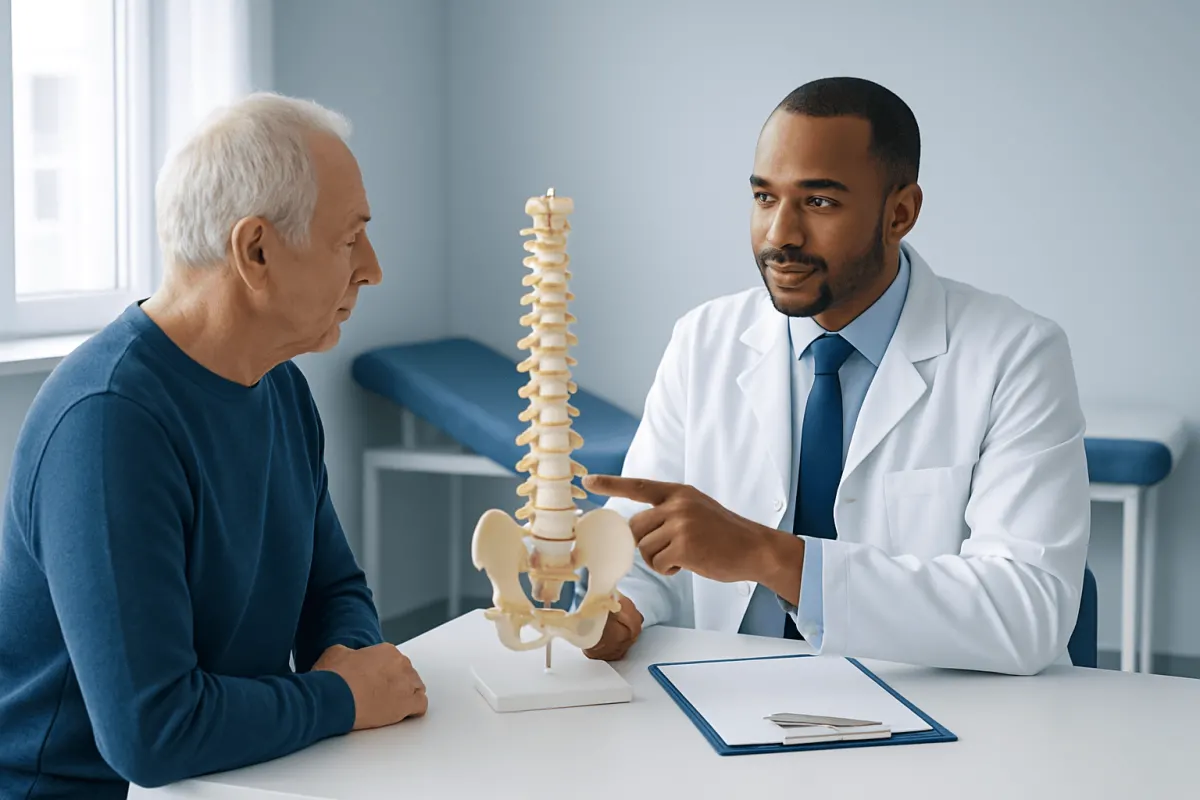
Laminoplasty is performed in an operating room under general anesthesia, meaning the patient is asleep throughout the procedure. The patient is positioned carefully on the stomach, with the head supported to keep the neck stable. The surgical team monitors important body functions and may also use neurological monitoring to observe spinal cord and nerve activity during the operation.
The surgeon makes an incision along the back of the neck and gently moves the muscles aside to reach the affected vertebrae. At each planned level, a narrow groove is created on one side of the lamina to serve as a hinge. A second opening is made on the opposite side, allowing the lamina to swing outward and widen the spinal canal. The opened lamina is then secured so it remains in position while healing occurs.
The exact technique can differ. In an open-door laminoplasty, the lamina opens mainly to one side. In a double-door technique, it is split in the middle and opened on both sides. The surgeon selects the approach based on anatomy, the affected levels, and the surgical plan. After the decompression is complete, the incision is closed, and the patient is monitored as anesthesia wears off.
Potential Benefits, Limits, and Risks
The central benefit of laminoplasty is spinal cord decompression while preserving the lamina rather than removing it completely. Because the vertebral bones are not usually fused together, many people retain more neck movement than they might after some fusion procedures. The operation may help stabilize or improve symptoms related to myelopathy, particularly walking difficulty, hand coordination, and spinal-cord-related weakness.
Results vary because recovery depends on factors such as the severity and duration of spinal cord compression, age, overall health, spinal alignment, and the degree of pre-existing nerve injury. Surgery is often more reliable at preventing further neurological decline than at fully reversing longstanding symptoms. Neck pain, numbness, stiffness, or balance difficulties may persist even when decompression is technically successful.
As with any surgery, laminoplasty has risks. These include bleeding, infection, blood clots, reactions to anesthesia, wound healing problems, and injury to nerves or the spinal cord. Procedure-specific risks can include neck stiffness or pain, reduced range of motion, weakness of the shoulder muscles caused by C5 nerve palsy, persistent symptoms, changes in spinal alignment, or the need for further surgery. The surgical team discusses the individual risk profile, expected benefits, and alternatives before treatment.
Recovery Timeline and Rehabilitation
After surgery, patients usually spend time in a recovery area while pain, breathing, movement, and neurological status are checked. Hospital stay varies with the person’s health, the number of levels treated, mobility, pain control, and any complications. Some patients are advised to wear a soft or rigid neck collar for a period, while others may not need one; this depends on the surgeon’s technique and preferences.
In the early days, discomfort around the incision, muscle tightness, tiredness, and reduced neck movement are common. The care team encourages safe movement, including getting out of bed and walking, as soon as appropriate. Pain medicine may be prescribed for short-term comfort, and instructions are provided about wound care, showering, sleeping positions, driving, lifting, and returning to work.
Recovery continues over weeks to months. Many people gradually increase walking and light daily activities during the first several weeks, but heavy lifting, repetitive overhead work, contact sports, and high-impact exercise generally need to wait until the surgeon confirms that healing is progressing well. Physical therapy may help restore posture, shoulder movement, strength, and confidence with walking. Nerve recovery can be slow, and improvements in coordination or sensation may continue for months after surgery.
Preparing for Surgery and Supporting Recovery
Before laminoplasty, the medical team typically reviews medical history, medications, allergies, prior surgeries, and imaging studies. Tests may include blood work, electrocardiography, and additional scans when needed. People should tell their clinician about blood-thinning medicines, diabetes treatments, supplements, smoking or nicotine use, sleep apnea, and any recent illness. Medication changes should only be made according to instructions from the treating team.
Preparing the home can make the first weeks easier. It may help to arrange support with meals, shopping, transport, and household tasks, especially if the person lives alone. Frequently used items should be placed within easy reach, and trip hazards such as loose rugs or clutter should be removed. A planned walking routine, as advised by the care team, can support circulation and gradual conditioning.
Smoking and nicotine products can interfere with wound healing and overall surgical recovery, so stopping before and after surgery is strongly encouraged. Good nutrition, adequate fluids, regular sleep, and following rehabilitation guidance can also support healing. Follow-up appointments are important for checking the incision, reviewing symptoms, monitoring movement and alignment, and adjusting the recovery plan.
When to Seek Medical Care
Anyone with symptoms that may suggest spinal cord compression should arrange a medical assessment, particularly if there is worsening hand clumsiness, increasing weakness, new walking or balance problems, frequent falls, or numbness affecting both hands or arms. A clinician can perform a neurological examination and decide whether imaging or referral to a spine specialist is appropriate.
Urgent medical care is needed for new or rapidly worsening weakness, loss of coordination that makes walking unsafe, loss of bladder or bowel control, or numbness in the genital or inner thigh region. These symptoms can have several causes, but they should be assessed without delay. After surgery, patients should contact their surgical team promptly for fever, increasing redness or drainage from the wound, severe or worsening pain, new arm or leg weakness, difficulty breathing, or other unexpected symptoms.
People considering laminoplasty benefit from discussing all reasonable options with a qualified spine surgeon, including observation, non-surgical symptom management, and other surgical approaches where relevant. Acıbadem Health Point’s multidisciplinary specialists and JCI-accredited hospitals assess and treat cervical spine conditions for international patients, with care plans based on individual clinical findings.
Frequently asked questions
01Is laminoplasty the same as laminectomy?
No. A laminectomy removes the lamina to create more room in the spinal canal, while laminoplasty reshapes and opens the lamina like a hinged door. Both operations can decompress the spinal cord, but they differ in how the back of the vertebra is managed and whether fusion may be needed.
02How long does it take to recover from laminoplasty?
Initial recovery commonly takes several weeks, while return to fuller activity and neurological recovery may take several months. The timeline varies according to the number of spinal levels treated, the person’s health, preoperative symptoms, work demands, and rehabilitation progress. The surgeon gives personalized activity guidance at follow-up visits.
03Will laminoplasty relieve neck pain?
Laminoplasty is primarily intended to relieve pressure on the spinal cord and prevent worsening myelopathy. Some people experience improvement in neck discomfort, but relief of neck pain is not guaranteed. When neck pain is the main concern, the surgeon will assess whether laminoplasty addresses its likely cause.
04Will neck movement be limited after laminoplasty?
Some loss of neck range of motion and stiffness can occur after laminoplasty, especially in the first months after surgery. The amount varies between individuals and may improve with healing and guided rehabilitation. Motion is often better preserved than with procedures that require multilevel fusion, but this depends on the specific surgical plan.
05Can cervical myelopathy return after laminoplasty?
Laminoplasty creates more space for the spinal cord at the treated levels, and many people have durable decompression. However, symptoms can persist, new degeneration can occur at other levels, or spinal alignment can change over time. Regular follow-up and reporting new neurological symptoms are important.
06What happens if cervical myelopathy is not treated?
Cervical myelopathy can remain stable in some people, but it may also gradually worsen and affect balance, walking, hand use, strength, and independence. Because spinal cord injury may become less reversible over time, progressive symptoms should be evaluated by a qualified clinician. Treatment decisions are based on symptoms, examination findings, imaging, and overall health.
This article is for general information only and is not a substitute for professional medical advice. Please consult a qualified doctor about your individual situation.
Joint and spine care in Turkey — expert assessment & treatment
JCI-accredited · board-certified surgeons · reply within 24h
Add us as a Preferred Source to see more of our trusted health content across Google Search, AI Overviews and Discover.