KOH Prep Test for Skin, Hair, and Nail Fungal Infections

A KOH prep is a simple laboratory test used to look for fungi in a sample of skin, nail, hair, or mucus. It can help clinicians confirm whether symptoms such as scaling, itching, rashes, or nail changes are caused by a fungal infection rather than another condition.
What is a KOH prep?
A KOH prep, also called a potassium hydroxide preparation or KOH test, is a microscopic test used to detect fungi in samples from the skin, scalp, hair, nails, or sometimes genital secretions. It is commonly used when a clinician suspects a superficial fungal infection, such as athlete’s foot, ringworm, jock itch, a yeast-related rash, or a fungal nail infection.
The test works by placing the sample on a glass slide with a potassium hydroxide solution. KOH dissolves much of the normal keratin and cellular material in skin, hair, and nails, making fungal elements easier to identify under a microscope. A clinician or laboratory professional may look for branching filaments called hyphae, yeast cells, or spores.
A KOH prep does not identify every fungal species and does not test for bacteria, viruses, allergies, eczema, or all other skin conditions. Instead, it provides useful, rapid evidence that fungi are present in the sampled material and can guide the next clinical step.
Why a clinician may recommend a KOH test
Many skin and nail conditions can look alike. Redness, itching, flaking, cracking, circular patches, or thickened nails may result from a fungal infection, but they can also occur with eczema, psoriasis, contact dermatitis, bacterial infection, or inflammatory conditions. A KOH prep can help avoid treating a non-fungal problem with unnecessary antifungal medication.
Clinicians often consider the test when there is persistent scaling between the toes, a spreading ring-shaped rash, recurrent groin irritation, scalp scaling with hair breakage, or nail discoloration and thickening. It may also be used when symptoms have not improved with an initial treatment or when the diagnosis is uncertain.
For example, a suspected fungal infection of the feet may be assessed alongside examination findings consistent with athlete’s foot. In people with nail changes, testing can be especially helpful because trauma, psoriasis, aging, and other causes can mimic fungal nail disease.
A KOH prep is an office or laboratory diagnostic tool, not a screening test for people without symptoms. The decision to perform it is based on the person’s symptoms, medical history, physical examination, and the site involved.
How the sample is collected and examined
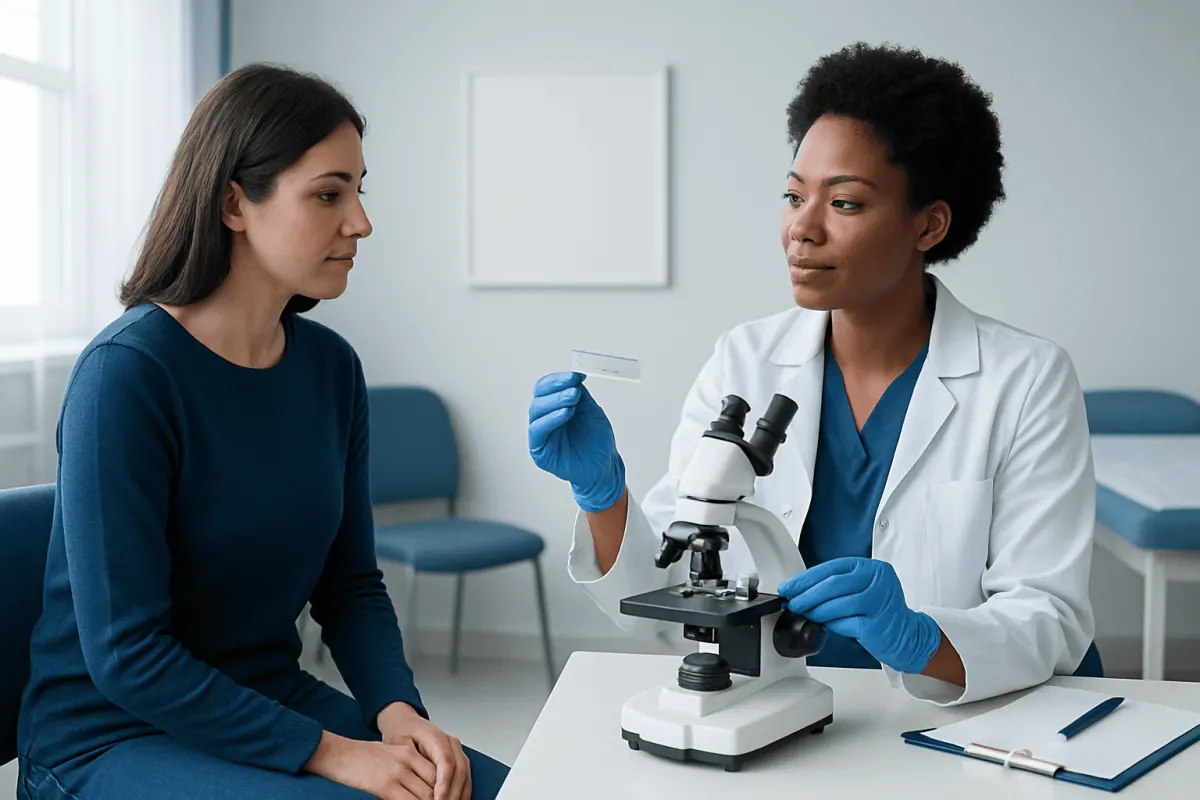
Collection usually takes only a few minutes. For a skin rash, the clinician gently scrapes loose scale from the active outer edge of the affected area. For suspected athlete’s foot, material may be collected from scaling skin between the toes or from the sole. For a nail concern, the best sample often comes from material beneath the affected nail or from a clipping taken close to the abnormal area.
When the scalp is involved, hair shafts and scale may be collected. Depending on the concern, a clinician may also take a swab or scraping from a mucosal area. The exact collection method matters because fungi may be unevenly distributed, and a sample from an inactive or recently treated area may not contain enough material to detect.
The sample is placed on a glass slide, mixed with KOH, and allowed time to clear. Gentle warming may sometimes be used. It is then viewed under a microscope. In many settings, preliminary results may be available during or soon after the appointment, although timing varies by laboratory workflow.
The procedure is typically painless. Skin scraping may cause brief mild discomfort, particularly if the skin is cracked, inflamed, or tender. Nail clipping and collection of debris from under a nail are also usually well tolerated.
Understanding KOH prep results
A positive KOH prep means fungal structures were seen in the sample. This supports the diagnosis of a superficial fungal infection and may help the clinician choose an appropriate treatment. The clinical location and appearance still matter, since treatment differs for skin, scalp, and nail infections.
A negative KOH prep means fungal elements were not identified in that sample. It does not always mean that no fungal infection is present. A false-negative result can occur if the sample was too small, was taken from the wrong location, contained little fungal material, or was collected after antifungal treatment had already reduced the amount of fungus.
Occasionally, the result may be uncertain or may not match the symptoms and examination. The clinician may repeat the test, request a fungal culture, use another laboratory method, or consider alternative diagnoses. Fungal culture can sometimes help identify the organism, but it usually takes longer than a KOH prep.
It is important not to interpret a result in isolation. A positive microscope finding may be meaningful only when it fits the symptoms and the body site, while a negative result may need further evaluation if a rash, nail change, or scalp problem persists.
Preparing for a KOH prep and factors that affect accuracy
Usually, no special preparation is needed before a KOH prep. However, people should tell the clinician about antifungal creams, sprays, shampoos, oral medicines, steroid creams, or other products recently used on the affected area. These treatments may change the appearance of the skin and can sometimes reduce the chance of detecting fungi in a sample.
If an appointment has been scheduled specifically to evaluate a possible fungal infection, the clinic may provide individualized instructions about pausing certain topical products beforehand. A person should not stop prescribed medication without advice from the clinician who prescribed it. Keeping the area clean is reasonable, but vigorous scrubbing, scraping, or applying cosmetic products immediately before the visit may make collection more difficult.
For nail testing, nail polish, artificial nails, and heavy cosmetic coatings can interfere with examination and sample collection. It may be helpful to remove them in advance if the clinic requests this. Nails should not be aggressively trimmed or filed just before the appointment unless instructed, as this can remove useful material.
Accuracy also depends on clinical expertise and sample quality. This is why a clinician may collect more than one scraping or may use additional testing when the first result does not clearly explain the symptoms.
What happens after the test?
When a KOH prep supports a fungal infection of the skin, treatment may involve an antifungal medicine applied directly to the affected area. The exact treatment and duration depend on the infection’s location, severity, extent, and whether there are factors such as diabetes, immune suppression, pregnancy, or repeated infections.
Scalp and nail infections often need different management from mild skin infections because topical treatments may not reach the fungus effectively in those areas. A clinician may discuss fungal nail treatment when testing and examination suggest nail involvement. Oral antifungal medicines can be appropriate for selected people, but they require medical assessment because they may interact with other medicines or may not be suitable for everyone.
Self-treatment may be reasonable for some mild, familiar fungal rashes, but an evaluation is advisable when symptoms are new, extensive, recurrent, or not improving. Steroid cream used alone can sometimes alter the appearance of a fungal rash and allow it to spread, so it is best to seek professional guidance when the cause is uncertain.
Acıbadem Health Point’s multidisciplinary specialists and JCI-accredited hospitals diagnose and treat skin, scalp, and nail conditions for international patients when further assessment is needed.
When to seek medical care
Medical care is recommended when a rash is painful, rapidly spreading, blistering, oozing, associated with fever, or affecting the face, scalp, genitals, or large areas of the body. Prompt assessment is also important for redness, warmth, swelling, or pus, which may suggest a bacterial infection or another condition requiring different treatment.
A person should consult a clinician if a suspected fungal rash does not improve, returns often, or worsens despite appropriate over-the-counter treatment. Nail changes should be assessed when they are painful, affect several nails, cause difficulty walking or using the hands, or occur alongside diabetes, poor circulation, or a weakened immune system.
Children with possible scalp ringworm should be evaluated because scalp infections can lead to hair breakage and may need prescription medicine. Anyone with a persistent or unexplained rash should avoid sharing towels, footwear, hair tools, or personal items until the cause is clear, as some fungal infections can spread through close contact or contaminated objects.
Reducing the chance of superficial fungal infections
Fungi grow well in warm, moist environments. Keeping skin clean and thoroughly dry, especially between the toes and in skin folds, can lower the likelihood of infection. Breathable footwear, clean socks, and changing out of damp exercise clothing promptly may also be helpful.
In communal showers, locker rooms, and pool areas, wearing protective footwear can reduce direct exposure to contaminated surfaces. Towels, socks, shoes, nail tools, razors, and hairbrushes should not be shared. Washing clothing, towels, and bedding regularly can be useful when someone in the household has an active contagious fungal infection.
For people prone to athlete’s foot, allowing shoes to dry fully between uses and treating recurrent symptoms early with professional advice may reduce complications. Those with diabetes or circulation problems should inspect their feet regularly and seek care for cracks, sores, or persistent skin changes rather than attempting aggressive self-care.
These steps reduce risk but cannot prevent every infection. If symptoms suggest a fungal condition, a KOH prep or other assessment can help ensure treatment is matched to the actual cause.
Frequently asked questions
01Is a KOH prep painful?
A KOH prep is usually not painful. The clinician may gently scrape flaky skin, collect a small nail clipping, or take material from under a nail, which can cause brief mild discomfort if the area is already inflamed or tender. No injection is usually needed.
02How long does a KOH prep take?
Sample collection generally takes only a few minutes. In many clinics, the slide can be examined the same day, sometimes during the visit. Timing can vary if the sample is sent to a laboratory or if additional testing is needed.
03Can a KOH prep diagnose nail fungus?
Yes, a KOH prep can help detect fungal elements in nail clippings or debris collected from beneath an abnormal nail. However, nail fungus can be difficult to sample accurately, so a clinician may recommend repeat testing, culture, or another test if the result is negative but suspicion remains high.
04Can I use antifungal cream before a KOH test?
Antifungal treatment can sometimes reduce the amount of fungus available for detection and contribute to a negative result. A person should tell the clinician about all creams, sprays, shampoos, and medicines used recently. They should only pause a prescribed treatment if a healthcare professional advises it.
05Does a positive KOH prep mean the infection is contagious?
Some superficial fungal infections can spread through direct skin contact or shared items, but contagiousness depends on the type and location of infection. Fungal nail infections are generally less easily spread than some skin or scalp infections. A clinician can explain appropriate hygiene measures based on the diagnosis.
06What if my KOH prep is negative but the rash continues?
A negative result does not always rule out a fungal infection because sampling and prior treatment can affect detection. The clinician may repeat the test, request a fungal culture, or evaluate for conditions such as eczema, psoriasis, contact dermatitis, or bacterial infection. Persistent, worsening, or recurrent symptoms deserve follow-up.
This article is for general information only and is not a substitute for professional medical advice. Please consult a qualified doctor about your individual situation.
Hair transplant in Turkey — costs, graft counts & a free assessment
JCI-accredited · board-certified surgeons · reply within 24h
Add us as a Preferred Source to see more of our trusted health content across Google Search, AI Overviews and Discover.