Knee Pain on Inside of Knee Joint: Causes, Relief and When to Worry

Key Takeaways
- Pain on the inner side of the knee can come from overuse, injury, arthritis, or tendon and ligament problems.
- Swelling, locking, giving way, or pain after a twist can suggest a more specific knee injury.
- Early relief often includes rest from aggravating activity, ice, gentle movement, and short-term support if advised.
- A doctor should evaluate pain that is severe, recurrent, associated with trauma, or not improving over time.
- Diagnosis is based on history, physical examination, and sometimes X-rays, ultrasound, or MRI.
Knee pain on the inside of the knee joint often points to irritation of structures on the medial side of the knee, such as ligaments, cartilage, tendons, or the joint lining. Many cases improve with simple care, but persistent pain, swelling, or instability deserves a medical assessment.
Overview
Knee pain on the inside of the knee joint usually means discomfort along the medial side of the knee, the area closest to the other leg. It is a common reason people seek orthopedic advice because it can interfere with walking, stairs, exercise, and even getting up from a chair.
The phrase can describe several different problems rather than one single diagnosis. In one person it may reflect a strained ligament after a sports twist; in another, it may be the first sign of knee osteoarthritis, irritation of a tendon, or inflammation around the joint. The location matters, but so do the details: whether the pain began suddenly or slowly, whether the knee swelled, and whether it feels stiff, unstable, or tender to touch.
For international patients deciding whether to travel for care, the pattern of symptoms helps guide the next step. Mild pain after overuse may settle with self-care, while pain after an injury, or pain that keeps returning, is more likely to benefit from an in-person orthopedic evaluation and imaging if needed.
Symptoms
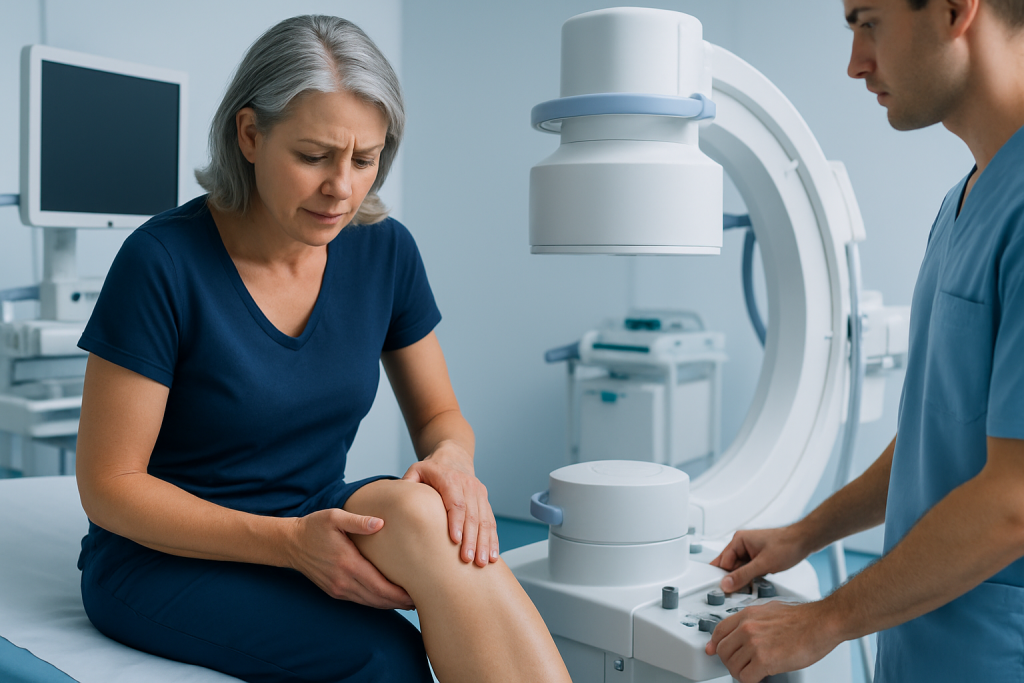
Inner knee pain does not always feel the same from person to person. Some people notice a sharp pain when turning, squatting, or stepping sideways, while others describe a dull ache that becomes more obvious after walking or standing for long periods.
Depending on the cause, the knee may also feel stiff in the morning, tender along the inner joint line, puffy after activity, or less steady when bearing weight. Some people can localize the pain to a small point, while others feel it spread across the front or back of the knee.
- Pain on the inner side of the knee during bending or twisting
- Swelling or a feeling of fullness around the joint
- Clicking, catching, locking, or giving way
- Tenderness when pressing the medial knee
- Stiffness after rest or in the morning
Symptoms that start after a fall, sports injury, or sudden pivot deserve closer attention because they can signal ligament, meniscus, or cartilage injury rather than simple strain.
Causes & Risk Factors
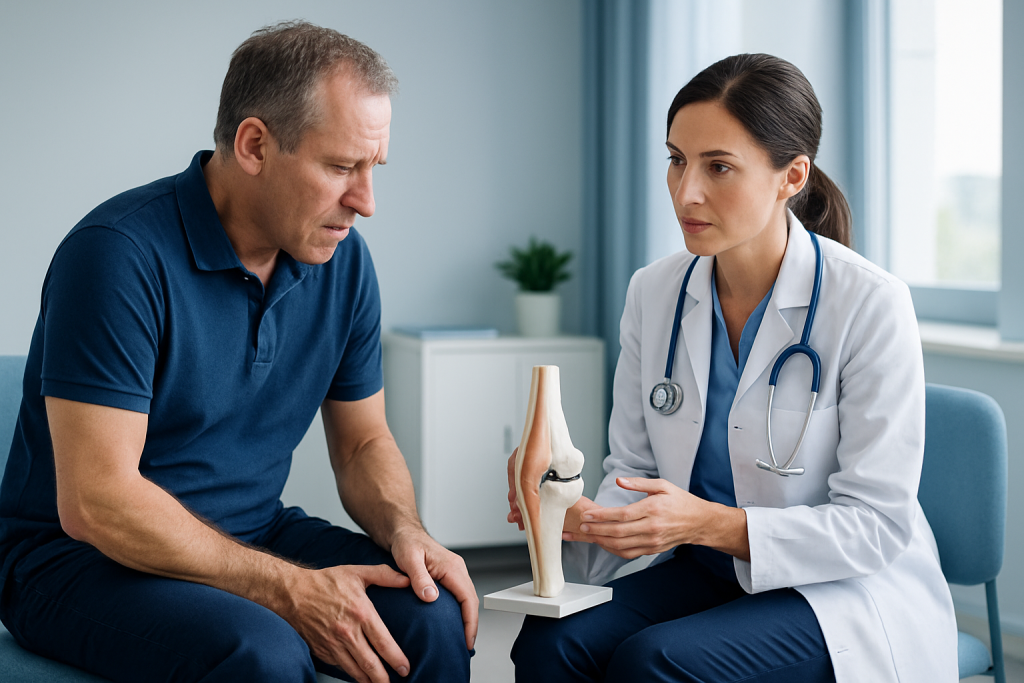
The inside of the knee contains several structures that can become painful. The medial collateral ligament supports the joint from the inner side, the medial meniscus cushions the knee, tendons pass along the area, and the joint surfaces can wear down over time. Pain often reflects irritation in one of these tissues.
Common causes include a medial collateral ligament sprain after a twist or blow, a meniscus tear, pes anserine bursitis near the inner upper shin, or knee osteoarthritis, which can create gradual pain and stiffness. Tendon irritation and muscle imbalance may also contribute, especially in active people or those returning to exercise too quickly.
Certain factors make inner knee pain more likely. These include previous knee injury, repetitive squatting or kneeling, running on uneven surfaces, weak thigh or hip muscles, excess body weight, and age-related joint wear. People with inflammatory joint conditions may also notice pain and swelling in the same area.
Although the cause can sometimes be identified from the story alone, more than one problem may be present at the same time. For example, someone may have mild arthritis and also strain the medial knee during a long walk or hike.
Diagnosis
Diagnosis starts with a careful history and physical examination. A clinician will usually ask when the pain began, what movement triggers it, whether there was an injury, and whether there is swelling, locking, or instability.
During the exam, the knee is checked for tenderness, range of motion, alignment, swelling, and signs of ligament or meniscus injury. The doctor may compare both knees and ask the patient to walk, bend, or squat in a controlled way to see what reproduces symptoms.
Imaging is chosen based on the suspected cause. X-rays can help look for arthritis, alignment issues, or bone-related problems. Ultrasound may be useful for some soft-tissue conditions, and MRI is often considered when a meniscus tear, ligament injury, or other internal knee problem is suspected.
Blood tests are not always needed, but they may be used if an inflammatory, infectious, or autoimmune condition is part of the picture. The goal is to match the treatment to the exact source of pain rather than treating every inner knee pain in the same way.
Treatment Options
Treatment depends on the cause, but many people begin with conservative care. Short-term rest from aggravating activities, ice, compression, elevation, and avoiding deep squats or twisting can reduce symptoms in the early phase.
Physiotherapy is often an important part of recovery. A therapist may focus on strengthening the quadriceps, hamstrings, hip muscles, and calf, because better control around the knee can reduce stress on the medial side. Stretching, movement retraining, and a gradual return to activity are commonly recommended.
If arthritis is contributing, treatment may include activity modification, supportive braces, weight management where appropriate, and medications recommended by a doctor. In some cases, injections or other procedures may be considered, but these are decided only after an in-person assessment. When a clear structural injury is present, such as a significant meniscus tear or ligament damage, surgical treatment may be discussed.
Patients traveling for care often want to know whether treatment must happen all at once. In many cases, the diagnostic visit, imaging, treatment plan, and early rehabilitation can be coordinated across appointments, with follow-up arranged after the patient returns home.
Prevention & Self-care
Not every cause of inner knee pain can be prevented, but many flare-ups can be reduced with sensible joint care. The knee generally tolerates gradual loading better than sudden changes, so returning to exercise in stages is usually safer than jumping back to full activity.
Supportive shoes, strengthening the muscles around the hip and thigh, and varying repetitive routines can lower stress on the knee. People who kneel often for work may benefit from padding and scheduled breaks, while runners may need attention to training volume, surfaces, and technique.
At home, self-care is usually about giving the knee the best chance to settle without overdoing rest. Gentle motion is often better than complete immobility, provided it does not increase pain. A simple approach may include:
- Temporarily reducing running, jumping, squatting, or twisting
- Using ice for short periods after activity if it feels soothing
- Keeping the knee moving with comfortable, low-impact exercise
- Wearing supportive footwear
- Following a clinician-guided strengthening plan
Self-care should be adapted if the knee is swollen, unstable, or painful enough to alter walking. In those situations, getting assessed is more helpful than pushing through symptoms.
When to See a Doctor
Medical evaluation is a good idea when inner knee pain lasts more than a short period, keeps returning, or interferes with daily life. Pain that follows a clear injury, especially a twist, fall, or direct impact, should be assessed sooner because ligament or meniscus damage may be present.
Prompt medical attention is also appropriate if the knee becomes significantly swollen, locks, gives way, looks deformed, or prevents normal weight-bearing. Fever, redness, warmth, or severe pain without a clear explanation should be checked, as these signs may point to a different and more urgent problem.
Even when symptoms are not dramatic, ongoing discomfort can be easier to manage when the cause is identified early. A qualified orthopedic specialist can distinguish between a strain that needs rehabilitation and a structural problem that may need imaging or procedural treatment.
For patients seeking care abroad, Acibadem Health Point’s multidisciplinary specialists and JCI-accredited hospitals diagnose and treat knee conditions for international patients with coordinated evaluation and follow-up.
Living With Inner Knee Pain
Many people continue normal life with inner knee pain while they work through the cause and recovery plan. The key is to notice which movements trigger symptoms and to make gradual, realistic adjustments rather than trying to ignore the problem completely.
Keeping a simple symptom record can help during medical review, especially for people who travel for treatment. Noting what makes the pain better or worse, how long it has lasted, and whether swelling or instability appeared can give the clinician useful clues and reduce the chance of unnecessary tests.
With the right diagnosis, most patients can move toward a clearer plan: targeted exercise, activity changes, medication if appropriate, or further treatment when needed. The goal is not only pain relief, but also stable, confident movement in everyday life.
Frequently asked questions
01What does pain on the inside of the knee usually mean?
It often points to irritation or injury on the medial side of the knee, such as a ligament sprain, meniscus problem, tendon irritation, or arthritis. The exact cause depends on how the pain started and what other symptoms are present.
02Can inner knee pain go away on its own?
Yes, some mild cases related to overuse or a minor strain improve with rest from triggering activities and gentle self-care. Pain that persists, worsens, or returns repeatedly should be assessed by a clinician.
03Is walking good for inner knee pain?
Light walking may be helpful if it does not increase pain or swelling. If walking makes the knee worse, it is better to reduce activity and seek advice rather than push through it.
04What tests are used for knee pain on the inside of the knee joint?
A doctor may begin with a physical examination and then choose X-rays, ultrasound, or MRI depending on the suspected cause. Not every patient needs imaging, but it becomes more useful when an injury or structural problem is suspected.
05When is inner knee pain an emergency?
Urgent care is needed if the knee is badly swollen, deformed, locked, unable to bear weight, or painful after a major injury. Fever with a hot, red knee should also be checked promptly.
06Can exercise make the pain worse?
Certain movements, especially deep squats, twisting, jumping, or sudden changes in direction, can aggravate symptoms. A clinician or physiotherapist can help identify safer exercises while the knee recovers.
This article is for general information only and is not a substitute for professional medical advice. Please consult a qualified doctor about your individual situation.
Joint and spine care in Turkey — expert assessment & treatment
JCI-accredited · board-certified surgeons · reply within 24h
Add us as a Preferred Source to see more of our trusted health content across Google Search, AI Overviews and Discover.