
Kidney Stone Extracorporeal Shockwave Therapy: Procedure, Benefits, Risks and Recovery
- 8 min read
- Published November 27, 2026
Key Takeaways
- Extracorporeal shockwave therapy, also called ESWL or shock wave lithotripsy, breaks kidney stones into smaller pieces without an incision.
- It works best for certain stones based on size, location, and density, so not every patient is a candidate.
- Most people go home the same day, and recovery usually focuses on drinking fluids, monitoring urine, and managing mild discomfort.
- Possible risks include incomplete stone clearance, temporary blood in the urine, bruising, and rarely infection or blockage from stone fragments.
- A doctor may recommend other procedures, such as ureteroscopy or percutaneous nephrolithotomy, if the stone is too large or hard to treat with shock waves.
Kidney stone extracorporeal shockwave therapy is a non-surgical treatment that uses focused sound waves to break certain kidney stones into smaller pieces so they can pass more easily in the urine. It can be an effective option for selected patients, especially when stone size, location, and composition make it a good fit.
Overview
Kidney stone extracorporeal shockwave therapy is a non-invasive way to treat certain kidney stones by sending precisely targeted shock waves through the skin and into the stone. The energy breaks the stone into smaller fragments, which the body can then pass more naturally through the urinary tract.
This treatment is often considered when a stone is causing pain, slowing urine flow, or is unlikely to pass on its own. For people traveling for care, it is especially important to understand whether the stone is the right size and location for shock wave treatment, because the best plan depends on imaging, symptoms, and overall kidney health.
The procedure is known by several names, including extracorporeal shock wave lithotripsy and ESWL. While the name sounds complex, the idea is straightforward: break the stone outside the body so surgery may be avoided or reduced.
Symptoms and when kidney stones need treatment
Kidney stones can cause a wide range of symptoms. Some are discovered by chance on an imaging test, while others announce themselves with sudden, severe flank pain that may come and go in waves. Pain can move toward the lower abdomen or groin as the stone shifts position.
Other common symptoms include blood in the urine, nausea, vomiting, urinary urgency, and discomfort while urinating. A stone may also be present with very few symptoms if it is not blocking urine flow.
Treatment is more likely to be needed when a stone is too large to pass comfortably, is causing persistent pain, is blocking urine drainage, or is linked to infection or kidney function concerns. In these situations, the treatment goal is not only relief, but also protecting the kidney and preventing complications.
Causes and risk factors

Kidney stones form when minerals and salts in urine become concentrated and crystallize. The exact type of stone matters, because calcium stones, uric acid stones, and other stone types can behave differently and respond differently to treatment.
Several factors raise the likelihood of stone formation, including not drinking enough fluids, certain diets, a family history of stones, obesity, recurrent urinary tract infections, and some medical conditions that alter urine chemistry. Some medications can also contribute to stone risk in susceptible people.
Not every stone is an ideal candidate for shock wave treatment. Stones that are very hard, very large, or located in certain areas of the urinary system may require another approach. A doctor uses imaging and clinical details to decide whether ESWL is likely to work well.
How the diagnosis and treatment decision are made
Before recommending kidney stone extracorporeal shockwave therapy, a clinician usually reviews symptoms, urine tests, and imaging such as an ultrasound, X-ray, or CT scan. These tests help show the stone’s size, exact location, and whether there is swelling or blockage in the kidney.
The decision also depends on whether the stone can be seen clearly on imaging, because the shock waves must be aimed accurately. The stone’s density and composition may matter too, since some stones fragment more easily than others.
For international patients arranging treatment from abroad, this step is often where the care plan becomes clearer. A treatment team can confirm whether the patient is likely to need a single session, a staged approach, or a different procedure altogether, which helps with planning travel and recovery time.
What happens during the procedure
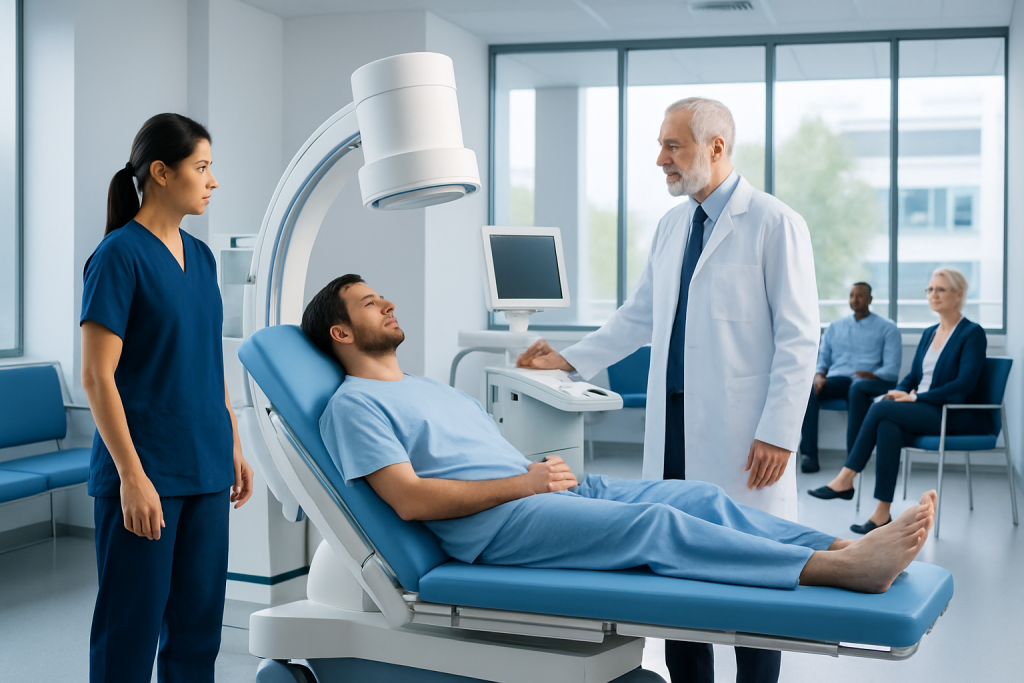
ESWL is usually performed on an outpatient basis, meaning most patients return home the same day. Depending on the center and the patient’s situation, sedation, pain relief, or light anesthesia may be used to keep the experience comfortable.
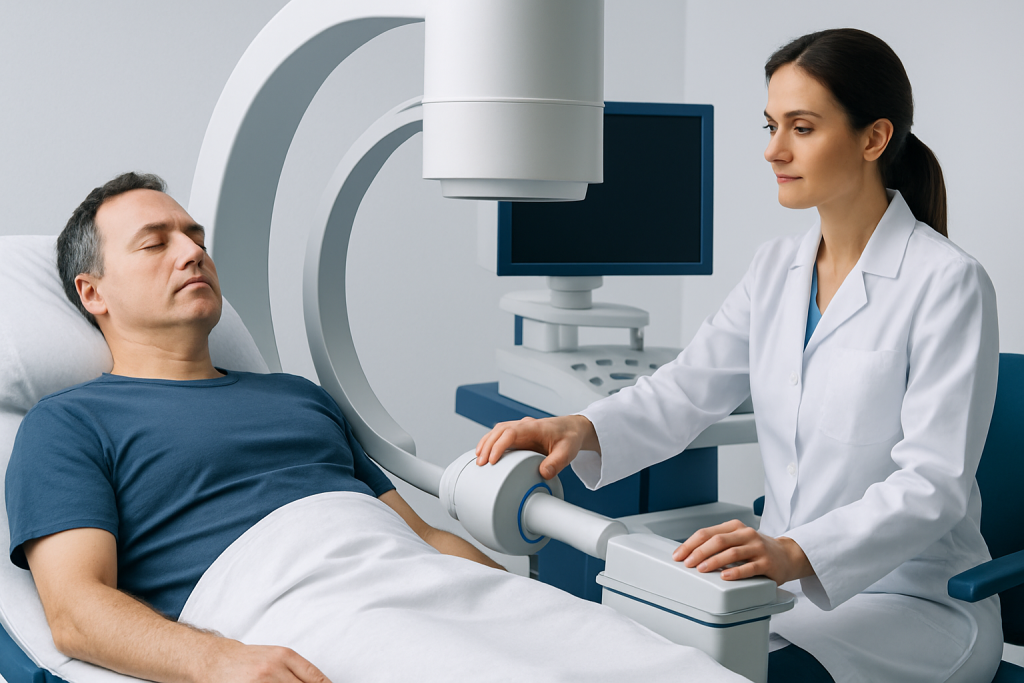
The patient lies on a treatment table while the medical team uses imaging guidance to localize the stone. A device then delivers repeated shock waves through the body toward the stone. The session may take under an hour or somewhat longer, depending on the stone and the equipment used.
Patients often hear tapping sounds or feel a rhythmic sensation during treatment. The goal is not to remove the stone in one piece, but to crack it into smaller fragments that can pass later in the urine. In some cases, more than one session is needed.
Benefits and possible risks
The main appeal of shock wave therapy is that it avoids an incision and usually involves a shorter recovery than surgical options. Many people are able to resume light activities relatively quickly, which can be especially helpful when care is being organized around work, family, or international travel.
Another benefit is that it can be a good match for certain stones that are not too large and are in a favorable location. For the right patient, ESWL can relieve symptoms and reduce the need for more invasive treatment.
Like any procedure, it has risks. Temporary blood in the urine, bruising on the skin, soreness, and passage of stone fragments are common enough to discuss in advance. Less commonly, fragments can lodge in the ureter and cause blockage, pain, or infection. Rarely, additional treatment is needed if the stone does not break sufficiently.
- Common short-term effects: mild pain, visible blood in urine, tiredness
- Less common concerns: incomplete stone fragmentation, urinary blockage from fragments
- Rare but important issues: infection, persistent obstruction, need for another procedure
Recovery, prevention, and self-care
Recovery after ESWL is often uncomplicated, but the days that follow still matter. Drinking fluids as advised by the care team helps flush stone fragments through the urinary tract. Some patients are asked to strain their urine so fragments can be collected and analyzed.
Mild discomfort is usually managed with general pain-relief measures recommended by the doctor. It is also common to notice blood-tinged urine for a short time after treatment. Rest, light activity, and attention to symptoms are usually more important than strict bed rest.
Long-term prevention depends on why the stone formed in the first place. A clinician may recommend changes in fluid intake, salt intake, animal protein, or other dietary habits. In some cases, blood or urine testing is needed to identify metabolic causes, especially if stones recur.
Patients recovering away from home should arrange follow-up before travel when possible. Knowing who will review post-treatment imaging, how to share symptoms if they change, and when to seek urgent help can make recovery much smoother.
When to see a doctor
Medical review is important if pain is severe, the person has fever, cannot keep fluids down, or notices reduced urine flow after treatment. These symptoms may suggest obstruction or infection and should not be ignored.
Anyone with a history of kidney stones should also seek care if symptoms do not improve as expected, if blood in the urine persists, or if the stone has not passed within the time discussed by the treating team. Follow-up imaging is often used to confirm whether fragments have cleared.
For patients considering treatment abroad, a clear conversation with the care team before travel helps set realistic expectations about recovery, follow-up, and the chance of needing another procedure. Acibadem Health Point’s multidisciplinary specialists and JCI-accredited hospitals diagnose and treat kidney stones for international patients with coordinated care across the treatment journey.
The right advice always depends on the individual stone, kidney function, and overall medical picture. A qualified doctor can explain whether shock wave therapy is appropriate or whether another approach would be safer and more effective.
Frequently asked questions
01What is kidney stone extracorporeal shockwave therapy used for?
It is used to break certain kidney stones into smaller pieces so they can pass through the urine more easily. It is most useful when the stone size, location, and density make shock waves a suitable option. A doctor determines whether it is likely to work better than another procedure.
02Is ESWL the same as surgery?
No. ESWL is non-invasive because it does not require an incision. It still counts as a medical procedure, but the recovery is usually simpler than with surgical stone removal.
03How long does it take to recover?
Many people return to light activities within a short time, but recovery varies based on pain, stone burden, and whether fragments are passing easily. Mild blood in the urine or discomfort can continue briefly after treatment. Follow-up may be needed to confirm the stone has cleared.
04Does the procedure hurt?
Most patients receive pain relief or sedation to make the session comfortable. During treatment, they may feel tapping or rhythmic pressure rather than sharp pain. Some soreness or bruising can happen afterward, but it is usually temporary.
05Can every kidney stone be treated with shock waves?
No. Very large stones, stones in certain locations, or stones that are too dense may not respond well. In those cases, ureteroscopy or another procedure may be a better choice.
06What should a patient do after ESWL?
They should follow the doctor’s instructions about drinking fluids, pain control, and any follow-up imaging. It is also helpful to watch for fever, worsening pain, or trouble passing urine. If any of those occur, medical review is important.
This article is for general information only and is not a substitute for professional medical advice. Please consult a qualified doctor about your individual situation.
Persistent digestive symptoms? Get evaluated in Turkey
JCI-accredited · board-certified surgeons · reply within 24h
Add us as a Preferred Source to see more of our trusted health content across Google Search, AI Overviews and Discover.


How can we help you today?
Meet an Acibadem specialist by secure video, before you travel.
Book a video visit