

Is Sunlight Good for your Eyes?
- 7 min read
- Published November 27, 2026
Key Takeaways
- Natural daylight is useful, but the eyes do not need direct sun exposure to stay healthy.
- UV rays can contribute to eye surface irritation and longer-term eye damage.
- Quality sunglasses and a wide-brimmed hat help reduce UV exposure.
- Children, outdoor workers, and people with light eyes may need extra protection.
- Sudden pain, vision changes, or light sensitivity should be checked by an eye doctor.
Sunlight can support some aspects of eye health, but direct exposure without protection can also harm the eyes over time. The safest approach is to enjoy daylight while shielding the eyes from ultraviolet (UV) rays and knowing when symptoms need medical attention.
Overview
The short answer to is sunlight good for your eyes is: daylight is helpful in moderation, but the eyes do not benefit from staring into the sun or spending time outdoors without protection. Normal outdoor light helps regulate the body’s sleep-wake cycle and supports visual development in children, yet the sun’s ultraviolet (UV) rays can gradually injure eye tissues.
That means the goal is not to avoid sunlight completely. It is to use it wisely. A person can enjoy time outdoors, exercise, travel, and daily activities while protecting the eyes in the same way they would protect the skin.
For many international patients, eye health questions come up during travel planning, beach holidays, ski trips, and high-altitude visits, where UV exposure may be stronger than expected. A practical understanding of sunlight helps people make safer choices in everyday life and while away from home.
How sunlight affects the eyes
Visible daylight helps the visual system function normally, and morning light can support a healthy sleep rhythm. In children, regular outdoor time is also associated with healthy eye development, although that does not mean looking directly at the sun is safe or useful. The eyes are designed to work in natural light, but they are not built to tolerate intense direct solar exposure.
UV radiation is the main concern. Over time, repeated UV exposure can contribute to problems such as photokeratitis, cataracts, pterygium, and other surface irritation. Bright glare may also make it harder to see clearly, especially while driving, skiing, boating, or spending long periods near water or snow, where light reflects strongly.
Some people are more sensitive to light than others. Those with lighter-colored eyes, certain eye conditions, or a history of eye surgery may notice more discomfort in bright sun and should be especially careful with protection.
Symptoms that sunlight may be irritating the eyes

Not every reaction to sunlight means damage, but persistent or repeated discomfort can be a sign that the eyes are being stressed. Common symptoms include squinting, watery eyes, burning, redness, and a gritty or sandy feeling. Some people notice temporary blurred vision after being outdoors in strong light.
In more significant exposure, symptoms can include marked light sensitivity, headache, eyelid swelling, and pain when blinking. Photokeratitis, sometimes called “sunburn of the eye,” may appear after intense UV exposure and can cause a very uncomfortable but usually temporary reaction.
If symptoms come on suddenly or affect only one eye, it is wise to have them assessed. Eye problems should not be guessed at from home because infections, corneal injuries, and inflammatory conditions can look similar at first.
Causes and risk factors for sun-related eye damage
Sun-related eye problems are usually caused by cumulative UV exposure rather than one dramatic event. The risk rises with long hours outdoors, especially without sunglasses, hats, or shade. Reflection from snow, water, sand, and concrete can intensify exposure even when the weather does not feel especially hot.
Certain situations increase vulnerability. These include living or traveling at high altitude, taking photosensitizing medicines, having had cataract surgery, or working outdoors for long periods. Children are also important to protect, because their eyes may receive more lifetime UV exposure.
- Frequent outdoor sports or work
- Snow, beach, and water activities
- High-altitude travel
- Light-colored eyes or strong light sensitivity
- Previous eye surgery or corneal disease
It is also helpful to remember that tanning, heat, and brightness are not reliable measures of UV intensity. UV exposure can be substantial even on cooler or cloudy days.
How doctors diagnose sun-related eye problems
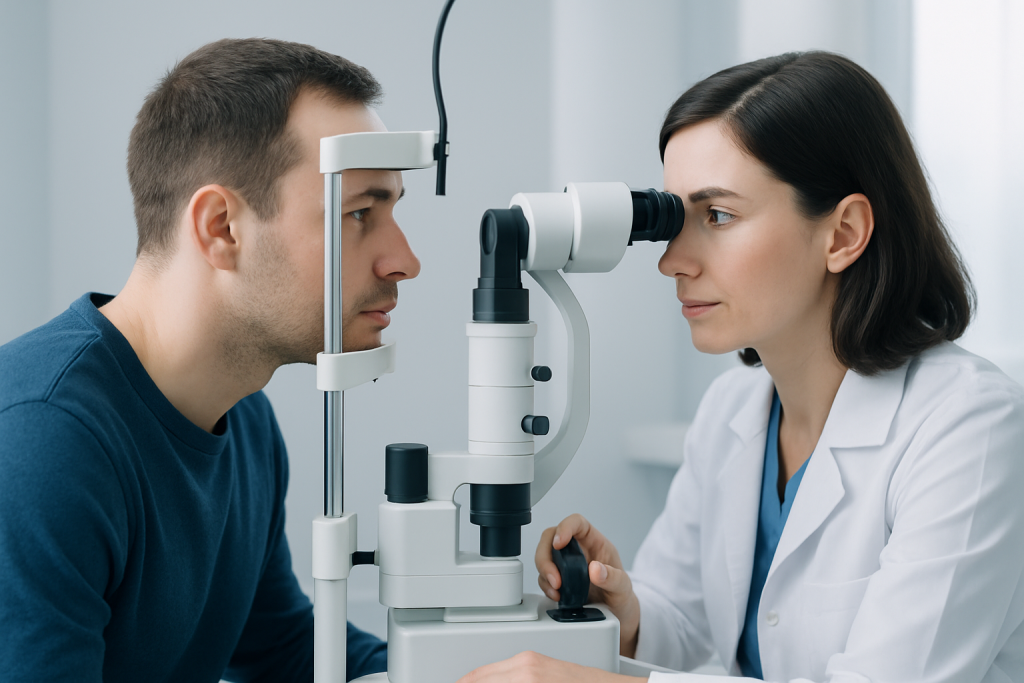
An eye specialist usually begins with a detailed history, asking about outdoor exposure, symptoms, travel, eyewear habits, and any recent injury or surgery. The doctor then examines the eyes with a slit lamp or other magnified light source to check the cornea, conjunctiva, lens, and other structures for irritation or damage.
If vision has changed, the assessment may include a visual acuity test, eye pressure measurement, and a closer look at the retina and optic nerve. In many cases, the diagnosis is clinical, meaning it is made from the symptoms and examination findings rather than from advanced testing.
Because light sensitivity and redness can come from many causes, a correct diagnosis matters. What looks like a simple sun reaction may actually be dry eye disease, infection, allergy, uveitis, or another condition that needs different treatment.
Treatment options
Treatment depends on the problem identified. Mild irritation from bright light may improve with rest, shade, lubricating eye drops, and protective eyewear. If the cornea has been affected, an eye doctor may recommend specific soothing measures and follow-up to confirm healing.
When the issue is more than temporary irritation, treatment may target the underlying condition. For example, dry eyes may need regular lubrication, inflammation may require prescription medicines, and cataracts or pterygium may need surgical discussion if they interfere with daily life. The right plan is individualized rather than one-size-fits-all.
It is important not to self-treat with leftover eye drops or assume that redness will always settle on its own. Some drops can worsen certain conditions if used incorrectly, and delaying care may prolong discomfort or blur vision.
Prevention and self-care
The most reliable way to protect the eyes is to combine shade, eyewear, and sensible habits. Sunglasses should block both UVA and UVB rays; wraparound styles can reduce light entering from the sides. A wide-brimmed hat adds another layer of protection, especially in bright climates or at higher altitudes.
Simple routines also help. Avoid looking directly at the sun, even during sunrise or sunset, because the light can still injure the eyes. Use extra caution near reflective surfaces such as water, snow, and pale pavement. Parents can make eye protection part of their child’s outdoor routine just like sunscreen.
- Choose sunglasses labeled for 100% UVA/UVB protection
- Wear a hat in strong sun
- Use protective eyewear for sports and outdoor work
- Seek shade during peak brightness when possible
- Replace damaged or poorly fitting sunglasses
For people traveling internationally, it is worth packing eye protection in hand luggage, not just checked bags. That makes it easier to use immediately after arrival, during transfers, and on unexpected sunny days.
FAQs
Can looking at sunlight help the eyes in any way?
Daylight supports normal vision function and helps regulate sleep, but the eyes do not need direct sun viewing. Looking at the sun can be harmful, so the benefit comes from being outdoors in normal light, not from staring into bright sunlight.
Are sunglasses necessary on cloudy days?
Yes, they can still be helpful because UV rays pass through clouds. Brightness may feel softer, but eye exposure can still be significant.
Do all sunglasses protect the eyes equally?
No. The most useful pairs block 100% of UVA and UVB rays. Very dark lenses without UV protection can be misleading because they reduce visible light but do not necessarily protect the eyes well.
Can children be outside in the sun safely?
Yes, children should spend time outdoors, but they need age-appropriate protection. Hats, sunglasses, and shade are especially helpful because protecting eyes early reduces cumulative UV exposure over a lifetime.
What is photokeratitis?
Photokeratitis is an inflammatory reaction of the cornea after intense UV exposure, often from sun, snow, or artificial sources like welding light. It usually causes pain, tearing, and light sensitivity, and it should be assessed if symptoms are significant.
Should contact lens wearers be extra careful?
Yes, because contact lenses do not replace UV-blocking sunglasses. Some contact lenses offer UV protection, but they still do not cover the whole eye, so sunglasses remain important.
When is sunlight most risky for the eyes?
Risk is higher during prolonged exposure, at high altitudes, and around reflective surfaces such as snow or water. The eyes can also be exposed on ordinary days, so regular protection is the safest habit.
This article is for general information only and is not a substitute for professional medical advice. Please consult a qualified doctor about your individual situation.
Explore treatments in Turkey — costs, top hospitals & a free quote
JCI-accredited · board-certified surgeons · reply within 24h
Add us as a Preferred Source to see more of our trusted health content across Google Search, AI Overviews and Discover.



How can we help you today?
Meet an Acibadem specialist by secure video, before you travel.
Book a video visit