Is It Common for Newborns to Fail a Hearing Test?
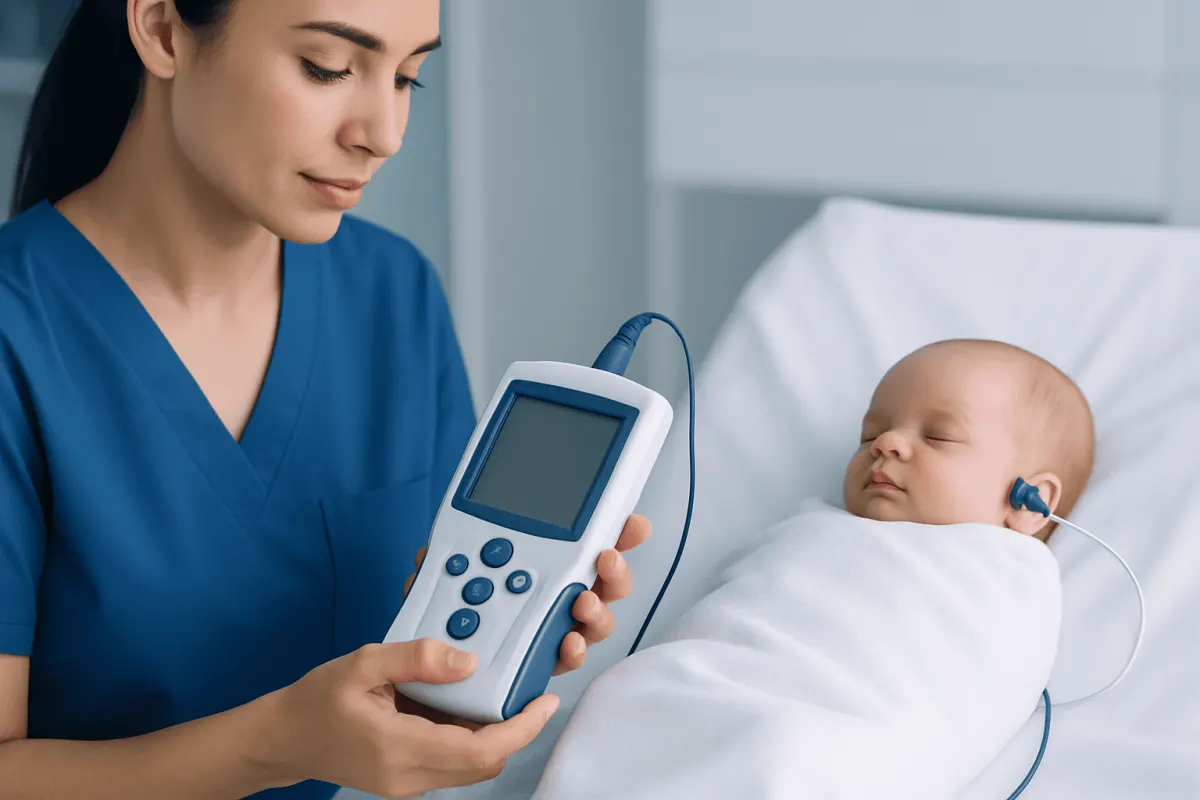
It is relatively common for a newborn not to pass the first hearing screen, and this result often reflects temporary factors such as fluid or debris in the ear rather than permanent hearing loss. A repeat screen or diagnostic hearing assessment is important because early identification of true hearing loss supports language and communication development.
Is It Common for Newborns to Fail Hearing Test?
Yes. It is common for newborns to fail the first hearing test, more accurately called a newborn hearing screening. Most babies who do not pass the first screen do not ultimately have permanent hearing loss. The screening is designed to identify babies who need another check, so a result of “refer” should be treated as a prompt for follow-up rather than a diagnosis.
Is it normal for newborns to fail hearing test in one ear or even in both ears? It can happen, particularly shortly after birth. Fluid in or behind the ear, vernix or other temporary material in the ear canal, a noisy setting, or a baby who is awake and moving can prevent the equipment from recording a clear response.
Even so, every baby who does not pass needs a timely repeat screen or a full assessment with a pediatric audiologist. Hearing is important for speech, language, learning, and social development, and early testing allows families and clinicians to act promptly if a hearing difference is confirmed.
What Percentage of Newborns Fail the Hearing Test?
The exact proportion varies by country, hospital, test method, and whether screening occurs before hospital discharge. Newborn screening programs commonly report that a small minority of babies do not pass the initial screen, while permanent hearing loss is much less common than an initial non-passing result.
A first-screen result may be affected by temporary circumstances, especially when testing is done in the first day or two of life. This is why parents may hear that it is common for babies to fail hearing test initially and then pass a repeat test after the ears have cleared and the baby is more settled.
Screening programs generally aim to complete screening by one month of age, confirm hearing status through diagnostic testing by three months where needed, and begin appropriate support by six months if hearing loss is identified. Local services may use slightly different timelines, but prompt follow-up remains the key point.
How Accurate Is a Newborn Hearing Test?
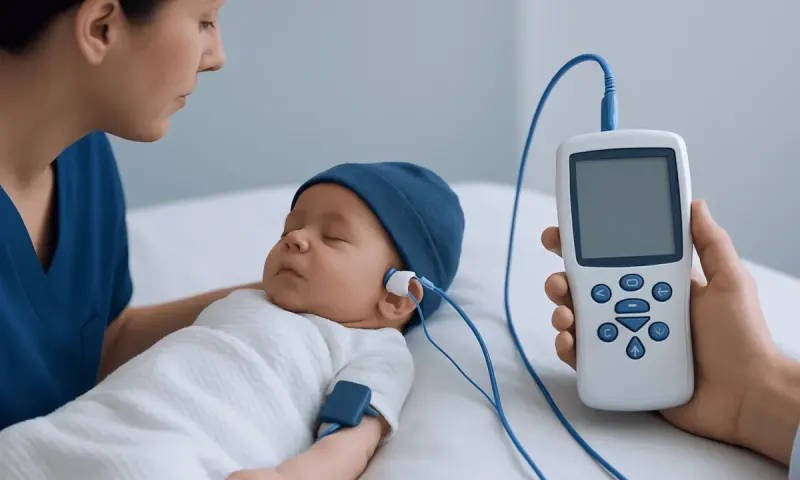
Newborn hearing screening is a reliable way to identify babies who may need further hearing assessment, but it is not a definitive diagnostic test. The two main methods are otoacoustic emissions (OAE), which measures a response from the inner ear, and automated auditory brainstem response (AABR), which measures how the hearing pathway responds to sound.
Both tests are quick, painless, and usually performed while a baby is asleep or calm. A baby can receive a non-passing result without having permanent hearing loss; this is called a false-positive screening result. Conversely, a baby who passes can later develop hearing loss, which is why developmental monitoring remains important.
The screening result does not measure how well a child will understand speech in every situation. If a repeat screen is not passed, diagnostic testing can provide more detailed information about each ear, the type of hearing problem, and the next appropriate steps.
Why a Baby May Not Pass the First Screen
When families ask whether it is common for newborns to fail first hearing test, the usual explanation is often temporary sound blockage or testing conditions rather than a permanent problem. Amniotic fluid or vernix in the ear canal, middle-ear fluid after birth, crying, sucking, frequent movement, or ambient noise can all interfere with screening.
A non-passing result in one ear may simply mean that one ear had more fluid or debris at the time of testing. Likewise, is it common for newborn to fail hearing test in both ears? It can be, particularly when a baby is tested very early or is unsettled during the assessment. Bilateral non-passing results still need follow-up because they can occasionally indicate hearing loss affecting both ears.
Other reasons for additional evaluation include prematurity, a stay in neonatal intensive care, severe newborn illness, certain infections during pregnancy or infancy, family history of childhood hearing loss, craniofacial differences, and exposure to medicines that can affect hearing. These factors do not mean a baby definitely has hearing loss, but they may influence the testing plan.
What Is the Most Common Cause of Hearing Loss in Newborns?
Genetic causes are the most common overall cause of permanent hearing loss present at birth. A child may have a genetic hearing difference even when there is no known family history, because some genetic changes can be inherited silently or occur for the first time in the child.
Other possible causes include congenital infections, complications linked with prematurity or serious illness, lack of oxygen around birth, structural differences of the ear, and certain medications used for severe medical conditions. In some children, a clear cause is not found despite careful evaluation.
Hearing loss can be conductive, meaning sound is blocked from reaching the inner ear effectively; sensorineural, involving the inner ear or hearing nerve; or mixed. A pediatric audiologist and ear, nose, and throat specialist can help clarify the type of hearing difference and whether it may be temporary or permanent.
What Happens After a Newborn Does Not Pass?
If a baby does not pass the initial screen, the hospital or screening service will usually arrange a repeat screening. It may be performed before discharge, at an outpatient appointment, or through a community hearing program. Parents should attend this appointment even if their baby appears to react to sounds at home.
If the repeat screen is also not passed, the next step is a diagnostic evaluation with a pediatric audiologist. This may include more detailed auditory brainstem response testing, otoacoustic emissions, tympanometry to assess middle-ear function, and an examination of the ears. These tests can often be completed while a young infant sleeps naturally.
When hearing loss is confirmed, care is individualized. Options may include observation for temporary middle-ear fluid, treatment of an underlying ear condition, hearing devices, communication and developmental support, and specialist review. Early intervention is tailored to the child and family, with the goal of supporting access to sound and language as early as possible.
What Are Three Signs of a Baby's Hearing Problem?
Newborns and young infants vary in how visibly they respond to sound, so absence of one reaction does not prove a hearing problem. However, parents should discuss concerns if their baby does not startle to sudden loud sounds, does not seem soothed or alerted by a familiar voice, or does not turn toward sounds as this would be expected with increasing age.
Three signs of a baby’s hearing problem that may become more noticeable over time are limited response to voices or everyday sounds, difficulty locating where a sound is coming from, and delays in babbling or speech-language development. A baby may also seem to notice vibrations or visual cues but not consistently respond to sound alone.
These observations are especially important if a child passed newborn screening but has risk factors for delayed-onset hearing loss. Parents should share specific examples with the child’s doctor, including when the behavior began and whether it occurs in quiet and noisy settings.
- No clear response to sudden loud sounds by the expected age
- Limited reaction to familiar voices or name-calling as the child grows
- Delayed babbling, speech, or language milestones
- Frequent ear infections or persistent fluid concerns
- Loss of previously observed responses to sound
When to Seek Medical Care
Parents should contact their baby’s doctor or hearing-screening service promptly if the newborn did not pass the screening and a repeat appointment has not been arranged. It is also important to seek review if the baby misses a follow-up hearing test, as a delayed appointment should be rescheduled as soon as possible.
Medical review is appropriate at any time if parents notice reduced responses to sound, delayed communication milestones, repeated ear infections, drainage from the ear, or a loss of skills that were previously present. These signs do not necessarily mean permanent hearing loss, but they deserve assessment.
Acıbadem Health Point’s multidisciplinary specialists and JCI-accredited hospitals assess hearing concerns in children and support international patients who need further evaluation. Families should work with a qualified pediatrician, pediatric audiologist, and ear specialist to understand their child’s individual results and care plan.
Frequently asked questions
01Is it normal for a baby to fail the hearing test?
A baby may not pass the first hearing screen for temporary reasons, including fluid or debris in the ear canal and difficulty staying quiet during the test. This result does not diagnose hearing loss. However, follow-up screening or diagnostic testing is essential to confirm the baby’s hearing status.
02Can a newborn fail a hearing test because of fluid in the ears?
Yes. Fluid in the ear canal or behind the eardrum can reduce how clearly sound reaches the inner ear and affect screening results. This fluid often clears naturally, but the baby should still attend the recommended repeat screen or assessment.
03What does it mean if a newborn fails hearing screening in one ear?
A non-passing result in one ear can be caused by a temporary issue affecting that ear, such as fluid or debris. It can also occasionally reflect hearing loss in one ear. Repeat or diagnostic testing is needed to distinguish between these possibilities.
04What does it mean if a newborn fails hearing screening in both ears?
A result in both ears may still be due to temporary factors, especially when screening is performed soon after delivery. Because it can also indicate hearing loss affecting both ears, timely follow-up with the screening service or a pediatric audiologist is important.
05Can a baby pass newborn hearing screening and still have hearing loss later?
Yes. Some forms of hearing loss develop after the newborn period or become more noticeable as a child grows. Parents should continue to monitor hearing, communication, and speech-language milestones and discuss concerns with a doctor.
06How soon should a baby have follow-up after not passing the hearing test?
Follow-up should be arranged as soon as possible through the hospital, newborn screening program, or pediatrician. Early hearing programs commonly aim for screening by one month of age and diagnostic confirmation by three months when needed. Families should ask their local care team about the appropriate schedule for their baby.
This article is for general information only and is not a substitute for professional medical advice. Please consult a qualified doctor about your individual situation.
Explore treatments in Turkey — costs, top hospitals & a free quote
JCI-accredited · board-certified surgeons · reply within 24h
Add us as a Preferred Source to see more of our trusted health content across Google Search, AI Overviews and Discover.