IG-SRT Vs Mohs Surgery for Skin Cancer
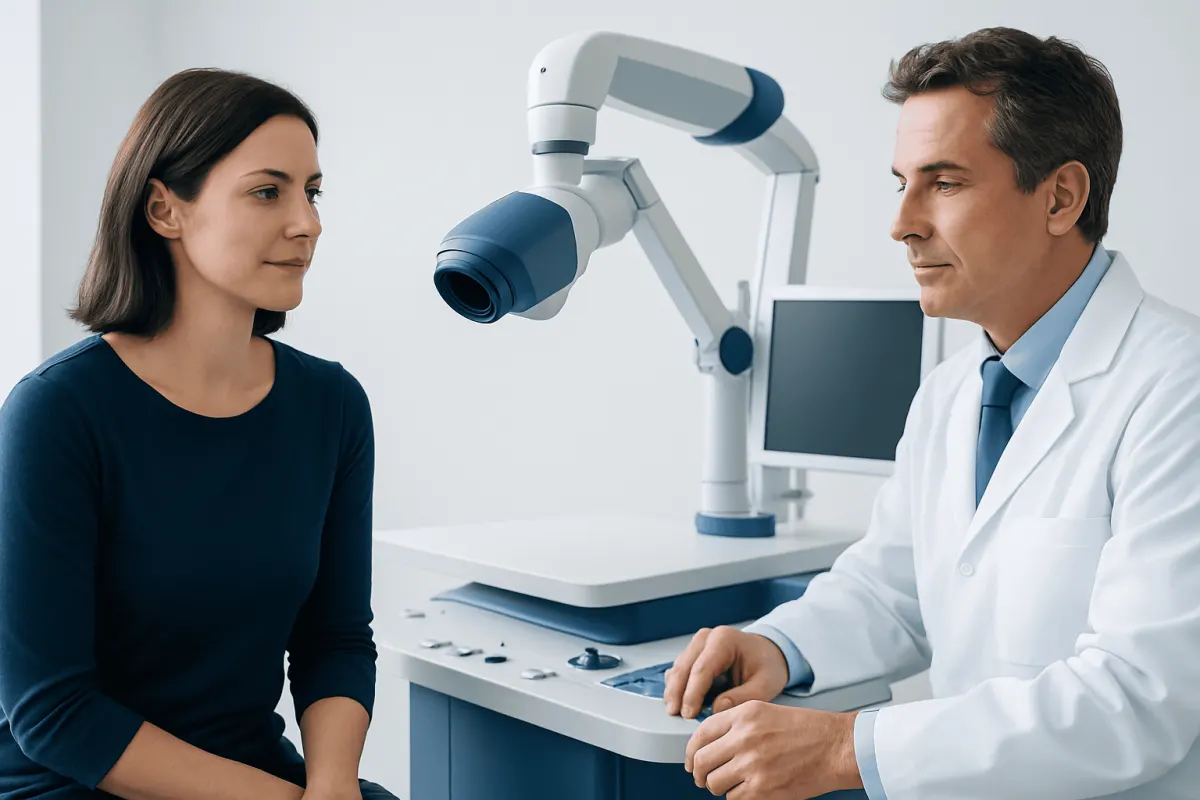
IG-SRT and Mohs surgery are two ways to treat selected nonmelanoma skin cancers, especially basal cell carcinoma and squamous cell carcinoma. Mohs surgery removes cancer and examines tissue margins immediately, while image-guided superficial radiation therapy (IG-SRT) uses ultrasound-guided low-energy radiation over several visits without cutting the skin.
IG-SRT vs Mohs Surgery: Side-by-Side Comparison
In the discussion of IG-SRT vs Mohs surgery, the central difference is how the cancer is treated and verified. Mohs micrographic surgery is an outpatient surgical technique in which a doctor removes visible cancer and then examines thin layers of tissue under a microscope until the margins are clear. IG-SRT, short for image-guided superficial radiation therapy, uses imaging such as high-frequency ultrasound to help direct superficial radiation to a biopsy-proven skin cancer over a planned series of appointments.
| Feature | Mohs surgery | IG-SRT |
|---|---|---|
| How it works | Cancer is surgically removed in stages; each stage is checked microscopically. | Low-energy radiation is delivered to the skin lesion area, guided by imaging and treatment planning. |
| Typical schedule | Usually completed in one day, followed by wound care and sometimes reconstruction. | Given in multiple short sessions over several weeks. |
| Margin confirmation | Yes. The surgeon assesses removed tissue margins during the procedure. | No surgical specimen is removed during treatment, so there is no real-time microscopic margin assessment. |
| Common role | Often used for high-risk, recurrent, facial, or tissue-sensitive-area cancers. | May be considered for selected low-risk nonmelanoma skin cancers when surgery is not suitable or is declined. |
| After-effects | A wound, scar, temporary bleeding or swelling, and a healing period are expected. | Redness, dryness, peeling, tenderness, and later skin-color or texture changes can occur. |
| Future treatment considerations | Usually preserves radiation as a possible future option if needed. | Radiation can make future surgery in the treated area more complex if cancer returns. |
Both approaches can be effective when they are matched to the right diagnosis and clinical setting. The decision should be made with a dermatologist, dermatologic surgeon, radiation oncologist, or multidisciplinary skin cancer team after a biopsy and a careful review of the lesion.
How a Clinician Decides Which Option Fits
Before choosing treatment, a clinician confirms the diagnosis with a skin biopsy. The pathology report identifies whether the lesion is basal cell carcinoma, squamous cell carcinoma, melanoma, or another condition. Mohs surgery and IG-SRT are mainly discussed for selected basal cell carcinomas and cutaneous squamous cell carcinomas; they are not interchangeable treatments for every skin cancer.
The clinician then assesses risk features. Important details include the tumor’s size, depth, growth pattern, borders, location, whether it has returned after previous treatment, and whether there is evidence of spread along nerves or into deeper tissue. Lesions on the nose, eyelids, lips, ears, scalp, hands, feet, or genital area often need particular care because preserving healthy tissue and maintaining function are important.
A person’s medical circumstances also matter. Surgery may be challenging for someone taking certain blood-thinning medicines, living with serious health conditions, or unable to manage wound care. Conversely, radiation may be less suitable for younger patients, for areas previously treated with radiation, for cancers that are recurrent or aggressive, and when a definitive tissue-based assessment of margins is especially important.
Skin cancer treatment should not be selected from appearance alone. A spot that seems small may have microscopic extensions, while an apparently uncomplicated lesion may have higher-risk features under the microscope. A personalized discussion helps balance cancer control, tissue preservation, convenience, healing, long-term skin changes, and follow-up needs.
Is Image-Guided SRT Better Than Mohs?
Image-guided SRT is not universally better than Mohs surgery. Mohs is widely considered a leading treatment for many high-risk nonmelanoma skin cancers because it provides immediate microscopic examination of the tissue edges and preserves as much healthy skin as possible. This is particularly valuable for cancers on cosmetically or functionally important areas and for lesions with unclear borders or a history of recurrence.
IG-SRT may be a reasonable alternative for selected biopsy-proven, low-risk basal cell or squamous cell cancers, particularly when a person is not a good surgical candidate or strongly wishes to avoid surgery. It does not require an incision or stitches, which may be appealing when surgery would be difficult. However, it involves repeated visits and does not produce the same surgical margin information as Mohs.
“Better” therefore means better for a particular person and tumor, rather than better in every circumstance. A patient with a recurrent basal cell carcinoma on the nose may be advised toward Mohs, while an older adult with a suitable superficial lesion and significant surgical risks may discuss radiation-based treatment. The treating team should explain why one route is recommended and what alternatives are appropriate.
For many people, the evaluation begins with understanding the specific diagnosis, such as basal cell carcinoma, and its individual risk profile. A second opinion can be useful if the options, expected outcome, or follow-up plan remain unclear.
What I Wish I Knew Before Mohs Surgery
Before Mohs surgery, it is helpful to know that the procedure can take much of a day even though the actual removal is usually done with local anesthetic. The surgeon removes a small layer of tissue, it is processed and examined, and further layers are taken only if cancer cells remain. Waiting between stages is normal, and the number of stages cannot always be predicted beforehand.
The final wound may be larger than the spot visible on the skin because the goal is to remove microscopic cancer extensions as well as the visible lesion. Depending on its size and location, the wound may be allowed to heal naturally, closed with stitches, or repaired with a flap or graft. The surgeon will discuss likely repair options before treatment, but the final plan may change based on the size of the cleared area.
Patients should arrange transportation if the treated area, medication, anxiety, or the expected length of the visit could make travel difficult. They should also ask in advance about medicines, especially blood thinners, diabetes medicines, and supplements, rather than stopping any prescribed treatment on their own. Clear aftercare instructions, including dressing changes, activity limits, pain relief, and signs of infection, support safe healing.
Most people have some swelling, bruising, tenderness, or minor bleeding after surgery, especially around the eyes or nose. Scars usually improve over time, but they do not disappear completely. Follow-up skin examinations are important because a person who has had one skin cancer has an increased chance of developing another lesion elsewhere.
What Is the Success Rate of Superficial Radiation Therapy?
Superficial radiation therapy can provide high local control rates for carefully selected nonmelanoma skin cancers, but there is no single success rate that applies to every person or every form of treatment. Outcomes depend on the cancer type, size, location, depth, treatment technique, total radiation plan, follow-up duration, and whether the tumor is new or recurrent. Studies of modern image-guided approaches are still evolving, and direct long-term comparisons with Mohs surgery may be limited.
Mohs surgery has extensive long-term evidence, including for high-risk and recurrent tumors, because each treatment stage includes microscopic margin assessment. Radiation can also control many appropriate tumors, but a recurrence after radiation may be harder to manage surgically because radiation can affect skin elasticity, blood supply, and tissue healing. This is one reason clinicians carefully consider long-term planning before recommending it.
Superficial radiation does not usually require anesthesia, cutting, or sutures. During treatment, the skin may become red, dry, itchy, sore, or peel, similar to a localized sunburn. Over months or years, some people notice lighter or darker skin, fine visible blood vessels, thinning skin, or altered texture in the treated area.
Rather than relying on a headline percentage, patients can ask how well the recommended approach is expected to work for their exact tumor, what evidence supports that estimate, how recurrence will be monitored, and what options remain if treatment does not fully control the cancer.
What Is the New Procedure Instead of Mohs Surgery?
There is no single new procedure that replaces Mohs surgery for all skin cancers. Image-guided superficial radiation therapy is often described as a non-surgical option because it combines superficial radiation with imaging to help define the treatment area. It may be offered in some settings for selected nonmelanoma skin cancers, but it should be viewed as an alternative for appropriate cases rather than a universal replacement.
Other treatments may be suitable for particular low-risk lesions, including standard surgical excision, curettage and electrodessication, cryotherapy, topical medicines, photodynamic therapy, or conventional radiation therapy. Each option has different strengths and limitations. For example, topical treatment may be used for carefully selected superficial lesions but does not provide a specimen that confirms complete removal.
The most appropriate option depends on the tumor’s pathology and risk category. Some cancers need surgery because they have aggressive features, are deep, are recurring, or are located where precise margin control is important. Melanoma is generally managed through surgical excision and should not be treated as though it were a routine superficial nonmelanoma skin cancer.
Patients considering a non-surgical approach should ask whether the lesion has been biopsied, whether its risk category makes radiation appropriate, how treatment boundaries are planned, and how the area will be followed over time. A treatment recommendation should always include a plan for surveillance and for addressing a possible recurrence.
Aftercare, Prevention and Follow-Up
After Mohs surgery, careful wound care helps lower the risk of bleeding, infection, and delayed healing. The care team will explain how to clean and cover the wound, when to return for suture removal if needed, and when normal exercise or swimming can resume. It is important to contact the surgical team promptly about worsening pain, spreading redness, fever, pus-like drainage, persistent bleeding, or a wound that opens.
After IG-SRT, the treated skin should be protected from irritation. Patients may be advised to use gentle skin care, avoid friction and unapproved creams, and protect the area from direct sun exposure. Radiation-related skin reactions can build gradually during treatment, so new or worsening symptoms should be reported to the radiation team rather than managed with over-the-counter products without advice.
Long-term prevention includes using broad-spectrum sunscreen, wearing protective clothing and hats, seeking shade during strong sunlight, and avoiding tanning beds. Monthly self-checks can help a person recognize new, changing, bleeding, crusted, or non-healing spots. Routine professional skin examinations are particularly important after a diagnosis of basal cell or squamous cell carcinoma.
Acıbadem Health Point’s multidisciplinary specialists and JCI-accredited hospitals diagnose and treat skin cancer for international patients, with care plans based on pathology, tumor characteristics, and individual health needs.
When to Seek Medical Care
A person should arrange a dermatology assessment for a sore that does not heal, a spot that repeatedly bleeds or scabs, a new pearly or shiny bump, a persistent rough patch, or a mole or pigmented mark that changes in size, shape, color, or sensation. Many skin changes are not cancer, but an examination is the reliable way to determine the cause.
Prompt medical review is especially important for a rapidly growing lesion, a painful or numb skin area, a wound with unexplained bleeding, or a lesion near the eye, nose, mouth, ear, hand, or genital region. People with a previous skin cancer, weakened immune system, significant sun exposure, prior radiation treatment, or a strong family history should be especially attentive to new changes.
After treatment, patients should not wait for a scheduled follow-up if a treated site becomes increasingly swollen, hot, painful, drains fluid, develops persistent bleeding, or appears to regrow. Early review allows the care team to distinguish normal healing from a complication or a possible recurrence.
Frequently asked questions
01What is the main difference between IG-SRT and Mohs surgery?
Mohs surgery physically removes the cancer and checks tissue margins under a microscope during the procedure. IG-SRT delivers targeted superficial radiation over multiple sessions and does not remove tissue to confirm margins in real time.
02Can IG-SRT treat basal cell carcinoma?
IG-SRT may be considered for selected biopsy-proven basal cell carcinomas, particularly when surgery is not suitable or a patient prefers a non-surgical approach. The cancer’s location, size, subtype, depth, and recurrence risk must be reviewed first.
03Does Mohs surgery leave a scar?
Mohs surgery creates a wound, so some degree of scarring is expected. The surgeon uses tissue-sparing techniques and selects the most appropriate repair method, but scar appearance varies with the location, wound size, healing process, and individual skin characteristics.
04Is superficial radiation painful?
The radiation delivery itself is generally not painful. Skin reactions may develop gradually, including redness, dryness, itching, tenderness, or peeling, and the treatment team can advise on safe skin care.
05Who may not be a good candidate for IG-SRT?
IG-SRT may be less appropriate for melanoma, high-risk or deeply invasive tumors, recurrent cancers, lesions with aggressive pathology, and areas that have received prior radiation. Younger patients may also need particular consideration because radiation effects can be long-lasting.
06Can skin cancer return after Mohs surgery or IG-SRT?
Yes. Either treatment can be followed by recurrence, although the risk varies by tumor type, location, prior treatment, and other features. Ongoing dermatology follow-up helps detect recurrence or new skin cancers early.
This article is for general information only and is not a substitute for professional medical advice. Please consult a qualified doctor about your individual situation.
Oncology care in Turkey — second opinion and treatment plan
JCI-accredited · board-certified surgeons · reply within 24h
Add us as a Preferred Source to see more of our trusted health content across Google Search, AI Overviews and Discover.