Hydrogen Peroxide for Teeth: What You Need to Know

Key Takeaways
- Hydrogen peroxide can whiten teeth by breaking down stain molecules, but it should be used carefully.
- Overuse or strong homemade mixtures may irritate gums and make teeth more sensitive.
- Whitening works best after a dental check, especially if there are cavities, gum disease, or worn enamel.
- Results are usually gradual, and not all discoloration responds to peroxide-based whitening.
- A dentist can help choose the safest whitening option based on the cause of staining and oral health.
Hydrogen peroxide for teeth is a common ingredient in whitening products, but it is not risk-free. Used correctly, it may help lift surface stains; used poorly, it can irritate gums and increase tooth sensitivity.
Overview
Hydrogen peroxide for teeth is widely used in whitening gels, strips, and some in-office dental treatments. It works by releasing oxygen that helps break down stain molecules on the tooth surface and, in some products, within the enamel. For many people, this can lighten the appearance of teeth and improve the look of mild to moderate staining.
That said, whitening is not the same as overall oral health, and brighter is not always better if the teeth or gums are already sensitive. Hydrogen peroxide can be useful when selected and monitored appropriately, but it is best approached as a dental treatment, not a casual home remedy. People who are considering whitening after traveling for treatment, or who plan care from another country, may find it helpful to confirm the cause of discoloration first so the right option is chosen from the start.
In practical terms, the question is not only whether hydrogen peroxide can whiten teeth, but whether it is suitable for a specific mouth, schedule, and dental history. A dentist can look for issues such as decay, enamel wear, or gum inflammation before whitening begins.
How Hydrogen Peroxide Whitens Teeth
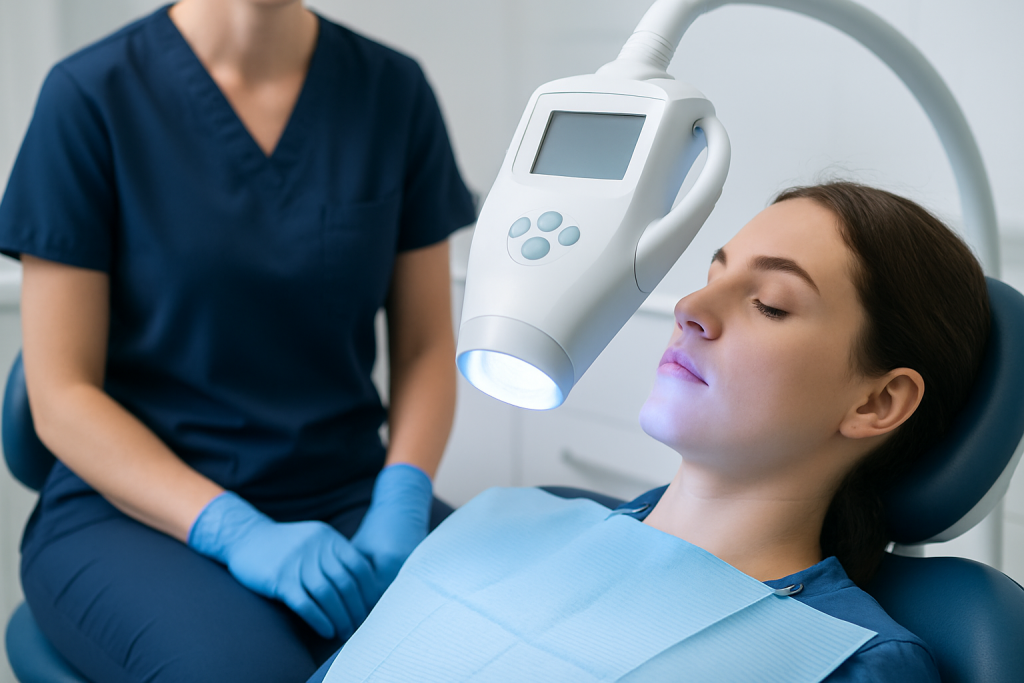
Hydrogen peroxide is an oxidizing agent. In whitening products, it helps break apart the chemical bonds of stain compounds, which can make teeth appear lighter. It may be used alone or in combination with carbamide peroxide, which breaks down into hydrogen peroxide over time.
There are important differences between professional and at-home whitening. In-office treatment is typically supervised by a dentist and may use stronger formulations with protective measures for the gums and soft tissues. Over-the-counter products tend to use lower strengths, while homemade mixtures are unpredictable and may be too harsh or unevenly applied.
Some discoloration responds better than others. Surface stains from coffee, tea, tobacco, or aging often improve more noticeably than internal discoloration caused by trauma, certain medications, or developmental conditions. A dental assessment helps set realistic expectations before treatment starts.
Common Uses and Product Types

Hydrogen peroxide appears in several whitening formats, each with a different balance of convenience, control, and strength. The main options usually include strips, whitening trays or gels, toothpaste with mild whitening effects, and professional in-office procedures.
- Whitening strips: Thin flexible strips coated with peroxide-based gel.
- Tray systems: Custom or one-size trays filled with whitening gel.
- Whitening toothpaste: Usually contains polishing agents and lower whitening support.
- In-office whitening: Dentist-supervised treatment with careful protection of gums and soft tissues.
Each option has trade-offs. Strips and tray systems can be effective, but they may also cause temporary sensitivity if used too often or if the fit is poor. Whitening toothpaste is generally gentler but usually offers more modest results. In-office whitening may be preferable for people who want closer supervision, especially if they are combining treatment with a short travel window or need a plan that can be reviewed before leaving the country.
Possible Benefits
When used appropriately, hydrogen peroxide can improve the appearance of stained teeth and help some people feel more confident about their smile. This can be especially helpful before a major event, after years of staining from diet or tobacco, or when a patient wants a non-restorative option before considering more invasive cosmetic work.
Another advantage is flexibility. Because peroxide is available in multiple strengths and delivery systems, a dentist can tailor the approach to a person’s oral health, sensitivity level, and desired pace of whitening. That customization matters because a whitening plan that suits one person may be too strong or too slow for another.
For international patients, supervised whitening can also be coordinated with other dental care, such as scaling, fillings, or veneer planning. In that setting, whitening may be one part of a broader treatment plan rather than a standalone cosmetic step.
Risks, Side Effects, and When It Is Not a Good Fit
Hydrogen peroxide is safe for many people when used as directed, but it can cause temporary side effects. The most common are tooth sensitivity, gum irritation, and a chalky or uneven appearance during early stages of treatment. These effects usually improve once the product is stopped or adjusted, but they should not be ignored if they become uncomfortable.
Problems are more likely when peroxide is used too often, left on too long, mixed in homemade recipes, or applied over existing dental problems. Cavities, cracks, exposed roots, inflamed gums, and worn enamel can all make whitening less comfortable and less predictable. People who already have significant sensitivity may need a gentler plan or a different cosmetic approach altogether.
Whitening is generally not the right first step if there is untreated gum disease, active decay, or pain of unclear cause. In those cases, a dentist usually treats the underlying issue before considering any cosmetic whitening product.
Diagnosis: What a Dentist Checks Before Whitening
A whitening consultation is usually straightforward, but it matters. The dentist looks at the type of staining, the health of the gums, the presence of cavities or cracks, and whether the enamel surface is intact. This evaluation helps determine whether hydrogen peroxide is suitable and what strength is likely to be well tolerated.
The dentist may also ask about medications, past dental trauma, tooth sensitivity, smoking, and daily habits such as coffee or tea intake. These details matter because they can explain why teeth look discolored and whether whitening is likely to provide the result the person expects.
For patients traveling from abroad, this step is especially useful because it can prevent wasted time on treatment that is unlikely to help. It also allows follow-up planning to be discussed in advance, which is important if the whitening plan needs to continue after returning home.
Treatment Options and Safer Alternatives
Not every tooth color concern should be managed with peroxide alone. If staining is superficial, professional cleaning may improve appearance without whitening products at all. If discoloration comes from a restored tooth, internal staining, or enamel defects, other options such as bonding, veneers, or internal bleaching may be more appropriate.
When hydrogen peroxide is used, dentists often recommend the lowest effective approach. That may mean a custom tray, short treatment cycles, or a plan that pauses if sensitivity develops. Using a dentist-guided product also helps avoid accidental contact with gums and limits the temptation to overuse the gel in hopes of faster results.
Safer at-home habits can support whitening results. These include brushing with a fluoride toothpaste, flossing regularly, limiting frequent exposure to staining drinks, and avoiding abrasive DIY mixtures. If a person wants a brighter smile but is worried about sensitivity, a dentist can suggest options that are gentler than stronger peroxide-based systems.
Prevention, Maintenance, and When to See a Doctor
Once whitening is complete, simple habits help preserve the result. Regular dental cleanings, good brushing technique, and moderation with staining foods and drinks can make a meaningful difference. Drinking dark beverages through a straw and rinsing with water afterward may also help reduce new surface stains.
It is sensible to see a dentist before using hydrogen peroxide for teeth if there is a history of sensitivity, gum bleeding, dental restorations, or recent dental pain. A professional review is also wise if the person is considering a home product but is unsure whether the discoloration is from staining or something else.
Medical attention should be sought promptly if whitening causes persistent pain, swollen gums, ulcers, or an unexpected change in the color of a tooth. Acibadem Health Point’s multidisciplinary specialists and JCI-accredited hospitals can help diagnose and treat dental concerns for international patients who need coordinated care and follow-up planning. The main goal is always the same: a healthier mouth and a whitening plan that fits the person safely.
Frequently asked questions
01Is hydrogen peroxide safe for teeth?
It can be safe when used in properly formulated dental whitening products and according to instructions. Problems are more likely with overuse, homemade mixtures, or use on teeth that already have sensitivity or dental disease.
02Can hydrogen peroxide damage enamel?
When used appropriately in dental products, it is not usually considered enamel-damaging. However, strong or frequent misuse may increase irritation and make teeth feel more sensitive, which is why professional guidance is helpful.
03How long does it take for hydrogen peroxide to whiten teeth?
The timeline varies by product strength, stain type, and how consistently the product is used. Some people notice changes within days, while others need longer, and deep discoloration may not respond fully.
04Why do my teeth hurt after whitening?
Temporary sensitivity is a common side effect of peroxide-based whitening. It often improves when treatment is paused or adjusted, but persistent pain should be checked by a dentist.
05Can I use hydrogen peroxide at home to whiten my teeth?
It is better to use a dentist-recommended whitening product rather than a homemade mixture. Home recipes can be too strong, uneven, or irritating to the gums and may not give predictable results.
06Does hydrogen peroxide whiten crowns, fillings, or veneers?
No, peroxide-based whitening does not change the color of most restorations such as crowns, fillings, or veneers. A dentist can explain whether whitening will match existing dental work or whether another cosmetic option is better.
This article is for general information only and is not a substitute for professional medical advice. Please consult a qualified doctor about your individual situation.
Explore treatments in Turkey — costs, top hospitals & a free quote
JCI-accredited · board-certified surgeons · reply within 24h
Add us as a Preferred Source to see more of our trusted health content across Google Search, AI Overviews and Discover.