How to Remove Skin Tag Moles?

Key Takeaways
- A skin tag is not the same as a mole, so a proper diagnosis comes first.
- Safe removal is usually done by a clinician with minor in-office procedures.
- Trying to cut, tie off, burn, or pick at a growth can cause bleeding, infection, scarring, or missed diagnosis.
- Any changing, painful, bleeding, or oddly shaped lesion should be checked before removal.
- People traveling for treatment should plan for an in-person exam and follow-up if pathology is needed.
People often ask how to remove skin tag moles, but the first step is to confirm what the growth actually is. Skin tags, moles, and other skin growths can look similar, yet they are managed differently and some should never be removed at home.
Overview
When someone searches for how to remove skin tag moles, they are usually trying to solve a practical problem: a small, visible skin growth that is rubbing on clothing, catching on jewelry, or simply causing worry. The safest answer is that removal should begin with identifying the growth correctly. A skin tag, a mole, a wart, and other benign or concerning lesions can look alike to the untrained eye, especially on the neck, armpits, eyelids, groin, or back.
Skin tags are usually soft, small, and attached by a narrow stalk. Moles are broader skin spots made of pigment cells and may be flat or raised. Because a mole can sometimes resemble a harmless tag, and because some skin cancers can imitate ordinary growths, a clinician should examine any lesion that is new, changing, or not clearly a skin tag. The right method for removal depends on the diagnosis, location, size, and whether tissue should be sent for testing.
For international patients, this often starts with a simple dermatology consultation. A doctor can explain whether the growth can be removed during the same visit or whether further assessment is needed first. That step is important because a quick cosmetic fix is never worth overlooking a lesion that deserves medical attention.
Symptoms and How Skin Tags Differ from Moles
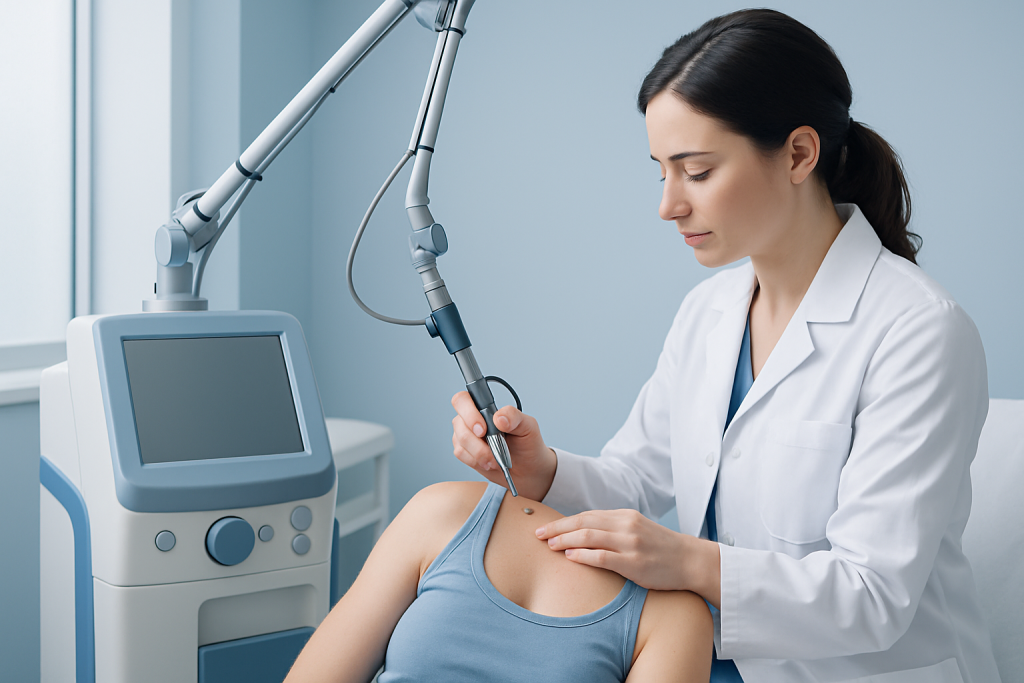
Skin tags are typically soft, flesh-colored or slightly darker bumps that hang from the skin on a small stalk. They are often found in areas where skin rubs against skin or clothing. They are usually painless, although they may become irritated if twisted, caught, or repeatedly scraped.
Moles, by contrast, are usually pigmented spots or bumps that may be tan, brown, black, or even skin-colored. Some are present from childhood, while others develop later. Most are harmless, but moles deserve closer attention if they are asymmetric, have irregular borders, show multiple colors, grow quickly, itch, bleed, or look noticeably different from the person’s other spots.
Other lesions can also be confused with these two conditions, including seborrheic keratoses, warts, cysts, and certain skin cancers. Because self-identification is unreliable, the visible appearance alone should not determine removal. A lesion that “looks like a skin tag mole” may still need a closer clinical look before anything is done.
Causes and Risk Factors

Skin tags are associated with friction, age, weight gain, and sometimes hormonal and metabolic factors. They are common and often appear where skin folds are warm and moist. Family tendency may also play a role, meaning some people develop them more easily than others.
Moles form when pigment cells cluster in the skin. Many are completely benign and stable over time. Sun exposure, personal and family history of unusual moles, and lighter skin types can influence the number and appearance of moles, but anyone can develop them.
The main risk factor for problems is not the presence of a growth itself, but confusion about what it is. A lesion that changes appearance, becomes painful, or bleeds without obvious cause should be assessed before removal. People with a personal or family history of skin cancer should be especially cautious about self-treatment.
Diagnosis Before Removal
Before removing any growth, a dermatologist or qualified doctor usually performs a visual examination and may use dermoscopy, a magnified light-based tool that helps reveal patterns not visible to the naked eye. This can make it easier to tell a skin tag from a mole or another lesion that needs a different approach.
If the lesion appears atypical, the doctor may recommend biopsy or complete removal with laboratory examination. This is particularly important for pigmented lesions, changing lesions, or those with irregular borders. In some cases, the safest path is to remove the entire lesion and send it for pathology rather than try to trim it cosmetically without a diagnosis.
For patients traveling for care, this is the part of the process that should not be rushed. An in-person evaluation, clear explanation of whether pathology is needed, and a realistic discussion of wound care and follow-up make the treatment plan safer and more predictable.
Treatment Options
If the growth is confirmed to be a benign skin tag, several minor procedures may be used. These may include snip excision with sterile instruments, cryotherapy, cauterization, or ligation in selected cases. The best choice depends on size, location, skin type, and the doctor’s judgment. Some methods may leave a tiny mark or temporary discoloration, especially in sensitive skin.
If the lesion is a mole, removal is handled differently. A doctor may shave, excise, or fully remove the mole depending on whether the goal is diagnosis, symptom relief, or cosmetic improvement. Pigmented lesions are sometimes removed with a margin of surrounding skin, especially when there is any uncertainty about their nature.
Home removal methods are not advised. Cutting with household tools, tying with thread, using acids, freezing products, or trying to burn off a lesion can lead to infection, scarring, bleeding, or incomplete removal. More importantly, these methods can delay the diagnosis of a lesion that should have been examined medically.
- Office-based removal: common for confirmed skin tags and some benign lesions.
- Surgical excision: used when a mole needs complete removal or pathology.
- Cryotherapy or cautery: may be suitable in selected cases for certain benign lesions.
- Pathology review: considered when the diagnosis is uncertain or the lesion is suspicious.
Prevention and Self-care
Not every skin tag or mole can be prevented, but gentle skin care can reduce irritation. Loose clothing, minimizing friction in skin folds, and keeping the skin clean and dry may help reduce rubbing that makes skin tags more noticeable. People who tend to develop tags should also avoid trying to shave over or pick at them.
For moles and other pigmented lesions, regular skin awareness matters. A person does not need to panic over every spot, but it is useful to notice what is new, what is stable, and what has changed. The simple habit of checking the skin in good light from time to time can help catch changes earlier.
Sun protection is also a sensible part of skin care. Using shade, protective clothing, and broad-spectrum sunscreen can help lower overall skin damage and support long-term skin health. When in doubt, the goal is not to self-diagnose, but to notice changes early enough to ask a doctor.
When to See a Doctor
A clinician should evaluate a skin growth before removal if it is pigmented, irregular, rapidly changing, painful, itchy, ulcerated, crusting, or bleeding. The same applies if the lesion appears on the face, eyelid, genital area, or another sensitive location where DIY treatment could easily cause harm or a poor cosmetic result.
Medical review is also sensible if the person is unsure whether the spot is a skin tag, mole, wart, or something else. This is especially true for people with many moles, a history of skin cancer, or a family history of melanoma. A short visit can prevent a much bigger problem later.
For international patients, planning matters. If treatment is being considered abroad, it is helpful to confirm whether the clinic can examine the lesion, remove it safely, and arrange pathology or follow-up if needed. At Acibadem Health Point, multidisciplinary specialists in JCI-accredited hospitals diagnose and treat skin lesions for international patients with an emphasis on careful evaluation and clear next steps.
Recovery After Removal
Most minor removals heal well with basic wound care. The doctor may advise keeping the area clean, protecting it from friction, and watching for signs of infection such as increasing redness, swelling, warmth, or discharge. Temporary tenderness and a small scab are common after many procedures.
Healing time varies by location and method. Areas that rub frequently, such as the neck or underarms, may need a little more care to avoid irritation. If stitches are used, or if a lesion was sent for pathology, a follow-up appointment may be recommended to review the result and healing progress.
After removal, people should continue to observe the surrounding skin. A new growth at the same site or a changing spot elsewhere should be checked rather than assumed to be harmless. Good follow-up is part of good skin care, not a sign that something has gone wrong.
Frequently asked questions
01Can a skin tag be removed at home safely?
Home removal is not considered safe because it can cause bleeding, infection, scarring, or incomplete removal. It can also be risky if the growth is actually a mole or another lesion that should be examined by a doctor first. A clinic-based evaluation is the safer choice.
02How do doctors tell a skin tag from a mole?
Doctors usually start with a visual exam and may use dermoscopy for a closer look. Skin tags are often soft and stalk-like, while moles are usually pigmented spots or bumps. If the lesion is uncertain or unusual, it may be removed and checked under a microscope.
03Does removing a mole mean it was cancerous?
No. Many moles are removed for symptom relief, cosmetic reasons, or because they simply need a clearer diagnosis. A doctor may recommend pathology if the mole looks atypical, but most removals are done to confirm what the lesion is or to prevent ongoing irritation.
04Will removal leave a scar?
Any skin procedure can leave some mark, although many are small and fade over time. The chance of scarring depends on the size and location of the lesion, the method used, and how the skin heals. A doctor can explain the likely cosmetic result before treatment.
05When should a skin growth be checked urgently?
It should be checked promptly if it changes shape, color, or size, or if it bleeds, crusts, itches, or becomes painful. A rapidly changing pigmented lesion deserves medical attention before any removal is attempted. Early assessment is the safest way to avoid missing a more serious condition.
06Can international patients get both diagnosis and removal in one trip?
Often, yes, but it depends on the lesion and whether pathology is needed. Some growths can be examined and removed during the same visit, while others require a staged plan. Before traveling, it is wise to ask the clinic how follow-up and test results will be handled.
This article is for general information only and is not a substitute for professional medical advice. Please consult a qualified doctor about your individual situation.
Explore treatments in Turkey — costs, top hospitals & a free quote
JCI-accredited · board-certified surgeons · reply within 24h
Add us as a Preferred Source to see more of our trusted health content across Google Search, AI Overviews and Discover.