How to Get Rid of Gingivitis: Treatments That Help

Key Takeaways
- Gingivitis is the earliest stage of gum disease and, unlike advanced periodontitis, it does not usually involve permanent bone loss.
- The foundation of treatment is removing plaque and hardened tartar with a professional dental cleaning, then keeping the gumline clean every day.
- Gums that bleed when brushing or flossing are not normal and are one of the most common early signals worth having checked.
- Antiseptic mouth rinses, interdental brushes and floss support treatment but do not replace professional cleaning.
- Smoking, diabetes, certain medications, hormonal changes and dry mouth can make gums more vulnerable and slower to settle.
- Improvement is often noticed within a few weeks of consistent care, but timing varies from person to person — a dentist should confirm progress.
Gingivitis is early, reversible gum inflammation caused mainly by plaque buildup along the gumline. In most cases it improves with a professional dental cleaning combined with consistent daily brushing, cleaning between the teeth, and follow-up with a dentist.
Gingivitis in Plain English: Why It Usually Reverses
People searching for how to get rid of gingivitis are usually looking for one clear answer, and fortunately there is one: gingivitis responds to plaque removal. In practical terms, that means a professional dental cleaning to remove the soft plaque and hardened tartar sitting along and just under the gumline, followed by a daily home routine that keeps that area clean. Gingivitis is the earliest and mildest form of gum disease, and it is generally considered reversible when it is identified and managed before it progresses.
The gums are living tissue that reacts to bacteria. When a sticky film of plaque is allowed to sit undisturbed where the tooth meets the gum, the body responds with inflammation — redness, puffiness and a tendency to bleed easily. Once the irritant is removed and kept away, that inflammatory response typically calms down. This is why cleaning, rather than any single product or rinse, is the centerpiece of care.
It is helpful to understand the distinction between gingivitis and periodontitis. In gingivitis, the inflammation is limited to the soft gum tissue. If plaque and tartar are left in place over time, the process can extend deeper and begin to affect the bone and fibers that hold teeth in place, which is periodontitis — a condition that can be controlled but not fully reversed. That difference is the reason dentists encourage early evaluation rather than waiting to see whether symptoms fade on their own.
What Is Normal and What Is Not

Healthy gums are typically firm, fit snugly around each tooth and do not bleed during normal brushing or flossing. Mild, brief tenderness after a first-time deep clean or after starting to floss again following a long gap can be expected for a short period. Persistent bleeding, however, is a signal worth acting on rather than dismissing as ordinary.
Common signs that gums are inflamed include:
- Pink or red traces in the sink after brushing, or blood on floss
- Gums that look swollen, shiny or darker red rather than firm and pale pink
- Tenderness when brushing along the gumline
- Persistent bad breath or an unpleasant taste that returns quickly after brushing
- Gums that appear to be pulling away from the teeth, or teeth that look longer than before
Signs that deserve prompt professional attention include gum pain that interferes with eating, swelling with a lump or pus, a tooth that feels loose or has shifted, or bleeding that does not settle after a couple of weeks of careful home care. Rather than self-diagnosing, the safest approach is to have a dentist look at the gums and confirm whether the picture is simple gingivitis or something that needs a different plan.
Why Gums Become Inflamed: Causes and Risk Factors
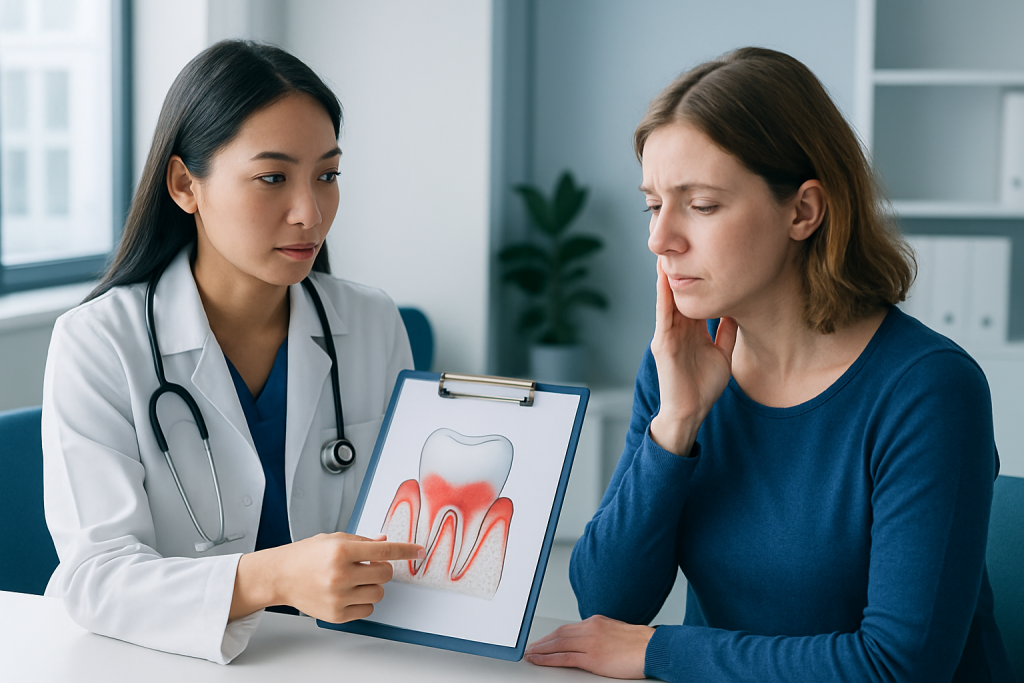
Plaque is the primary driver. It forms continuously on tooth surfaces, and when it is not disturbed within roughly a day it begins to mineralize into tartar (calculus), a hard deposit that cannot be brushed away at home. Tartar creates a rough surface that collects more plaque, which is one reason gingivitis tends to persist without professional cleaning.
Several factors can make gums more reactive or make plaque harder to control. These include smoking and other tobacco use, poorly controlled diabetes, hormonal changes during pregnancy or puberty, certain medications that reduce saliva flow or cause gum overgrowth, stress, and nutritional gaps. Crowded or crooked teeth, ill-fitting fillings and crowns, and orthodontic appliances can create areas that are simply harder to clean well. Dry mouth, whatever the cause, removes some of saliva’s natural rinsing and buffering effect.
None of these factors mean gingivitis is inevitable or untreatable — they simply mean the daily routine may need to be more thorough, and dental check-ups may need to be more frequent. A dentist or dental hygienist can identify which specific factors apply to an individual and adjust the plan accordingly, including coordinating with a physician when a medical condition or medication is playing a role.
How a Dentist Confirms the Diagnosis
Diagnosis is usually straightforward and does not involve anything uncomfortable. The dentist or hygienist examines the gums for color, texture, swelling and bleeding, and reviews medical history, medications and habits such as smoking. A small measuring probe is gently placed between the gum and tooth to check the depth of the space, or pocket, around each tooth. Shallow measurements with inflammation generally point to gingivitis; deeper pockets suggest that the process has advanced.
X-rays may be taken to check the level of the bone supporting the teeth. In gingivitis, bone levels are typically normal; changes on X-ray are one of the ways periodontitis is distinguished from earlier disease. Photographs and a written chart of measurements are often recorded so that progress can be compared at follow-up visits.
Because gum inflammation can occasionally be linked to systemic issues — such as undiagnosed diabetes, blood disorders, or the side effects of certain drugs — a dentist may recommend a conversation with a primary care physician if the pattern of symptoms does not fit typical plaque-related gingivitis. This is a normal part of thorough care, not a cause for alarm.
How to Get Rid of Gingivitis: Treatments That Help
The core of treatment is mechanical: the plaque and tartar must be physically removed. A professional dental cleaning, sometimes called scaling and polishing, uses hand instruments and ultrasonic devices to clear deposits from the tooth surfaces and just beneath the gumline. Most people find this well tolerated; where gums are very tender, local numbing can be discussed. If deposits extend deeper, a dentist may recommend a more thorough cleaning of the root surfaces, often performed over more than one appointment.
Supporting measures may be added depending on the situation. These can include:
- Antiseptic mouth rinses prescribed or recommended for a limited period to reduce bacterial load
- Personalized instruction in brushing technique and in cleaning between the teeth with floss, interdental brushes or a water flosser
- Smoothing or replacing rough fillings, crown margins or other areas that trap plaque
- Referral for orthodontic assessment when crowding makes cleaning difficult
- Guidance on managing dry mouth, or coordination with a physician about medications and medical conditions affecting the gums
Antibiotics are not routinely used for simple gingivitis; they are reserved for specific situations judged by a clinician. Similarly, no toothpaste, rinse or supplement replaces the removal of tartar. Many people notice their gums bleeding less and looking calmer within a few weeks of a cleaning combined with consistent home care, but the pace of improvement differs from person to person, and only a dental professional can confirm whether the tissue has actually returned to health. Follow-up visits — often scheduled a few weeks or months after the initial cleaning — are how that is checked.
Daily Care That Keeps Gums Settled
Professional cleaning resets the situation; daily habits determine whether it stays that way. Brushing twice a day for about two minutes with a fluoride toothpaste, angling the bristles gently toward the gumline, is the baseline. A soft-bristled brush is generally recommended, and powered brushes with a pressure sensor can help people who tend to scrub too hard — aggressive brushing irritates gums rather than protecting them.
Cleaning between the teeth once a day matters just as much, because a toothbrush cannot reach the surfaces where teeth touch. Floss, interdental brushes and water flossers each have a place; a hygienist can advise which sizes and tools suit a particular mouth. Rinsing with an antiseptic or fluoride mouthwash may be suggested as an addition, never as a substitute for brushing and interdental cleaning.
Broader habits also support gum health: not smoking or vaping, keeping blood sugar well managed if diabetes is present, staying hydrated, limiting frequent sugary snacks and drinks, and attending routine dental check-ups and cleanings at the interval a dentist advises. People with braces, implants, bridges or dentures often benefit from tailored cleaning tools and slightly more frequent professional visits.
When to See a Dentist — and How Care Is Coordinated
A dental appointment is appropriate whenever gums bleed regularly, look swollen or have started to recede, when bad breath persists despite good hygiene, or when it has been longer than recommended since the last check-up. Same-day or urgent care is sensible for gum swelling with pus, severe pain, facial swelling, fever, or a tooth that has become loose. Anyone who is pregnant, has diabetes, takes blood thinners, has a weakened immune system, or is preparing for cardiac or joint surgery should mention gum symptoms to both their dentist and their physician, since gum health and general health influence each other.
For patients arranging dental care away from home, the process is usually more predictable when it is planned in stages. That typically means sending existing X-rays, photographs and a medical history for review, having a video consultation or second opinion to clarify whether a simple cleaning or a more extensive periodontal plan is likely to be needed, receiving an indicative treatment and cost plan for budgeting purposes, and confirming how many visits and how much time on the ground the plan may require. Interpreter support, appointment sequencing, travel and accommodation guidance, and a written aftercare plan to share with a dentist back home all help avoid gaps in care once treatment is complete.
Acibadem Health Point coordinates this kind of pathway for international patients, connecting them with multidisciplinary specialists across Acıbadem’s JCI-accredited hospitals and clinics for the assessment and treatment of gum disease, along with practical support before, during and after the visit. Whatever route a person chooses, gingivitis is best addressed early — the conversation to start is with a qualified dentist who can examine the gums directly.
Frequently asked questions
01How long does it take for gingivitis to improve?
Many people notice less bleeding and less swelling within a few weeks of a professional cleaning combined with consistent daily brushing and interdental cleaning. The exact timeline varies with the amount of tartar present, smoking status, medical conditions and how thorough the home routine is. Only a dentist can confirm at a follow-up visit whether the gum tissue has genuinely returned to health.
02Can gingivitis go away without seeing a dentist?
Very mild inflammation may improve when home care is upgraded, but hardened tartar cannot be removed by brushing, flossing or any rinse. If deposits remain along the gumline, the inflammation tends to persist or return. A dental evaluation is the reliable way to know whether the gums are actually healing or whether the problem is progressing quietly.
03Is bleeding while brushing ever normal?
Brief, minor bleeding can occur when someone restarts flossing after a long break or immediately after a deep cleaning. Bleeding that continues beyond a couple of weeks, happens every time the teeth are brushed, or occurs spontaneously is not considered normal. It is one of the most common early signs of gum inflammation and should be assessed by a dentist.
04Does mouthwash cure gingivitis?
Antiseptic mouth rinses can reduce bacteria and support healing, and a dentist may recommend one for a limited period. However, a rinse cannot remove tartar or reach plaque that is packed between teeth, so it works as an addition to brushing, interdental cleaning and professional cleaning rather than as a replacement. Long-term use of certain rinses should be discussed with a clinician.
05What is the difference between gingivitis and periodontitis?
Gingivitis is inflammation limited to the gum tissue and is generally reversible with treatment. Periodontitis develops when the process extends deeper and begins to damage the bone and fibers supporting the teeth, which is why it can be controlled but not fully reversed. A dentist distinguishes the two using gum measurements and X-rays.
06Can pregnancy or diabetes make gum problems worse?
Yes. Hormonal changes in pregnancy can make gums more reactive to plaque, and poorly controlled blood sugar in diabetes is associated with more gum inflammation and slower healing. Both situations are manageable with good daily care and appropriate professional monitoring. Sharing these details with both a dentist and a physician helps them plan care together.
07What should international patients prepare before traveling for gum treatment?
Recent X-rays, dental photographs, a list of medications and a summary of medical history allow a remote review or video consultation before travel. That review helps clarify whether a straightforward cleaning or a longer periodontal plan is likely, how many appointments may be needed and what an indicative cost plan looks like. Arranging interpreter support and a written aftercare plan for a dentist at home helps care continue smoothly after the trip.
This article is for general information only and is not a substitute for professional medical advice. Please consult a qualified doctor about your individual situation.
Explore treatments in Turkey — costs, top hospitals & a free quote
JCI-accredited · board-certified surgeons · reply within 24h
Add us as a Preferred Source to see more of our trusted health content across Google Search, AI Overviews and Discover.