How Much Does Sclerotherapy Cost for Spider Veins?
Sclerotherapy cost depends on the size and number of veins treated, the number of sessions needed, the clinician’s expertise, facility fees, imaging requirements and local healthcare system. Because plans are individual and cosmetic treatment is often self-funded, a clinical assessment is the most reliable way to receive a written estimate.
How Much Does Sclerotherapy Cost?
How much does sclerotherapy cost? There is no single standard price because treatment plans are tailored to the veins being treated and the person’s clinical needs. The total may reflect the consultation, examination or ultrasound assessment, the injections, compression garments, follow-up appointments and the number of sessions required.
For spider veins, treatment is commonly considered cosmetic and may be paid for privately. When enlarged veins cause symptoms or are linked with confirmed venous insufficiency, coverage may be possible under some health insurance plans, subject to medical criteria and prior authorization. A clinic can provide an individual estimate after assessing the veins and explaining what is included.
Online searches for how much does sclerotherapy cost without insurance, how much does sclerotherapy cost with insurance, or how much does sclerotherapy cost for spider veins can be useful starting points, but they cannot account for an individual’s anatomy or benefits. Costs also differ substantially between countries and cities, including the UK, Australia, Nigeria, Ontario and other parts of Canada.
What Determines the Cost of Sclerotherapy?
The most important cost factor is the treatment goal. Treating a small cluster of superficial spider veins is different from treating larger reticular or varicose veins, especially when an underlying vein problem needs evaluation first. More extensive areas and veins requiring several injections or staged sessions generally require more clinical time and resources.
Assessment and imaging can also affect planning. Duplex ultrasound may be recommended when symptoms, larger varicose veins, skin changes or a history of vein problems suggest reflux in deeper or connecting veins. Treating only surface veins without addressing important underlying reflux may not provide the desired result.
Other considerations include the experience of the treating clinician, whether the procedure is ultrasound-guided, facility and supply fees, compression recommendations and follow-up visits. People comparing how much does sclerotherapy cost in the UK, Australia, Nigeria, Ontario or Canada should ask for an itemized estimate and clarify whether consultation, imaging, garments and review appointments are included.
- Number, size and location of veins
- Whether treatment is cosmetic or medically necessary
- Need for ultrasound evaluation or ultrasound-guided injections
- Expected number of sessions and follow-up visits
- Local clinical fees, regulations and insurance arrangements
How Sclerotherapy Works and Who May Be a Candidate

Sclerotherapy is a minimally invasive procedure in which a clinician injects a solution, called a sclerosant, into a targeted vein. The solution irritates the vein lining in a controlled way, causing the vein walls to seal together. Over time, the body naturally breaks down the treated vein and blood is redirected through healthier veins.
It is often used for spider veins and selected small varicose veins, particularly in the legs. A clinician considers symptoms, medical history, skin findings and vein size before recommending treatment. Sclerotherapy treatment may be part of a broader plan when vein concerns affect comfort, circulation or appearance.
It may not be suitable for everyone. Pregnancy, active blood clotting conditions, infection near the injection area, certain allergies, significant arterial disease and some medical conditions may change the recommendation or require postponement. People with a previous blood clot, mobility limitations, a known clotting disorder or use of blood-thinning medicines should discuss this carefully with the treating clinician.
What Happens During the Procedure and Recovery?
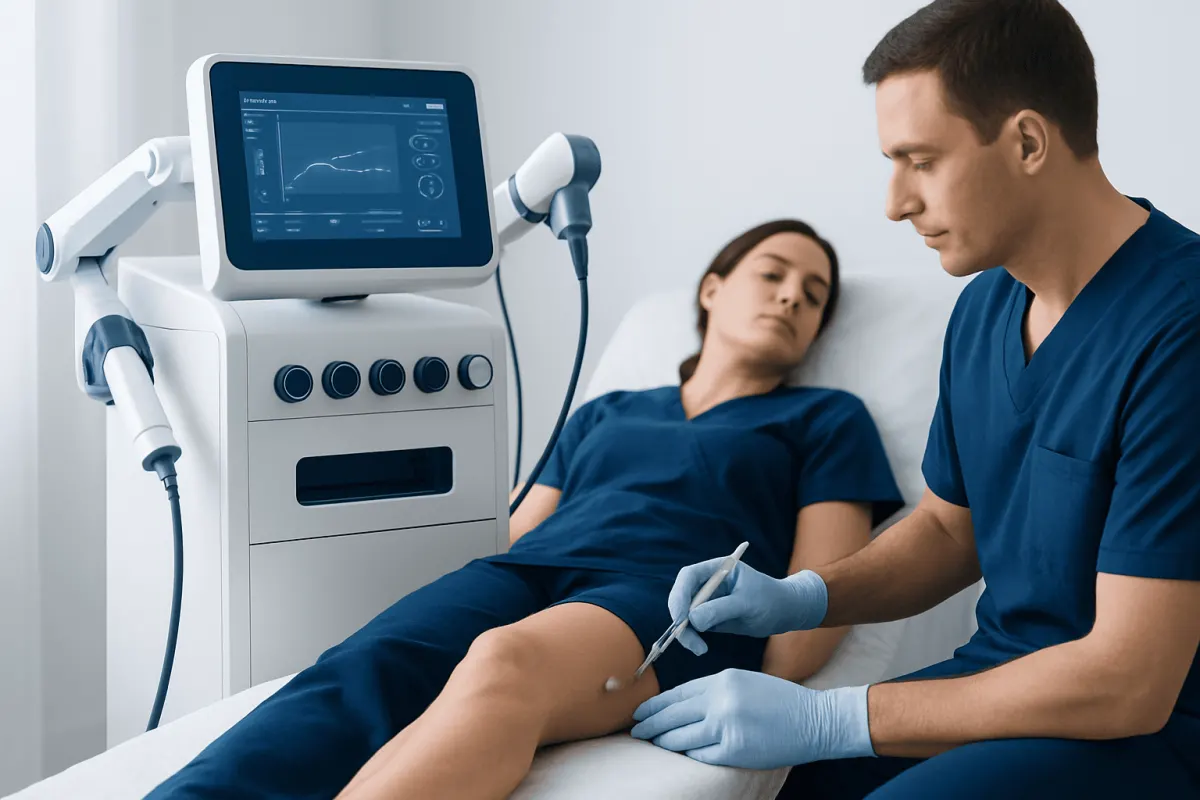
Sclerotherapy is usually performed in an outpatient setting. After the skin is cleaned, the clinician uses a very fine needle to inject the sclerosant into selected veins. For some veins, ultrasound guidance helps place the injection accurately. Several injections may be given during one visit, depending on the treatment plan and safety considerations.
Most people are encouraged to walk soon after treatment. Compression stockings or bandages may be recommended for a specific period to support the treated veins and help reduce bruising or discomfort. The clinical team will give individualized advice about bathing, exercise, sun exposure, travel and when to return for review.
Recovery is generally straightforward, but visible improvement is gradual rather than immediate. Mild soreness, bruising, redness, itching or small firm areas along treated veins can occur temporarily. Spider veins may take weeks to fade, while larger veins can take longer and may need further treatment. Following the aftercare plan and attending review appointments helps the clinician assess progress safely.
Benefits, Risks and Expected Results
The potential benefits of sclerotherapy include reducing the visibility of selected veins and, in appropriate cases, easing symptoms such as aching, heaviness or local discomfort. It does not require general anesthesia or surgical incisions, and it is commonly completed during a clinic visit. However, the likely benefit depends on the type of vein and whether underlying venous disease is present.
Common temporary effects include stinging at the injection site, bruising, tenderness, swelling, skin redness and brownish discoloration along a treated vein. Some people notice tiny new red vessels near the treatment area. These changes often improve with time, although pigmentation can occasionally persist.
Less common but important risks include inflammation of a superficial vein, skin injury, allergic reaction, blood clot formation and visual or neurologic symptoms. Serious complications are uncommon, but urgent assessment is needed for chest pain, shortness of breath, coughing blood, sudden severe headache, weakness, speech difficulty or significant leg swelling. A qualified clinician will explain individual risks before treatment.
Is Sclerotherapy Worth the Cost?
Whether sclerotherapy is worth the cost is personal and depends on the reason for treatment, the expected improvement and the person’s budget. For someone troubled by visible spider veins or symptoms from suitable small veins, the procedure may offer meaningful benefits. For others, reassurance, compression measures or a different vein treatment may be more appropriate.
Before deciding, it is helpful to ask what result is realistic, whether more than one session is likely, what alternatives exist and which parts of care are included in the estimate. A clinician should also check whether visible veins may be a sign of venous reflux that needs a different approach. Choosing treatment based only on the lowest advertised price can overlook assessment, safety standards and follow-up care.
The least expensive option is not always the best value. A personalized plan that matches the underlying vein problem can reduce the risk of unnecessary or incomplete treatment and support more satisfying long-term results.
How Long Will Sclerotherapy Last?
When a treated vein closes successfully, it is usually permanently removed from circulation. The body gradually absorbs it, and that same treated vein generally does not reopen. The timing of visible improvement varies, with smaller spider veins often improving over several weeks and larger veins taking longer.
However, sclerotherapy does not prevent new spider veins or varicose veins from developing. Genetics, aging, hormonal changes, pregnancy, prolonged standing, body weight and underlying venous reflux can all influence future vein development. Some people choose maintenance treatment after a period of time if new veins appear.
Compression when advised, regular movement, avoiding long periods of stillness and seeking assessment for recurrent symptoms may support vein health. These steps cannot guarantee that new veins will not form, but they can be useful parts of an individualized care plan.
What Is the Cheapest Way to Get Rid of Spider Veins?
The cheapest way to get rid of spider veins depends on what is meant by “get rid of.” Home measures such as physical activity, leg elevation after prolonged standing or sitting, and compression stockings may help some people manage leg discomfort or reduce progression of venous symptoms. They do not reliably remove existing spider veins.
For visible existing spider veins, sclerotherapy is often a well-established treatment option. Laser-based treatment may be considered for certain small vessels or areas where injections are less suitable. The best option depends on skin tone, vessel size, location, medical history and the clinician’s assessment.
Over-the-counter creams and unproven devices should be approached cautiously, as they are not established methods for removing spider veins. A consultation can prevent spending on treatments that are unlikely to work and can identify signs of a more significant vein condition that needs medical care.
Can I Get Sclerotherapy Covered by Insurance?
Can sclerotherapy be covered by insurance? It may be covered when it is considered medically necessary, but this depends on the insurer, policy and local healthcare system. Coverage is more likely when there are documented symptoms, complications or confirmed venous reflux and when conservative measures or other required steps have already been tried.
Cosmetic treatment for uncomplicated spider veins is commonly not covered. People wondering how much does sclerotherapy cost with insurance should contact their insurer before booking treatment and ask about eligibility, referral requirements, preauthorization, network rules, deductibles and co-payments. Written confirmation is helpful, but final payment decisions are made by the insurer.
For self-funded care, people asking how much does sclerotherapy cost without insurance should request a written, itemized estimate. It should distinguish clinical consultation, imaging, procedure charges, compression garments, planned follow-up and possible additional sessions. This makes comparisons more meaningful across clinics and countries.
When to Seek Medical Care
Visible veins are often harmless, but medical assessment is advisable if they are accompanied by persistent aching, heaviness, itching, ankle swelling, skin discoloration, hardening of the skin, a rash near the ankle or a leg ulcer. These features can sometimes indicate chronic venous disease rather than an appearance-only concern.
Prompt medical care is important for sudden one-sided leg swelling, warmth, redness or pain, particularly after surgery, a long journey or a period of reduced mobility. Emergency care is needed for chest pain, shortness of breath, fainting or coughing blood, as these may signal a serious condition unrelated to routine cosmetic vein treatment.
Acıbadem Health Point’s multidisciplinary specialists and JCI-accredited hospitals can assess and treat vein concerns for international patients. A vascular consultation can help clarify whether sclerotherapy, monitoring, compression or another treatment approach is appropriate.
Frequently asked questions
01How much does sclerotherapy cost for spider veins?
The cost for spider vein sclerotherapy varies according to the number and extent of veins, the treatment area, the expected number of sessions and local clinic fees. A consultation is needed to determine whether treatment is cosmetic and to provide an estimate that includes relevant assessments and follow-up care.
02How much does sclerotherapy cost in the UK, Australia, Nigeria, Ontario and Canada?
There is no directly comparable single figure across these locations because healthcare systems, provider fees, currency, insurance arrangements and the scope of included care differ. Patients should obtain an itemized estimate locally and ask whether consultation, ultrasound, compression garments and subsequent sessions are charged separately.
03Does insurance pay for sclerotherapy?
Insurance may contribute when treatment is medically necessary for symptomatic venous disease and policy requirements are met. Cosmetic treatment for uncomplicated spider veins is often excluded. Checking benefits and any need for preauthorization before treatment is important.
04How many sclerotherapy sessions will be needed?
Some people need one session, while others need several sessions to treat all target veins safely and achieve the desired improvement. The number depends on vein size, location, extent and response to treatment. A clinician can outline an expected plan after an examination.
05Is sclerotherapy painful?
People may feel brief pinching or stinging with the injections, and mild tenderness or itching can occur afterward. Most procedures are performed without general anesthesia. The clinician can explain comfort measures and what sensations are expected during treatment.
06Can spider veins come back after sclerotherapy?
Successfully treated veins usually remain closed, but new spider veins can form elsewhere over time. This is more likely when underlying risk factors or venous reflux are present. Follow-up assessment can help determine whether new veins need treatment or monitoring.
This article is for general information only and is not a substitute for professional medical advice. Please consult a qualified doctor about your individual situation.
Explore treatments in Turkey — costs, top hospitals & a free quote
JCI-accredited · board-certified surgeons · reply within 24h
Add us as a Preferred Source to see more of our trusted health content across Google Search, AI Overviews and Discover.