How Many Adult Teeth?

Key Takeaways
- Most adults have 32 teeth, but 28 is also common if wisdom teeth are absent or removed.
- Permanent teeth usually replace baby teeth between childhood and the early teens.
- Some people naturally have fewer or extra teeth, and this may be found during a routine dental exam or X-ray.
- Missing, crowded, or late-erupting teeth can affect bite, chewing, and oral hygiene.
- Regular dental checkups help identify tooth-development issues early and guide treatment when needed.
Most adults have 32 permanent teeth, including wisdom teeth, though the number can be lower if wisdom teeth are removed or never develop. This guide explains the usual count, common variations, and when a dental evaluation may be helpful.
Overview
The short answer to how many adult teeth a person usually has is 32. That total includes the four wisdom teeth, also called third molars. In everyday dentistry, many adults end up with 28 teeth because wisdom teeth may not develop, may stay trapped in the jaw, or may be removed.
Adult teeth are also called permanent teeth because they are meant to last for life. They begin replacing baby teeth in childhood, usually starting around age 6, and most of the set is in place by the early teenage years. A dental team can often tell whether the number and position of adult teeth are developing normally by examining the mouth and, when needed, using X-rays.
For people planning care from abroad, this question is not only about counting teeth. It can also be the starting point for understanding a bite problem, an unexpected gap, or a child whose teeth are coming in later than expected. In those situations, a clear explanation from a dentist can make the next step much easier to plan.
What Counts as an Adult Tooth?
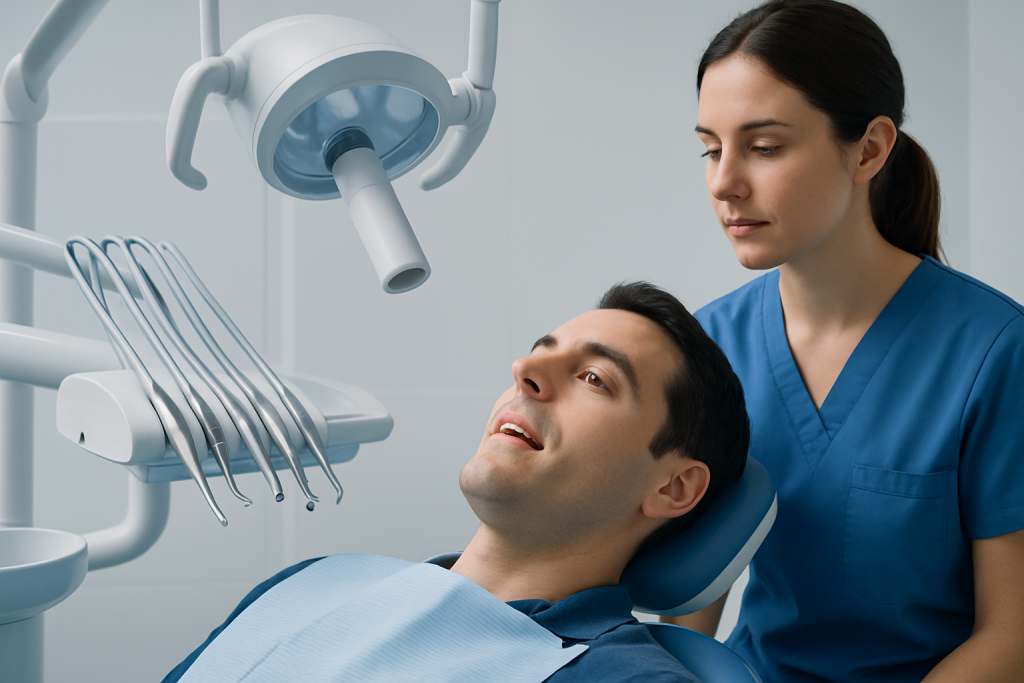
Adult teeth are the permanent teeth that replace the 20 primary teeth of childhood. They are designed for long-term chewing, speaking, and maintaining space in the jaw for a stable bite. The full adult set, when all teeth are present, includes incisors, canines, premolars, molars, and wisdom teeth.
The usual breakdown is straightforward:
- 8 incisors in the front for biting
- 4 canines for tearing
- 8 premolars for grinding
- 12 molars, including 4 wisdom teeth, for heavier chewing
Not every mouth follows the textbook pattern exactly. Some adults never develop one or more teeth, while others have extra teeth. This is why dentists rely on both the visible exam and imaging, rather than counting only what can be seen in the mirror.
Why the Number Can Be Different

Although 32 is the classic answer, several common situations can change the total. Wisdom teeth are the most frequent reason, since they may be removed for crowding, decay, pain, or impaction. If they are absent from birth, the total adult count becomes 28 rather than 32.
Some people have congenitally missing teeth, meaning one or more permanent teeth never formed. This can happen in families and may involve only a single tooth or several teeth. Less commonly, a person may have extra teeth, a condition known as hyperdontia, which can delay eruption or crowd neighboring teeth.
Other factors also matter. A tooth may be present but not yet erupted, may be trapped under the gum, or may have been lost after injury or disease. For this reason, the number of teeth in the mouth on a given day does not always reflect how many permanent teeth are actually present in the jaw.
How Adult Teeth Develop
Permanent teeth usually begin to emerge in a predictable order. The first molars and lower central incisors often appear around age 6, which is why parents and clinicians sometimes call them the “6-year molars.” The front teeth continue to replace baby teeth over the next several years, and the second molars often arrive in the early teen years.
Wisdom teeth are the least predictable. They may appear in the late teens or early twenties, but some never erupt at all. In many people, the jaw does not have enough room for these teeth to come in comfortably, which is why dentists often monitor them over time rather than assuming they will need immediate treatment.
Tooth eruption timing varies from person to person. Slight differences are often normal, especially when a child is otherwise healthy and the bite is developing in an orderly way. A dentist can help distinguish a normal variation from a delay that deserves closer attention.
How Dentists Check Tooth Count and Position
A dental exam usually starts with a visual inspection of the mouth, gums, and bite. The dentist looks at which teeth are present, whether any are missing, and whether some teeth seem smaller, crowded, rotated, or slow to erupt. This first step can already reveal a great deal.
X-rays are often the next piece of the picture. They help show teeth that have not come through the gums yet, teeth that are impacted, and any extra or missing tooth buds. In some cases, a panoramic X-ray is especially useful because it gives a broad view of the upper and lower jaws in a single image.
When questions remain, the dentist may coordinate with an orthodontist or oral surgeon. This is particularly helpful if a missing tooth, extra tooth, or impacted wisdom tooth may affect alignment, chewing, or future treatment planning.
Treatment Options When the Count Is Not Typical
Not every variation in the adult tooth count requires treatment. If a person has fewer teeth because wisdom teeth were removed, no further action may be needed. If a tooth never formed but the bite is stable, the dentist may simply monitor the area and discuss options later if spacing or function changes.
Treatment depends on the reason for the difference. Options may include observation, orthodontic treatment to create or close space, a filling or crown for a damaged tooth, extraction of a problem tooth, or replacement of a missing tooth with a bridge, implant, or removable prosthesis when appropriate. The best approach depends on the health of the surrounding teeth, the bite, and the patient’s long-term goals.
For international patients, treatment planning often includes more than one appointment. A careful dentist can outline which steps are urgent, which can wait, and what follow-up would be needed after returning home. That kind of staging helps make care more manageable across travel schedules.
Prevention and Self-Care
People cannot change how many adult teeth they naturally develop, but they can protect the teeth they have. Daily brushing with fluoride toothpaste, cleaning between the teeth, and routine dental visits all reduce the risk of decay and gum disease, which are common reasons adult teeth are lost later in life.
If wisdom teeth are still present, regular monitoring matters. Even when they do not hurt, they can be difficult to clean and may contribute to swelling, decay, or pressure on nearby teeth. A dentist can advise whether observation or removal makes more sense based on the position of the teeth and the person’s age and symptoms.
Parents can also help by keeping childhood dental visits on schedule. Early checks make it easier to notice delayed eruption, missing permanent teeth, or crowding while there is still time to plan carefully. In many cases, small issues are simpler to manage when they are identified early.
When to See a Doctor
A dental evaluation is a good idea if a permanent tooth has not appeared within a reasonable time after its counterpart on the other side, if there is a persistent gap, or if a tooth seems to be erupting in the wrong place. Pain, swelling, bad taste, or repeated irritation near the back teeth can also suggest a wisdom tooth problem.
Adults should seek dental advice if they notice new shifting of the teeth, difficulty chewing, or a bite that suddenly feels different. These changes do not always mean something serious, but they are worth checking because tooth position and jaw health can change gradually.
If a person is traveling for care, it is especially useful to collect prior X-rays and dental records before the visit. Acibadem Health Point’s multidisciplinary specialists and JCI-accredited hospitals diagnose and treat this condition for international patients, which can help coordinate assessment, treatment, and follow-up in a structured way.
A Practical Way to Think About the Answer
When people ask how many adult teeth there are, they usually want a simple number. The practical answer is 32, but 28 is very common, and some people naturally have more or fewer teeth for developmental reasons. What matters most is whether the teeth are healthy, functional, and properly supported by the bite.
If the count is different from expected, that does not automatically mean a problem. It does mean a dentist should interpret the pattern in context, especially if a tooth is missing, crowded, painful, or slow to appear. A calm, step-by-step assessment is usually enough to clarify what is normal and what needs attention.
For patients and families, the key is to treat tooth count as one part of overall oral health, not as a test to pass. With regular checkups and the right timing for care, most issues related to adult teeth can be managed safely and clearly.
Frequently asked questions
01How many adult teeth do most people have?
Most adults have 32 permanent teeth when wisdom teeth are included. If wisdom teeth are removed or never develop, 28 is also a very common total. The exact number can vary from person to person.
02Do wisdom teeth count as adult teeth?
Yes. Wisdom teeth are the third molars and are part of the permanent adult set. Some people have all four, some have fewer, and some do not develop them at all.
03Is it normal to have fewer than 32 adult teeth?
Yes, it can be normal, especially if wisdom teeth were removed or never formed. Some people also naturally lack one or more other permanent teeth. A dentist can check whether the pattern is expected or needs monitoring.
04Can adults develop extra teeth?
Yes, though it is less common. Extra teeth may stay hidden, affect the bite, or crowd nearby teeth. They are often found during a routine exam or X-ray.
05Why are my adult teeth coming in late?
Delayed eruption can happen for several reasons, including normal variation, lack of space, missing teeth, or teeth that are stuck under the gum. A dental exam and X-ray can help explain the cause.
06What should someone do if a permanent tooth is missing?
The next step is usually a dental evaluation to confirm whether the tooth never developed, is still waiting to erupt, or was lost earlier. The dentist can then discuss observation, orthodontics, or replacement options if needed.
This article is for general information only and is not a substitute for professional medical advice. Please consult a qualified doctor about your individual situation.
Explore treatments in Turkey — costs, top hospitals & a free quote
JCI-accredited · board-certified surgeons · reply within 24h
Add us as a Preferred Source to see more of our trusted health content across Google Search, AI Overviews and Discover.