How Long Does MCL Sprain Recovery Take?

MCL sprain Neck Surgery Recovery Time?" class="ahp-ilk">recovery time depends on the severity of the ligament injury, associated knee damage, and rehabilitation progress. Many isolated mild MCL sprains improve within a few weeks, while complete tears can require several months of structured care before a safe return to sport or demanding activity.
MCL Sprain Recovery Time at a Glance
MCL sprain recovery time is commonly about 1 to 3 weeks for a mild injury, 4 to 6 weeks for a moderate sprain, and 6 to 12 weeks or longer for a complete tear. Recovery is individual: a person’s activity demands, knee stability, rehabilitation, age, overall health, and any accompanying injury to the meniscus or cruciate ligaments can all affect the timeline.
The medial collateral ligament (MCL) is a broad band of tissue on the inner side of the knee. It connects the thighbone to the shinbone and helps prevent the knee from bending inward too far. MCL injuries often occur after a blow to the outside of the knee, a twist, or a forceful change in direction.
Most isolated MCL sprains heal well without an operation because this ligament has a relatively good blood supply. Early assessment is still important, since similar symptoms may occur with other knee injuries, including anterior cruciate ligament tears or meniscal damage.
How MCL Sprains Are Graded
Clinicians generally describe MCL injuries by grade. The grade reflects how much of the ligament has been stretched or torn and how much looseness, known as laxity, is found during an examination. The grading system helps guide protection, rehabilitation, and expectations for return to activity.
- Grade 1: The ligament fibers are stretched but not significantly torn. There may be tenderness on the inner knee, mild swelling, and little or no instability.
- Grade 2: The ligament is partially torn. Pain, swelling, and tenderness can be more noticeable, and the knee may feel unstable during turning or side-to-side movements.
- Grade 3: The MCL is completely torn. The knee may feel unstable, especially with pivoting or contact activity. A grade 3 injury may occur with damage to other ligaments or the meniscus.
Severity cannot always be determined from symptoms alone. Some people with a more significant injury have surprisingly little pain after the first days, while an apparently mild injury may remain painful because of associated cartilage, bone, or tendon irritation.
Week-by-Week MCL Sprain Recovery Timeline
Days 1 to 7: The early goal is to protect the healing ligament and control pain and swelling. A clinician may recommend relative rest, ice or cold therapy for comfort, compression, elevation, and crutches if walking causes a limp. A hinged knee brace may be used for moderate or severe sprains to limit stressful side-to-side motion while allowing controlled bending and straightening.
Weeks 1 to 3: For many grade 1 injuries, walking and daily activities become more comfortable during this stage. Gentle range-of-motion exercises and activation of the quadriceps and hip muscles are often introduced. A person should avoid twisting, pivoting, deep squatting, lateral cutting, and impact exercise until these movements can be performed without pain or instability.
Weeks 3 to 6: People recovering from grade 2 injuries commonly progress toward full motion, normal walking, and strengthening work. Rehabilitation may include cycling, controlled leg exercises, balance training, and gradual movement drills. The program should address the hips, core, and lower leg as well as the knee, because these areas help control knee alignment during activity.
Weeks 6 to 12 and beyond: A complete MCL tear or a combined ligament injury often needs a longer rehabilitation period. Sport-specific drills, jogging progression, jumping, and changes of direction are introduced only when swelling is absent or minimal, movement is restored, and the knee is stable. Return to competitive sport may take several months, especially if another knee structure also requires treatment.
Assessment, Diagnosis, and Treatment Approach
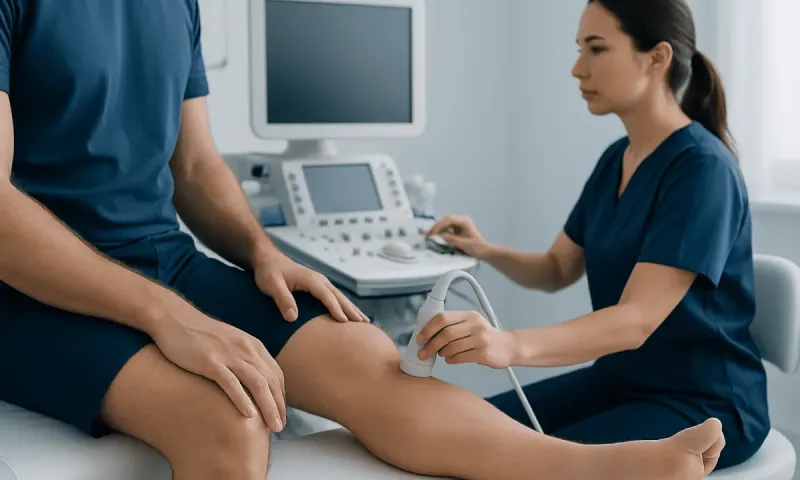
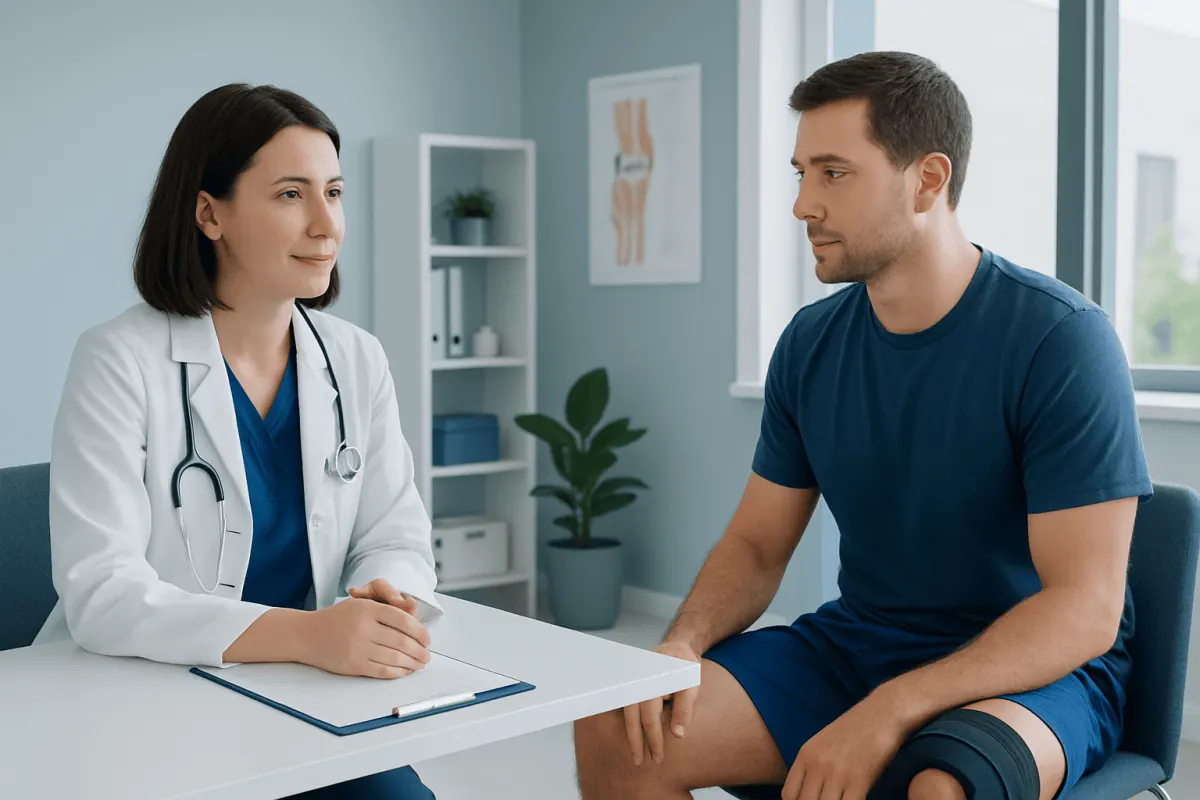
Diagnosis begins with a discussion of how the injury occurred, current symptoms, previous knee problems, and activity goals. During the physical examination, a clinician checks tenderness, swelling, range of motion, walking pattern, and stability. A valgus stress test, performed carefully by a trained professional, helps assess the MCL’s ability to resist inward force on the knee.
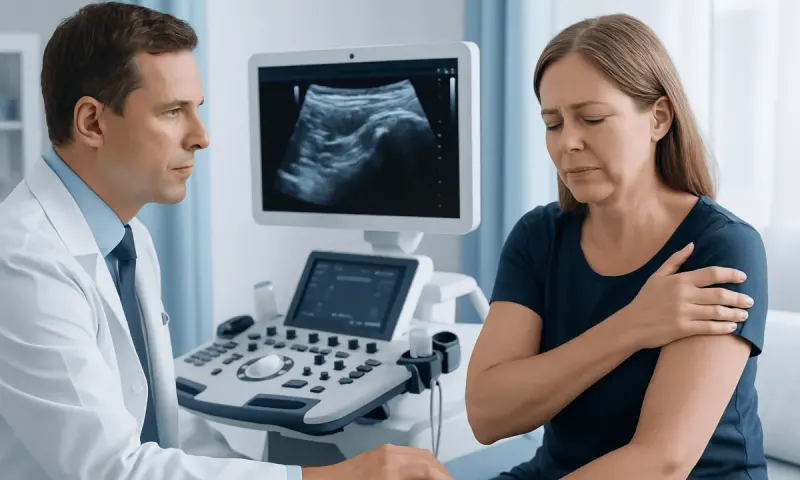
X-rays may be used after a traumatic injury to rule out a fracture or a small bone avulsion. Magnetic resonance imaging (MRI) is not always necessary for an uncomplicated mild MCL sprain, but it can help identify a complete tear or associated injuries to the meniscus, cartilage, ACL, or other structures when symptoms or examination findings suggest them.
Non-surgical care is appropriate for most isolated MCL sprains, including many complete tears. It may include a brace, temporary use of crutches, symptom-relieving measures, and individualized physiotherapy. Orthopedic assessment and rehabilitation planning can help ensure that treatment matches the injury grade and the person’s work, daily-life, and sport requirements.
Surgery is uncommon for an isolated MCL injury. It may be considered when there is persistent instability despite appropriate rehabilitation, an avulsion or complex injury pattern, or combined ligament damage requiring reconstruction. When surgery is relevant, the plan depends on the precise structures involved rather than the MCL grade alone.
Rehabilitation: How a Safe Return to Activity Is Built
MCL rehabilitation is a gradual process rather than a fixed calendar. The program typically begins by restoring comfortable knee motion and normal walking. As symptoms settle, exercises are progressed to rebuild strength in the quadriceps, hamstrings, hips, calves, and core muscles that support the knee during standing, stairs, and sport.
Balance and neuromuscular training are also important. These exercises help the body respond to changes in position and reduce unwanted inward movement of the knee. Later-stage rehabilitation may include step-downs, controlled single-leg tasks, hopping, running, and direction-change drills, depending on the person’s goals.
A return to running, physically demanding work, or sport is generally based on function rather than time alone. Helpful signs include full or near-full motion, no meaningful swelling after exercise, good strength compared with the uninjured leg, confidence with movement, and the ability to complete activity-specific tasks without pain or a sense of giving way.
Physical therapy can be especially useful for grade 2 or 3 injuries, persistent symptoms, athletes, and people returning to work that involves lifting, climbing, rapid movement, or uneven ground. Progression should be adjusted if pain, swelling, limping, or instability increases after activity.
Benefits, Risks, and Factors That Can Delay Recovery
The main benefits of a structured non-surgical approach are that it supports natural healing, maintains joint motion, helps prevent muscle weakness, and rebuilds control before a return to normal activity. Bracing can provide short-term protection and confidence, while rehabilitation addresses the movement patterns that may otherwise leave the knee vulnerable during twisting or side-to-side activity.
The main risk of returning too quickly is re-injury or ongoing knee instability. Continuing high-impact sport or pivoting activity before the ligament and supporting muscles have recovered can prolong symptoms. Prolonged complete rest is also not usually helpful, as it can lead to stiffness, loss of strength, and slower functional recovery.
Recovery may take longer when the injury is severe, the knee is repeatedly stressed during healing, rehabilitation is inconsistent, or there is another injury in the same knee. Persistent joint-line pain, catching, locking, repeated swelling, or instability may indicate meniscal or ligament involvement that needs reassessment.
Anti-inflammatory or pain-relieving medicines may be appropriate for some people, but the choice depends on medical history, other medicines, and individual risks. A doctor or pharmacist can advise on safe options. Pain medication should not be used to push through instability or resume activity before the knee is ready.
Prevention and Everyday Self-Care
Not every MCL sprain can be prevented, particularly those caused by accidental contact or a fall. However, maintaining lower-body strength, hip control, flexibility appropriate to the activity, and good movement technique can lower the risk of knee injuries. A gradual increase in training volume gives muscles and connective tissues time to adapt.
Before sports that involve running, jumping, or changing direction, a warm-up that includes light aerobic activity, dynamic movement, and sport-specific drills can be helpful. Appropriate footwear and safe playing surfaces also matter. For skiing, contact sports, and field sports, learning correct turning, landing, and stopping mechanics may reduce knee stress.
During recovery, people should follow the recommended brace and exercise plan, avoid activities that cause limping or instability, and increase activity in small steps. Keeping a simple record of pain, swelling, and how the knee feels the day after exercise can help identify whether progression is appropriate.
Acıbadem Health Point’s multidisciplinary specialists and JCI-accredited hospitals assess and treat knee ligament injuries for international patients, with rehabilitation plans tailored to the individual injury and recovery goals.
When to Seek Medical Care
Medical assessment is advisable after a significant knee injury, especially if there is immediate swelling, difficulty bearing weight, a visible change in knee shape, severe pain, or a popping sensation at the time of injury. These features do not confirm a particular diagnosis, but they can occur with fractures and injuries involving more than one knee structure.
A person should seek prompt care if the knee locks, cannot be fully straightened, repeatedly gives way, becomes increasingly swollen, or has numbness, a cold foot, or marked color change below the knee. Urgent assessment is also appropriate for severe worsening pain, fever with a hot swollen joint, or symptoms after a major trauma.
For a diagnosed MCL sprain, follow-up is important if pain, instability, or reduced motion does not steadily improve within the expected early recovery period. A clinician can review the diagnosis, check for associated damage, and update the rehabilitation plan before return to higher-risk activities.
Frequently asked questions
01How long does an MCL sprain take to heal?
A mild grade 1 MCL sprain often improves within 1 to 3 weeks. A grade 2 sprain may take about 4 to 6 weeks, while a complete grade 3 tear can require 6 to 12 weeks or longer. The timeline may be extended if there are injuries to the meniscus, ACL, or other knee structures.
02Can a person walk with an MCL sprain?
Many people can walk with a mild MCL sprain, although it may be uncomfortable at first. A limp, marked pain, or a feeling that the knee is unstable can mean that crutches or a brace are temporarily needed. A clinician can advise on safe weight-bearing after examining the knee.
03Does an MCL sprain require surgery?
Most isolated MCL sprains heal without surgery, including many complete tears. Surgery is more likely to be considered when the knee remains unstable, the ligament is injured along with other structures, or a particular injury pattern cannot heal adequately with non-surgical care. The decision is based on examination findings, imaging when needed, and functional goals.
04When can a person return to sports after an MCL sprain?
Return to sport should occur when the knee has recovered motion, strength, stability, and confidence, not only after a certain number of weeks. The person should be able to perform sport-specific movements, such as running, stopping, jumping, and changing direction, without pain, swelling, limping, or giving way. A clinician or physiotherapist can guide this progression.
05Should an MCL sprain be braced?
A brace is not always necessary for a mild sprain, but it may be useful for moderate or severe injuries and during early return to activity. A hinged brace can limit side-to-side stress while allowing controlled movement. The type and duration of bracing should be individualized by a healthcare professional.
06What symptoms suggest an MCL injury may be more serious?
More concerning symptoms include inability to bear weight, substantial swelling, locking, repeated giving way, inability to fully straighten the knee, or pain that does not improve. These symptoms can occur with associated meniscal, cartilage, fracture, or other ligament injuries. Medical evaluation can clarify the cause and help prevent delayed recovery.
This article is for general information only and is not a substitute for professional medical advice. Please consult a qualified doctor about your individual situation.
Joint and spine care in Turkey — expert assessment & treatment
JCI-accredited · board-certified surgeons · reply within 24h
Add us as a Preferred Source to see more of our trusted health content across Google Search, AI Overviews and Discover.