How Long Does It Take to Pass a Kidney Stone? Timeline by Size

Key Takeaways
- Stones smaller than about 4 mm often pass within one to two weeks, and many pass in just a few days.
- Stones around 5-6 mm may take four to six weeks and are less likely to pass without help.
- Stones larger than about 6-7 mm frequently need a procedure such as shock wave lithotripsy or ureteroscopy.
- Location matters: a stone already low in the ureter, near the bladder, usually passes faster than one higher up.
- Fever, chills, uncontrolled pain, persistent vomiting, or an inability to urinate are urgent warning signs requiring immediate care.
- Only a clinician who has reviewed imaging can estimate a realistic timeline for an individual stone — no timeline is guaranteed.
Most small kidney stones pass on their own within days to a few weeks, and stone size is the single biggest factor in how long that takes. This guide explains typical timelines by size, what a normal passage feels like, and the warning signs that mean a person should stop waiting and contact a doctor.
How Long Does It Take to Pass a Kidney Stone? The Short Answer
For most people, the honest answer to how long does it take to pass a kidney stone is somewhere between a few days and about six weeks, with stone size being the strongest predictor. Very small stones — those measuring under roughly 4 millimeters, about the width of a grain of rice — frequently pass within one to two weeks, and a good number pass within a few days. Medium stones in the 5 to 6 millimeter range often take four to six weeks and pass less reliably. Stones larger than about 6 to 7 millimeters are much less likely to pass unaided and usually prompt a discussion about treatment.
These figures are averages drawn from urology practice, not promises. Two people with identically sized stones can have very different experiences, because passage depends on where the stone sits in the urinary tract, the shape and surface of the stone, the anatomy of the ureter, hydration, and how well pain is managed. A smooth, oval stone can slip through a passage that a jagged, star-shaped stone of the same width cannot.
It is also worth knowing what “passing” means. The stone has to travel from the kidney down the ureter — a narrow, muscular tube roughly the diameter of a coffee stirrer — into the bladder, and then out through the urethra. The painful part is almost always the ureter journey. Once a stone reaches the bladder, most people feel dramatic relief, and the final exit is often barely noticed.
Timeline by Size: What Urologists Generally Expect
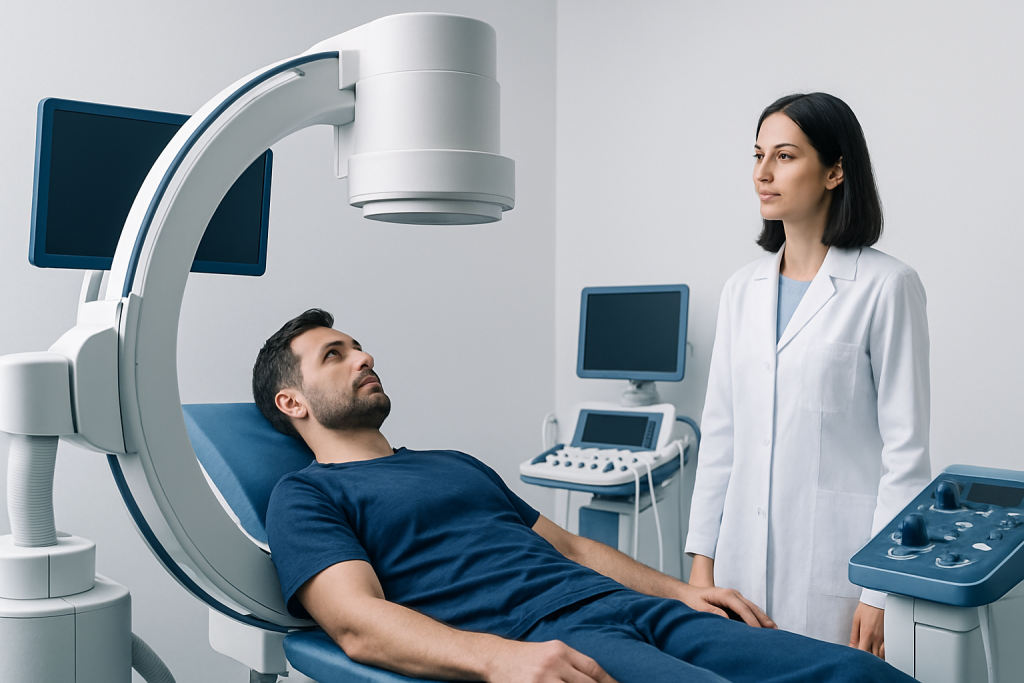
Imaging, usually a low-dose CT scan or ultrasound, gives a millimeter measurement that drives the plan. While every practice interprets numbers alongside the individual patient, the broad expectations look roughly like this:
- 2 mm or smaller: often passes within about a week, sometimes in a day or two, and may pass with little more than an ache.
- 2-4 mm: commonly passes within one to two weeks; the majority of stones in this range pass without a procedure.
- 4-6 mm: may take two to six weeks; roughly half or fewer pass spontaneously, and doctors often add medication to help.
- 6-8 mm: passage is possible but slow and uncomfortable; many clinicians recommend intervention rather than prolonged waiting.
- Larger than 8 mm: spontaneous passage is uncommon, and a planned procedure is usually the safer route.
Location refines the estimate considerably. A stone in the distal ureter — the last stretch before the bladder — has a much better chance of passing, and passing quickly, than one lodged where the ureter leaves the kidney. This is why a radiology report will describe both size and position, and why two patients told “you have a 5 mm stone” may be given quite different advice.
Most guidelines suggest that a trial of observation for a stone that is likely to pass should not stretch on indefinitely. If a stone has not moved after about four to six weeks of watchful waiting, the risk of ongoing obstruction and kidney strain begins to outweigh the benefit of waiting longer. That decision point belongs to the treating physician, who can compare a repeat scan with the original.
What Passing a Stone Usually Feels Like

Classic stone pain, known as renal colic, tends to arrive suddenly and come in waves. It is often felt in the flank or side, below the ribs, and may radiate toward the lower abdomen and groin as the stone descends. Many people describe restlessness — an inability to find a comfortable position — which is fairly characteristic. Nausea, vomiting, and pink or brown urine are common companions. When the stone reaches the lower ureter, urinary urgency and a burning sensation may appear, sometimes mimicking a bladder infection.
Waves of pain are not necessarily a sign that things are going wrong; they often reflect the ureter contracting around a moving stone. Equally, several pain-free days do not always mean the stone has passed. It may simply have settled into a wider segment of the ureter. Doctors frequently ask patients to strain their urine through a fine mesh so the stone can be captured and analyzed, since knowing its chemical composition shapes prevention advice later.
Recovery after passage is usually quick. Some soreness, mild blood in the urine, and a bruised feeling in the flank can linger for a day or two. If pain resolves abruptly and completely, that is often the moment the stone entered the bladder.
What Is Normal, and What Is Not
Normal, though unpleasant, includes intermittent severe pain that responds to prescribed pain relief, small amounts of blood in the urine, occasional nausea, and a passage that takes days rather than hours. Normal also includes being sent home from an emergency department with pain medication and instructions to drink fluids and wait — that is standard care for a small stone in an otherwise healthy person.
What is not normal, and what should prompt immediate medical attention, is any sign that the urinary system is obstructed and infected, or that the kidney is under serious strain. Warning signs include:
- Fever or chills alongside flank pain — this combination can signal an infected, blocked kidney, which is a medical emergency
- Pain that is not controlled by the medication prescribed, or that keeps escalating
- Vomiting that prevents keeping fluids down
- Inability to urinate, or passing only tiny amounts
- Confusion, dizziness, rapid heartbeat, or feeling faint
- Symptoms in someone with a single kidney, a transplanted kidney, known kidney disease, or pregnancy
Anyone in these situations should not wait to see whether the stone passes on its own. Prompt evaluation protects kidney function and, in the case of infection, can be life-saving.
When Waiting Gives Way to Treatment
If a stone is too large, too slow, or causing complications, several well-established options exist. Medical expulsive therapy — typically a medication that relaxes the ureter — is sometimes prescribed to improve the chance that a stone in the 5 to 10 millimeter range will pass, though it is not appropriate for everyone and is always a physician’s decision. Alongside this, adequate pain control and hydration remain the backbone of conservative management.
When a procedure is needed, extracorporeal shock wave lithotripsy uses focused energy waves from outside the body to fragment the stone into pieces small enough to pass. Ureteroscopy involves passing a very fine scope up the urinary tract to see the stone directly and break it up with a laser, often removing the fragments in the same session; a temporary stent may be left in place afterward. For large or complex stones inside the kidney, percutaneous nephrolithotomy removes the stone through a small incision in the back. The choice depends on stone size, composition, location, kidney anatomy, and the patient’s overall health.
Recovery timelines differ from passage timelines. Many people return to routine activity within days of a minimally invasive procedure, while stent-related discomfort may persist until the stent is removed. A urologist can outline what to expect in a specific case, including whether more than one session might be required.
Getting a Clear Answer: Diagnosis, Second Opinions, and Care Planning
Because timelines hinge on precise measurements, imaging is the pivot point of the whole journey. A non-contrast CT scan is the usual reference standard for identifying size and position; ultrasound is often preferred in pregnancy and in younger patients to limit radiation exposure. Blood and urine tests check kidney function and look for infection. If stones keep recurring, a metabolic workup — analyzing urine chemistry and, when available, the stone itself — helps identify the underlying driver.
Patients who receive conflicting advice, or who are told they need a procedure and want to understand the alternatives, often benefit from a formal second opinion. Sharing existing scans and reports with a urologist for review can clarify whether continued observation is reasonable, which procedure fits best, and how urgent the situation truly is. Remote video consultations have made this far more accessible, allowing an initial discussion before any travel or scheduling decisions are made.
For those exploring care outside their home country, coordination matters as much as clinical expertise: gathering prior imaging in a readable format, arranging interpretation, understanding what a treatment package typically includes, and planning realistically for indicative costs rather than assuming a fixed figure. Acibadem Health Point supports international patients in this way, connecting them with multidisciplinary specialists across JCI-accredited Acıbadem hospitals for the diagnosis and treatment of kidney stones, and helping with practical arrangements such as scheduling, travel guidance, accommodation, and interpreter support.
Prevention, Self-Care, and Aftercare
Once a stone has passed or been treated, attention shifts to reducing the chance of another. Recurrence is common, so prevention is not an afterthought. The most consistently recommended measure is drinking enough fluid — generally enough to produce pale, plentiful urine throughout the day. Water is the mainstay; a doctor may advise limits on certain beverages depending on stone type.
Dietary guidance depends heavily on stone composition, which is why stone analysis is so useful. In broad terms, clinicians often discuss moderating sodium intake, keeping animal protein reasonable rather than excessive, and maintaining normal dietary calcium rather than restricting it — since low calcium intake can paradoxically increase the risk of the most common stone type. For people with recurrent stones, specific medications may be considered to alter urine chemistry. All of this should be individualized rather than self-prescribed.
Aftercare back home typically includes a follow-up imaging study to confirm the urinary tract is clear, removal of any stent, and a plan for periodic monitoring in people prone to recurrence. Keeping copies of imaging reports, stone analysis results, and operative notes makes future care smoother, particularly if treatment took place in another country. Anyone unsure about their timeline, symptoms, or prevention plan should discuss it with a qualified physician who knows their medical history.
Frequently asked questions
01How long does it take to pass a 4 mm kidney stone?
A 4 mm stone often passes within about one to two weeks, and many pass sooner. Stones at or below this size have a relatively good chance of passing without a procedure, especially if they are already low in the ureter. A doctor may still prescribe pain relief and, in some cases, medication to help the process along.
02Can a kidney stone take months to pass?
It is possible, but most clinicians do not recommend waiting that long. If a stone has not passed after roughly four to six weeks, prolonged obstruction can begin to affect the kidney. At that point a urologist usually repeats imaging and discusses treatment rather than continued observation.
03How can someone tell if the stone has passed?
The clearest sign is the sudden and complete disappearance of pain, often after a period of urinary urgency and burning. Straining urine through a fine mesh may capture the stone itself, which is helpful for analysis. Because pain can also fade temporarily without passage, follow-up imaging is the only reliable confirmation.
04Does drinking more water make a stone pass faster?
Staying well hydrated supports urine flow and is standard advice during a stone episode, though it does not guarantee faster passage. Excessive forced fluid intake is not recommended, particularly if the urinary tract is fully blocked or if nausea makes drinking difficult. A doctor can advise on the right approach for the individual situation.
05Is it safe to wait at home while a stone passes?
For a small stone in an otherwise healthy person with controlled pain, watchful waiting at home is common and reasonable. It is not safe when there is fever, uncontrollable pain, persistent vomiting, inability to urinate, or a single or transplanted kidney. Those situations require immediate medical evaluation.
06Why do some stones need surgery when others pass on their own?
Size, shape, and position are the main reasons. Larger stones physically cannot navigate the narrow ureter, and irregular stones can wedge in place even at modest sizes. Stones that cause infection, severe obstruction, or unmanageable pain are also treated rather than observed, regardless of size.
07Will passing one kidney stone mean more in the future?
Many people who have had one stone will form another over the years, which is why prevention is emphasized after the first episode. Fluid intake, dietary adjustments guided by stone composition, and treatment of any underlying metabolic condition can meaningfully reduce that risk. A urologist or nephrologist can build an individualized prevention plan.
This article is for general information only and is not a substitute for professional medical advice. Please consult a qualified doctor about your individual situation.
Explore treatments in Turkey — costs, top hospitals & a free quote
JCI-accredited · board-certified surgeons · reply within 24h
Add us as a Preferred Source to see more of our trusted health content across Google Search, AI Overviews and Discover.