How Long Does It Take to Donate Plasma? Process and Recovery
Key Takeaways
- A first-time plasma donation visit commonly takes about two hours because of registration, screening and a health history review; return visits are often closer to one to one and a half hours.
- The plasmapheresis collection itself usually runs about 35 to 60 minutes, varying with the donor's size, hydration and vein flow.
- Because red blood cells are returned during the procedure, most healthy donors feel back to normal within a few hours and can donate more frequently than whole blood donors.
- Mild fatigue, thirst, light-headedness or a small bruise at the needle site are common and short-lived; drinking fluids and eating a balanced meal helps.
- Fainting, persistent arm pain, swelling, tingling around the mouth, chest discomfort or signs of infection are not typical and should be evaluated promptly.
- Eligibility rules, frequency limits and center policies vary — donors should confirm details with the collection center and discuss any chronic condition with their own physician.
Most plasma donation appointments take between one and two hours from check-in to checkout, with the actual collection lasting roughly 35 to 60 minutes. This guide explains what happens at each stage, what recovery normally feels like, and which symptoms deserve a call to a doctor.
How Long Does It Take to Donate Plasma? The Short Answer
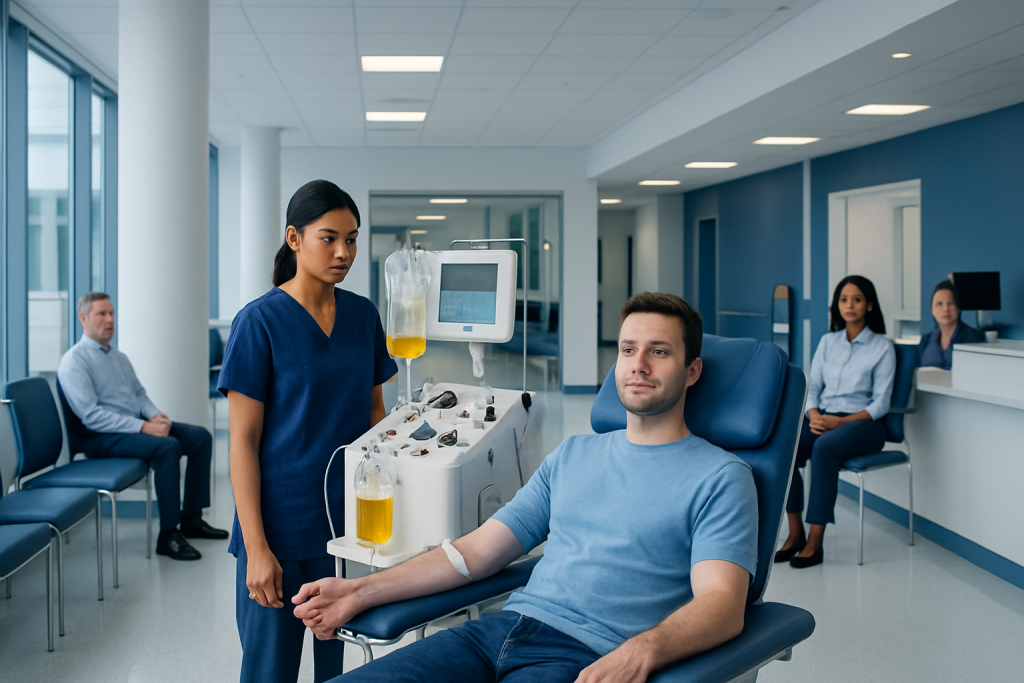
For most people asking how long does it take to donate plasma, the practical answer is: set aside about two hours for a first visit and roughly one to one and a half hours for each return visit. The needle time — the part where plasma is actually being collected — is usually only 35 to 60 minutes of that total. The rest is registration, a health questionnaire, a brief physical check, a small blood sample for testing, and a short rest period afterward.
The reason a first appointment takes longer is paperwork and screening rather than anything medical going wrong. New donors complete an identity check, an in-depth health and travel history, and a mini-physical that typically includes blood pressure, pulse, temperature, and a finger-stick test for hemoglobin and protein levels. Once that baseline record exists, subsequent visits move considerably faster because staff only need to confirm that nothing has changed.
Individual timing varies. People with smaller body frames give a smaller target volume and may finish sooner; those who are mildly dehydrated or who have small or difficult veins may take longer because the machine cycles more slowly. Busy centers with waiting lines add time at the front end, which is why many donors find that booking an appointment rather than walking in shortens the visit noticeably.
What Happens Step by Step on Donation Day
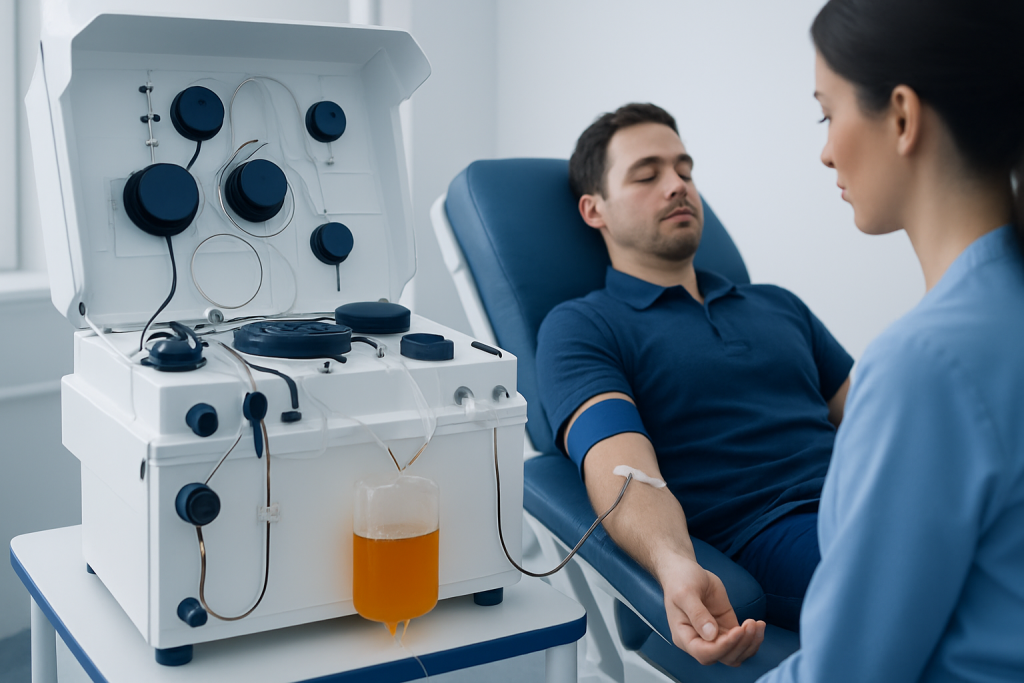
Understanding the sequence helps set realistic expectations. Although details differ between blood centers and commercial plasma collection facilities, the general flow is consistent across the United States and is designed to protect both the donor and the person who will eventually receive the plasma product.
- Check-in and identification (5–15 minutes): Photo ID, proof of address and, at many centers, a Social Security number or equivalent identifier.
- Health history questionnaire (10–20 minutes): Questions about medications, recent travel, tattoos or piercings, pregnancy, infections and behaviors that affect eligibility. First-time donors take the longest here.
- Mini-physical and finger stick (10 minutes): Vital signs plus a small blood sample to check hemoglobin and total protein, which confirms the body can safely spare plasma that day.
- The collection itself (35–60 minutes): The donor sits or reclines while a machine separates plasma from the blood and returns the remaining components.
- Post-donation rest and snack (10–15 minutes): Pressure dressing applied, fluids and a snack offered, and a short observation period before leaving.
Staff monitor donors throughout and will pause or stop the process if anything feels wrong. Speaking up early about dizziness, nausea or arm discomfort is encouraged and does not usually mean the donation must be abandoned — often a small adjustment, a drink of water or a slower return cycle resolves it.
Why Plasmapheresis Takes Longer Than a Whole Blood Donation
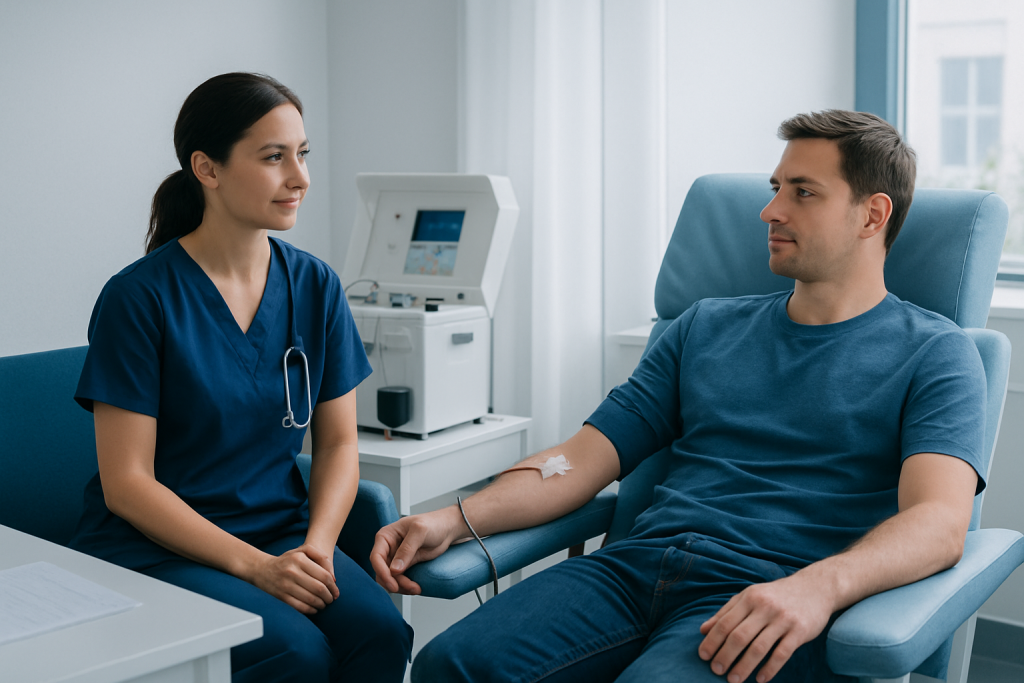
A whole blood donation is quick — often under 15 minutes of collection time — because blood simply flows into a bag. Plasma donation uses a different technique called plasmapheresis, in which blood is drawn through a sterile, single-use tubing set into a centrifuge or filter that separates the straw-colored liquid plasma from red cells, white cells and platelets. The cellular components are then returned to the donor, usually along with a small amount of saline.
This draw-and-return cycle repeats several times during a single session, which is the main reason the appointment runs longer. It is also the reason many donors feel less depleted afterward than they would after giving whole blood: the red blood cells that carry oxygen stay in the body. Because the body replaces plasma volume relatively quickly through fluid intake and protein synthesis, regulators permit more frequent plasma donation than whole blood donation, within defined limits.
Donors often notice a cool sensation in the arm during the return phase, because the returned fluid is at room temperature rather than body temperature. Some also notice a slight tingling around the lips or fingertips related to the citrate anticoagulant used to keep blood from clotting in the tubing. Both sensations are common, generally mild and typically resolve when the machine slows or after the session ends — but they should always be reported to staff so the process can be adjusted.
How Often Can Someone Donate Plasma?
In the United States, U.S. Food and Drug Administration regulations allow source plasma donation as often as twice in a seven-day period, with at least one full day between donations. Community blood centers that collect plasma for transfusion often apply a more conservative interval. Center policy, the donor’s weight, protein levels and overall health all influence what is permitted on any given day, so the frequency a person is offered may differ from the maximum allowed.
Frequent donors are usually monitored more closely over time. Many centers periodically recheck total protein and immunoglobulin levels, since repeatedly removing plasma proteins can gradually lower them in some individuals. If a value falls outside the acceptable range, a donor may be asked to take a break — a routine, protective step rather than a sign of illness.
Anyone with a chronic medical condition, a bleeding or clotting disorder, a history of fainting, or who is pregnant or recently postpartum should discuss plasma donation with their own physician before starting a regular schedule. The same applies to people taking prescription medications, since certain drugs affect eligibility or the safety of the plasma collected.
Recovery: What Normal Feels Like Afterward
Most healthy donors feel essentially normal within a few hours. The plasma volume removed is largely replaced by drinking fluids over the following 24 hours, while the proteins are rebuilt over the next day or two. It is common to feel slightly tired, thirsty or a little “flat” for the remainder of the day, particularly after a first donation, and this typically improves with rest, water and a meal containing protein.
A small bruise or a tender spot at the needle site is also common and usually fades within a week. Keeping the bandage on for the recommended few hours, avoiding heavy lifting with that arm for the rest of the day, and applying a cool compress in the first day if the area is sore all help. Vigorous exercise, alcohol and long periods of standing in heat are best postponed until the following day.
Recovery is smoother when preparation is good. Donors are generally advised to drink extra water in the hours before the appointment, eat a meal that includes protein and iron-containing foods, avoid fatty foods immediately beforehand (fat in the bloodstream can cloud the plasma and lead to deferral), skip alcohol the night before, and wear clothing with sleeves that roll up easily. Adequate sleep the night before makes light-headedness less likely.
Side Effects: What Is Common and What Is Not
Plasma donation is a well-established, closely regulated procedure, and serious complications are uncommon. Still, it is useful to know the difference between expected sensations and warning signs. Common, short-lived effects include mild fatigue, thirst, a cool feeling in the arm, brief tingling around the mouth or fingers, a small bruise, and momentary light-headedness on standing.
Less common effects that warrant attention from center staff or a clinician include fainting or near-fainting that does not resolve quickly, persistent or worsening arm pain, significant swelling, warmth or redness at the needle site, numbness or shooting pain down the arm, muscle cramping, or nausea and vomiting. Very rarely, an artery rather than a vein is entered, or a nerve is irritated — situations that staff are trained to recognize and manage.
- Report immediately during donation: chest tightness, shortness of breath, severe tingling or twitching, sudden sharp arm pain.
- Seek medical care after leaving: spreading redness, pus or fever suggesting infection; a rapidly enlarging swelling at the site; fainting episodes at home; symptoms that keep recurring after each donation.
Repeated deferrals for low hemoglobin or low protein should not simply be worked around by donating elsewhere — they are a signal to see a primary care physician, since they can occasionally point to an underlying issue such as anemia or a nutritional deficiency that deserves evaluation in its own right.
Who Can and Cannot Donate
General eligibility in the United States usually requires being at least 18 years old (some states and centers permit 16 or 17 with consent for blood donation), weighing at least 110 pounds, and being in good general health on the day of donation. Screening also covers recent illness, infections, certain travel destinations, recent tattoos or piercings depending on state regulation, some medications, and specific medical histories.
Temporary deferrals are frequent and rarely a cause for concern — a cold, a course of antibiotics, a recent dental procedure or a low hemoglobin reading can all postpone a donation for days or weeks. Permanent deferrals apply to a smaller number of conditions and are set by federal regulation to protect recipients who often depend on plasma-derived therapies for lifelong treatment.
Donors should always answer screening questions honestly and completely. The questionnaire is confidential, and the goal is not to exclude people unnecessarily but to make sure the donation is safe both for the donor’s own body and for the patients who will ultimately receive the medicines made from that plasma.
When to See a Doctor
Routine plasma donation should not leave a person feeling unwell for days. A physician’s opinion is sensible if fatigue lingers well beyond 24 hours, if dizziness or fainting occurs after more than one donation, if bruising is unusually large or appears without obvious cause, or if arm symptoms such as numbness, weakness or persistent pain continue after the site has healed. Recurrent deferral for low protein or low hemoglobin is another reason to schedule a check-up.
Urgent care is appropriate for chest pain, breathing difficulty, a rapidly swelling arm, high fever, or spreading redness and warmth around the needle site. These are uncommon, but they should never be dismissed. People with heart, kidney, liver or bleeding disorders, and anyone who is pregnant, should talk with their own physician before donating rather than relying on the screening questionnaire alone.
For patients who want a broader assessment — for example, if repeated deferrals or unexplained fatigue raise questions about an underlying condition — Acibadem Health Point coordinates evaluations with multidisciplinary specialists across JCI-accredited Acıbadem hospitals, including remote second opinions and interpreter support for international patients. Any such review is intended to complement, not replace, care from a personal physician at home.
Frequently asked questions
01How long does the first plasma donation take compared with later visits?
A first visit typically takes about two hours because it includes identity verification, a detailed health history and a mini-physical. Once that record is on file, return visits usually take one to one and a half hours. The collection itself is roughly 35 to 60 minutes in both cases.
02Why does plasma donation take longer than giving whole blood?
Plasma donation uses plasmapheresis, a cycle in which blood is drawn, separated by a machine, and the red cells and platelets are returned to the donor. This draw-and-return process repeats several times, which extends the session. The trade-off is that donors keep their oxygen-carrying red cells and generally recover more quickly.
03How long does it take to recover after donating plasma?
Most healthy people feel normal again within a few hours, with plasma volume largely restored through fluid intake over about 24 hours and proteins rebuilt over the following day or two. Mild tiredness or thirst on donation day is common. Lingering fatigue beyond a day is worth discussing with a doctor.
04What should someone eat and drink before donating plasma?
Drinking extra water in the hours beforehand and eating a balanced meal with protein and iron-containing foods helps the session go smoothly. Fatty foods immediately before donation can cloud the plasma and lead to deferral, and alcohol the night before increases the chance of light-headedness. A good night's sleep also reduces the risk of feeling faint.
05Is tingling around the mouth during plasma donation normal?
Mild tingling around the lips or fingertips is a recognized effect of the citrate anticoagulant used in the tubing and is usually brief and harmless. Donors should still tell staff right away, because the machine can be slowed or calcium can be offered. Severe tingling, muscle twitching or cramping needs immediate attention.
06How often can a person donate plasma in the United States?
Federal regulations permit source plasma donation up to twice within a seven-day period, with at least one day between donations, though many community blood centers apply longer intervals. Actual frequency depends on weight, protein and hemoglobin levels, and center policy. Frequent donors are periodically rechecked to make sure protein levels stay in a healthy range.
07When should a plasma donor seek medical care?
Prompt medical attention is appropriate for chest discomfort, breathing difficulty, a rapidly swelling arm, fever, or spreading redness and warmth at the needle site. Fainting episodes, numbness or persistent arm pain after donation also deserve evaluation. Repeated deferral for low hemoglobin or protein is a reason to see a primary care physician.
This article is for general information only and is not a substitute for professional medical advice. Please consult a qualified doctor about your individual situation.
Explore treatments in Turkey — costs, top hospitals & a free quote
JCI-accredited · board-certified surgeons · reply within 24h
Add us as a Preferred Source to see more of our trusted health content across Google Search, AI Overviews and Discover.