How Long Does It Take for a Tattoo to Heal? Stages and Aftercare

Key Takeaways
- The outer skin surface of a new tattoo typically closes within about 2-3 weeks; deeper skin layers often keep remodeling for 2-3 months.
- Mild redness, warmth, swelling, oozing of clear or ink-tinged fluid, itching, flaking and peeling in the first days to weeks are usually normal.
- Gentle washing with clean hands, a thin layer of a recommended ointment or lotion, and sun protection are the core of aftercare.
- Picking, scratching, scrubbing, soaking in pools or hot tubs, and sun exposure can slow healing and blur the design.
- Spreading redness, increasing pain after day 3-4, thick yellow-green pus, fever, red streaks or a rash may signal infection or allergy and need prompt medical review.
- Healing speed varies with tattoo size, placement, technique, skin type, age, and overall health, so no fixed timeline can be promised.
Most tattoos look and feel healed on the surface within about two to three weeks, but the deeper layers of skin continue repairing for roughly two to three months. Knowing the normal healing stages — and the few signs that call for medical attention — helps people care for new ink safely.
How Long Does It Take for a Tattoo to Heal? The Short Answer
For most healthy adults, how long does it take for a tattoo to heal comes down to two answers rather than one. The visible surface — the epidermis that was punctured thousands of times by the needle — usually closes and stops flaking within roughly two to three weeks. Underneath, the dermis where the pigment actually sits continues to repair, settle and remodel for another two to three months. During that deeper phase the tattoo can look slightly cloudy, dull or uneven before the colors sharpen.
A new tattoo is, in medical terms, a controlled superficial wound. The body responds the way it responds to any skin injury: a short inflammatory phase, then new tissue formation, then maturation. That is why a fresh tattoo is briefly red, warm, tender and weepy — and why it later itches and peels. None of this means something has gone wrong.
Timelines are averages, not promises. A small line-work piece on the forearm may feel comfortable in days, while a large, heavily shaded back piece, a foot tattoo, or one placed over a joint can take noticeably longer and may need more patience. Anyone whose healing seems to be moving backward rather than forward should have the area assessed by a clinician.
The Stages of Tattoo Healing, Week by Week
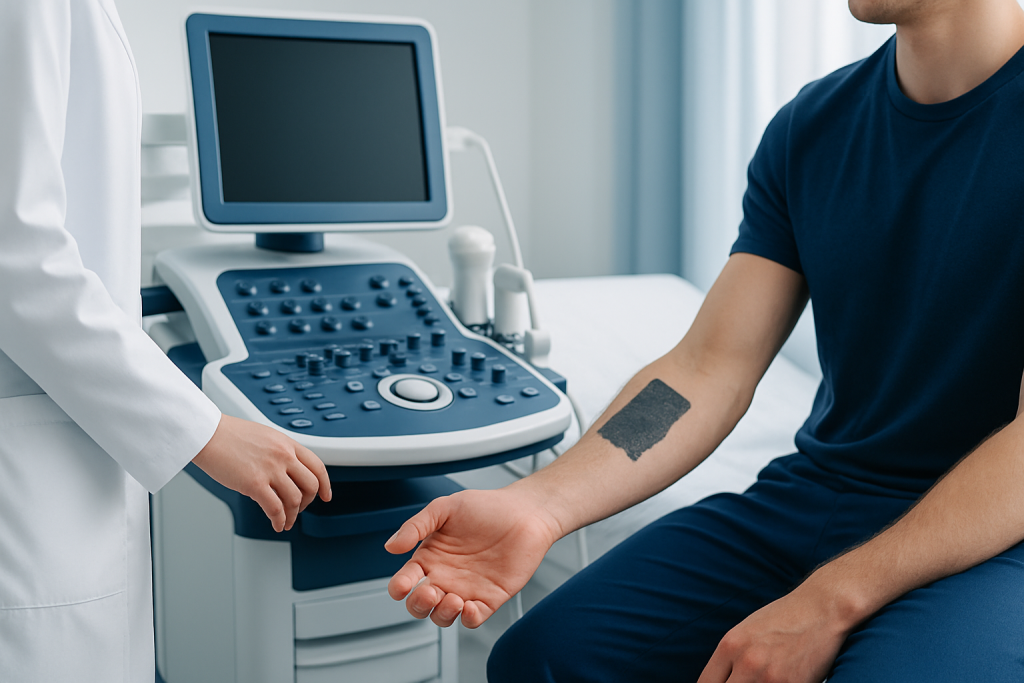
Healing generally moves through recognizable phases. The dates below are typical ranges, and overlap between stages is common.
- Days 1-3 (inflammation): The area looks red or darker than surrounding skin, feels warm, swollen and sore, similar to a sunburn or a graze. Clear or ink-tinged fluid (plasma) may weep, and excess pigment often comes off on the bandage or in the first wash. This is expected.
- Days 3-7 (early repair): Weeping settles, a thin scab or shiny film forms, and tenderness eases day by day. Swelling should be shrinking, not growing.
- Days 7-14 (peeling and itching): Flakes of colored skin lift away — this is old epidermis, not the tattoo itself. Itching is very common at this stage and can be intense.
- Weeks 2-4 (surface healed, dull phase): Peeling finishes and the skin closes. The tattoo may look faded, milky or waxy because a fresh layer of skin is sitting over the pigment.
- Months 1-3 (maturation): The new skin thins and clarifies, colors look crisper, and the dermis finishes remodeling. Some people notice small patches where pigment did not take evenly; artists usually assess these only after full healing.
Tattoos over joints, hands, feet and ribs — areas that move, rub against clothing or have thinner skin — often peel later and stay sensitive longer. Large color-packed work also carries more trauma per square inch and may take the longer end of the range.
What Is Normal — and What Is Not

Normal early healing includes mild swelling, redness or darkening confined to the tattoo and a small border around it, warmth, tenderness that improves after the first two or three days, light oozing of clear or pink fluid, thin flaking scabs, dryness and itching. Bruising can appear around tattoos on soft or thin-skinned areas. Excess ink washing away in the shower is expected and does not mean the tattoo is disappearing.
Signals that deserve attention are usually about direction and degree. Pain, redness and swelling that increase after day three or four rather than fade; redness spreading well beyond the tattoo or moving in streaks; thick yellow or green discharge with an odor; hard, hot, tender lumps; blistering; fever, chills or feeling generally unwell — these are not part of ordinary healing and should be reviewed by a health professional.
Occasionally the issue is allergic rather than infectious. Some people react to a specific pigment (red inks are the most frequently reported), developing raised, itchy, bumpy skin limited to those colors, sometimes weeks or months later. Others react to a topical product or bandage adhesive, producing a rash that follows the shape of the dressing rather than the design. A dermatologist can usually tell these apart.
Tattoo Aftercare Step by Step
Aftercare is simple, and doing less — carefully — usually beats doing more. Reputable studios provide written instructions, and those instructions take priority because they match the specific technique and dressing used. In general terms, the routine looks like this:
- Leave the initial dressing in place for the time the artist specifies. Adhesive medical film may stay on longer than traditional wrap.
- Wash with clean hands, lukewarm water and a mild fragrance-free cleanser, usually two to three times daily for the first week. Rinse well and pat dry with a clean paper towel rather than a shared bath towel.
- Apply a thin layer of the ointment or fragrance-free moisturizer the artist recommends. Thick layers trap moisture and can macerate the skin.
- Wear loose, clean clothing over the area and change bedding frequently during the first week.
- Do not pick, scratch or peel flakes and scabs. Pulling them off early can lift pigment and leave patchy or scarred areas.
- Avoid soaking — no swimming pools, lakes, hot tubs or long baths until the surface has fully closed. Short showers are fine.
- Keep it out of the sun, and once healed use broad-spectrum sunscreen; ultraviolet light fades pigment permanently.
Heavy exercise, sweating and friction can irritate a fresh tattoo, so many artists suggest easing back into workouts over the first week or two. Alcohol and smoking are worth limiting because both can interfere with the body’s normal wound-repair processes.
Factors That Affect How Fast a Tattoo Heals
Two people can get the same design on the same day and heal at different speeds. Size and density matter most: a fine-line piece is a smaller wound than a saturated blackwork sleeve. Placement matters too — areas with good blood supply and little movement (outer upper arm, thigh) tend to settle faster than hands, feet, elbows, knees, ribs and the neck.
Personal health factors also play a role. Age, nutrition, hydration, sleep and stress all influence tissue repair. Conditions such as diabetes, immune suppression, circulation problems and certain skin conditions can slow healing or raise infection risk, as can some medications, including systemic steroids and blood thinners. People living with eczema or psoriasis may find that a tattoo triggers a flare in that area, and are usually advised to speak with a dermatologist before booking.
Technique and studio hygiene are equally important. A licensed artist using sterile, single-use needles, fresh gloves and properly disinfected surfaces in a regulated studio reduces the risk of bloodborne infection. Heavy-handed work that traumatizes the skin can prolong swelling and increase the chance of scarring, regardless of how careful the aftercare is.
Infection, Scarring and Other Complications
The most common complication is a superficial bacterial skin infection, usually appearing in the first week or two and often traced to contaminated hands, dirty bedding or water exposure. Treated early, it is typically straightforward; left alone, it can spread into deeper tissue. Because pigment already changes the skin’s appearance, it helps to compare the area to how it looked the previous day rather than to normal skin.
Less commonly, tattoos are associated with delayed granulomatous reactions (small firm bumps around pigment), keloid or hypertrophic scarring in people prone to it, and, rarely, reactivation of conditions such as psoriasis at the site. A tattoo placed over or near a mole is discouraged because it can obscure changes that would otherwise be an early warning sign; any new, changing or unusual lesion should be examined by a dermatologist regardless of tattoos.
Non-sterile equipment carries a risk of transmitting bloodborne viruses such as hepatitis B and C. Choosing a licensed studio that follows local public health regulations is the single most effective way to reduce this risk. Anyone concerned about a possible exposure should seek medical advice promptly rather than waiting for symptoms.
When to See a Doctor
Most tattoos heal without any medical input. Medical review is appropriate when pain, swelling or redness worsens after the first few days; when redness spreads outward or forms streaks; when there is thick, discolored, foul-smelling discharge; when blisters, open sores or hard painful lumps appear; or when fever, chills, swollen lymph nodes or a general feeling of illness develops. Urgent care is warranted for rapidly spreading redness, high fever or severe pain.
It is also reasonable to see a clinician for itching or raised bumps that persist beyond normal healing, for a rash that appears in specific colors of the tattoo, for raised thickened scar tissue forming along the lines, or for any change in a mole near the design. People with diabetes, immune-system conditions or a history of poor wound healing may benefit from a check-in even for milder symptoms.
For those exploring dermatologic care while traveling, Acibadem Health Point coordinates appointments with multidisciplinary specialists at JCI-accredited Acıbadem hospitals, including dermatology assessment of skin reactions, infections and scarring for international patients. Any decision about diagnosis or treatment should be made with a qualified physician who can examine the skin directly.
Caring for a Tattoo Long Term
Once the surface has healed, maintenance is mostly about sun and skin health. Ultraviolet exposure is the main cause of fading and blurring over the years, so daily broad-spectrum sunscreen on visible tattoos — or clothing coverage — preserves definition. Well-hydrated skin also tends to keep ink looking sharper, and a simple fragrance-free moisturizer is usually enough.
Significant weight change, pregnancy and normal aging can stretch or soften a design over time; this is expected rather than a sign of a problem. Many artists offer a touch-up after full healing to even out any areas where pigment did not settle, and that appointment is generally scheduled once the skin has finished maturing rather than during the peeling phase.
Finally, it is worth remembering that tattooed skin still needs routine skin checks. Regular self-examination and periodic professional skin exams remain important, and clinicians can assess pigmented areas even within a tattoo. Anyone unsure about a change in their skin should ask rather than wait.
Frequently asked questions
01How long does it take for a tattoo to heal completely?
The outer layer of skin usually closes within about two to three weeks, at which point the tattoo stops weeping and peeling. The deeper dermis, where the pigment sits, generally continues to repair for another two to three months, and the design often looks clearer once that process finishes. Individual timelines vary with size, placement and personal health.
02Is it normal for a new tattoo to peel and itch?
Yes. Flaking and peeling of colored skin usually begins around the end of the first week and can last several days, and itching commonly accompanies it. The flakes are dead epidermis, not the tattoo itself. Scratching or pulling at them can lift pigment and cause patchy healing, so gentle moisturizing is preferred.
03How can someone tell if a tattoo is infected?
Ordinary healing improves after the first two to three days, while infection tends to get worse. Warning signs include increasing pain, redness spreading beyond the tattoo or forming streaks, thick yellow or green discharge, an unpleasant odor, blistering, or fever and chills. These symptoms should be assessed by a health professional promptly.
04When can someone swim or exercise after getting a tattoo?
Soaking in pools, hot tubs, lakes and baths is generally avoided until the skin surface has fully closed, which for most people is around two to three weeks. Short showers are fine from the start. Intense exercise that causes heavy sweating or friction over the area is usually reintroduced gradually, following the artist's specific advice.
05Why does a healed tattoo look faded or cloudy?
After peeling, a fresh layer of skin sits over the pigment and can make the design look milky, dull or slightly out of focus. This usually clears over the following weeks as the new skin thins and matures. If patchiness persists after full healing, many artists offer a touch-up appointment.
06Do some body areas heal more slowly than others?
Yes. Tattoos on hands, feet, elbows, knees, ribs and the neck often take longer because the skin is thinner, moves constantly, or rubs against clothing. Large, heavily shaded pieces also involve more skin trauma than small line work. Extra patience and careful aftercare are reasonable in these locations.
07Can people with skin conditions or diabetes get tattoos?
Many can, but it is sensible to discuss it with a doctor first. Conditions such as eczema, psoriasis, diabetes, immune suppression or a tendency to keloid scarring can affect healing or be triggered by the procedure. A clinician can advise on timing, site selection and any precautions specific to the individual.
This article is for general information only and is not a substitute for professional medical advice. Please consult a qualified doctor about your individual situation.
Joint and spine care in Turkey — expert assessment & treatment
JCI-accredited · board-certified surgeons · reply within 24h
Add us as a Preferred Source to see more of our trusted health content across Google Search, AI Overviews and Discover.