How Do Lice Form and How Do They Spread?
Head lice are small insects that live on the scalp and feed on tiny amounts of blood. They do not arise from poor hygiene or develop spontaneously; an infestation begins when a live louse spreads from one person to another, most often during close head-to-head contact.
How Do Lice Form? The Evidence-Based Answer
Head lice do not form from dirt, sweat, poor hygiene, or an unclean home. They begin when a live head louse moves from one person’s hair to another person’s hair, usually during close head-to-head contact. Once on the scalp, an adult female louse can lay eggs, known as nits, which remain attached to the hair until they hatch.
Although head lice can be unpleasant and may cause itching, they are very common and usually do not cause serious illness. They are not known to spread disease. Anyone can get head lice, regardless of hair type, hair length, age, cleanliness, or family circumstances.
The most important point is that lice are living insects with a life cycle. They do not appear spontaneously. Recognizing this can help families focus on practical treatment and reduce unnecessary worry or stigma.
What Head Lice Are and How Their Life Cycle Works
Head lice are tiny, wingless insects that are adapted to live close to the human scalp. They feed on small amounts of blood and hold tightly to hair using claw-like legs. They are usually grayish, tan, or brown, and their color may look darker after feeding.
An adult female lays eggs along the hair shaft, most often within a few millimeters of the scalp where warmth helps development. The egg is covered by a sticky substance that makes it difficult to brush or wash away. After hatching, a young louse, called a nymph, goes through several growth stages before becoming an adult.
Empty egg cases can remain on the hair after a successful infestation has been treated. These shells may be visible farther away from the scalp as hair grows. Finding nits alone does not always prove that live lice are currently present; finding a moving louse is the clearest confirmation.
Lice need human blood to survive and generally do not live long away from the scalp. This is why close personal contact, rather than the home environment, is the main route of spread.
How Head Lice Spread Between People
Head lice spread most efficiently through direct head-to-head contact. This can occur when children play closely together, when family members hug or share close seating, or during activities that bring heads near one another. Lice crawl quickly from hair to hair, but they cannot fly or jump.
Spread through items such as hats, hairbrushes, headphones, pillows, or towels is possible but thought to be less common. A louse that has fallen away from the scalp has limited opportunity to survive and transfer to another person. Routine household cleaning is reasonable, but extensive environmental disinfection is generally unnecessary.
Head lice are not related to personal cleanliness. In fact, clean hair does not prevent lice from crawling onto the scalp. Families should avoid blaming a child or adult with lice, as shame can delay identification and treatment.
Pets do not spread human head lice. Dogs, cats, and other household animals may have their own parasites, but human head lice are specialized to live on people.
Signs That May Suggest Head Lice
Itching of the scalp is a common symptom, often around the ears and at the back of the neck. The itch is usually caused by the body’s reaction to louse saliva after bites. However, itching may take time to develop, especially during a first infestation, and some people have little or no itch.
Other possible signs include a tickling sensation in the hair, small scratch marks, irritability or difficulty sleeping, and visible nits close to the scalp. Lice are often easiest to find in damp hair under bright light, especially behind the ears and near the neckline.
Several conditions can look similar. Dandruff, hair-product residue, scalp eczema, and lint may be mistaken for nits. Unlike dandruff, true nits are usually firmly attached to one side of the hair shaft and do not slide off easily with a finger.
Persistent scratching can irritate the skin. If there are tender areas, spreading redness, crusting, pus, swollen lymph nodes, or fever, a clinician should assess the scalp because a secondary skin infection may be present.
How a Doctor Confirms the Diagnosis
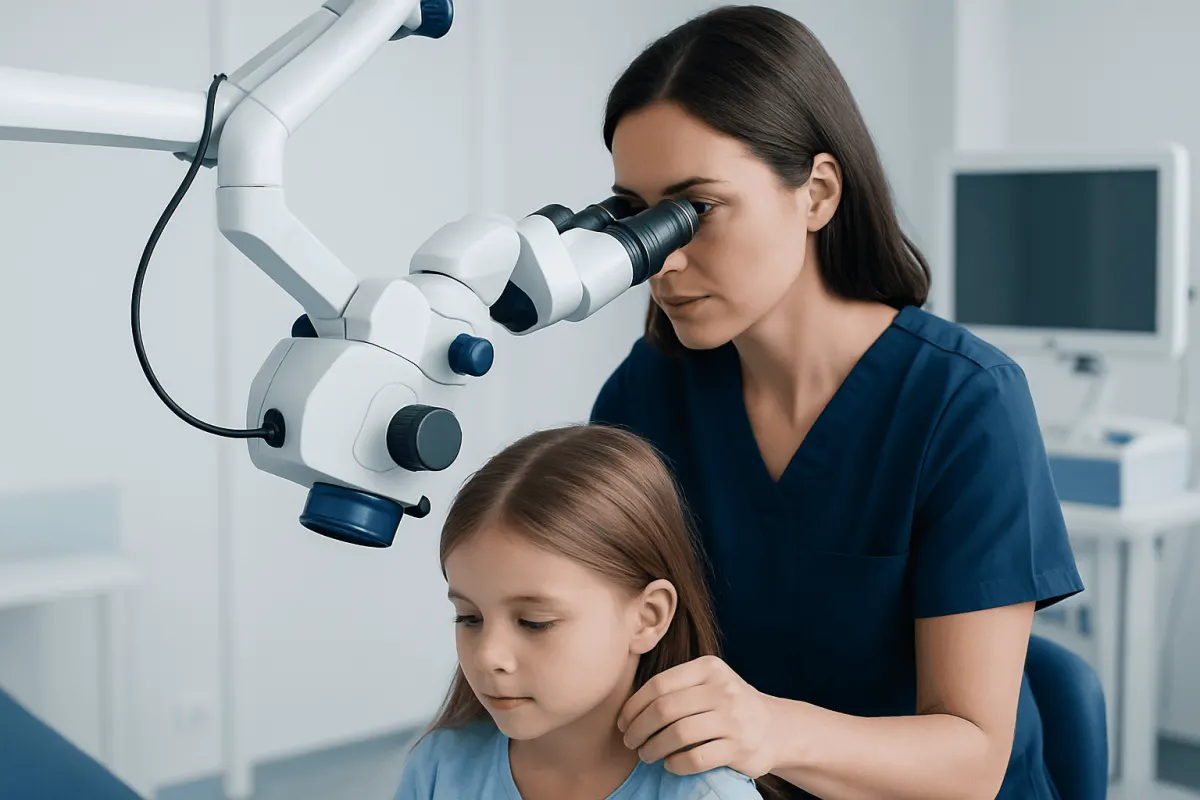
A doctor, nurse, or qualified pharmacist will usually begin by asking about itching, recent close contact with someone who has lice, previous treatments, and any scalp symptoms. They will examine the scalp and hair carefully, paying particular attention to the areas behind the ears and at the nape of the neck.
The most reliable diagnosis is identification of a live crawling louse. A fine-toothed lice comb, used on wet hair with conditioner, can help collect and identify lice. Magnification and bright lighting may be used to distinguish viable nits from empty egg casings or scalp debris.
A medical professional may also look for signs of inflammation, eczema, fungal infection, or bacterial infection when the scalp is very itchy or damaged. This helps avoid treating the wrong condition with lice products.
If an infestation is confirmed, close household contacts may be checked. Treatment is generally recommended for people with active lice, rather than treating everyone automatically without evidence of infestation.
Treatment Options and Practical Care
Effective treatment usually involves a lice treatment product appropriate for the person’s age and health status, plus methodical combing to remove lice and nits. The most suitable product can vary by country, local resistance patterns, allergies, pregnancy status, and previous treatment use, so it is sensible to seek advice from a doctor or pharmacist.
Many treatments need a repeat application after a specified interval because some products do not reliably kill every egg. Following the product instructions exactly is important. Using more than directed, combining products, or repeating treatment too soon can irritate the scalp and does not necessarily improve results.
Wet-combing with a fine-toothed lice comb can be used alongside treatment or, in some cases, as a non-medicinal approach. Hair is divided into small sections and combed from the scalp to the ends, with the comb cleaned between passes. Careful, repeated combing is essential for this method.
Checking household members and close contacts can help identify additional active cases. Clothes, bedding, and recently used hair items may be washed or cleaned according to local public-health advice, but fumigant sprays and intensive whole-home cleaning are not recommended. For persistent or difficult cases, a clinician may discuss dermatology assessment and alternative treatment options.
Prevention and Reducing Repeat Spread
Because head lice spread mainly during close contact, avoiding prolonged head-to-head contact during an active outbreak may reduce transmission. Children can be reminded to avoid sharing hairbrushes, combs, hats, hair accessories, and headphones where practical, though shared objects are not the main source of spread.
Regular checks may be useful when a household member or close classmate has confirmed lice, particularly for children. Wet-combing under good light can be more accurate than quickly looking through dry hair. Schools and childcare settings may have their own guidance on notification and attendance.
There is no proven need for preventive insecticide treatments in people without live lice. Home remedies such as essential oils, kerosene, gasoline, or strong chemicals should not be used because they may be ineffective or cause skin injury, allergic reactions, or fire risk.
After treatment, continued checks help ensure that live lice have cleared. If live lice are still found after correctly used treatment, this may reflect reinfestation, missed eggs, incorrect application, or reduced response to a product rather than poor hygiene.
When to Seek Medical Care
Most cases of head lice can be managed with clear advice and appropriate over-the-counter treatment. Medical review is recommended when the diagnosis is uncertain, when a person is very young, pregnant or breastfeeding, has a significant skin condition, or has had an allergic reaction to a lice product.
A clinician should also assess the scalp if there is pain, marked swelling, extensive rash, pus, yellow crusting, fever, or signs of infection from scratching. These symptoms are not typical of uncomplicated head lice and may need separate treatment.
Seek professional advice if live lice remain after treatment has been used exactly as directed and repeat treatment or careful combing has been completed. A doctor can confirm whether lice are still active, rule out another cause of symptoms, and recommend a safer alternative when needed.
Acıbadem Health Point’s multidisciplinary specialists and JCI-accredited hospitals can assess scalp concerns and provide care for international patients when professional evaluation is needed.
Frequently asked questions
01Do lice come from dirty hair?
No. Head lice do not come from dirty hair, poor hygiene, or an unclean house. They spread when a live louse crawls from one person’s hair to another person’s hair, most commonly during close head-to-head contact.
02Can head lice jump or fly?
No. Head lice do not have wings and cannot fly or jump. They move by crawling and are most likely to spread through direct contact between heads.
03How quickly do lice eggs hatch?
Lice eggs usually hatch in about one week, although timing can vary with conditions. The newly hatched nymph then develops into an adult louse over the following days, which is why many treatments require a repeat step.
04Can a person have nits without live lice?
Yes. Empty egg casings can stay attached to hair after lice have been removed, and old nits may remain visible as hair grows. A live crawling louse is the best evidence of an active infestation.
05Should the whole family be treated for head lice?
Household members and close contacts should be checked carefully. Treatment is generally reserved for people with live lice, rather than given automatically to everyone in the household.
06Do pets carry head lice to people?
No. Human head lice are adapted to humans and are not spread by cats, dogs, or other pets. Pet parasites are different from human head lice.
This article is for general information only and is not a substitute for professional medical advice. Please consult a qualified doctor about your individual situation.
Hair transplant in Turkey — costs, graft counts & a free assessment
JCI-accredited · board-certified surgeons · reply within 24h
Add us as a Preferred Source to see more of our trusted health content across Google Search, AI Overviews and Discover.