High PSA Levels: Causes, Testing, and Next Steps
High PSA levels do not diagnose prostate cancer on their own. They are a signal to review the result in context, check for temporary causes of elevation, and discuss appropriate follow-up tests with a qualified clinician.
What High PSA Levels Mean
High PSA levels mean that the amount of prostate-specific antigen (PSA) measured in the blood is higher than expected for an individual’s situation. PSA is a protein produced by cells in the prostate, a small gland below the bladder that contributes fluid to semen. The PSA test is useful, but it cannot identify the cause of an elevation by itself.
A raised result does not automatically mean cancer. Many non-cancerous conditions can increase PSA, including benign prostate enlargement and inflammation. Conversely, some people with prostate cancer may have PSA values that are not markedly elevated. For this reason, doctors interpret PSA alongside age, symptoms, prostate size, family history, prior PSA results, examination findings, and, when needed, imaging or tissue testing.
Rather than focusing on one number alone, clinicians often assess the pattern over time. A result that is stable may be approached differently from one that rises repeatedly. The next step is usually a conversation about possible temporary influences and whether repeating the blood test or arranging further assessment is appropriate.
Why PSA Can Be Elevated
The prostate commonly grows with age. This non-cancerous enlargement, called benign prostatic hyperplasia (BPH), may raise PSA and can also cause urinary symptoms such as a weaker stream, frequent urination, or waking at night to urinate. Prostate inflammation, known as prostatitis, and urinary tract infections can also increase PSA, sometimes substantially.
PSA can temporarily rise after ejaculation, vigorous cycling or similar pressure on the prostate, urinary retention, catheter placement, cystoscopy, or other procedures involving the urinary tract. A recent prostate examination may also affect results in some circumstances. It is important to tell the clinician about recent illness, urinary symptoms, activities, and procedures before interpreting a result.
Prostate cancer is another possible explanation for high PSA levels, but the test is not specific enough to confirm it. A careful evaluation helps distinguish people who may safely continue monitoring from those who would benefit from further tests. Related information about prostate cancer may be useful for people who are undergoing an assessment.
- Benign prostate enlargement
- Prostatitis or urinary infection
- Recent ejaculation, cycling, or prostate manipulation
- Urinary retention or recent urinary procedures
- Prostate cancer
The Evaluation Process: From Blood Test to Next Steps

A PSA test is a simple blood draw, usually performed from a vein in the arm. No recovery period is needed beyond brief pressure on the puncture site. Before testing, the care team may advise avoiding factors that could temporarily influence PSA, depending on the person’s circumstances. They may also ask about medicines, because some treatments used for prostate enlargement can lower PSA and affect how the result is interpreted.
If the result is elevated, a doctor may repeat the PSA test after allowing time for a possible infection, inflammation, or temporary trigger to settle. A repeat result can be especially informative when the first result was unexpected. Urinalysis or urine culture may be used if urinary infection is suspected, while blood tests and symptom review can help guide the wider assessment.
Some people may be offered a digital rectal examination, in which a clinician gently examines the prostate through the rectum to assess its size and feel for areas of concern. Other tools may include the free-to-total PSA ratio, PSA density, or risk calculators. These measures do not provide certainty, but they can support shared decisions about imaging or biopsy.
MRI and Prostate Biopsy Procedures
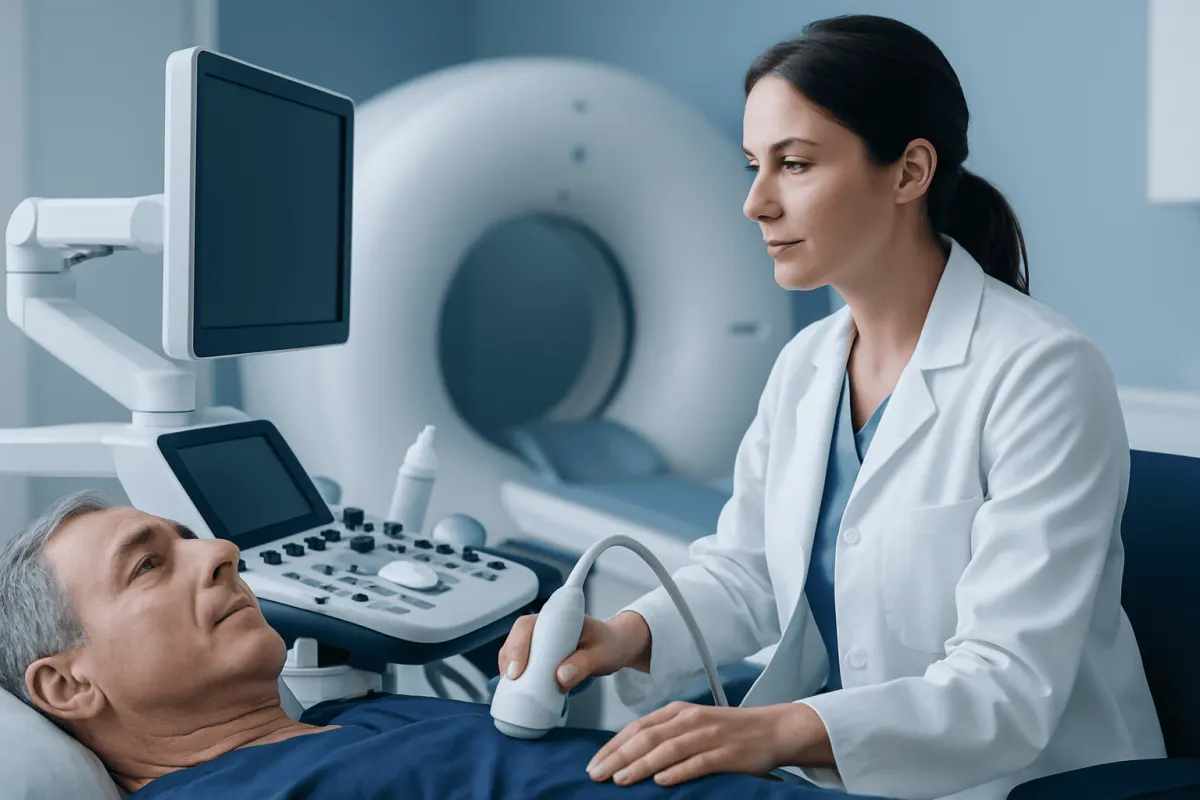
Multiparametric MRI of the prostate is often considered before a first biopsy or after a persistently concerning PSA result. This scan creates detailed images that can identify areas requiring closer attention and may help avoid biopsy in selected people with a low likelihood of clinically significant cancer. MRI results are interpreted together with PSA, examination findings, and individual risk factors.
If a biopsy is recommended, small tissue samples are taken from the prostate and examined by a pathologist. Biopsies may be performed through the rectum or through the skin between the scrotum and anus (the perineum). The approach, use of local or other anesthesia, infection-prevention measures, and preparation instructions differ between centers and should be discussed in advance.
When an MRI shows a specific area of concern, MRI-targeted sampling may be combined with systematic samples from other parts of the prostate. This approach can improve the ability to detect important disease while still assessing the gland more broadly. A prostate biopsy is a diagnostic procedure, not a cancer treatment, and it is only recommended when its potential benefits outweigh its risks.
Recovery After PSA Testing or Biopsy
After a PSA blood test, people can generally return to normal activities immediately. Mild tenderness or bruising at the blood-draw site can occur and usually settles quickly. The key part of recovery is often practical: attending follow-up appointments, asking what the result means in context, and completing any repeat tests as advised.
After a prostate biopsy, mild discomfort, temporary blood in the urine or semen, and small amounts of rectal bleeding may occur, depending on the biopsy route. These effects commonly improve over days to a few weeks. The clinical team will provide individualized advice about activity, hydration, pain relief, and whether to pause or restart medicines that affect bleeding risk.
Infection is an uncommon but important complication after biopsy. Patients should follow the post-procedure instructions carefully and contact the treating team urgently if they develop fever, chills, worsening pain, difficulty passing urine, heavy bleeding, or feel significantly unwell. These symptoms need prompt medical assessment rather than home management.
Understanding Results and Planning Follow-Up
Results are best understood as part of a risk assessment rather than as a simple positive or negative answer. A repeat PSA that returns closer to the expected range may support continued observation, while a persistently raised or rising PSA may lead to MRI, biopsy, or closer monitoring. The pace of follow-up depends on symptoms, the degree and pattern of PSA change, examination findings, and personal risk.
If a biopsy finds cancer, the pathology report describes features such as the grade group, which helps estimate how the cancer may behave. Not every prostate cancer needs immediate treatment. In some cases, active surveillance—with regular PSA tests, examinations, imaging, and occasional repeat biopsy—can be an appropriate way to monitor low-risk disease while preserving quality of life.
If cancer requires treatment, options may include surgery, radiation therapy, hormone therapy, and other treatments depending on the stage and biology of the disease. Decisions should be individualized through discussion with urology, radiology, pathology, oncology, and other relevant specialists. The goal is to match the intensity of testing and treatment to the person’s likely benefit and preferences.
Supporting Prostate Health and Preparing for Follow-Up
There is no guaranteed way to prevent a high PSA result, because prostate changes can occur with age and for many reasons. However, people can support general health by staying physically active, maintaining a balanced eating pattern, avoiding tobacco, and seeking care for urinary symptoms or possible infections. These measures support overall wellbeing but do not replace recommended clinical follow-up.
For an upcoming PSA appointment, it can help to bring a list of medicines and supplements, prior PSA results, relevant family history, and notes about urinary or pelvic symptoms. People should ask their clinician whether recent ejaculation, cycling, infection, or a urinary procedure could affect the timing of their test. They should not stop prescribed medicine without medical advice.
For international patients, Acıbadem Health Point’s multidisciplinary specialists and JCI-accredited hospitals can provide coordinated assessment of prostate concerns, including diagnostic imaging and urology evaluation. A clinician can explain which investigations are suitable and what each result may mean for the individual.
When to Seek Medical Care
People should arrange a routine medical review after an elevated PSA result, even if they feel well. Prompt review is particularly helpful for those with a strong family history of prostate cancer, a known inherited cancer-risk mutation, or a previous abnormal prostate assessment. The clinician can decide whether the PSA should be repeated and whether additional tests are indicated.
Medical advice should also be sought for persistent urinary symptoms, such as burning during urination, difficulty starting or maintaining a stream, inability to empty the bladder, blood in the urine, or new pelvic discomfort. These symptoms are often caused by non-cancerous conditions, but they deserve assessment.
Urgent medical care is appropriate for inability to urinate, fever or chills with urinary symptoms, severe pain, or feeling acutely unwell. After a prostate biopsy, fever, shaking chills, worsening pain, heavy bleeding, or urinary retention should be treated as urgent reasons to contact the clinical team or seek emergency care.
Frequently asked questions
01What PSA level is considered high?
There is no single PSA value that has the same meaning for every person. Age, prostate size, medicines, previous PSA values, symptoms, and family history all affect interpretation. A doctor should review the result in context and may recommend repeating the test or arranging further evaluation.
02Can high PSA levels go down without treatment?
Yes. PSA can fall if a temporary factor, such as an infection, inflammation, urinary retention, recent ejaculation, or prostate irritation, resolves. A clinician may advise repeating the test after an appropriate interval. It is important not to assume that a lower repeat result rules out every possible prostate condition.
03Should a person avoid sex before a PSA test?
Ejaculation may temporarily increase PSA in some people. A clinician or testing center may recommend avoiding ejaculation for a short period before the blood test, particularly when an accurate baseline result is needed. The person should follow the preparation instructions provided by their healthcare team.
04Does cycling affect PSA results?
Vigorous cycling or activities that put pressure on the prostate may temporarily influence PSA in some individuals. The effect is not the same for everyone, but it is sensible to mention recent cycling or similar activity when discussing an unexpected result. The clinician may recommend repeat testing under more standardized conditions.
05How long does it take to recover from a prostate biopsy?
Most people resume gentle daily activities relatively soon, although minor discomfort and temporary blood in urine or semen can last for days or sometimes weeks. Recovery instructions depend on the biopsy approach and a person’s health history. Fever, chills, difficulty urinating, heavy bleeding, or worsening pain require prompt medical advice.
06Does a high PSA always mean prostate cancer?
No. High PSA levels are commonly caused by benign prostate enlargement, inflammation, infection, or temporary prostate irritation. PSA is a useful marker for assessing risk, but cancer can only be confirmed through appropriate diagnostic evaluation, which may include imaging and biopsy.
This article is for general information only and is not a substitute for professional medical advice. Please consult a qualified doctor about your individual situation.
Oncology care in Turkey — second opinion and treatment plan
JCI-accredited · board-certified surgeons · reply within 24h
Add us as a Preferred Source to see more of our trusted health content across Google Search, AI Overviews and Discover.