Hemogram Blood Test: What It Measures and What Results Mean

Key Takeaways
- A blood hemogram test measures red blood cells, white blood cells, hemoglobin, hematocrit and platelets from a single small blood sample.
- It is a screening and monitoring tool, not a diagnosis on its own — results are always interpreted alongside symptoms, medical history and other tests.
- Reference ranges differ between laboratories and vary by age, sex, pregnancy and altitude, so results should be read against the range printed on the report.
- Mildly abnormal values are common and often temporary, caused by a recent infection, dehydration, menstruation, medication or even how the sample was taken.
- Persistent or markedly abnormal results usually lead to repeat testing or targeted follow-up tests rather than immediate treatment.
- Unexplained fatigue, easy bruising, recurrent fevers, unusual bleeding or shortness of breath are reasons to have a hemogram discussed with a doctor.
A hemogram — also called a complete blood count (CBC) — is a simple blood test that counts and describes the cells circulating in the bloodstream. It is one of the most common first-line tests doctors use to check for anemia, infection, inflammation and bleeding or clotting problems.
Overview: What a Hemogram Is and Why Doctors Order It
A blood hemogram test — known in the United States more often as a complete blood count, or CBC — is a laboratory analysis of the cells suspended in blood. From a single tube of blood, an automated analyzer counts red blood cells, white blood cells and platelets, and measures the amount of oxygen-carrying hemoglobin. Because blood travels through every organ, changes in these cell populations can offer early, general clues about what is happening in the body.
Doctors order a hemogram for many everyday reasons: as part of a routine health check, before surgery or a procedure, when someone feels persistently tired or unwell, when an infection is suspected, during pregnancy, or to monitor a known condition or the effects of certain medications. It is inexpensive, widely available and requires only a small blood sample, which is why it is often the very first test performed.
It is equally important to understand what a hemogram cannot do. It does not diagnose a specific disease by itself, does not detect most cancers, and does not measure cholesterol, blood sugar, kidney or liver function — those require separate tests. A hemogram narrows the field. It tells a clinician whether the blood-forming system looks typical or whether something deserves a closer look.
What the Blood Hemogram Test Measures
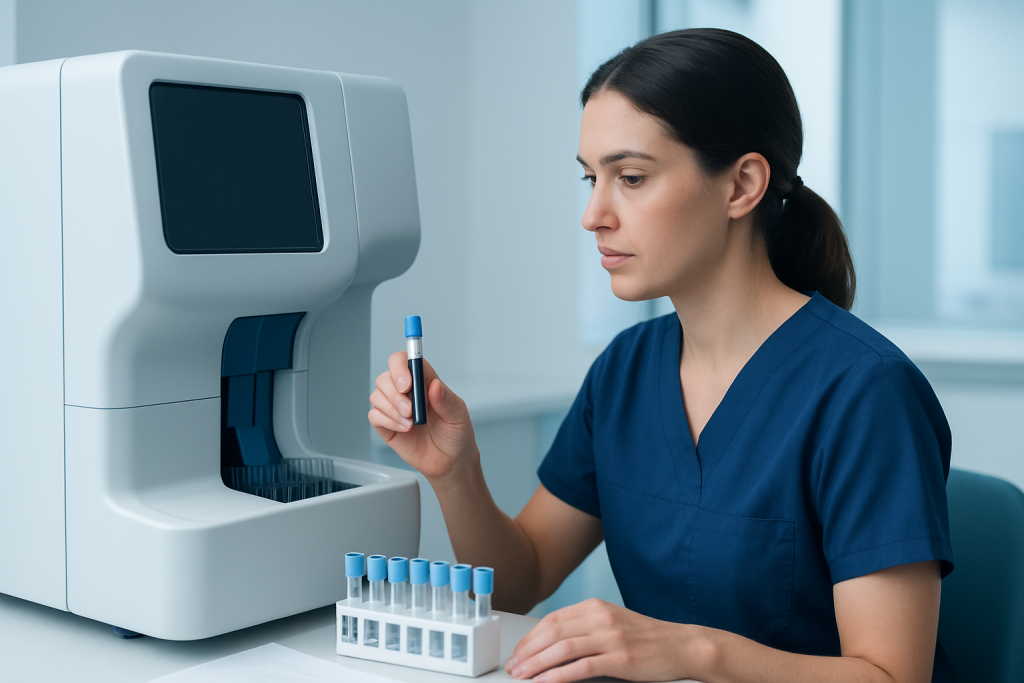
Most reports group the results into three families of cells, plus several calculated indices that describe the size and content of those cells. Reading the report becomes far less intimidating once the groupings are clear.
- Red blood cells (RBC), hemoglobin and hematocrit: these reflect the blood’s capacity to carry oxygen. Hemoglobin is the protein inside red cells that binds oxygen; hematocrit is the proportion of blood volume made up of red cells.
- Red cell indices (MCV, MCH, MCHC, RDW): these describe whether red cells are unusually small or large, pale or well filled with hemoglobin, and how uniform they are in size. They help point toward the reason behind anemia.
- White blood cells (WBC) and the differential: the total white count plus the breakdown into neutrophils, lymphocytes, monocytes, eosinophils and basophils. These cells defend against infection and take part in allergic and inflammatory responses.
- Platelets (PLT) and MPV: platelets are cell fragments essential for clotting; their number and average size are reported together.
Some laboratories add a reticulocyte count, which estimates how quickly the bone marrow is producing new red cells, or a manual review of the blood smear under a microscope when the analyzer flags something unusual. These add-ons are ordered by the physician when the basic panel raises a question.
How the Test Is Performed: What to Expect

The procedure itself is brief and familiar. A phlebotomist cleans the skin, usually inside the elbow, and draws blood into a tube containing an anticoagulant so the sample does not clot before analysis. In infants and young children, a heel or fingertip prick may be used instead. The draw typically takes a couple of minutes, and most people feel only a brief sting.
Fasting is generally not required for a hemogram alone. However, it is frequently ordered together with panels that do require fasting — such as glucose or lipid tests — so patients should follow the instructions given by the ordering clinic rather than assume. Staying normally hydrated before the draw is helpful, because significant dehydration can concentrate the blood and nudge several values upward.
Results are often available the same day, sometimes within an hour in a hospital setting. Mild bruising or tenderness at the puncture site is common and fades within a few days; applying gentle pressure for a minute or two after the needle is removed reduces it. Anyone who feels faint during blood draws should mention this beforehand so the sample can be taken while lying down.
Understanding Normal and Abnormal Results
Every hemogram report lists a reference range beside each value. These ranges are statistical — they describe where most healthy people fall — and they differ from laboratory to laboratory depending on the equipment and the population served. They also shift with age and sex, during pregnancy, and at high altitude, where red cell values are naturally higher. For this reason, a value should always be compared with the range printed on that particular report, not with a number found online.
A result slightly outside the range is not automatically a sign of disease. Because a reference range is built to include the middle of a healthy population, a small percentage of perfectly well people fall just outside it. Recent exercise, a viral illness the week before, menstruation, smoking, stress, pregnancy, altitude and many common medications can all shift a value temporarily. Even the technique of the blood draw can affect results if the sample sits too long or is partly clotted.
What clinicians pay attention to is the pattern and the trend: several related values moving in the same direction, a marked rather than borderline deviation, a change compared with the person’s own previous results, and — most importantly — whether the findings match the symptoms. A modestly low hemoglobin in someone who feels well is interpreted very differently from the same number in someone who is breathless climbing stairs.
What Different Patterns May Suggest
Low hemoglobin or hematocrit indicates anemia, meaning fewer red cells or less hemoglobin than expected. Anemia is a finding, not a diagnosis; the red cell indices help suggest a direction. Small, pale red cells often point toward iron deficiency — a common cause in menstruating women, in people with poor iron intake, or where there is slow blood loss from the digestive tract. Larger-than-usual red cells may raise questions about vitamin B12 or folate. Higher-than-expected red cell values can reflect dehydration, chronic lung disease, smoking, life at altitude, or less commonly a bone marrow condition.
A raised white blood cell count most often accompanies bacterial infection, inflammation, tissue injury, or the use of corticosteroids; a rise in lymphocytes is more typical of viral illness, while eosinophils may increase with allergies or certain parasitic infections. A low white count can follow some viral infections, autoimmune conditions or particular medications. Very high or very low counts with unusual cells on the smear prompt further hematology evaluation.
Low platelets can cause easy bruising, tiny red skin spots or prolonged bleeding from small cuts, and may follow viral infection, certain drugs, liver disease or immune conditions. High platelets can occur reactively after infection, inflammation, iron deficiency or surgery. In every one of these situations, the next step is a conversation with a physician, who will decide whether to repeat the test, add targeted investigations, or simply observe.
Next Steps, Repeat Testing and Second Opinions
When a value is unexpected, the most common next step is not treatment but confirmation. Doctors frequently repeat the hemogram after a short interval, since a single abnormal snapshot may simply reflect a passing illness or a technical issue with the sample. If the finding persists, focused follow-up tests may be added — iron studies, vitamin B12 and folate levels, thyroid or inflammatory markers, a peripheral blood smear review, or a referral to a hematologist.
Patients often arrive at a consultation holding a report full of abbreviations and asterisks. Bringing previous hemograms, a current medication and supplement list (including over-the-counter products), and a note of recent illnesses or dietary changes makes the interpretation far more accurate. Trends over time carry more meaning than any single line on a page.
For people managing care across borders, laboratory reports can be reviewed remotely before travel so that testing is not needlessly duplicated. Acibadem Health Point coordinates video consultations and second opinions for international patients, connecting them with multidisciplinary specialists at JCI-accredited Acıbadem hospitals, arranging interpreters, appointment scheduling and travel logistics, and helping plan follow-up once the patient returns home. Any interpretation of results, however, belongs in a direct conversation with a qualified physician who knows the full clinical picture.
Preparation, Self-care and When to See a Doctor
Little preparation is needed for a hemogram, but a few habits improve reliability: drink water normally in the hours before the draw unless fasting has been requested, avoid strenuous exercise immediately beforehand, and tell the staff about any medications, supplements or recent vaccinations. Anyone taking blood thinners or with a bleeding tendency should mention it so pressure can be applied longer at the puncture site.
General health measures support healthy blood counts: a balanced diet containing iron-rich foods, vitamin B12 and folate; treating heavy menstrual bleeding rather than tolerating it; not smoking; and keeping chronic conditions under review. Iron and other supplements should be taken only when a doctor has confirmed a deficiency, because unnecessary iron can be harmful and may mask the true cause of a low count.
Medical advice should be sought for persistent fatigue or breathlessness, pallor, dizziness, recurrent or prolonged fevers, night sweats, unexplained weight loss, swollen lymph nodes, easy bruising, frequent nosebleeds, bleeding gums, blood in the stool or urine, or any bleeding that is hard to stop. Prompt care is warranted for a high fever with shaking chills, severe or sudden weakness, chest pain, fainting, or heavy uncontrolled bleeding. These symptoms deserve evaluation regardless of what a laboratory report shows.
Frequently asked questions
01Is a hemogram the same as a complete blood count (CBC)?
Yes. "Hemogram" and "complete blood count" refer to the same panel of tests measuring red cells, white cells, hemoglobin, hematocrit and platelets. The term hemogram is used more widely in Europe and parts of Asia, while CBC is standard in the United States. Some laboratories offer it with or without a white cell differential.
02Do I need to fast before a blood hemogram test?
Fasting is usually not required for a hemogram on its own. It is often ordered alongside tests such as glucose or a lipid panel that do require fasting, so patients should follow the specific instructions from the ordering clinic. Drinking water is generally allowed and helps with the blood draw.
03What does it mean if one value is flagged as high or low?
A single flagged value is common and frequently has a harmless explanation such as a recent infection, dehydration, exercise or menstruation. Reference ranges are built around most healthy people, so some well individuals naturally fall just outside them. A doctor looks at the whole pattern, the trend over time and the person's symptoms before drawing conclusions.
04Can a hemogram detect cancer?
A hemogram is not a cancer screening test and cannot rule cancer in or out. It can, however, show patterns — such as unexplained anemia or markedly abnormal white cell or platelet counts — that prompt further investigation, including blood cancers. Any suspicion requires additional specialized testing arranged by a physician.
05How often should a hemogram be repeated?
There is no single schedule that fits everyone. Healthy adults may have one as part of a periodic check-up, while people with anemia, chronic illness or on certain medications may need it more regularly. The interval should be set by the treating physician based on individual circumstances.
06Can medications or supplements change hemogram results?
Yes. Corticosteroids, some antibiotics, chemotherapy agents, certain anti-inflammatory drugs and iron or vitamin B12 supplements can all influence counts. Patients should bring a complete list of prescription drugs, over-the-counter products and supplements to the appointment. Medication should never be started or stopped based on a lab report alone.
07How quickly are results available?
Hemogram results are usually processed rapidly, often the same day and sometimes within an hour in hospital laboratories. The report should be reviewed with a clinician rather than interpreted alone, since the meaning depends on symptoms, history and previous results.
This article is for general information only and is not a substitute for professional medical advice. Please consult a qualified doctor about your individual situation.
Explore treatments in Turkey — costs, top hospitals & a free quote
JCI-accredited · board-certified surgeons · reply within 24h
Add us as a Preferred Source to see more of our trusted health content across Google Search, AI Overviews and Discover.