Hair Transplant Options in Istanbul, Turkey
Hair Transplant Turkey vs US: How Care Differs" class="ahp-ilk">Hair transplant Turkey Istanbul is a surgical hair-restoration option in which healthy follicles, usually from the back or sides of the scalp, are relocated to areas of permanent thinning. Suitability, technique, safety and natural-looking results depend on a specialist assessment, an appropriate donor area and realistic expectations.
Hair Transplant Turkey Istanbul: What It Involves
A hair transplant is a surgical procedure that moves healthy, genetically more resistant hair follicles from a donor area to areas affected by permanent hair thinning. For most people, the donor area is the back and sides of the scalp. In a hair transplant Turkey Istanbul consultation, the central clinical questions are the cause and stability of hair loss, the quality and density of donor hair, and whether the planned design can remain natural as a person ages.
Transplanted follicles retain many of the characteristics of the area from which they are taken. Once established in the recipient area, they can grow hair over the long term. However, surgery redistributes existing hair; it does not create additional follicles or prevent non-transplanted hair from continuing to thin.
Hair loss may be related to androgenetic alopecia, commonly called male- or female-pattern hair loss. It may also have other causes, including inflammatory scalp disease, alopecia areata, nutritional deficiency, medication effects, hormonal changes or scarring. An accurate diagnosis should come before deciding whether hair transplant treatment is appropriate.
How Hair Transplantation Works
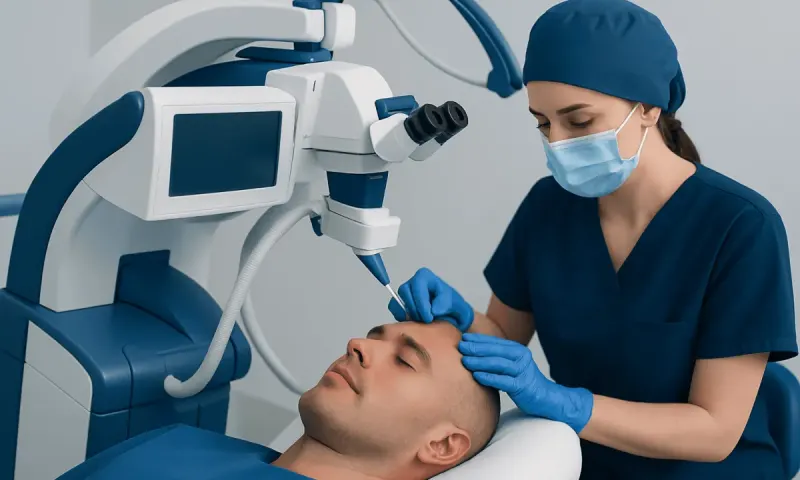
Hair follicles are naturally grouped in small units called follicular units. A surgeon removes these units from the donor region, prepares them under magnification and places them into tiny recipient sites made at planned angles and directions. The direction, density and placement of each graft influence how natural the final hairline and coverage appear.
Follicular unit extraction (FUE) removes individual follicular units using a small punch instrument. It usually leaves many tiny, dot-like scars that are often difficult to notice once healed, especially when surrounding hair is kept at a moderate length. Follicular unit transplantation (FUT), sometimes called strip surgery, removes a narrow strip of scalp from the donor area and leaves a linear scar that is closed with sutures.
Neither technique is universally best. FUE may be preferred by people who wish to keep their hair shorter or avoid a linear donor scar, while FUT may be useful in selected cases where a larger number of grafts is needed and scalp characteristics are suitable. The specialist should explain the likely trade-offs, including donor preservation, scarring, expected density and whether more than one session could be needed.
Who May Be a Suitable Candidate?

Good candidates generally have a pattern of hair loss that has been assessed by a qualified doctor, sufficient healthy donor hair and realistic expectations about coverage. Hair characteristics also matter. Curl, thickness, color contrast between hair and scalp, and the degree of existing thinning can affect the visual appearance of density.
Age alone does not determine suitability. In younger adults, hair loss may still be progressing, so a conservative hairline and a long-term plan are particularly important. A clinician may recommend first stabilizing hair loss with medical treatment, where suitable, before surgery is considered.
A transplant may not be suitable or may need to be delayed when hair loss is sudden, diffuse, patchy or caused by an active scalp condition. People with poorly controlled medical conditions, bleeding disorders, active infection, significant scarring disorders or limited donor supply require individualized assessment. A review of medicines, allergies, smoking or nicotine use, previous procedures and general health is also an essential part of safe planning.
- Stable or reasonably predictable hair loss pattern
- Adequate donor density and scalp health
- Clear understanding that density may be limited by available donor hair
- Willingness to follow wound-care and follow-up instructions
What Happens During the Procedure?
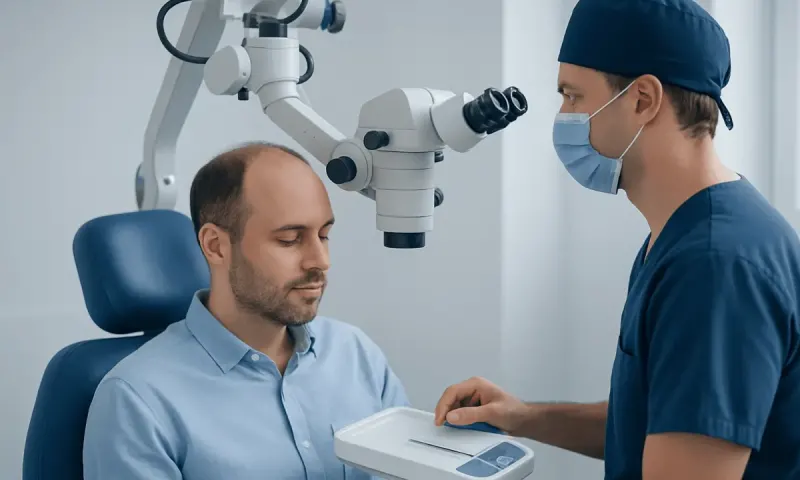
Before surgery, the clinician examines the scalp, discusses medical history and agrees on a treatment plan. This typically includes the hairline design, the areas to be treated, the estimated graft requirement and the technique proposed. Photographs may be used for planning and later comparison. The hairline should be individualized and usually designed conservatively to help it remain appropriate over time.
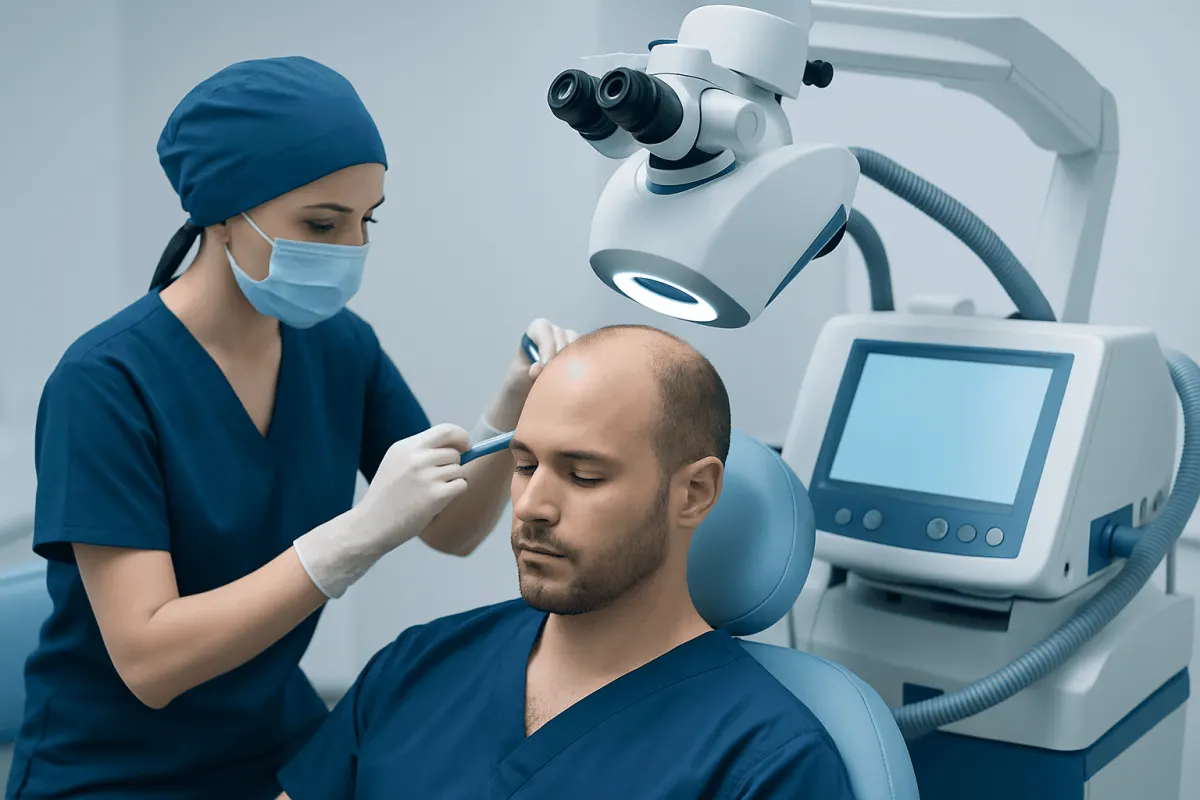
On the procedure day, the scalp is cleaned and local anesthetic is used to numb the donor and recipient areas. With FUE, follicular units are extracted one at a time. With FUT, the donor strip is removed and the team separates it into follicular units under magnification. The grafts are kept protected and hydrated while recipient sites are created.
The surgeon then places grafts according to the planned pattern. Single-hair grafts are commonly used along a hairline for softness, while grafts containing multiple hairs may be placed behind it to build coverage. The procedure can take several hours, depending on the treatment area and number of grafts. Most patients remain awake, and they receive clear instructions for the first days of recovery before leaving the clinic.
Recovery Timeline and Expected Results
In the first few days, mild swelling, tenderness, tightness, redness and small crusts around grafts are common. The scalp must be handled gently. Patients are usually advised to avoid rubbing or scratching, to follow specific washing instructions and to avoid strenuous activity, alcohol or smoking for the period recommended by their clinical team. The precise timeline differs by technique and individual healing.
Crusting commonly settles over approximately one to two weeks when aftercare instructions are followed. Transplanted hairs often shed during the first several weeks; this expected phase is sometimes called shock shedding. It does not usually mean the follicles have failed, because the follicles remain beneath the skin and later enter a new growth cycle.
Early new growth may become noticeable after several months, often appearing fine at first. Coverage generally improves gradually, with a clearer cosmetic change commonly developing between 6 and 12 months. Hair texture and density can continue to mature for 12 to 18 months, particularly at the crown. Individual results vary with graft survival, hair characteristics, healing, ongoing hair loss and the extent of the original thinning.
Benefits, Limitations and Possible Risks
For appropriately selected patients, hair transplantation can provide natural-looking, growing hair using their own follicles. It may improve coverage of the hairline, mid-scalp or crown and can reduce reliance on camouflage methods. A carefully planned procedure also respects the finite nature of donor hair and considers possible future hair loss.
It is important to understand the limitations. A transplant cannot restore the density of an unthinned scalp when donor hair is limited, and one session may not provide coverage in every area. Existing, non-transplanted hair may continue to thin, which can alter the overall appearance over time. Medical therapies, low-level light devices or other non-surgical approaches may be discussed as part of a broader plan, depending on the diagnosis.
Potential surgical risks include bleeding, infection, prolonged redness, swelling, altered sensation, visible scarring, folliculitis, cysts, poor growth of grafts and an unnatural-looking hairline or density if planning or placement is unsuitable. Temporary shedding of nearby existing hair can also occur. Choosing a properly qualified medical team and following aftercare guidance can help reduce risk, but no procedure is risk-free.
Planning Travel, Aftercare and Medical Follow-Up
People considering hair transplant Turkey Istanbul should allow enough time for assessment, surgery and early review rather than treating the procedure as a brief cosmetic appointment. It is sensible to discuss travel timing in advance, particularly because the first few days require careful graft protection. The treating team should provide written guidance about washing, sleeping position, headwear, activity, medicines and how to contact them with concerns.
Before choosing a provider, patients can ask who performs each part of the procedure, which technique is recommended and why, how grafts are counted and handled, what follow-up is included, and how complications are managed. A clinical consultation should not promise a specific density or guarantee an outcome. Previous hair-loss treatments, family history and long-term goals should be considered rather than focusing only on the immediate appearance.
Acıbadem Health Point’s multidisciplinary specialists and JCI-accredited hospitals diagnose and treat hair-loss concerns for international patients, with individualized evaluation and follow-up planning. A consultation can help clarify whether surgery, medical management or observation is the most appropriate next step.
When to Seek Medical Care
A person should seek medical assessment before considering transplantation if hair loss is sudden, rapidly worsening, patchy or associated with scalp pain, burning, marked itching, scaling, pustules or scarring. These features can suggest a medical or inflammatory cause that may need treatment first. Seeking early care is especially important for conditions that can permanently damage follicles if left untreated.
After a hair transplant, prompt contact with the treating clinic is appropriate for increasing pain, spreading redness, fever, pus-like drainage, persistent bleeding, significant swelling, an allergic reaction or any concern about the graft area. These symptoms do not always indicate a serious complication, but they should be assessed without delay.
People who are unsure about the cause of thinning can also discuss evaluation for alopecia areata and other hair-loss conditions with a dermatologist or qualified physician. An informed diagnosis supports safer treatment decisions and more realistic expectations.
Frequently asked questions
01How long does a hair transplant in Turkey Istanbul take?
The procedure often takes several hours, but the duration depends on the technique used, the number of grafts and the size of the treatment area. A clinical team can provide a more accurate estimate after examining the donor area and planning the desired coverage.
02Is hair transplant surgery painful?
Local anesthetic is typically used so the scalp is numb during graft extraction and placement. Some pressure or discomfort may be felt, and tenderness or tightness can occur during the first days of recovery. The treating clinician can explain appropriate pain-relief and aftercare measures.
03When can a person wash their hair after a transplant?
The timing and method of washing should follow the clinic’s specific instructions, as grafts need gentle protection in the early healing period. Patients are commonly given advice on using water pressure, shampoo and hand movements without disturbing the grafts. Scratching or rubbing the scalp should be avoided while crusts are healing.
04Are the results of a hair transplant permanent?
Transplanted follicles from the donor area often continue to grow for the long term after they establish themselves. However, the person’s original, non-transplanted hair can still thin over time. Ongoing monitoring and, when appropriate, medical hair-loss treatment may help support the overall result.
05Can women have a hair transplant?
Some women are suitable candidates, particularly when they have stable, localized thinning and adequate donor hair. Because diffuse hair loss is more common in women, a careful medical assessment is important before surgery. The underlying cause of hair loss should be identified and addressed where possible.
06What should be avoided after hair transplant surgery?
The treating team may advise avoiding strenuous exercise, smoking or nicotine, alcohol, direct sun exposure and swimming for a defined period. Patients should also avoid rubbing, scratching or placing pressure on newly transplanted grafts. Exact restrictions vary, so written aftercare advice should take priority.
This article is for general information only and is not a substitute for professional medical advice. Please consult a qualified doctor about your individual situation.
Hair transplant in Turkey — costs, graft counts & a free assessment
JCI-accredited · board-certified surgeons · reply within 24h
Add us as a Preferred Source to see more of our trusted health content across Google Search, AI Overviews and Discover.